
By Jon Branch.
It was like a scene from a “The Lord of the Rings” movie: the part where the Hobbits are making their way up into the Misty Mountains. The range at Emmaville NSW was clothed in mist and fog, with a fine rain hanging in the air, and the targets sometimes visible, and sometimes not.
It was cold, but the cold was offset by a gorgeous fire-pit with more than a ton of dry firewood to feed into it, but more importantly the place was warmed by the friendly greetings of locals and those of us who had travelled long distances to get there.
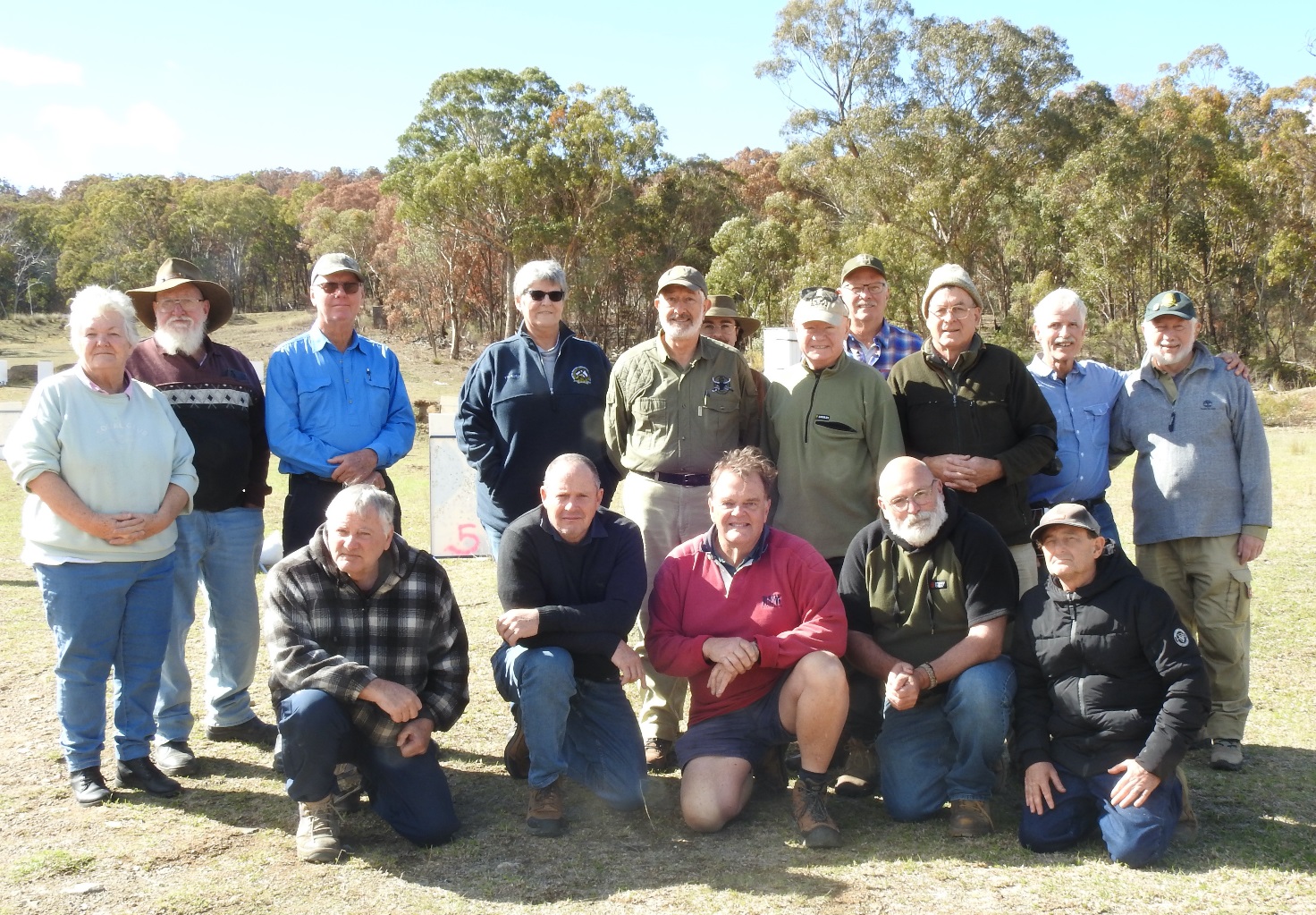
And there were quite a number of us who had decided “Have rifle, will travel”: we had shooters from Victoria and Queensland, one who had braved the Tasman Strait to make the trek from Tasmania, and a few of us from NSW including from Newcastle, Sydney, and the Mid-coast.
The range at Emmaville is superbly set up and maintained with facilities for rifle and pistol, including turning targets on the pistol range: it is one of few ranges in NSW that can accommodate a Big Game Rifle State Titles as it is approved for calibres above 8mm.
It was Friday, 29th May, and the day was allocated to rifle sighting in and preparation, with only one match scheduled; the African Plains Rifle Match. But that was to present some difficulties.
African Plains match is shot at ranges of 50m, 100m and 200m, and in NSW is shot on the Buffalo target. Normally this is perfectly fine but when the fog and mist thickened the targets at 200m disappeared, occasionally becoming visible as shadows in the fog.
We waited and waited until it was getting on for 4:00pm and the targets remained mostly as invisible as the legendary Emmaville Panther. So, as African Plains is one of the supplementary events and as such allows us to modify the event to suit local conditions, then modify it we did and moved 50m up the range so we were 150m from the 200m targets – at which point we could see them in the mist: and we shot the 200m section from there – being careful not to sit in the patches of roo poo that carpeted that part of the range.
After that we were able to advance and shoot the 100m and 50m segments as planned.
Participants said that the experience was just like the “field conditions” we deal with when out hunting fur bearing quarry. They say that the best experiences happen outside your comfort zone and indeed this event was both a challenge and a lot of fun.
Suffice to say that the damp rifles needed a bit of a clean and oil, but it was a fun way to start the competition and all were in good spirits.
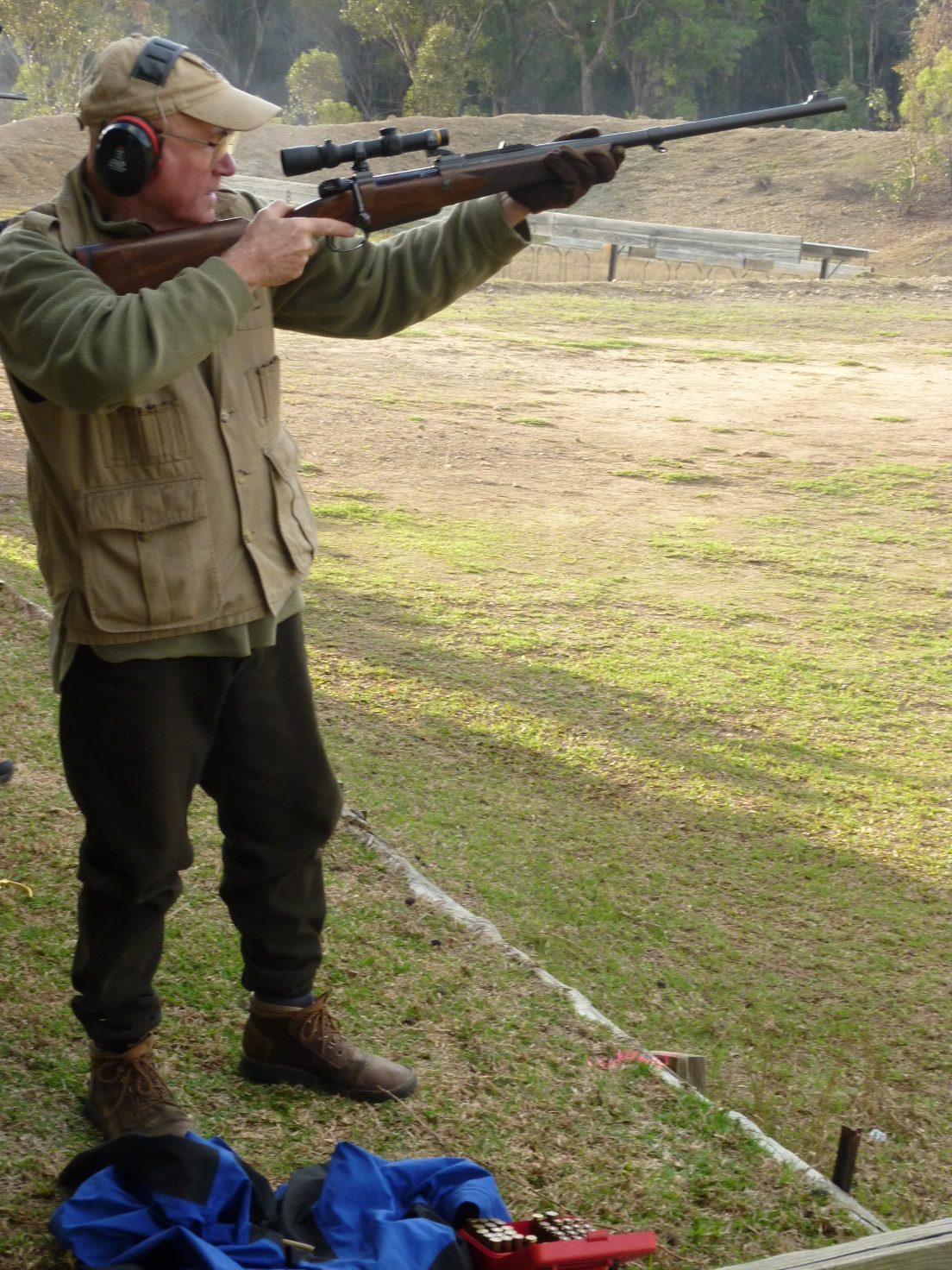
The event was won by Ben Doherty using a rather lovely Winchester Model 70 in 300 Holland & Holland Magnum (154/200). Graham Picton secured second place, also using a Winchester Model 70, though chambered in 300 Winchester Magnum (108/200), and the bronze medal went to Terrance Usmar using yet another Winchester Model 70 in 7mm Remington Magnum (104/200).
The “Rifleman’s Rifle” had proved it’s fortitude yet again!
The question in our minds was whether the wet and misty conditions would continue throughout the weekend or whether we might be blessed with sunshine for some or even all of it.
And indeed blessed we were and Saturday was bright and sunny, conditions that would persist throughout both Saturday and Sunday.
The Saturday program began with the smallest rifles used in the Big Game Rifle matches, the Pot Rifle (2) event, which is shot with humble .22 rimfires of either .22lr or .22 Magnum chambering. This was an event that was a great way to start the day and it was fiercely contested.
The winner was Ben Doherty (142.4/150), with Don Chesworth in second place (141.4), and Mark Davidson in third place (136.3).
The next match for the Saturday was a step up from the humble .22 rimfires: the Light Nitro/Hunting Class, an event that can be shot with a centrefire rifle of not less than .224 calibre, so it can be shot with a rifle as light as a .22 Hornet, or pretty much anything else on up. Some interesting rifles appeared on the firing point for this event including a quite exquisite vintage Mannlicher-Schönauer chambered for the 8×68 S.
The event was won by Ben Doherty (171/200), with James Sloman taking the silver (145/200), both using .308 Winchester rifles, and Donald Lawson took the bronze using a 22-250 (141.1).
The next event was the Special Snap which is shot with Group One or above rifles and which requires eight shots in 35 seconds on a 25m target. Only up to four rounds are allowed to be in the rifle at any one time so this event requires quick reloading.
It’s an exciting and challenging match and it was a dead heat for first place between Robert Christopher from Victoria using a 375 Sako (74.1/80) and Queenslander Graeme Wright using a 338-06 (74.1/80). The third place getter was Jason Cody from Tasmania using a Merkel double rifle in 470 Nitro Express (64/80).
The Special Snap was followed by the Group One match. Group One rifles must be from calibre .330” firing a minimum bullet weight of 225 grains and generating a minimum of 2,900ft/lb.
This match requires 20 rounds at ranges of 25m, 50m and 100m from a variety of shooting positions and time limits.
The event was won by Robert Christopher using the 375 Sako (167.4/200), with Ben Doherty in second place using a Ruger RSM in 375 H&H Magnum (155/200), and Graeme Wright using his 338-06 in third (151.2).
Up to this point all the rifle matches had been for nitro rifles but the fragrance of nitro powder in the morning was about to be supplemented by something a tad more acrid: it was time for the Black Powder Express event.
Black Powder Express rifles can range from .400” to .577” calibre with minimum bullet weights specified depending on calibre: and the cartridge case must hold a minimum of 110 grains of black powder.
This event was won by Robert Christopher using a vintage 450 Alexander Henry, (151.1/200) with Graeme Wright in second place using a 450 Black Powder Express, and third place going to Victorian Robert Mc Callum using a Ruger No.1 in 45/120 (106/200).
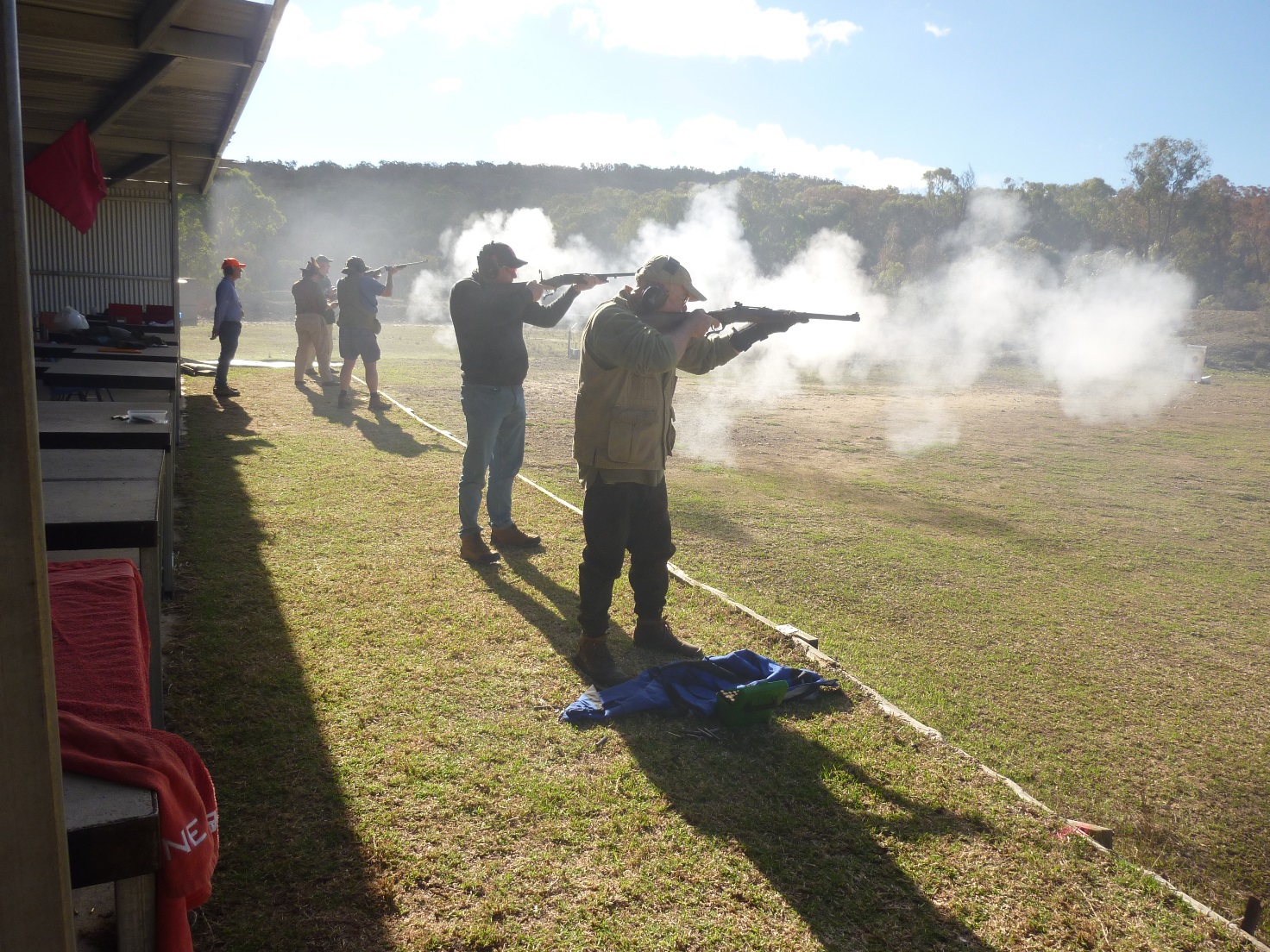
Suffice to say that by the time the intrepid competitors in this event had completed sending large quantities of black powder smoke into the air the range almost looked as foggy has it had on the previous day.
But the smoke cleared quickly leaving the way open for the Stalking Double Rifle event.
People tend to think of double rifles as being horribly expensive custom guns chambered for cartridges that are likely to loosen the fillings in one’s teeth. But this is actually not the case.
Stalking Double Rifles can be expensive custom made items, but they can also be mass produced affordable items such as those made by Baikal. And they can be chambered in smaller calibres down to the .22 rimfires, and up to such cartridges as the 9.3x74R and 375 Holland & Holland Flanged Nitro Express and all the shades in between.
To participate in this event the rifle is required to be a centrefire double rifle of not less than .228” calibre.
The winner of this event was Robert Christopher shooting with a 375 H&H (112/140), in second place was Graeme Wright with a 9.3x74R (103/140), and in third place Jason Cody using a Sabatti in 9.3x74R (89/140).
With the conclusion of the Stalking Double Rifle event the planned matches for the day were completed, but we still had a good amount of time and sunshine available to us so, with the consent of the competitors it was decided to go ahead with the first of the events planned for the Sunday; the Group Two match.
The Group Two match is for rifles that are suitable for large and potentially dangerous game. For Big Game Rifle competition these rifles must be chambered for traditional Big Game cartridges such as the 450/400, 416 Rigby, 450 and 470 Nitro Express, and 458 Winchester Magnum, to name a few.
The rifles must be in a traditional sporting configuration. Minimum calibre is .400”, and minimum muzzle energy is 3,900 ft/lb.
This event was won by Robert Mc Callum using a 404 Lyon & Lyon (115.2/140), In second place came Graeme Wright using a 416 Rigby (112.1), and in third place Robert Christopher using a Sako in 416 Remington Magnum (110/140).
That concluded the day’s shooting. The Big Game Rifle AGM was then conducted followed by a delightful dinner presented by Emmaville Club members.
Sunday morning was bright and sunny, perfect for bringing out the “big guns” for the final events of the competition.
First on the agenda was the Stopping Double Rifle match: an event for traditional large bore double rifles, double rifles that meet or exceed the minimum requirements for Group Two.
This even was won by Robert Christopher shooting a Ferlach in 458 Winchester Magnum (83/100), in second place was Ben Doherty shooting a Merkel 140 AE in 450/400 Nitro (81/100), and in third place was Graeme Wright fielding a 450/400 3.25” (75/100).
The second event for the Sunday was the Group Three event. This event is for traditional big game rifles suitable for use against such game as Australia’s Asian Buffalo or Africa’s “big five” at short range in thick cover. Rifles that qualify as “stopping rifles”, that provide the sort of life insurance one needs if something big and determined is coming at you with bad intent.
Minimum calibre for this event is .500”, minimum bullet weight is 525 grains, and minimum muzzle energy 5,300 ft/lb.
This event was won by Graeme Wright using a custom bolt action 500 Jeffrey (58/100), with Robert Christopher shooting a Sako 500 Jeffrey taking the silver (57.2), and Robert Mc Callum using the Sako 500 Jeffrey the bronze (49/100).
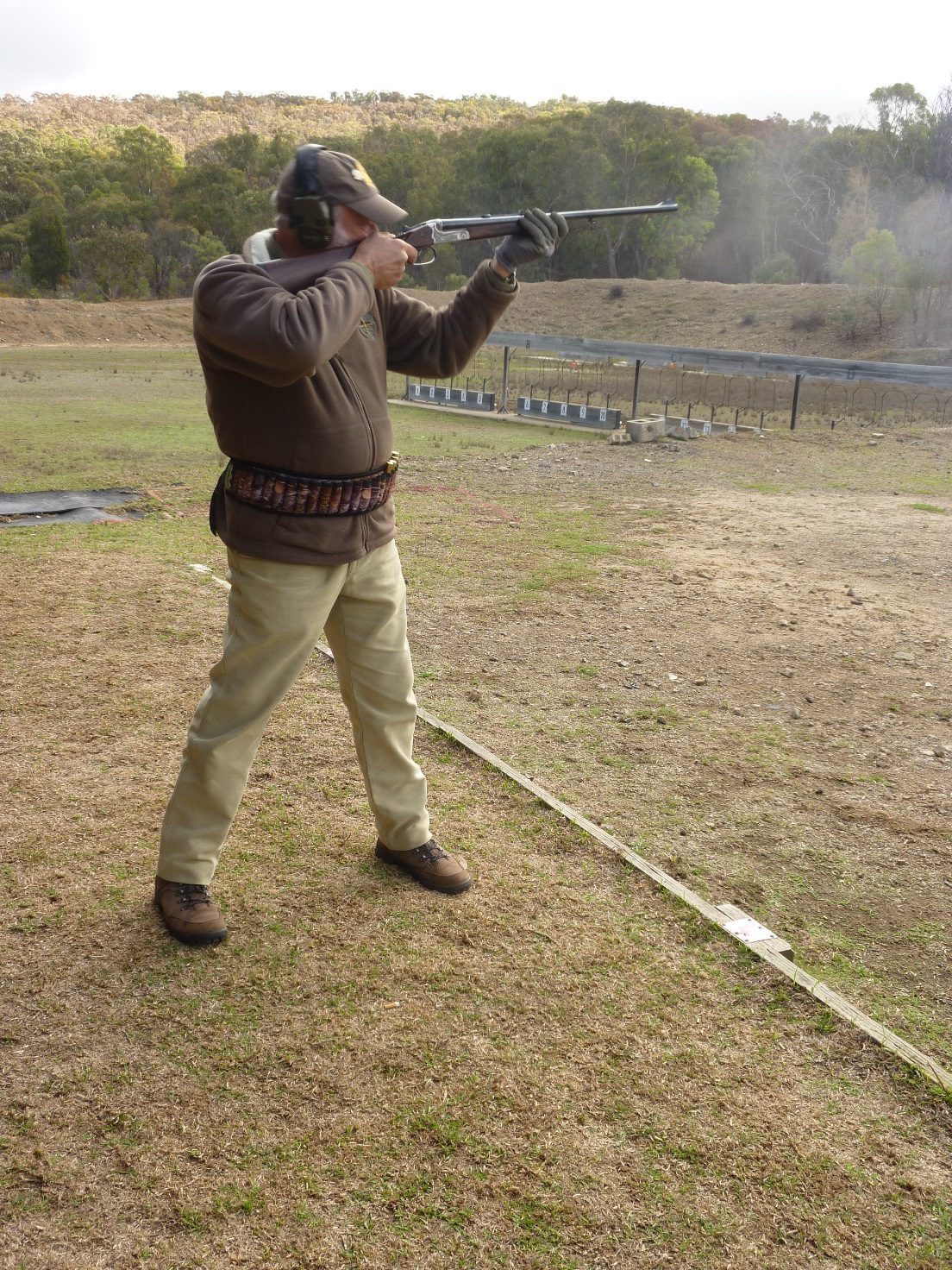
Last event for the State Titles, but certainly not least, was our journey back in time to that of the era of bore guns and rifles, a time that encompasses the Victorian era. This event sees shooters fielding both guns and rifles from 12 bore on up, and also the ball and shot guns such as the Holland & Holland Paradox and the Westley Richards Explora.
These are especially interesting sporting guns as they not only emerge from a fascinating period in the history of sporting arms, but they also demonstrate a period of rapid technical development which encompasses both black powder and nitro powder periods.
This event was another dead heat for first place between Robert Christopher shooting an antique 12 Gauge Gastinne Rennette (98.1/140), and Graeme Wright shooting a 12 gauge Paradox (98.1/140). In third place was James Sloman using a Greener 12 gauge (89.1).
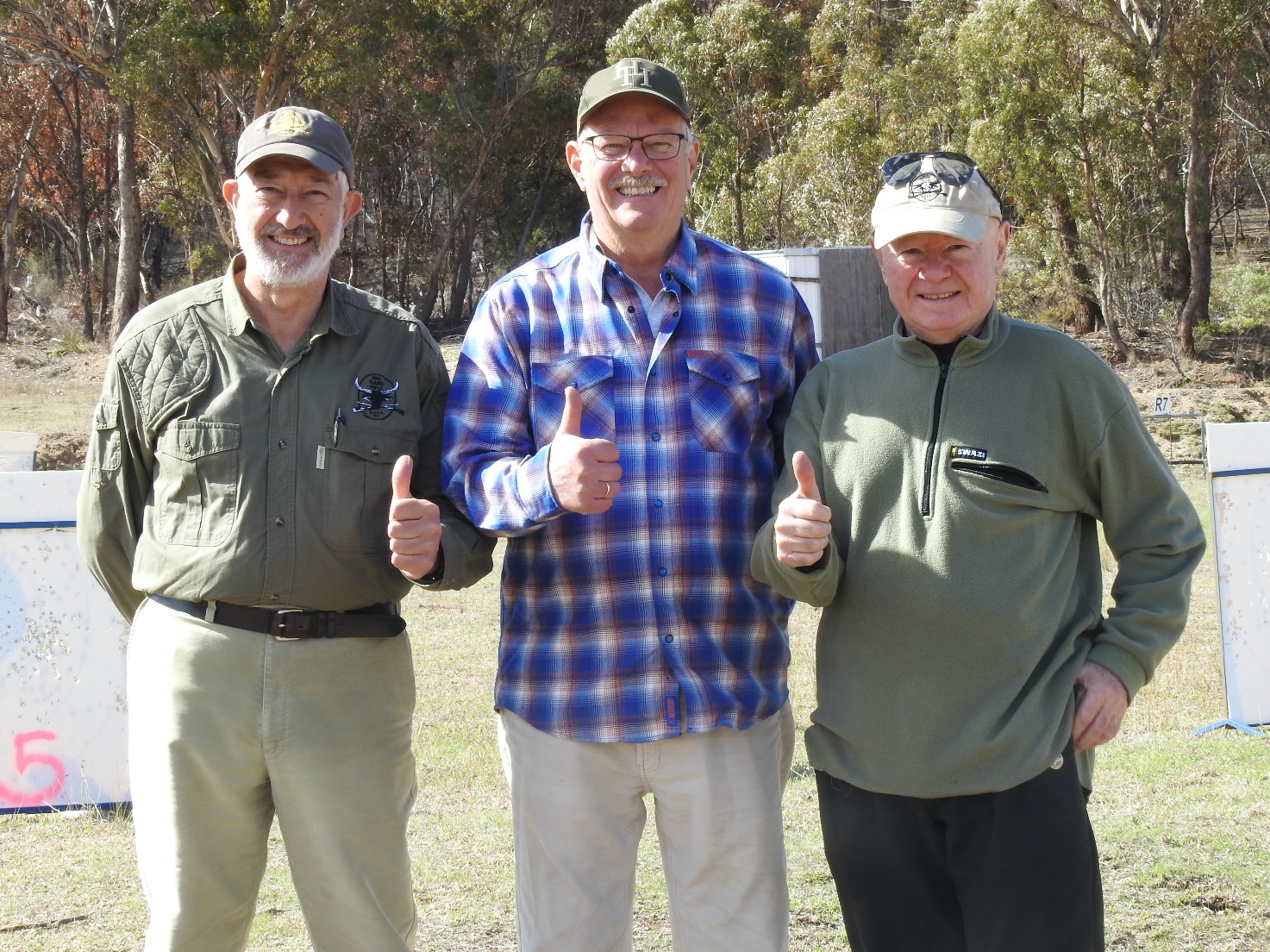
The overall, Open Champion on aggregate was Robert Christopher, with Graeme Wright taking the silver and the bronze secured by Ben Doherty.
The BGR Rules also provide for a Veteran’s Champion – and the usual suspects also appeared in the placings, proving that being a Senior Citizen is not necessarily an impediment to fine marksmanship! Robert Christopher won the Gold medal, with Graeme Wright taking the Silver, and Robert McCallum securing the Bronze.
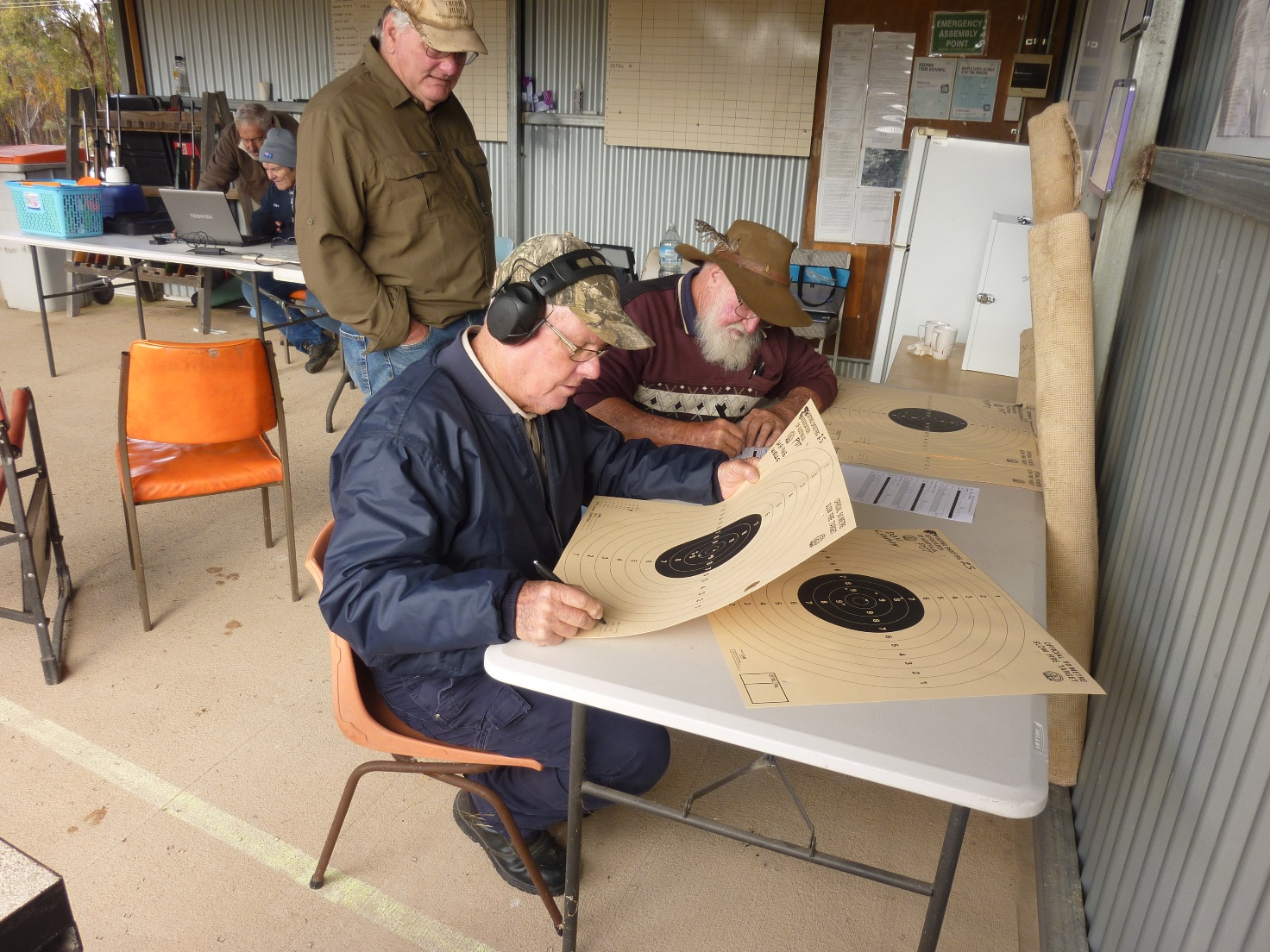
With the end of the shooting it was time to pack up the vehicles while the scorers completed the work they had been faithfully doing over the three days of competition. Then followed the medal presentations and concluding address by NSW BGR Discipline Chairman Ben Doherty.
The SSAA Glen Innes Branch had provided the Emmaville Range in superb condition, and that preparation was due to the diligent work of the local Branch Committee and dedicated volunteers. Reg, Tracey, Evan, Dell, Dusty, Wayne and Don all contributed greatly to the success of the event. Gary Beling deserves a special mention, as he completed much of the organising and hand-made trophies as mementoes for all competitors, though was precluded from attending and competing by the onset of illness.
Then it was time to say farewell to old friends and new: hoping to meet each one at future shoots.
Big Game Rifle is an SSAA discipline that celebrates the classic rifles that formed the backbone of the development of the sporting rifle. We use classic and traditional rifles, often vintage and antique, sometimes modern classics, rifles that were created not only as functional tools, but rifles that often qualify as works of art.
Big Game Rifle is deeply rooted in history and tradition: and if you are interested in classic rifles then it may well be the discipline that you would greatly enjoy.
And the people who shoot Big Game Rifle tend to be a rather lovely group of people!