

Well worth the wait
Daniel O’Dea hails S&W’s return to the lever-action
It took a mere 170 years but last year Smith & Wesson found themselves back in the lever-action rifle business. “Back?” you say. “When did they ever make lever-action firearms?” Well technically perhaps not as in the Smith & Wesson Revolver Company (founded in 1856), but an earlier iteration where Horace Smith and Daniel B. Wesson created the Smith & Wesson company (1852) to develop the Volcanic Rifle, later changing the name to the Volcanic Repeating Arms Company. The product was a lever-action design, both pistol and carbine, firing a self-contained ‘Rocket Ball’ round in the years just prior to full development of centrefire ammunition.
Without going into all the details, a gentleman by the name of Oliver Winchester became a shareholder and director of Volcanic Repeating Arms. Shortly after Horace and Daniel departed, having sold the patents and assets to the company, Olly would go on to create the Winchester Repeating Arms Company and the rest, as they say, is history. Jumping forward 170 years and the 2024 US SHOT Show gave us the newly-launched Smith & Wesson 1854 lever-action rifle, paying homage to their founder’s original patent of the same year for their very first lever-action firearm.
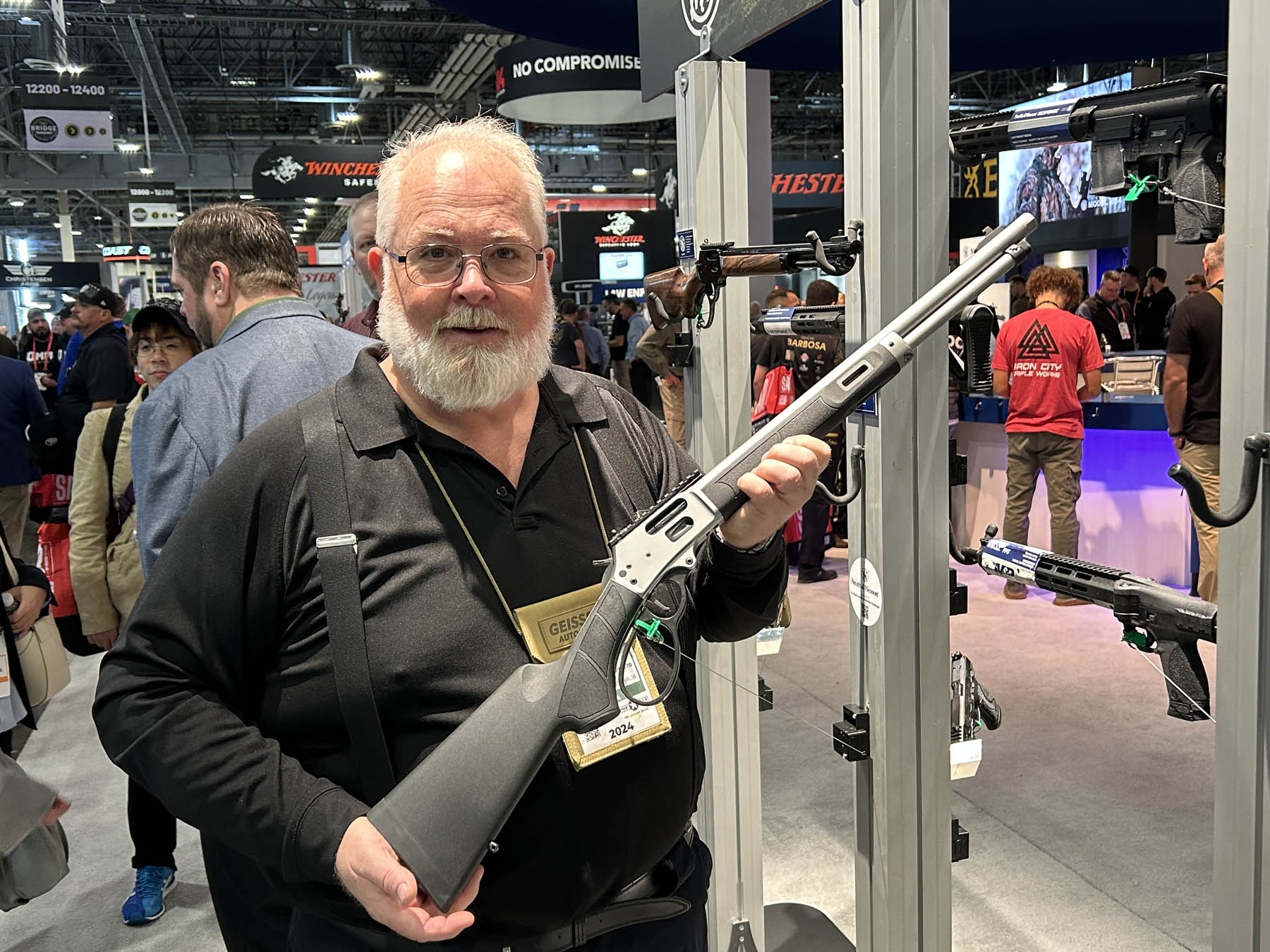
Having been there last year, I was surprised when I saw this new lever gun on the Smith & Wesson stand. Two variants were present in a very modern ‘tacticool’ stainless synthetic model and a stunning collector’s edition with high-grade walnut timber, a black blued finish and only 1854 individual units to be produced. Always happy to find new product that’s ‘Aussie compliant’ I gave it a mention in my SHOT Show report last April and, on my return, contacted Grycol International, Australian S&W distributor to make sure I laid my hands on one when they became available here.
Not surprisingly the review rifle wasn’t one of the collector’s editions (I’m not sure any of those made it to our shores), rather the more practical stainless synthetic version chambered in .44 Remington Magnum. Interestingly, this calibre historically also has a strong connection with S&W. Elmer Kieth, the famous US gun writer with a proclivity for loading the old .44 special round so hot only the strongest-framed revolvers could hold it, petitioned both S&W and Remington to develop a hot new .44 based on his work. Remington agreed to make the round and S&W would build a revolver to handle it, hence the birth of the .44 Magnum.
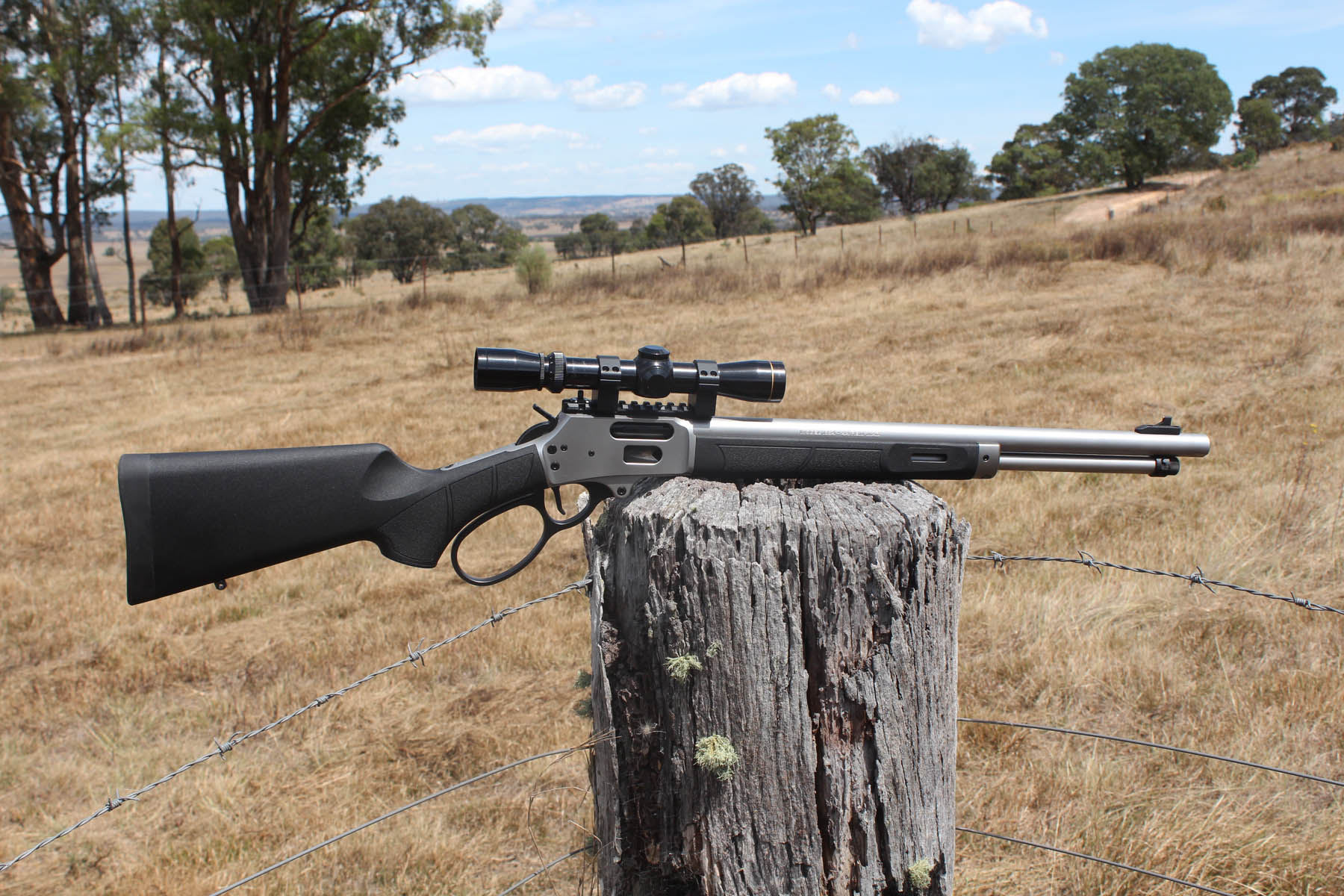
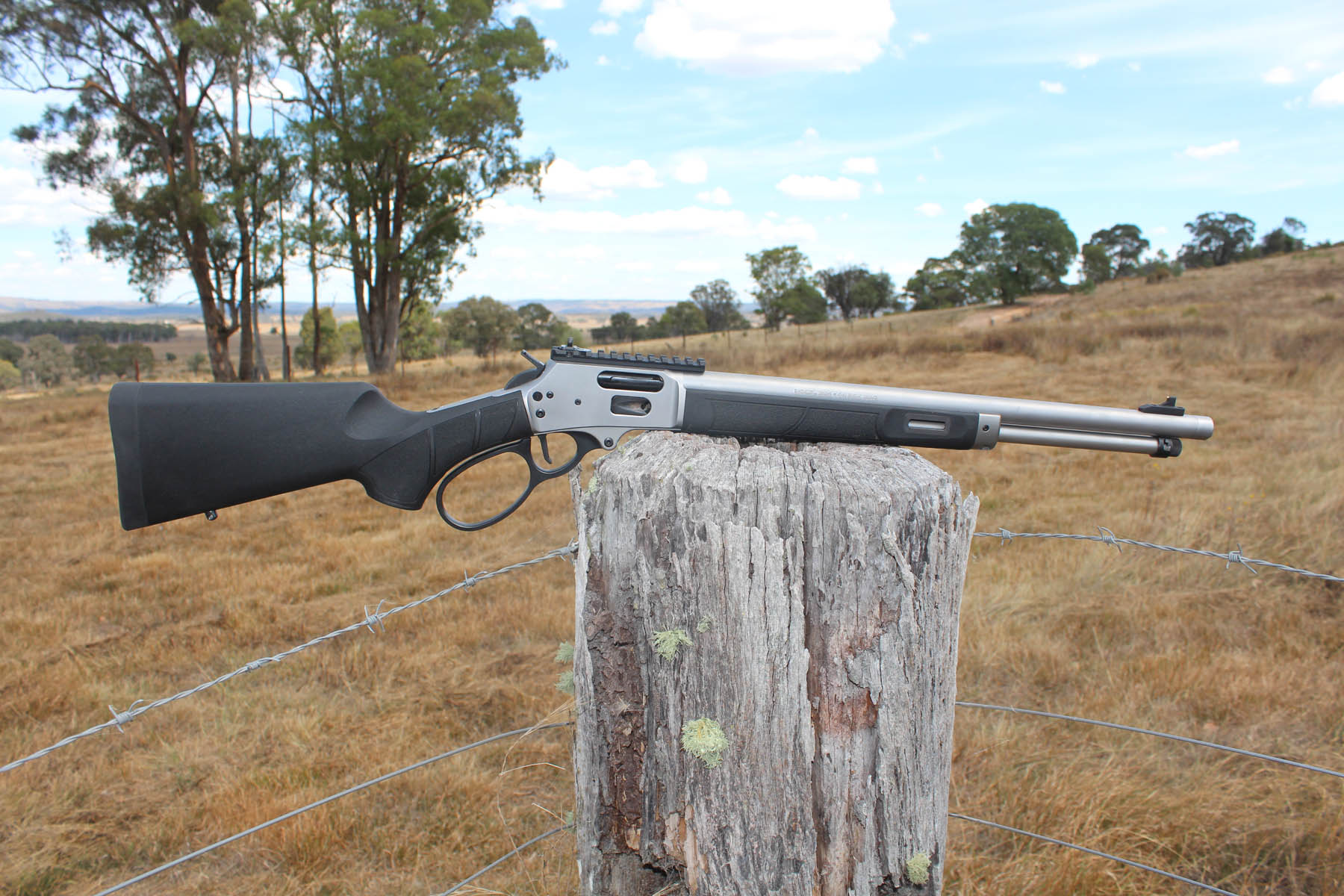
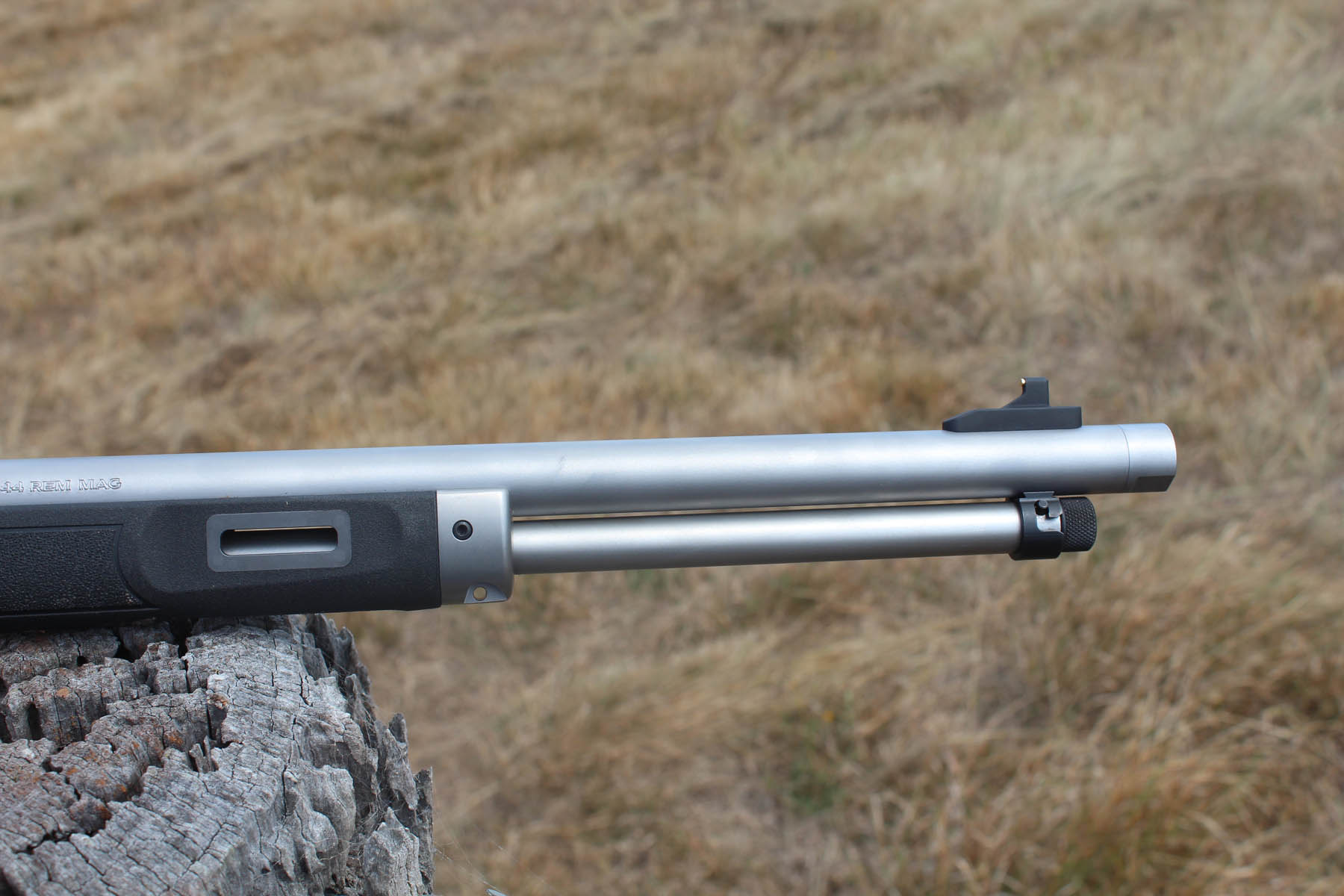
The rifle is side-ejecting rather than top, making it more reminiscent of the Marlin lever-action design than the Winchester. Side-eject of course is also preferable for scope-mounting as a solid top receiver allows for a fixed mounting interface. In this case the S&W 1854 comes as standard with a Picatinny rail which interestingly also incorporates a ghost ring-style rear peep sight which lines up with a front post and gold bead.
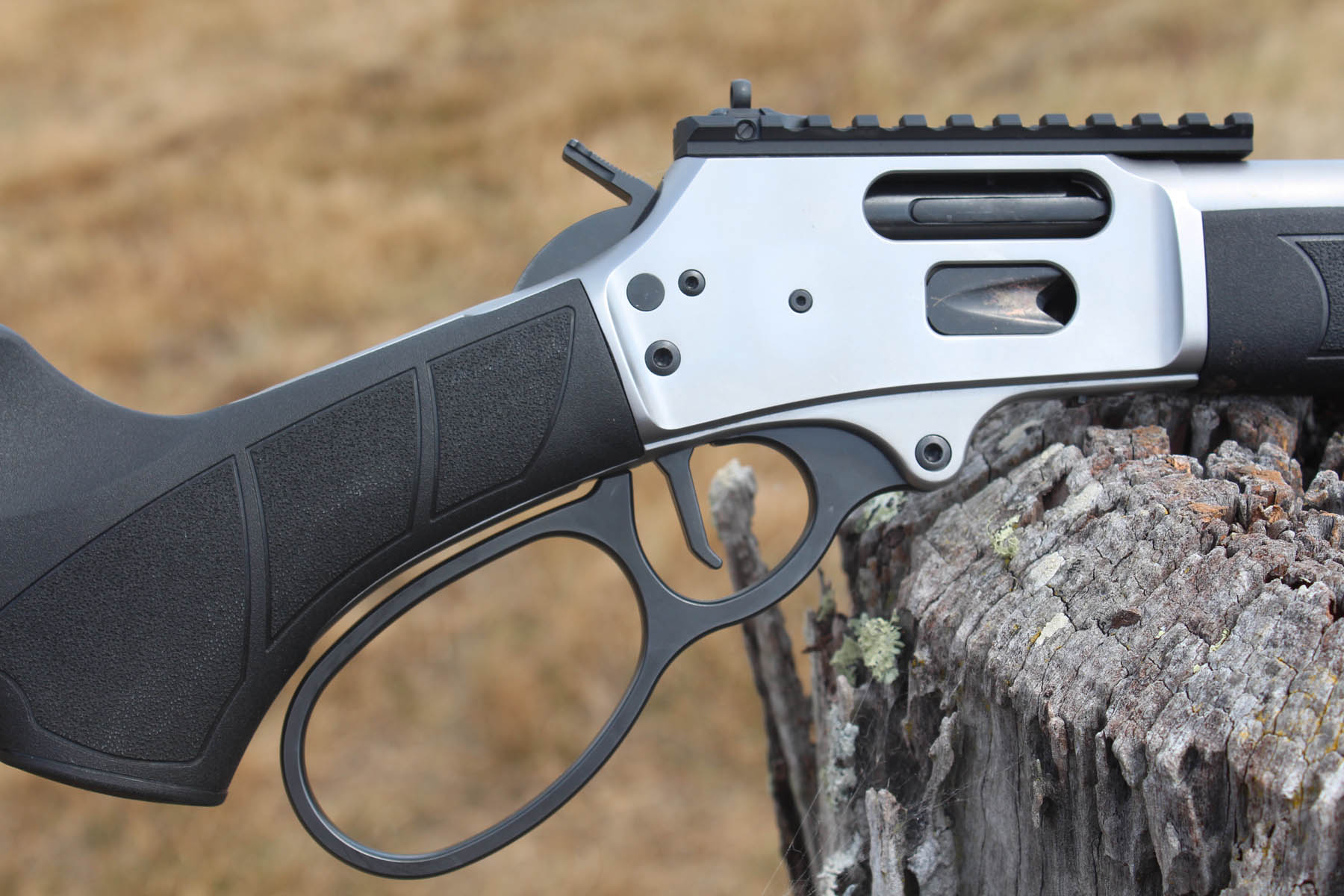
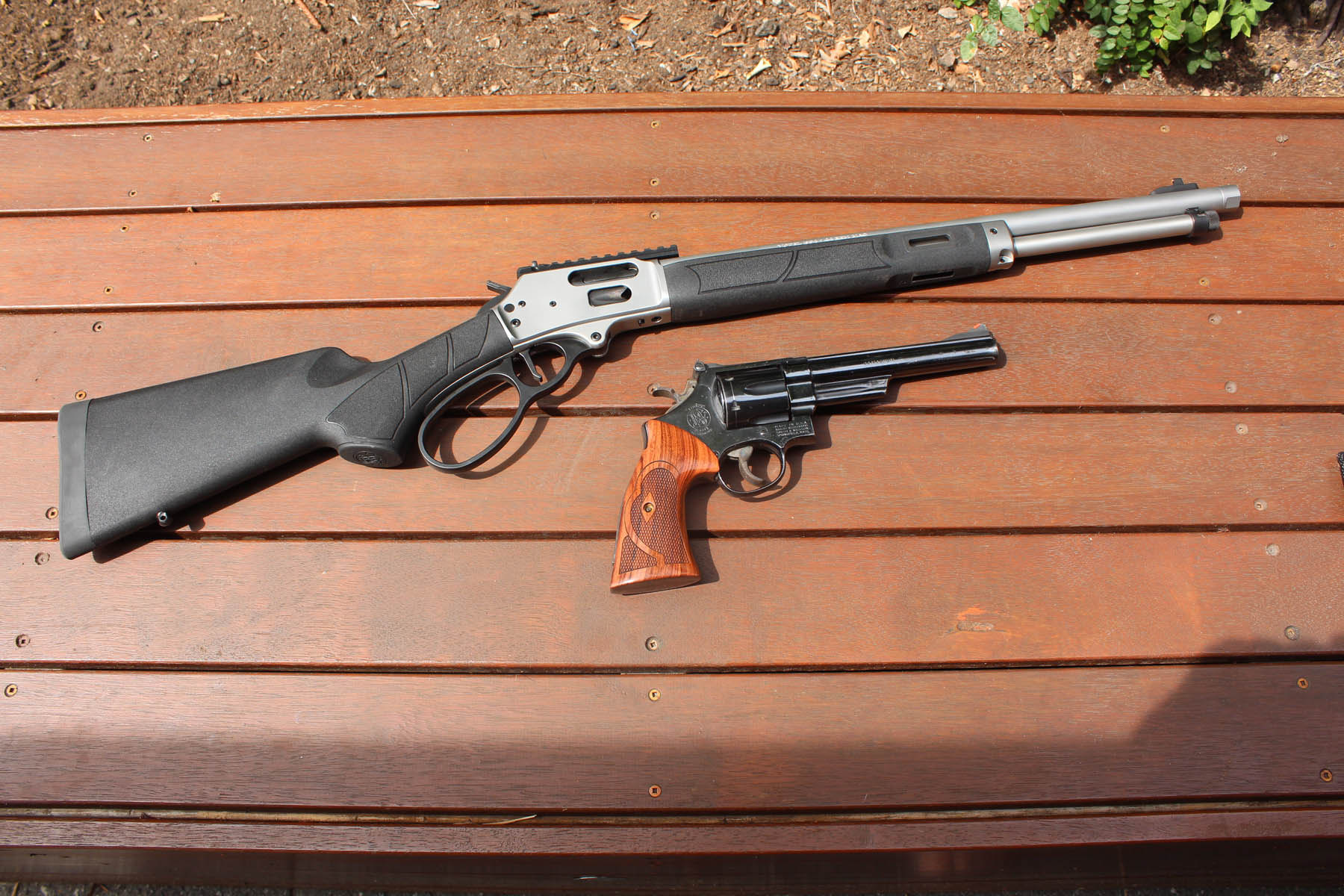
The matte stainless finish of both the barrel and forged 416 stainless steel receiver offsets nicely against the matte black lever, trigger, hammer spur, mag tube release and scope rail, all of which combined with the black polymer furniture provides a stylish two-tone effect. Both stock and fore-end feature rough stippling to the grip surfaces and a generous soft rubber kick-pad effectively tames any recoil. QD sling points are present on both the toe of the buttstock and bottom edge of the stainless steel fore-end end cap, while M-Lok slots at 3, 6 and 9 o’clock on the fore-end tip provide for fitment of grips, lights or lasers.
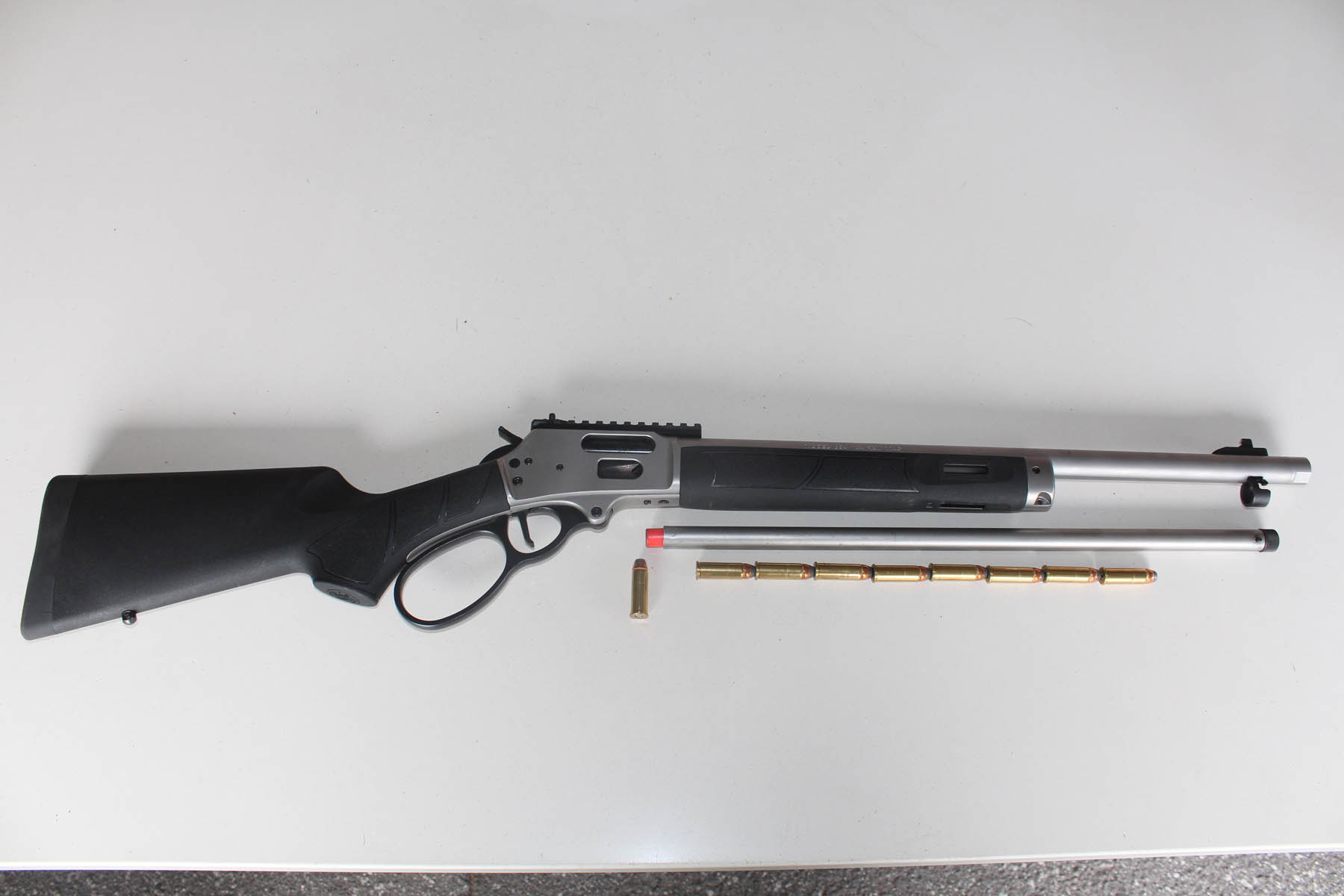
In .44 Magnum, eight of the stubby rounds can be loaded into the magazine tube via a tradition lever-gun side-loading gate for a total of 8+1 capacity. In a neat safety feature, a knurled knob at the end of the magazine tube can be turned to remove an inner tube to dump unused loaded rounds to clear the rifle when the shooting’s done. This removes the need to cycle rounds through the action in order to unload, something required with some other centrefire lever-gun designs.
Perhaps not quite big enough to be up to John Wayne or Chuck Conners standards, the 1854 does have a somewhat oversized lever loop. Plenty big enough for a gloved hand (but perhaps not for spinning) it offers a stylish modern look, as does a flat-faced trigger. A generous hammer spur is ribbed for thumb grip and a cross-bolt safety acts as a hammer block. The 410 stainless steel barrel is 19¼” (489mm), has eight-groove rifling with a 1:20 RH twist and a threaded muzzle in 11/16-24 for accessory fitment.
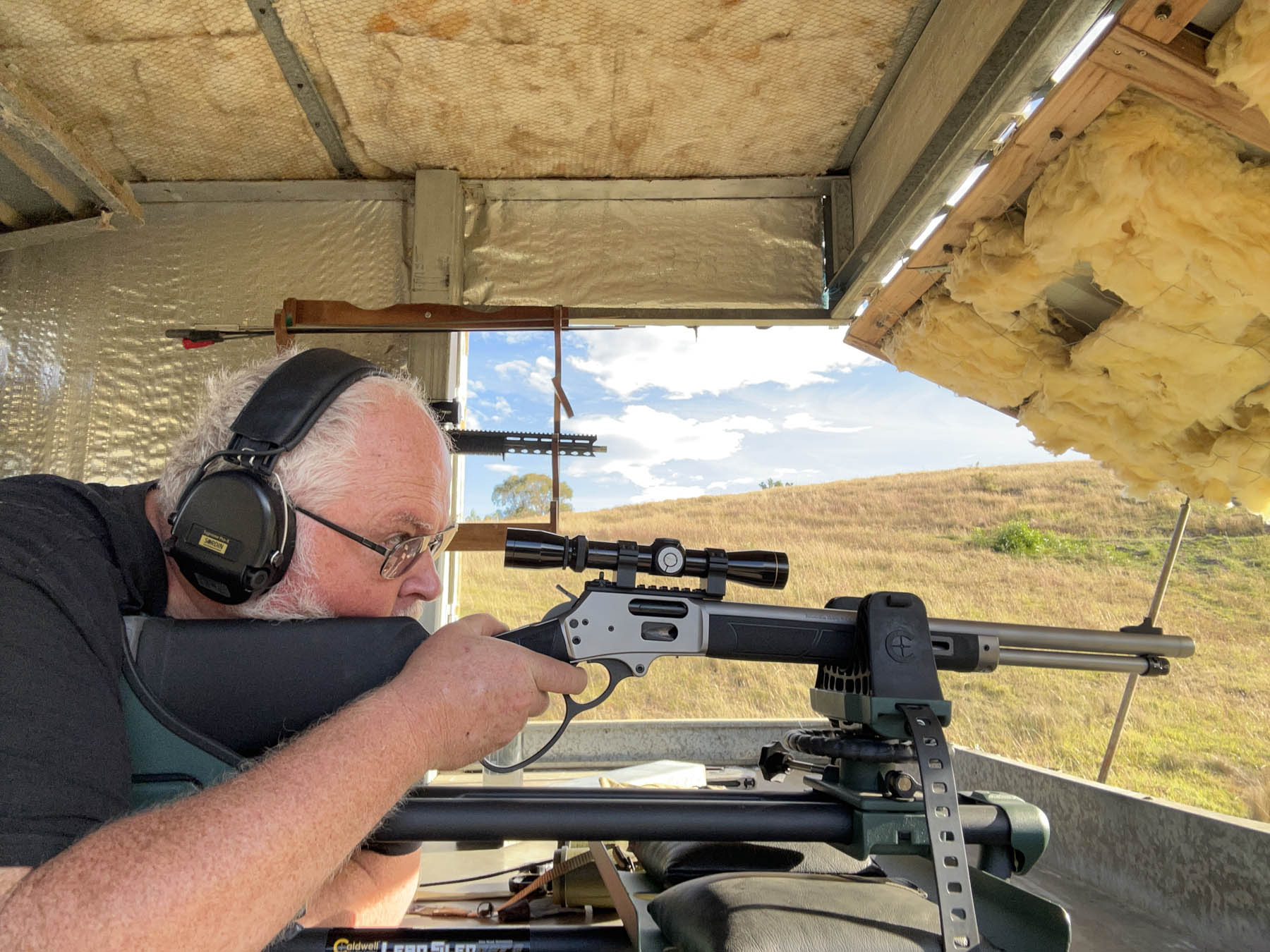
Fitted with effective iron sights but not wanting to rely on my ageing eyes for testing, I fixed a low-powered Leupold 2-7×33 riflescope I had on hand. It fitted nicely in medium height 1” Warne scope rings, sitting low but still just clearing the ghost ring peep (the peep sight is removable where other mounting options might fowl or prove problematic).
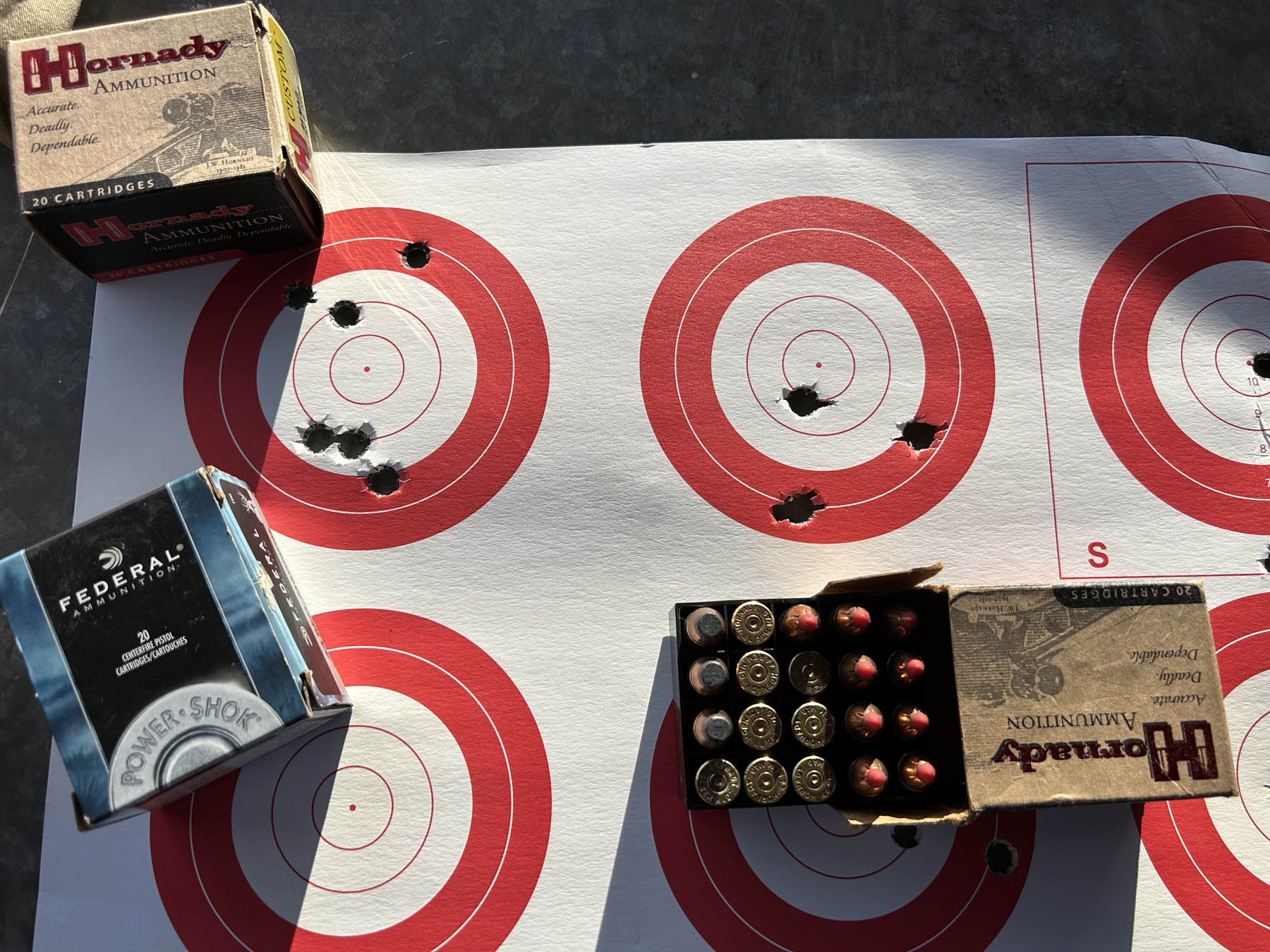
As a pistol round the .44 Magnum does get quite a lift in velocity of at least 300+ feet per second when fired from a carbine-length barrel, likewise providing an increase in muzzle energy making it an effective scrub-gun calibre. In my opinion this is where it’s most effective. Sure it’ll kill easily enough with good placement out past 150m, but unless you want to start calculating bullet drop, 100m and under is probably the sweet spot for this type of carbine, especially with iron sights. On the range at 50m, groups of 1-2” were the norm with most ammo types, which equates to excellent accuracy in this rifle-calibre combination.
Of course hunting isn’t everyone’s game and when it comes to general plinking, the fun factor of a lever-gun carbine like this rates extremely highly. The 1854 was easy to shoot, with even heavy factory loads which might test your wrist in a large-framed revolver plonked out quite effortlessly with manageable recoil. Cast lead reloads can also make the fun more cost effective. All rounds cycled smoothly at each stroke of the lever with a firm but crisp trigger pull releasing each shot. With the S&W 1854 you can have a ball just working steel plates or any inanimate targets at various ranges.
Worth noting when shooting the 1854 is the cross-bolt safety is a hammer block, not a trigger block. So if you pull the trigger with the safety engaged, the hammer will fall but be blocked from striking the firing pin and the rifle won’t fire. If this was done in error while hunting, a quick recovery is to just thumb the hammer back, safety off and squeeze the trigger again. The rifle does have an effective half-cock position too, which both locks the trigger and blocks the hammer, so perhaps the cross-bolt safety is just there to keep the lawyers happy.
In summary, the Smith & Wesson 1854 is a fun and effective modern take on a traditional firearm design with many potential applications for use, hard-hitting and quick handling in the scrub but just as entertaining on the range. At time of writing, new Model 1854s are also at hand including new calibre choices in .357 Magnum and .45 Colt, as well as timber versions with Armornite metal finish and a black-over-black Stealth Hunter model. More at www.grycol.com.au.
Suppress it (where you can)
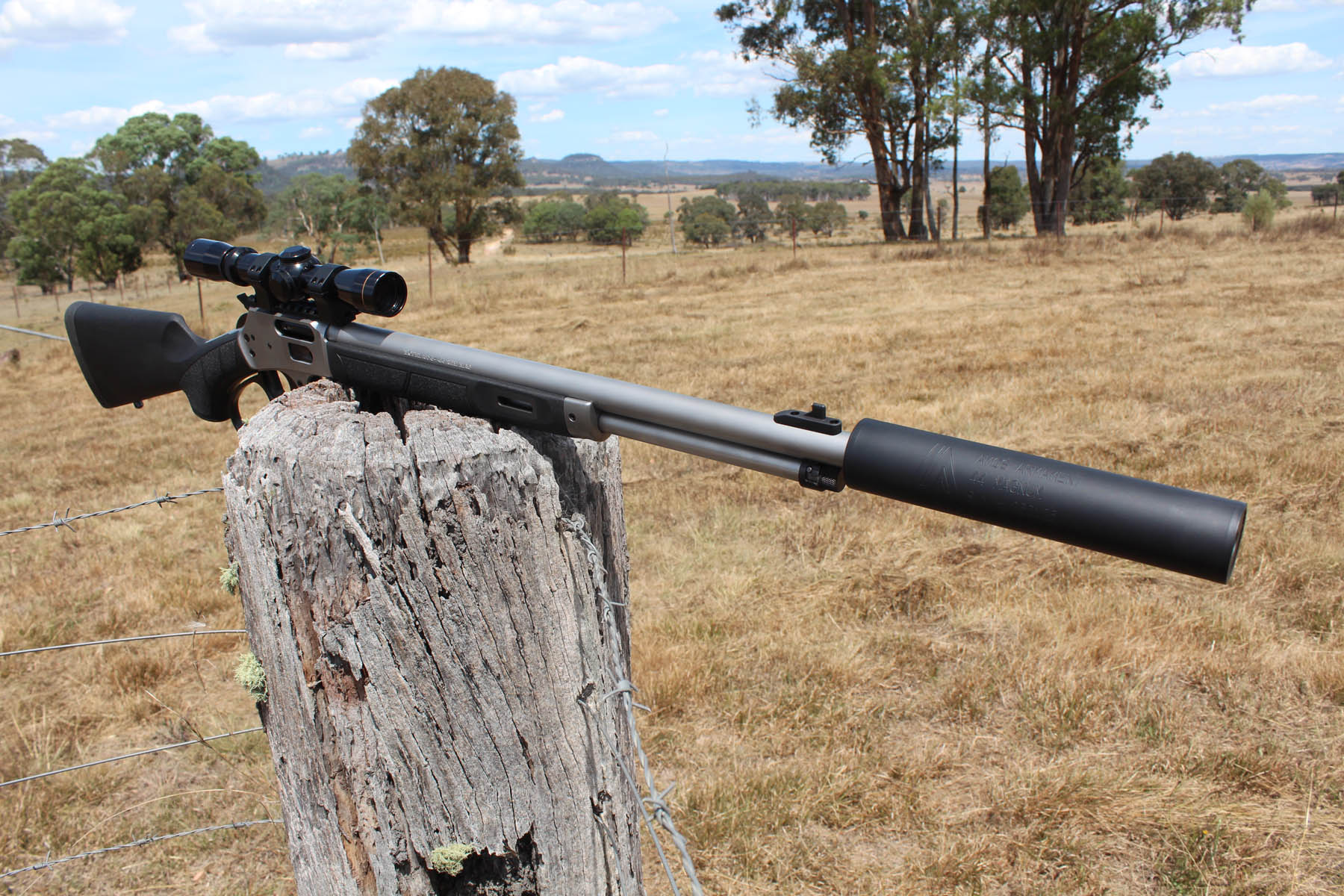
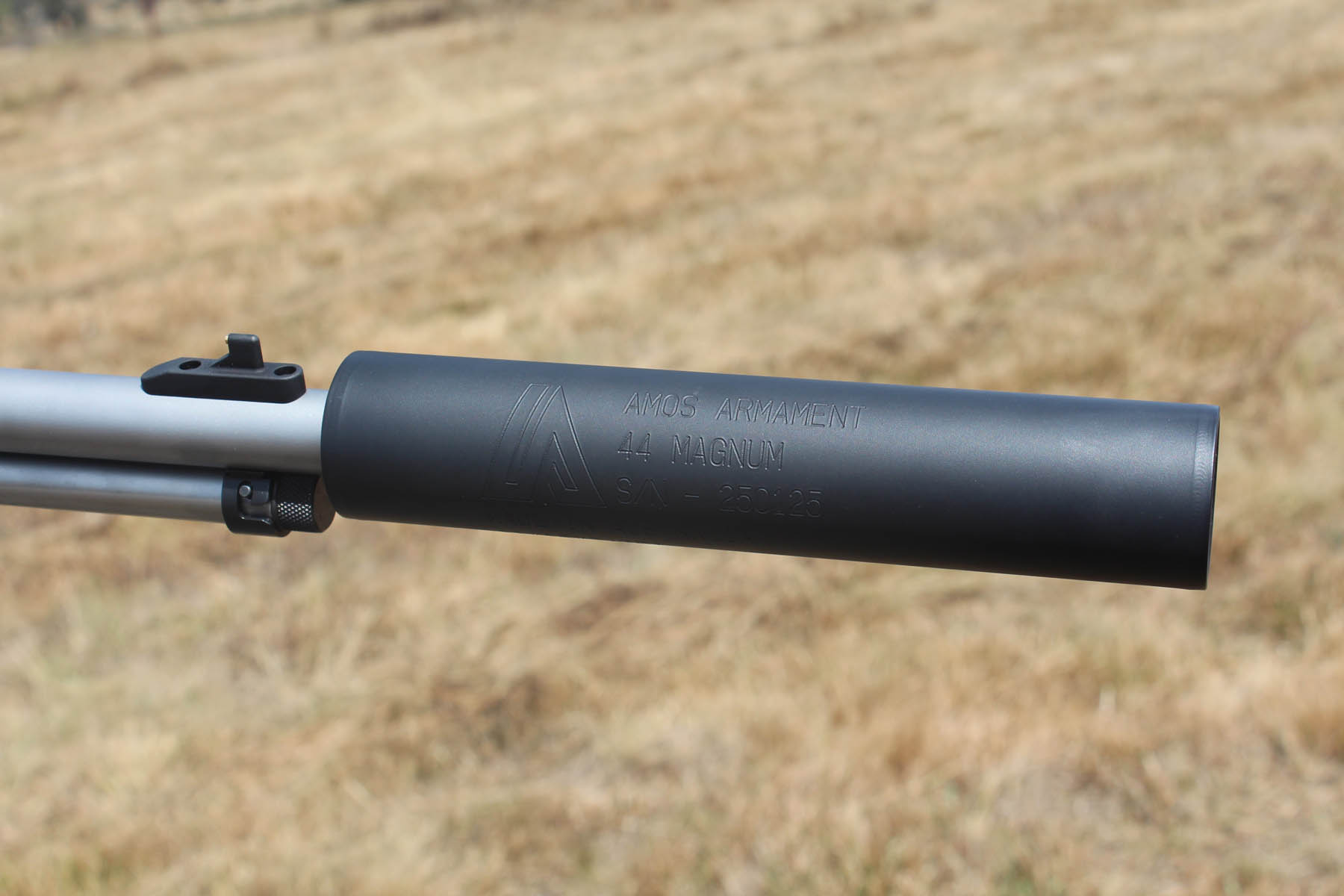
As mentioned the 1854 has a threaded barrel so, exploring the full flexibility of the rifle and being appropriately licensed, I had the chance to run a suppressor. Provided by Amos Armament, a Newcastle NSW-based company, it added a whole new dynamic to the package. Commonly incorrectly referred to as ‘silencers’ such devices far from silence anything, especially when used with supersonic ammunition. That’s all Hollywood.
What they do most effectively is reduce the overall level of noise, muzzle blast and felt recoil. Results can vary depending on climatic conditions and ammo used, with subsonic producing the best results. Even a reduction of 10-15 per cent can bring noise recognised as dangerous levels (above 120db) down to something more manageable for the shooter and anyone else within earshot.
Potentially a Smith & Wesson 1854 in .44 Magnum suppressed could present a safe and effective tool for managing pests in semi-rural environments, subject to urban encroachment to farming land. Ballistically .44 Magnum rounds are hard-hitting but limited in range and, when suppressed, unnecessary noise and possible distress to nearby communities can be greatly reduced. Perhaps a good option for appropriately licensed primary producers and contactors.
As both a gunsmith and suppressor manufacturer, owner-proprietor Amos Buresti offers services including firearm restoration and tuning, certified Cerakote application as well as contract shooting services. Specifications provided as follows: 41mm OD 316 stainless steel tube, 200mm long 600g including mount, Monocore baffle design, rated for factory 44M loads, direct thread 11/16×24, Cerakote armor black. Suppressors are manufactured to individual requirement and start from $1500. More at www.warboy.com.au