



Magnificent century!
Daniel O’Dea revels in Sako’s new 100 flagship rifle
My love affair with Sako rifles began with the 75 series. When it first appeared it was quite different with its three-lugged bolt head providing a shorter throw, super-slick action, great trigger, detachable magazine and superb accuracy. It was easy choice when I decided to stretch the budget on a dedicated quality deer rifle. Calibre? 30/06 of course. Innovative at the time it also offered a choice of stainless and synthetic finishes, perhaps not a completely new concept but in this case a quality stock with traditional lines, palm swell in the pistol grip and rubberized grip panels. This was all at a time when stainless synthetic otherwise meant suffering a hard plastic boat paddle like the old Rugers (not bad rifles actually).
I took my first real trophy, a stunning 17-point red stag with that rifle in New Zealand then, a few years later when I went back there after tahr and chamois, thinking I might need to stretch the legs range-wise I took my newly-acquired Sako 75, a blued Hunter this time chambered in .300 Weatherby Magnum. A rare chambering for a Sako which I understand was a cancelled special order I discovered in Beretta Australia’s inventory at the time.
At peak Sako I owned six 75s in .223, .243, .308, .30/06, .300WBM and .338 Win Mag in all variants of stock, barrel profile and finish. Over the years this has thinned down to three 75s, both my NZ guns and a Stainless Hunter in .223 Remington. If push comes to shove these three rifles would be the last I’d ever part with.
I passed on the Sako 85, wasn’t a fan of the new anti-drop magazine catch feature, wasn’t persuaded by the attempt at controlled round feed and, of course, had a safe full of 75s I was happy with. The Sako 90 introduced more innovation and improvements on the design, though here we’re taking a look at what perhaps represents a great leap for the company in their new premium flagship, the long-awaited Sako 100 series, a rifle featuring switch-barrel capacity along with many more new design features.
First mooted a couple of years ago, Sako held off the release of the new 100 series for reasons unknown, so when offered the rifle for review by Beretta Australia and as a big Sako fan, of course I was intrigued at the prospect of laying my hands on one.
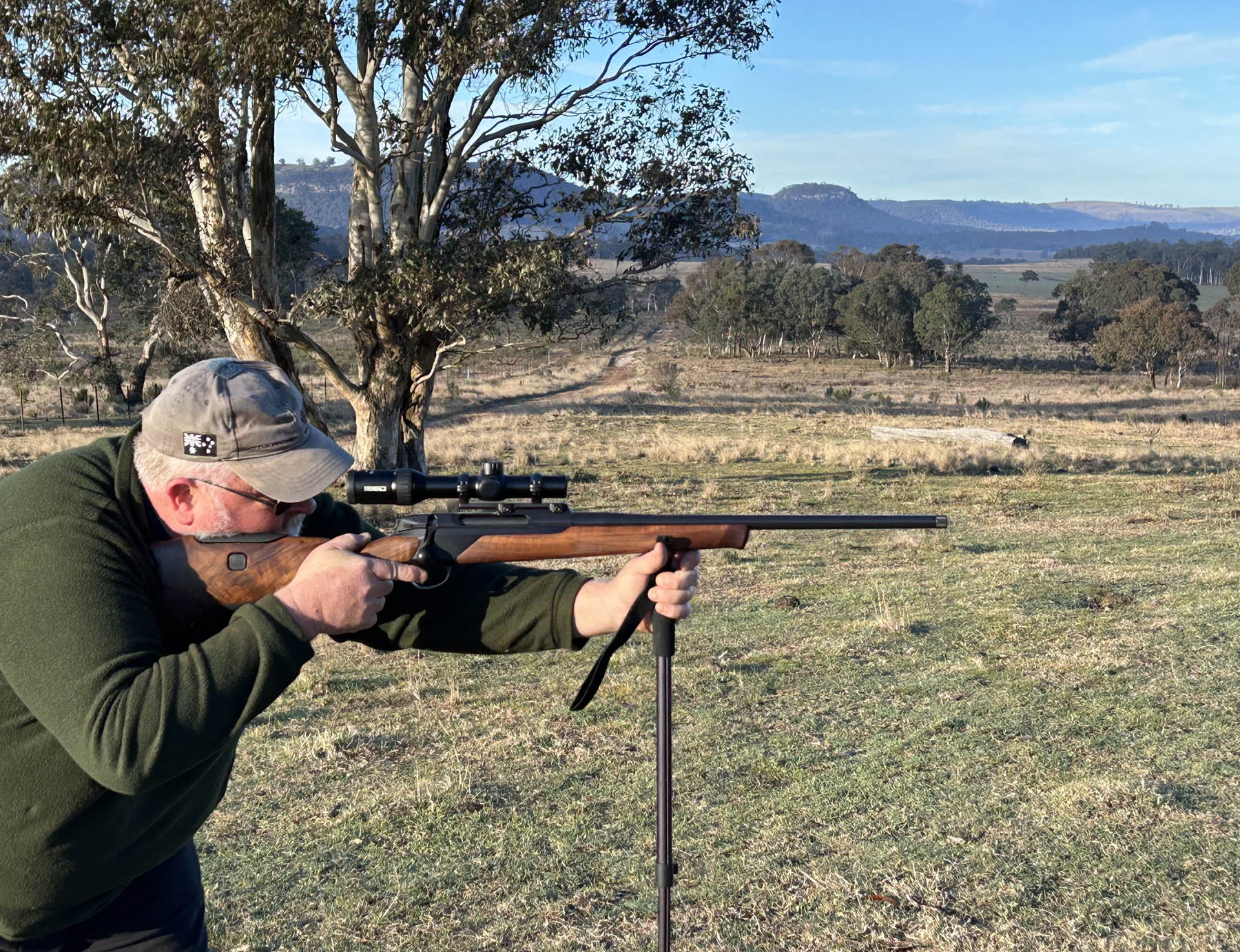
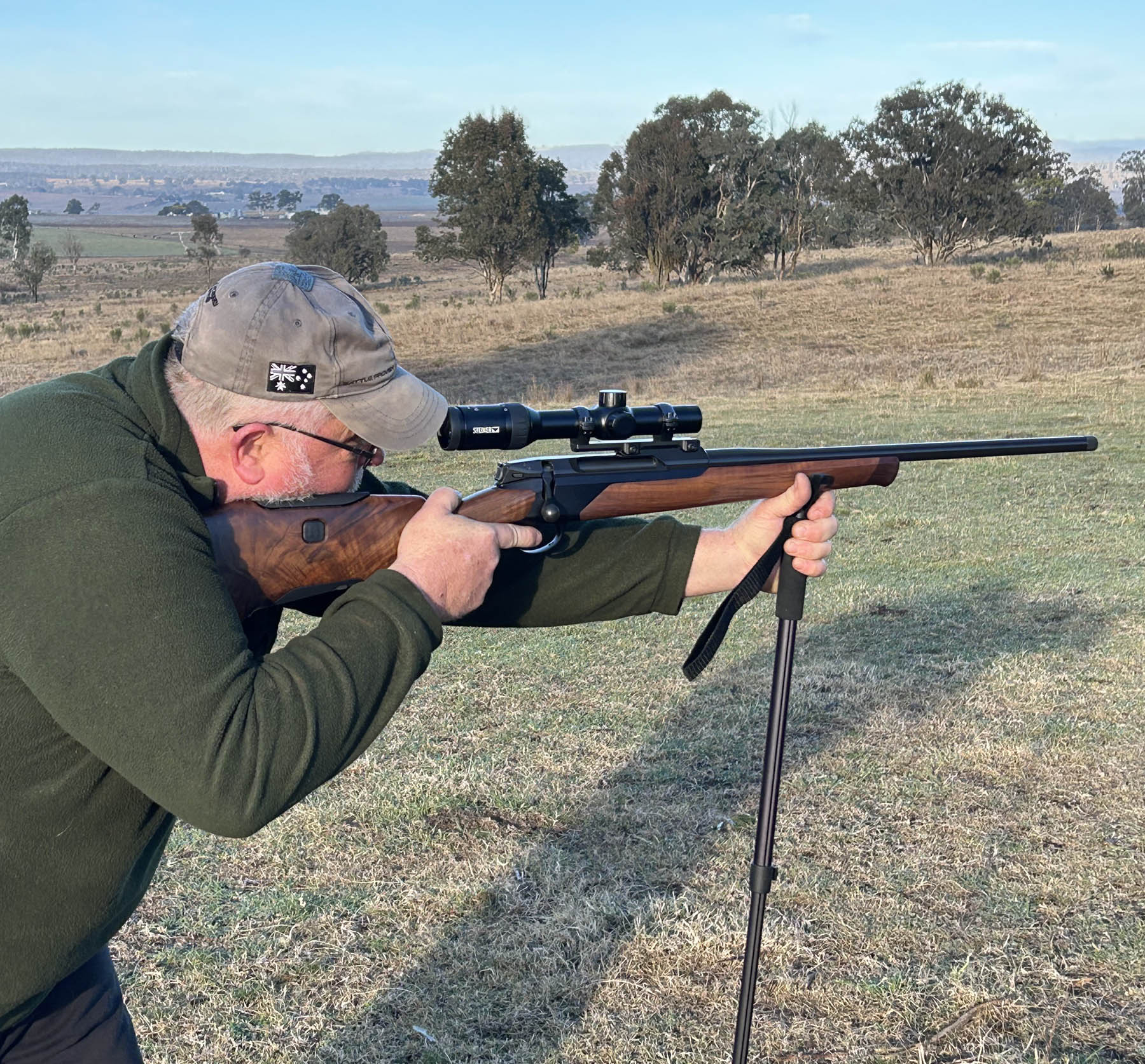
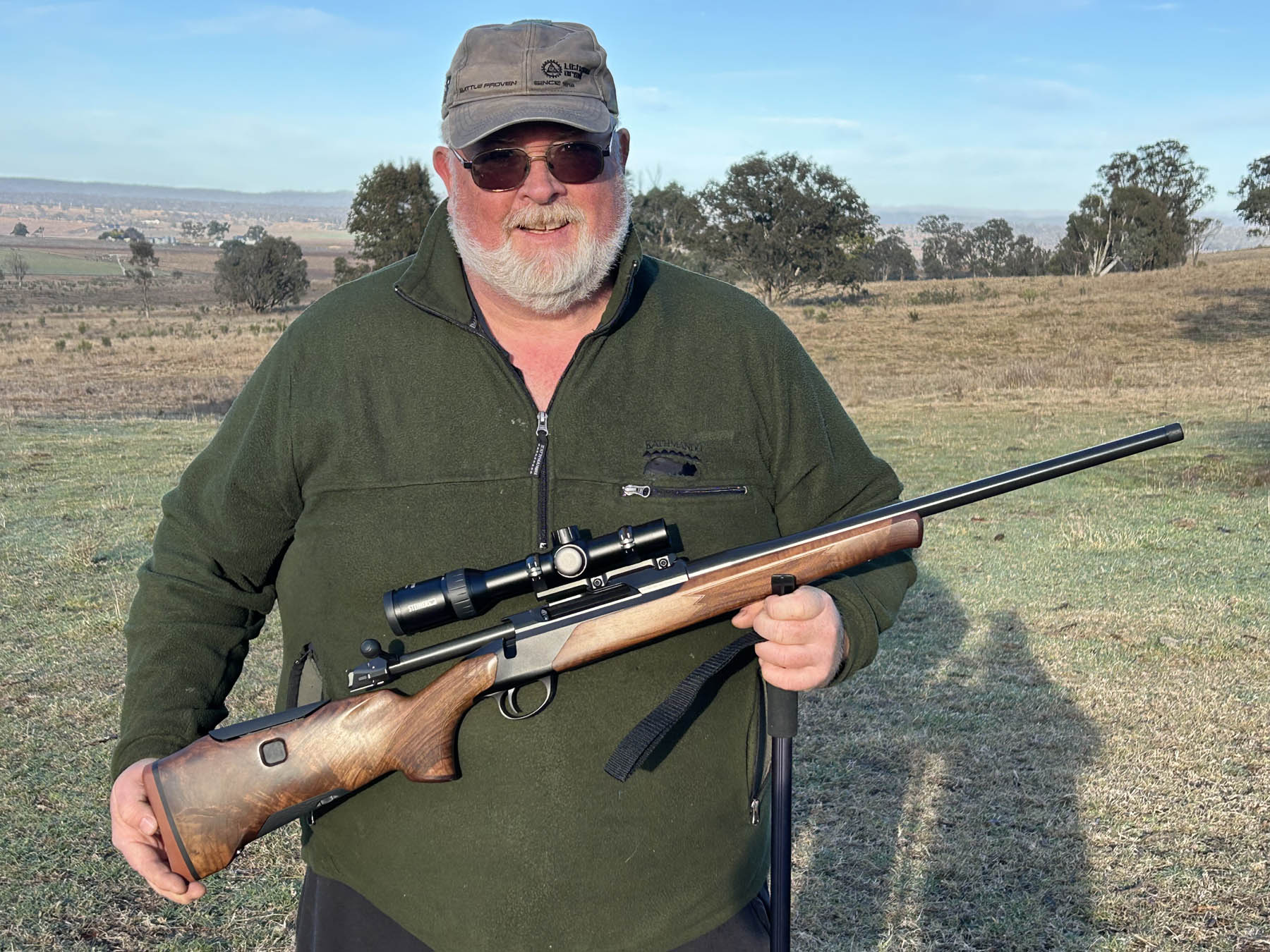
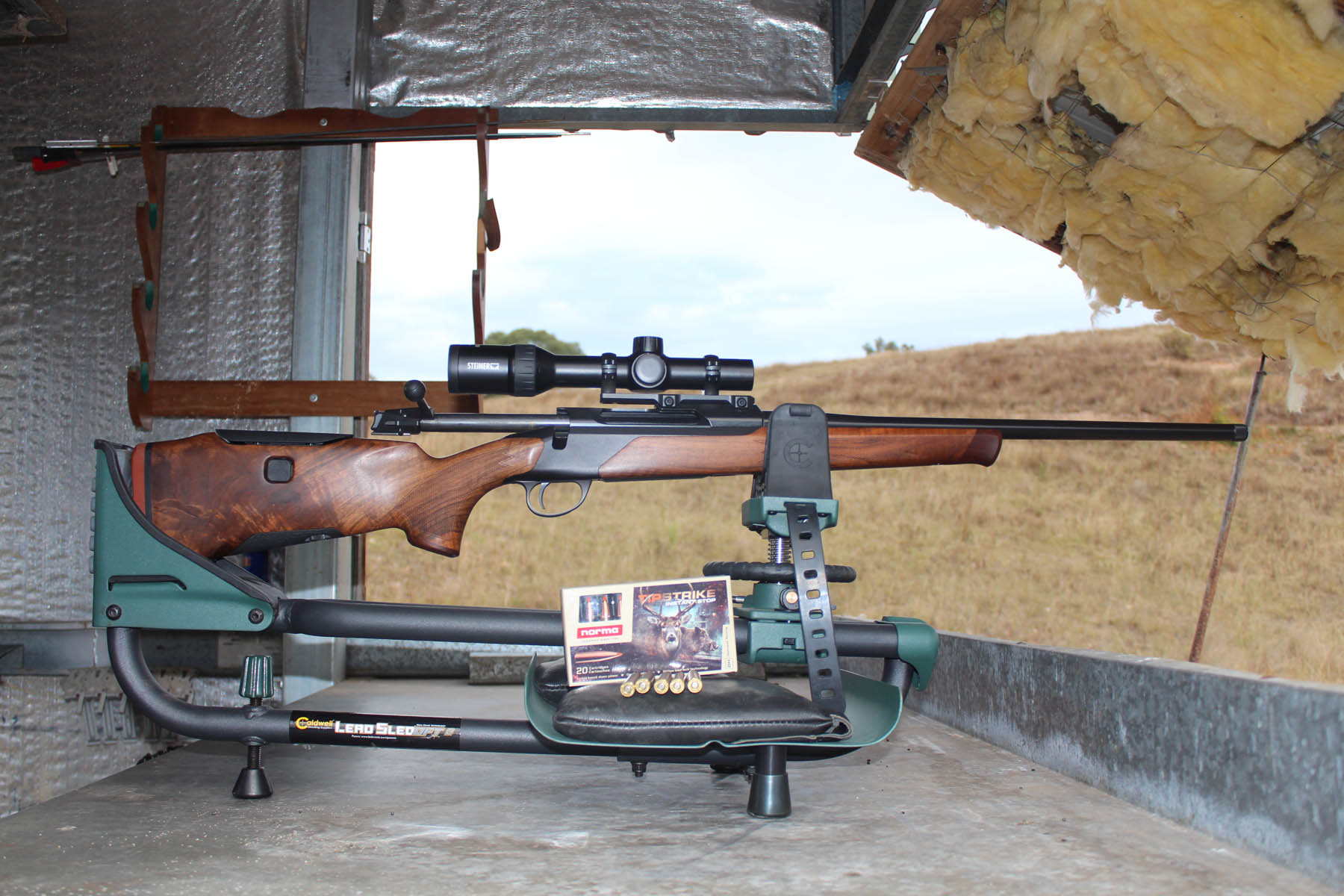
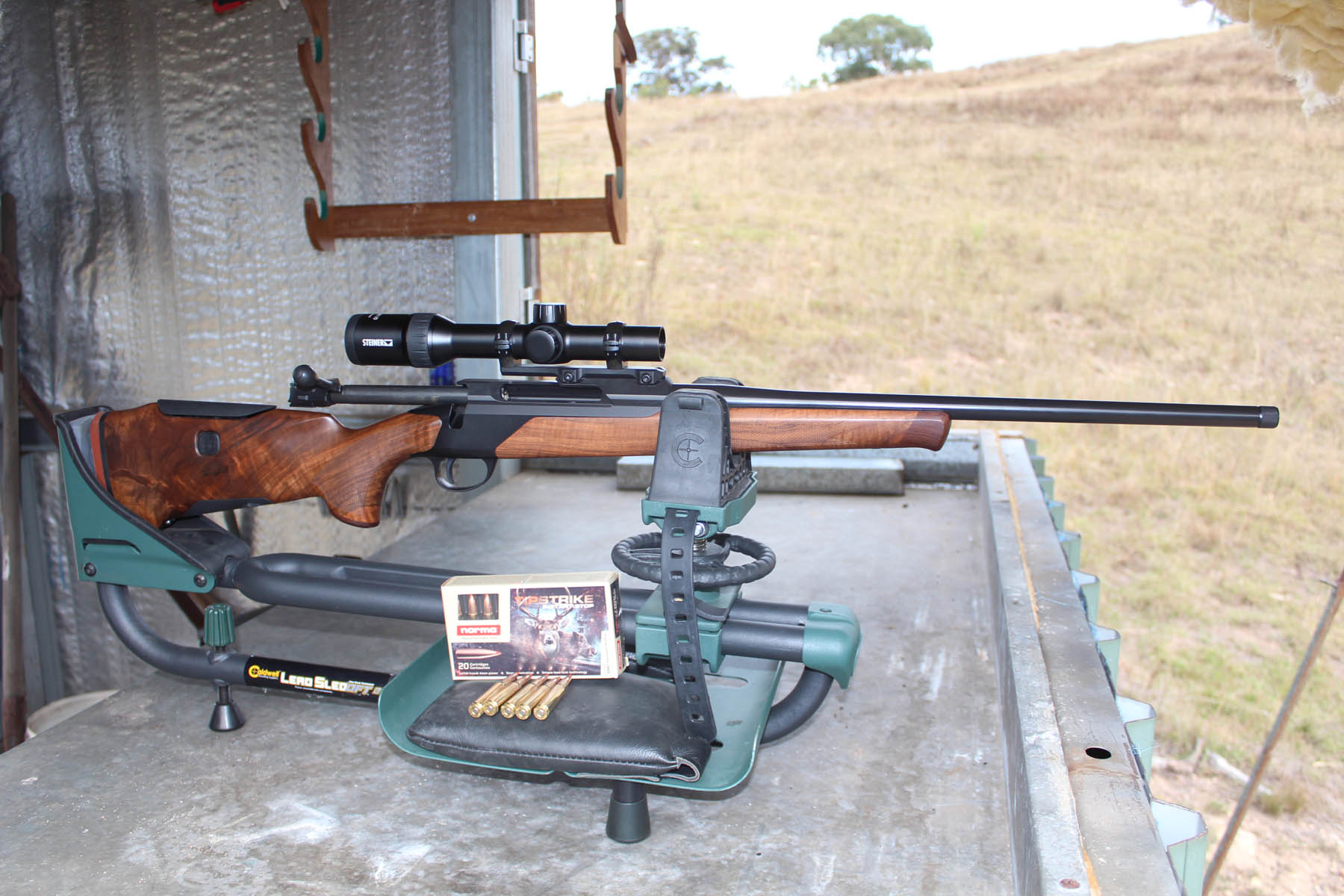
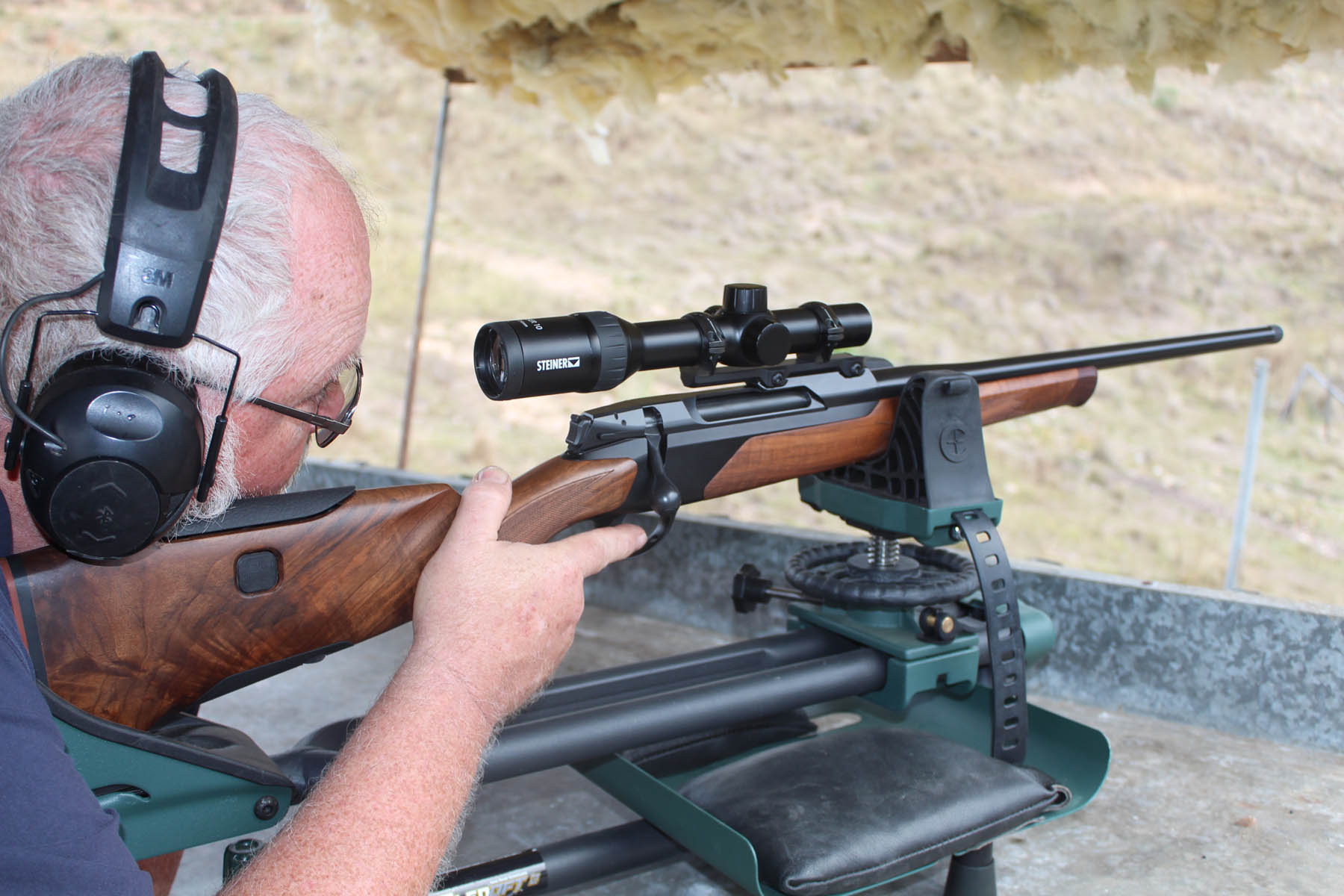
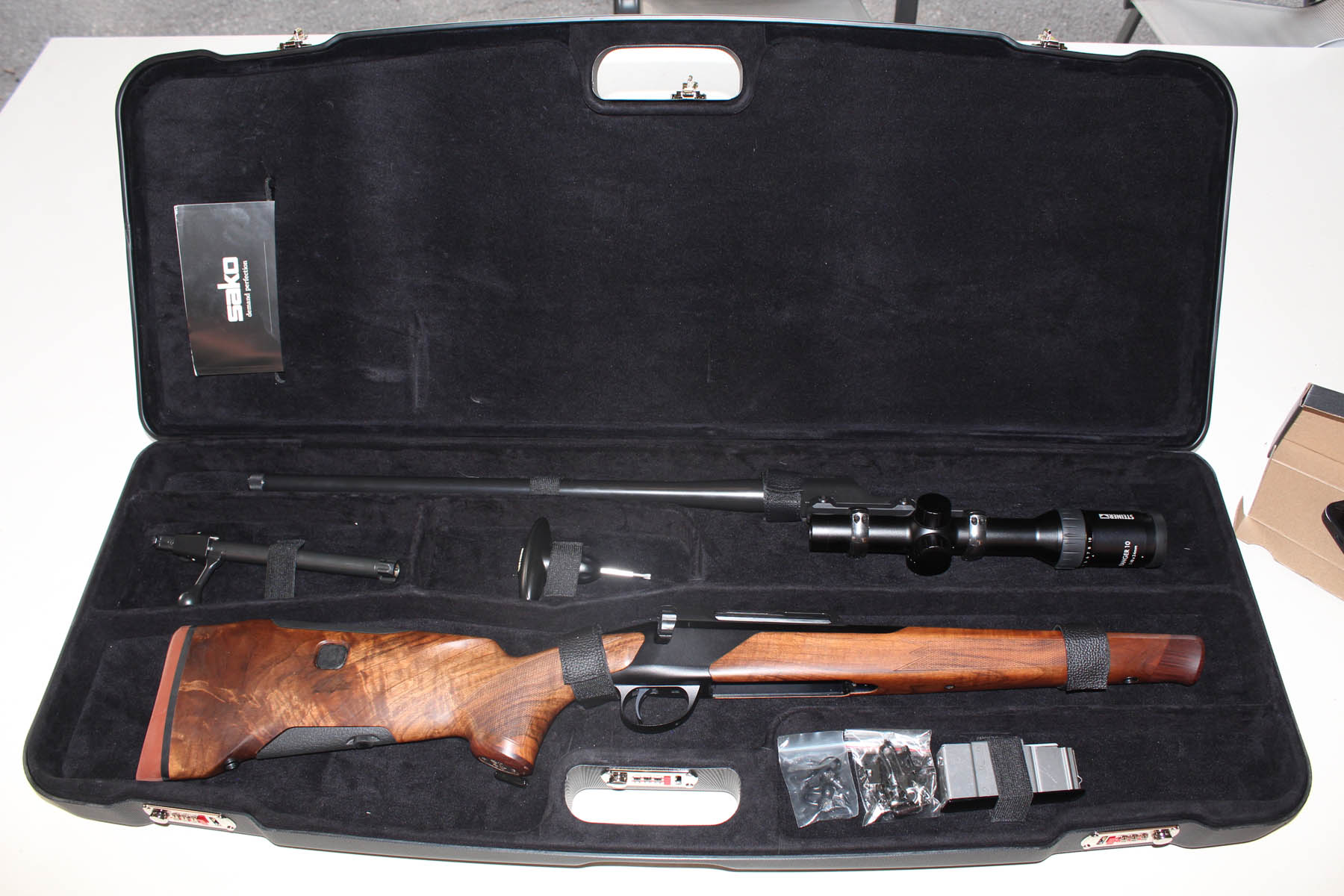
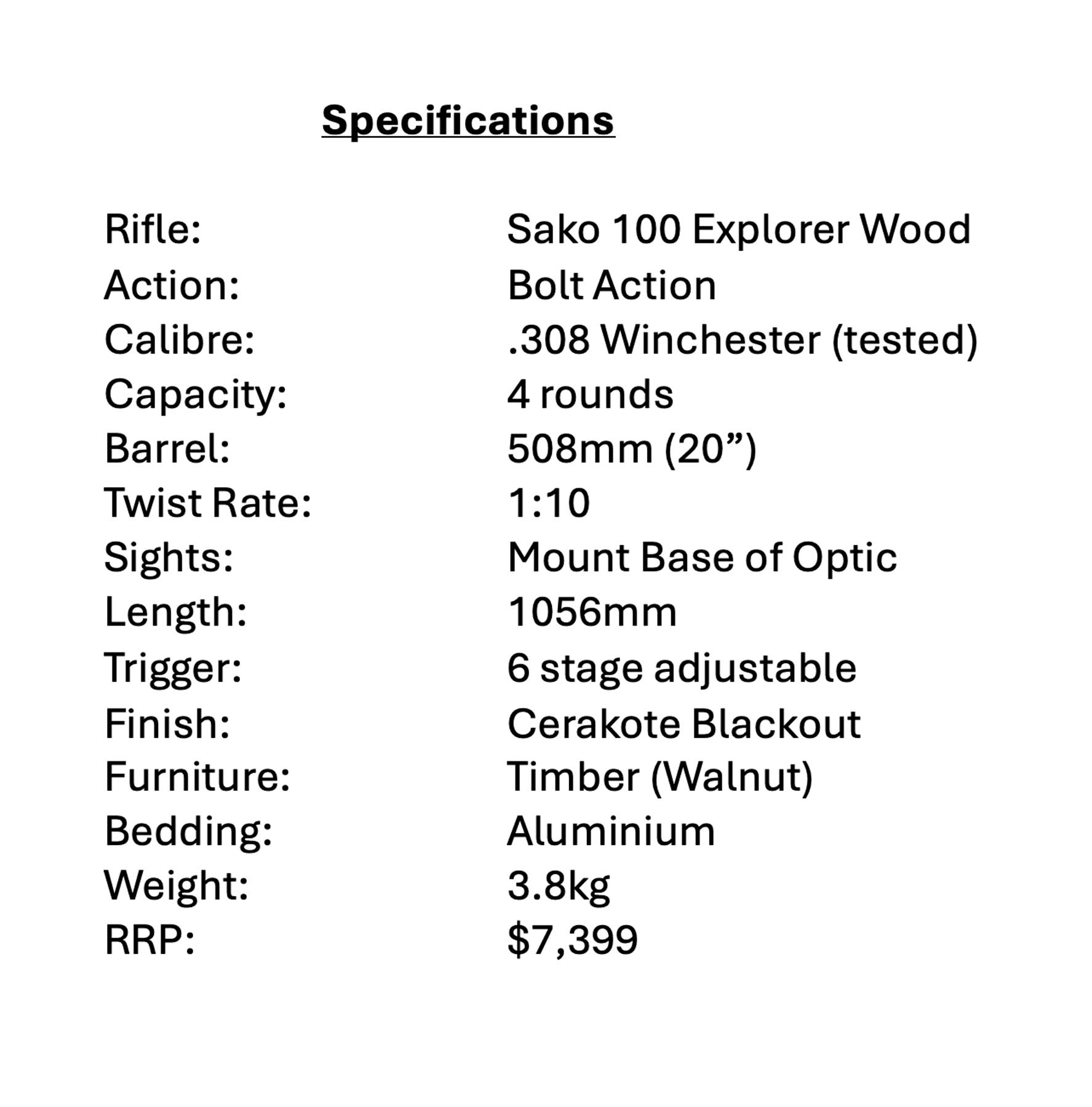
The rifle comes housed in an Italian-made Negrini hard case, custom-made for the Sako 100. The designation for the rifle received was a Sako 100 Explorer Wood (the rifle also comes in a version stocked in carbon). The test rifle was chambered in .308 Winchester and features a 20” cold hammer forged stainless steel barrel with 1:10 twist and finished in Cerakote Blackout, all metal parts sharing this same high-lustre Cerakote finish. The muzzle is threaded M15x1 and capped neatly with a knurled thread protector.
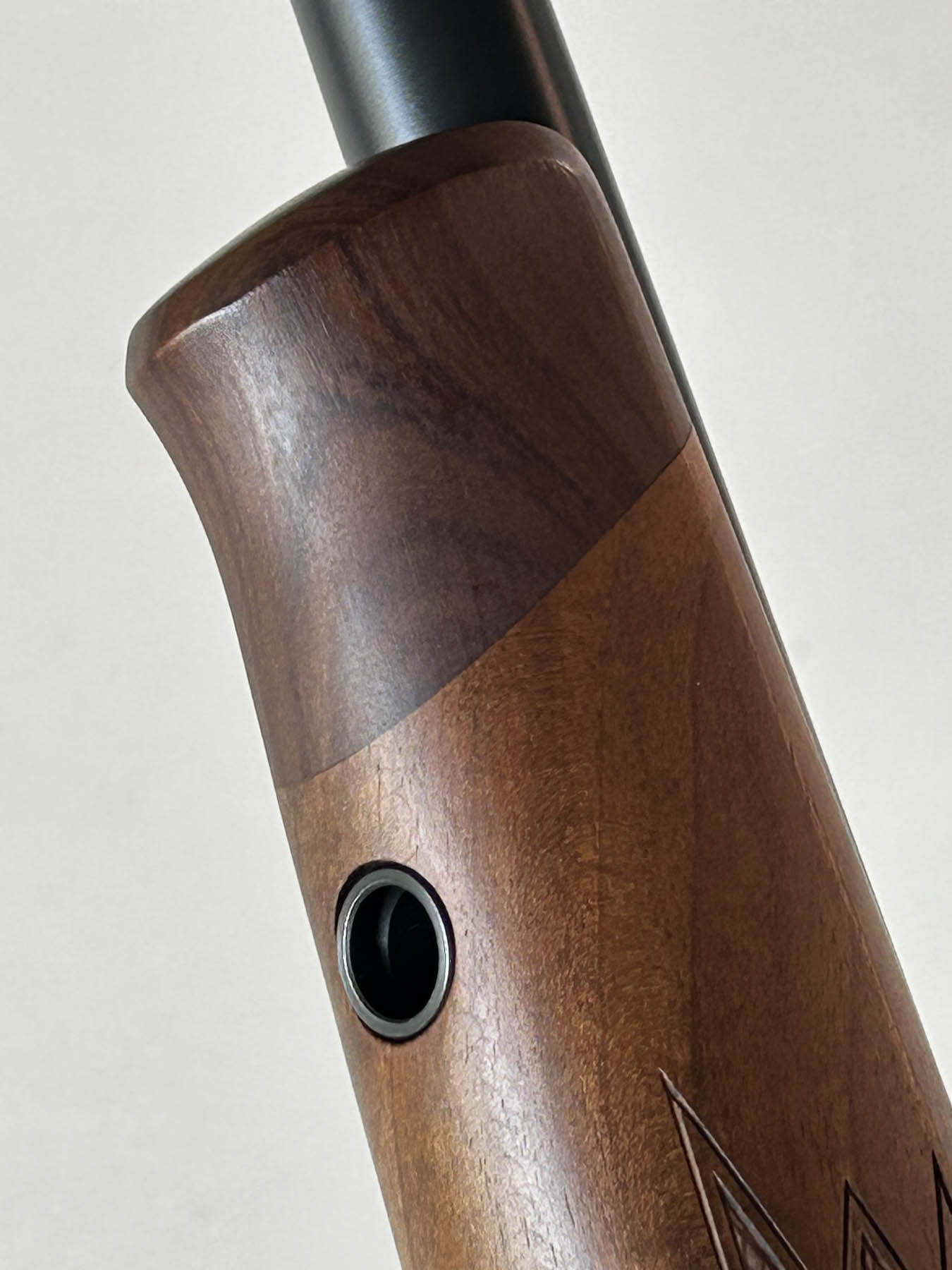
The timber is something else, a beautifully well-figured, high-grade walnut with both grip cap and Schnabel-styled fore-end tip finished in contrasting rosewood. Both grip and fore-end feature cut checkering with a little palm swell to the right side of the grip panel, which I love. The Monte Carlo-type comb incorporates an adjustable cheek piece which presents as black, leather-grained rubber and for a while had me trying to work out whether it was real leather or not, though I’ll go with the former. The cheek piece is spring loaded and controlled from a polymer button recessed into the right of the stock and appears to have 12 or so individual positions of adjustment.
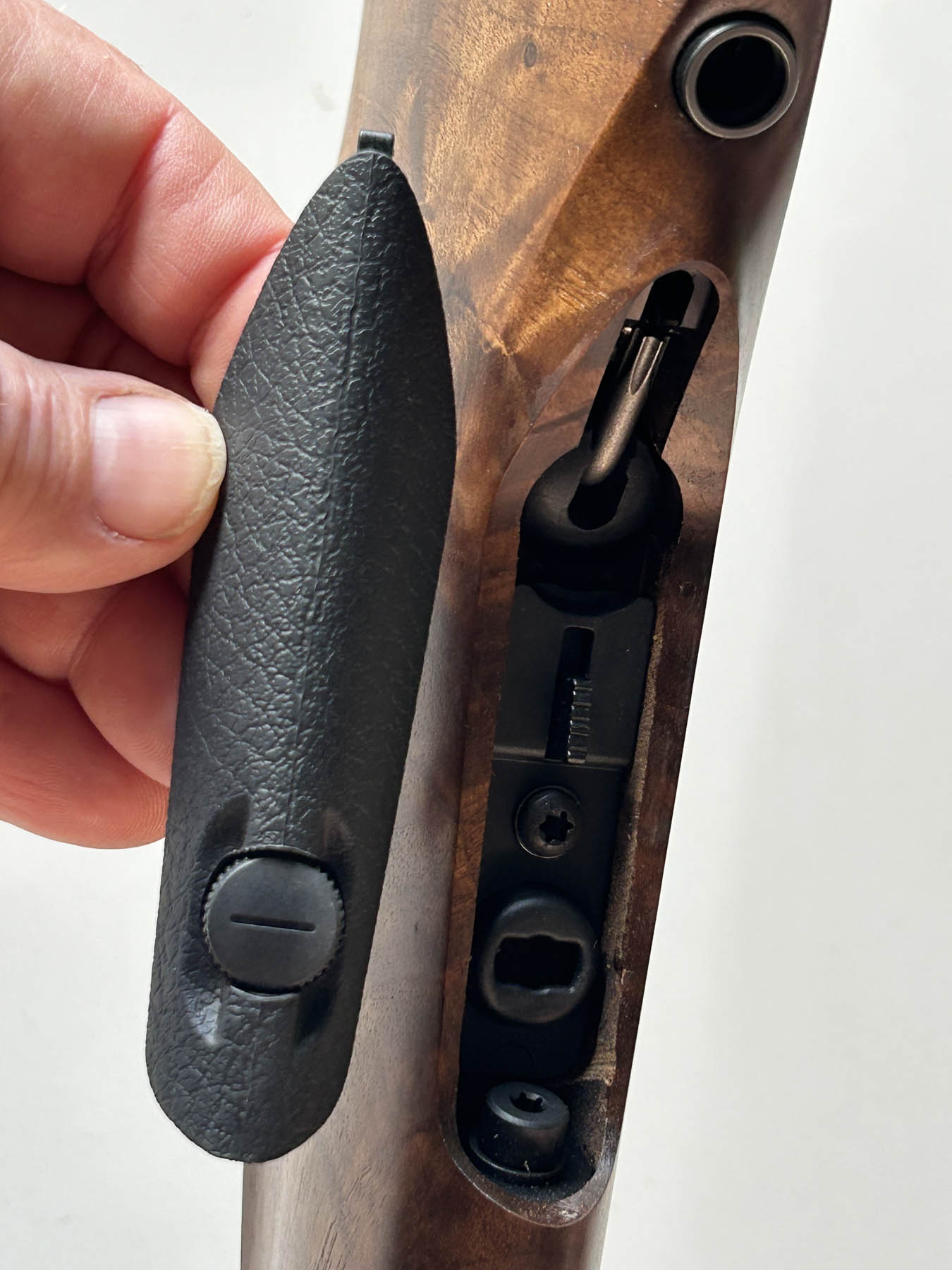
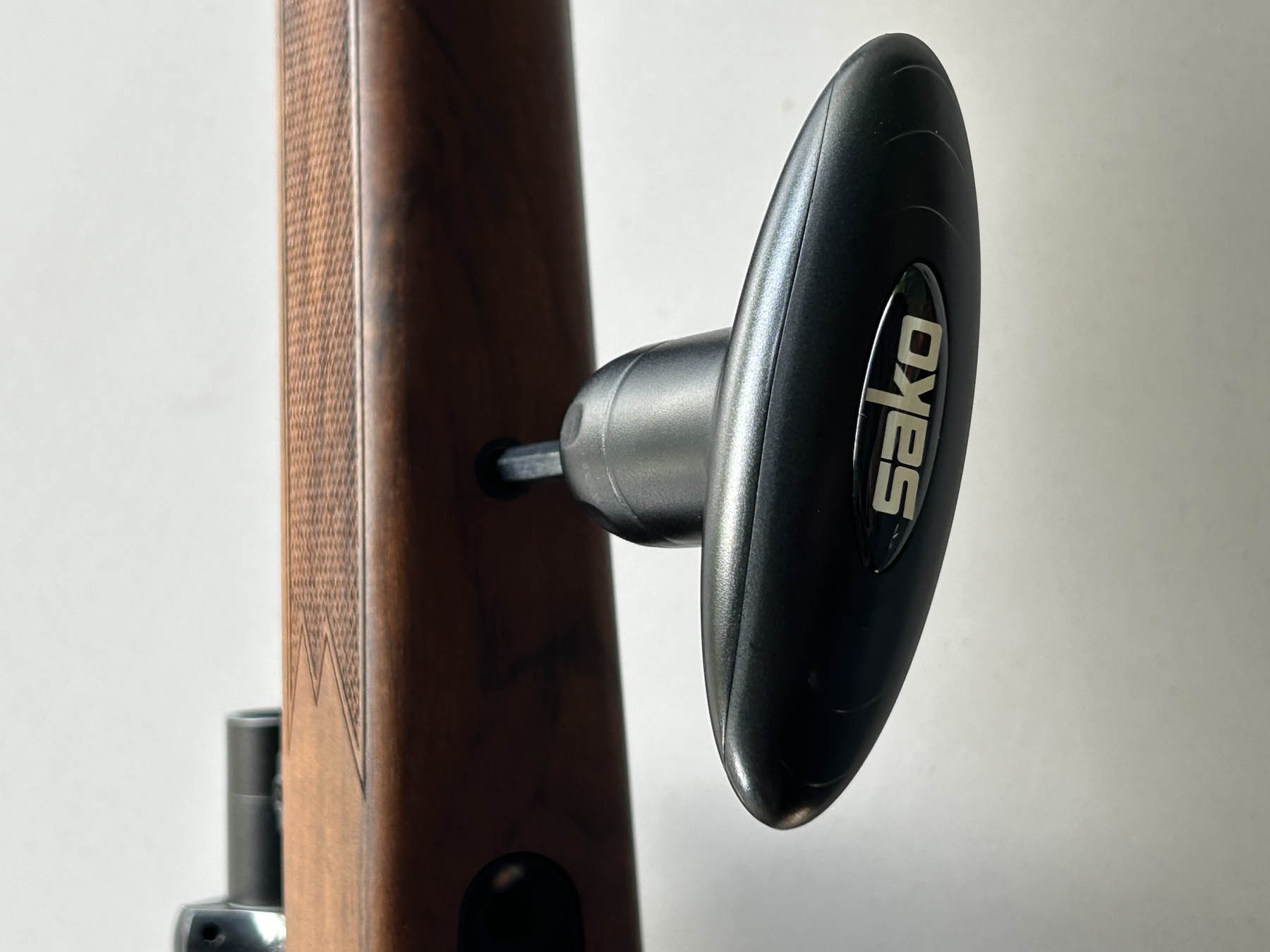
A firm rubber recoil pad, chestnut coloured, is separated from the timber by a black spacer, the thickness of which can control length of pull as I understand. On the underside of the butt stock lies another panel finished much like the cheekpiece, which opens to reveal a tool compartment containing both an L-shaped Torx T25 and 2mm hex key. Not sure what the latter’s for but the T25 will basically do about everything on the rifle from removing the stock to adjusting the trigger to switching the barrel, tightening mount screws etc. The manual refers to this item as for field use only, probably reflecting the fact the case includes a T25 torque driver (wrench) set for 7 NM, this the designated torque setting for the barrel action screws and most all other operations.
For sling fitment the rifle is fitted with flush-mounted QD cups at both the heel of the stock and just behind the fore-end tip. For those who prefer, I noticed a spare set of QD studs to replace the cups included in the gun case along with sling swivels for both types. Lastly for the stock, a bronze-coloured Sako medallion is precision inletted into the end of the grip cap for another high-quality touch.
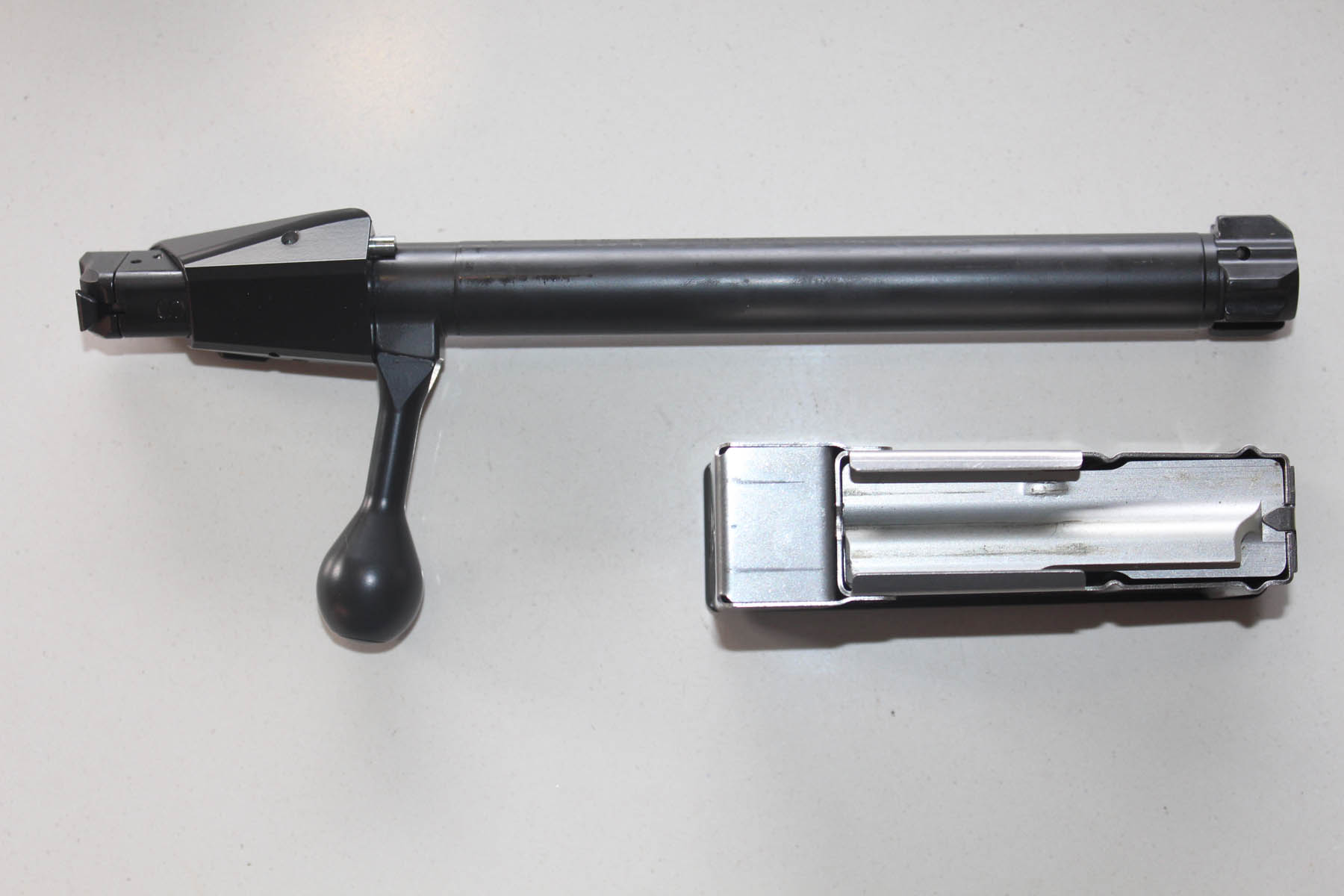
As a switch-barrel, the action is magnum length to accommodate the different available chamberings and cartridge lengths from .243 to .375 H&H. I noted the same with the detachable magazine, which in .308 is blocked at the rear to fill the left-over space. This of course is a necessary compromise in switch-barrel rifles and departs from the action length being perfectly scaled to the calibre as it was for my many Sako 75s (there were five action lengths). Likewise with the 100 the bolt is long and draws further than needed when in use with short-action calibres.
Staying with the bolt we have the short lift three-lugged Sako bolt head which carries over the improved twin ejectors as seen on the Sako 90. The bolt handle has a teardrop shape with a small cap which appears to be removable, so future bolt handle/knob options may be available. It’s at the bolt shroud departure from previous Sako models becomes apparent, as the new bolt now incorporates a decocking feature, replacing the traditional side-mounted three-position safety catch.
This seems to be a popular trend in Europe and is present on straight-pull rifles such as the Blaser R8 and Beretta BRX-1. Basically, you depress and toggle up a piece at the end of the bolt shroud which then moves rearward, decocking the bolt. This means there’s no longer any spring tension on the firing pin and so the rifle’s unable to fire. On the Sako 100 it also locks the bolt, with a separate catch on the side of the shroud allowing the bolt to be opened and cycled in the decocked position for unloading etc.
There’s no doubt this, theoretically at least, is safer than a traditional cocked bolt safety system. I guess it’s akin to carrying a 1911 pistol, hammer back, cocked and locked, as opposed to hammer down on a decocking double-action pistol such as a Beretta 92. I say ‘theoretically’ safer only because if all other safety protocols are followed both are equally fine. I’m not a fan and didn’t like it on the Blaser R8 or Beretta BRX-1 either. Not for what it does as the idea is excellent, rather I find it unnecessarily complex to operate and hard on the thumb. This is only a personal opinion and I’m sure when automatic transmissions first appeared some didn’t like those either.
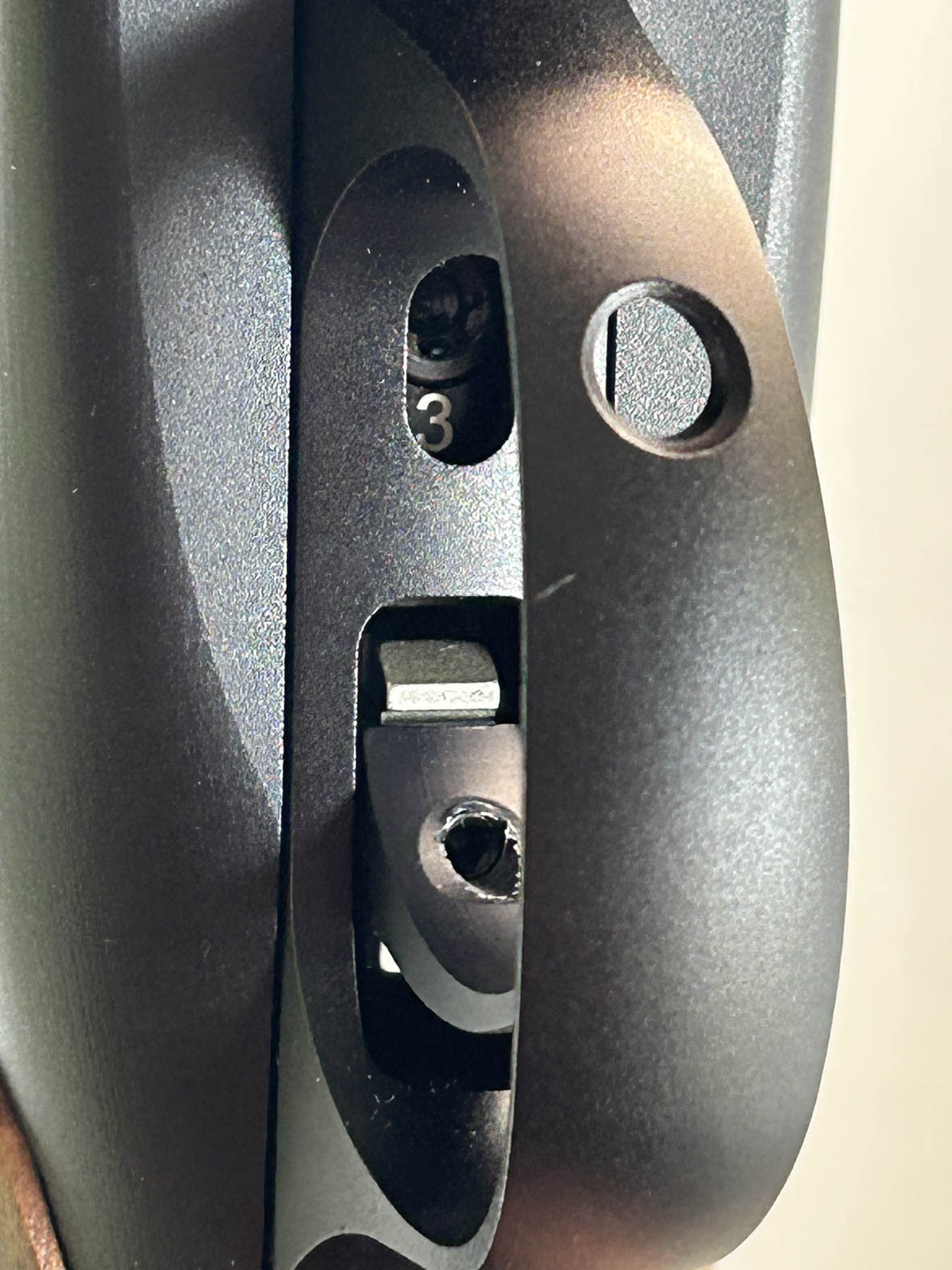
One thing I do love though is the Sako 100’s trigger which is super-crisp and easily fully adjustable through a small hole in the trigger guard. Six-step adjustability allows pull weight to be set progressively from 750g to 1750g, about 1½-4lb in old money. Steps one through six are numbered and visible just behind the adjustment screw and, as mentioned, these are made using the Torx T25 tool. The trigger blade can also be adjusted fore and aft to favour personal preference.
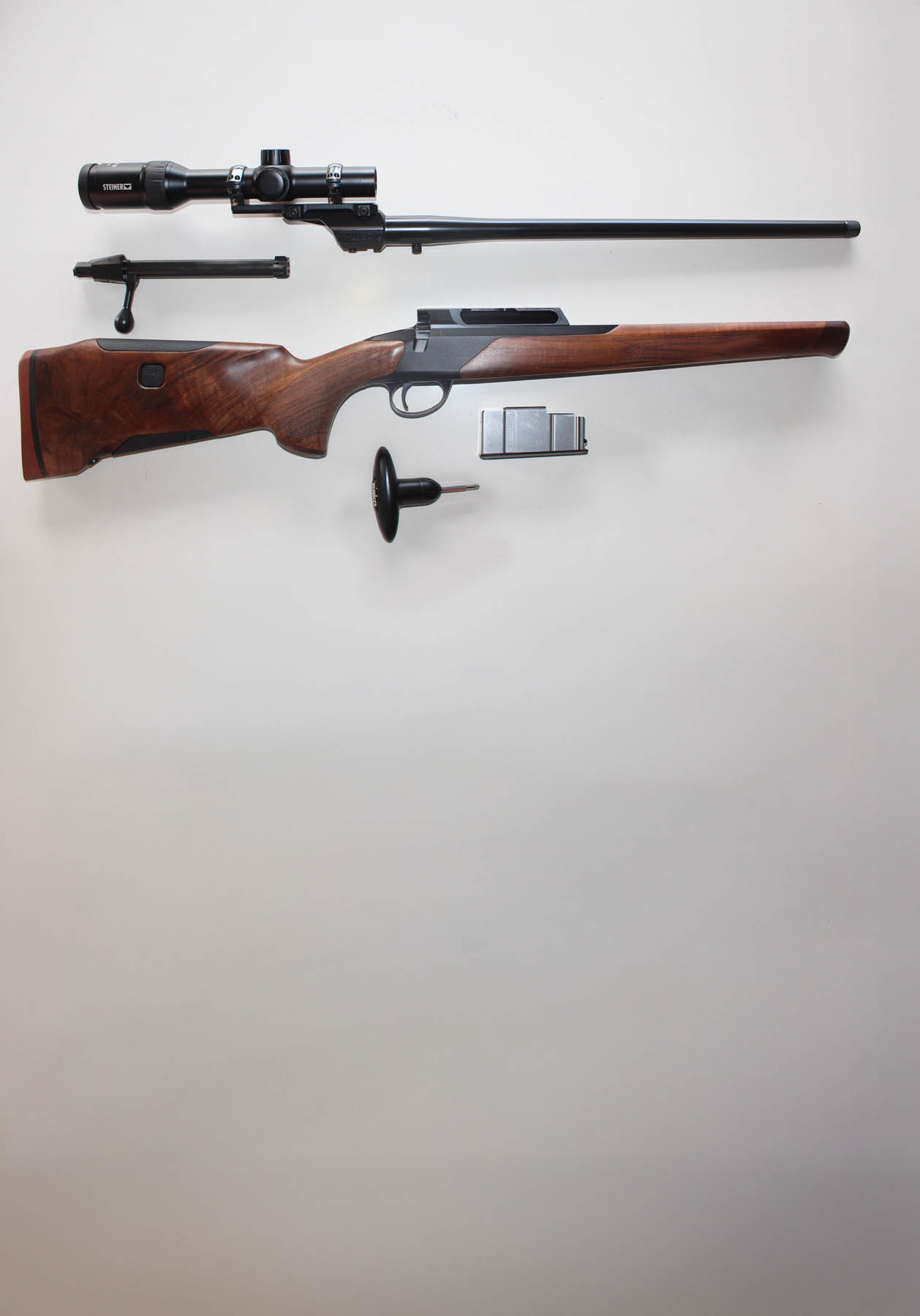
Great triggers are conducive to great accuracy, something Sako rifles have always been renown for and the 100 proved no exception. Of course, equally important to accuracy is bedding. In the 100 series an alloy V-block system is used to provide full-length contact with the receiver to ensure stability and secure repeatable fit, essential with a switch-barrel rifle. Likewise, the proprietary Sako mounting base which comes with the rifle secures directly to the barrel, so both barrel and optic are retained in-situ when removed to maintain zero. The mounting base uses Sako’s excellent Optilock scope rings which must be bought separately for scope tube diameter and desired scope height, at time of purchase.
To remove or switch the barrel is a simple affair. Firstly, remove the bolt then loosen two action screws using the T25 driver which frees the barrel for storage, transport or replacement. To pop a barrel back in, simply reverse the procedure only installing and closing the bolt in the action prior to fully tightening the screws to 7 NM as dictated by the torque driver. That’s it and literally takes less than a minute.
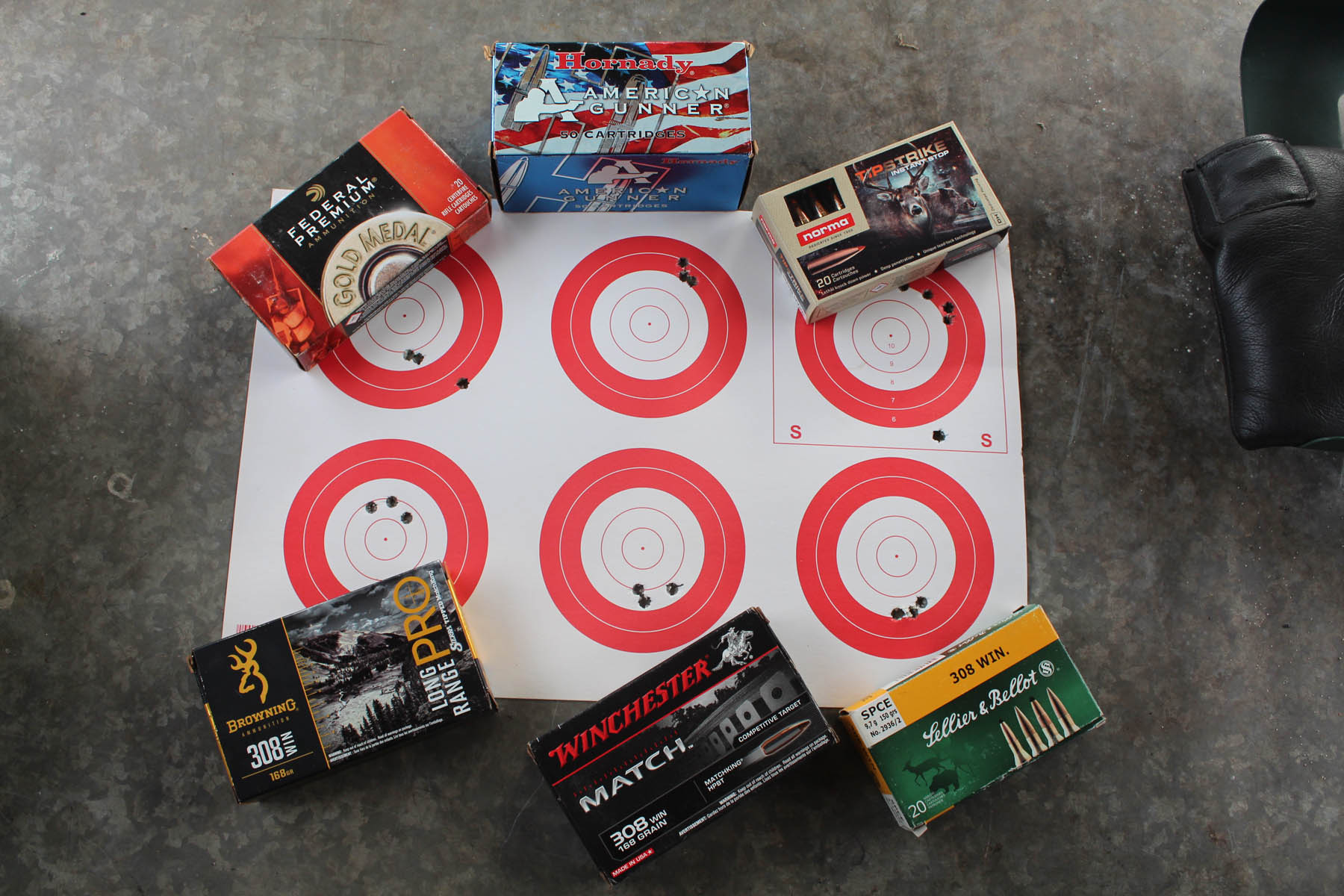
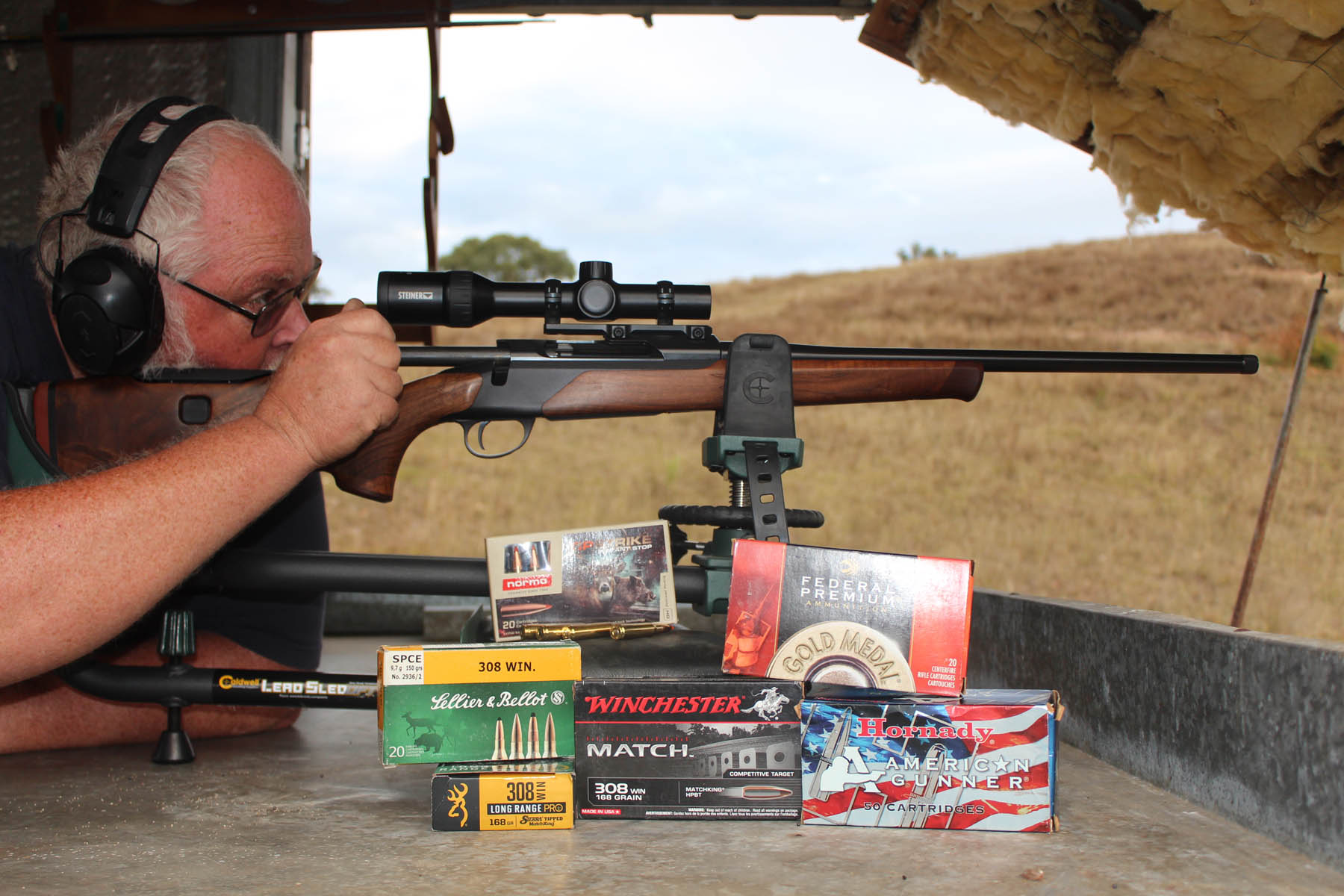
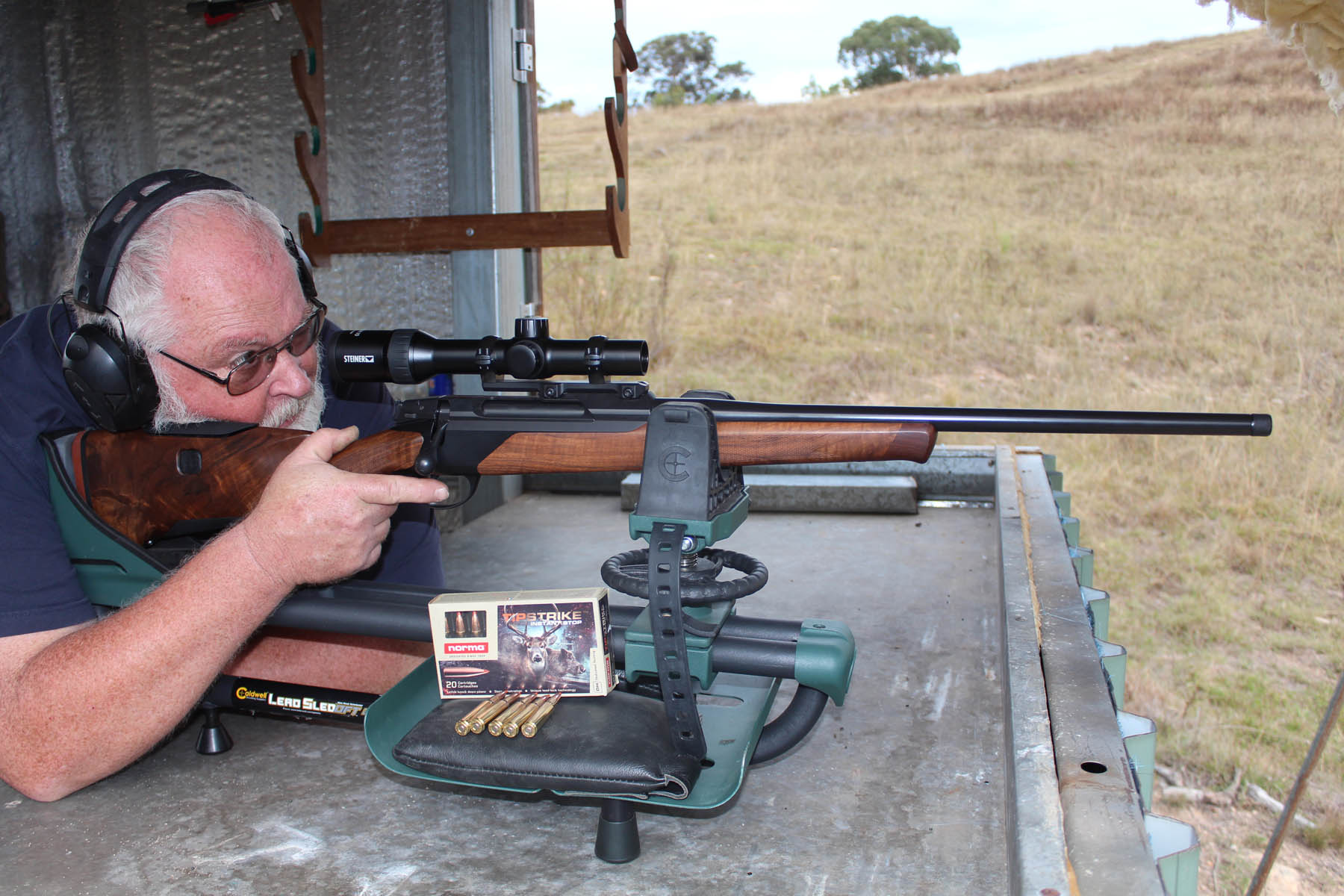
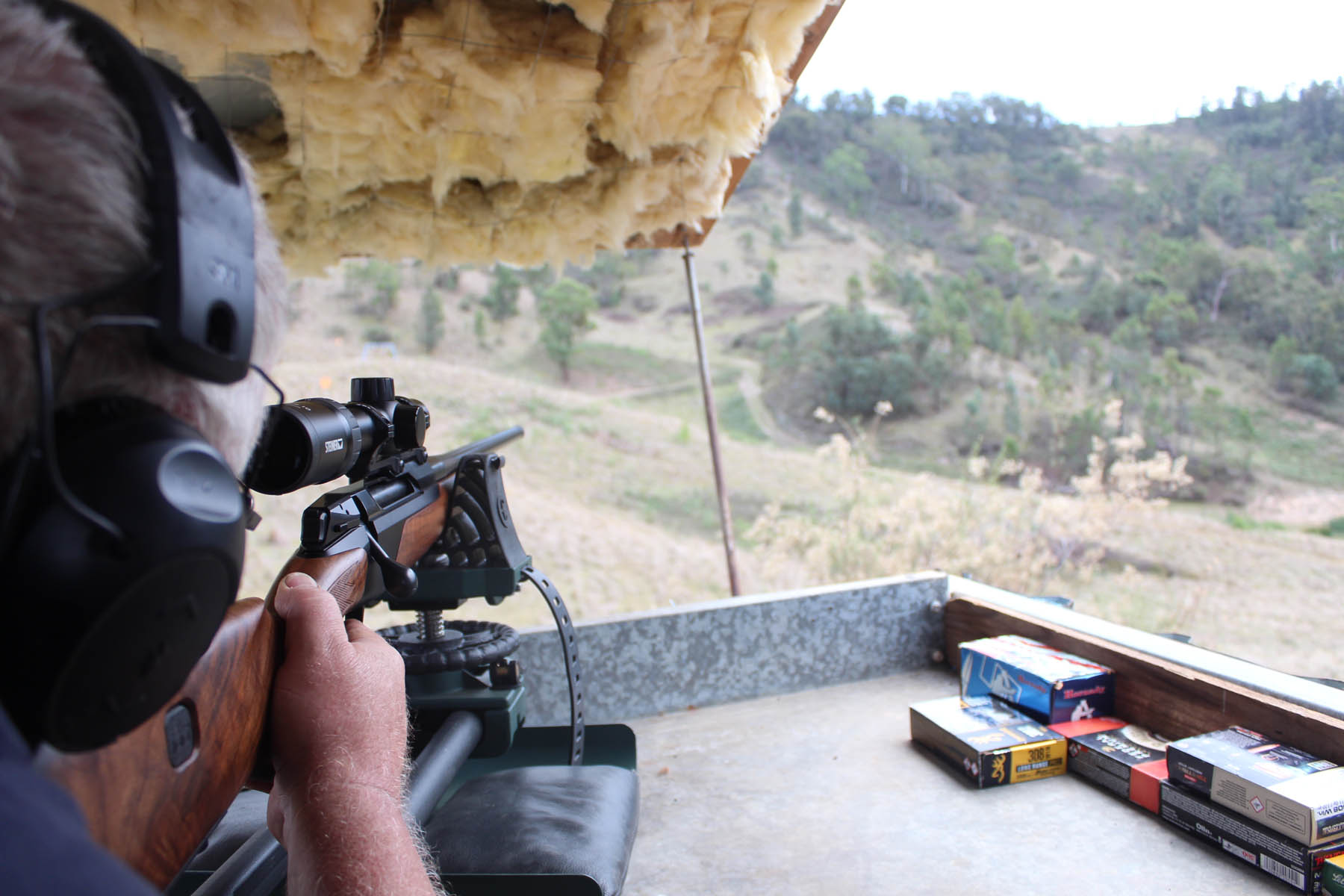
The rifle comes supplied with a Steiner Ranger 10 in 1-10×24, a neat and compact scope with all the magnification you could use in a hunting rifle of this calibre and lens quality and features expected in a premium European optic. On the range the Sako 100 had no problem achieving or exceeding the manufacturer’s 1 MOA accuracy guarantee with most all factory ammunition variants and bullet weights tried. I would warrant half-minute groups readily achievable with a bit of load development.
In summary the Sako 100 is a premium quality hunting rifle with a hell of a lot to offer and, being a switch-barrel, lifts it into a new league price-wise. The Explorer Wood retails at $7399 (you can buy two Sako 90s and get change from that), while the Carbon version adds another $1600. That said, on the test rifle the timber, finish and quality of build is outstanding, as are many of the other features. Likewise the price is comparable to other similar European switch-barrel rifles and it’s a firearm I feel would give great pride and pleasure in owning and using. If budget isn’t an issue and you’re after a switch-barrel rifle, with the Sako 100 I don’t think you’d go wrong.