


Don Caswell recalls fond memories of Arnhem Land
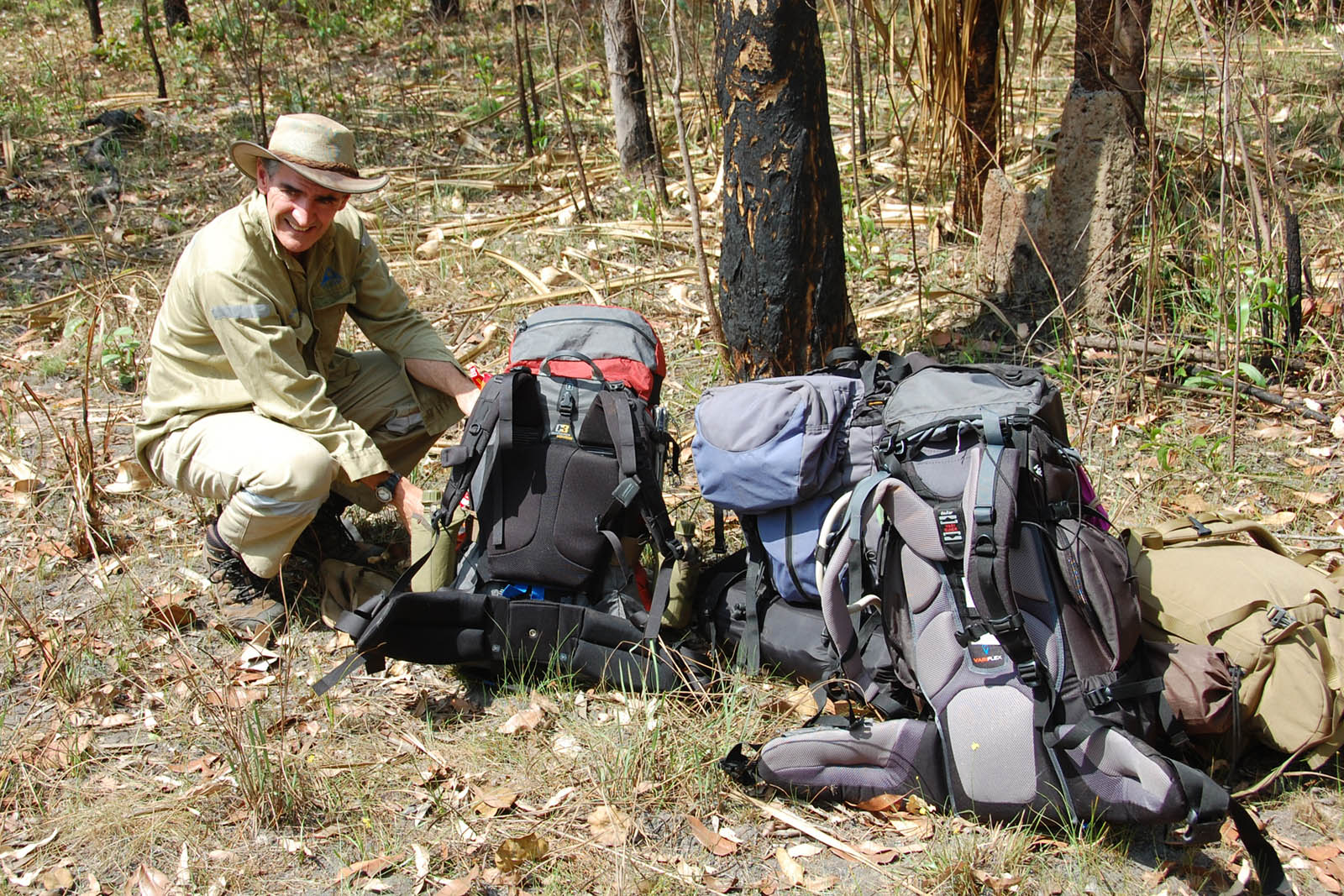
The trip began with a taxi ride, a long one in a Toyota Troop Carrier. A $1200 taxi ride to a drop-off point a few hundred kilometres from the remote airport where we’d landed. The driver queried if our nominated spot was in fact where we actually wanted to be left, as it was in the middle of nowhere. He was dubious until I assured him we were familiar with the location and rough dirt track. He helped us unload our backpacks and rifles and, confirming he’d collect us from the same spot in a week’s time, shook his head and left.
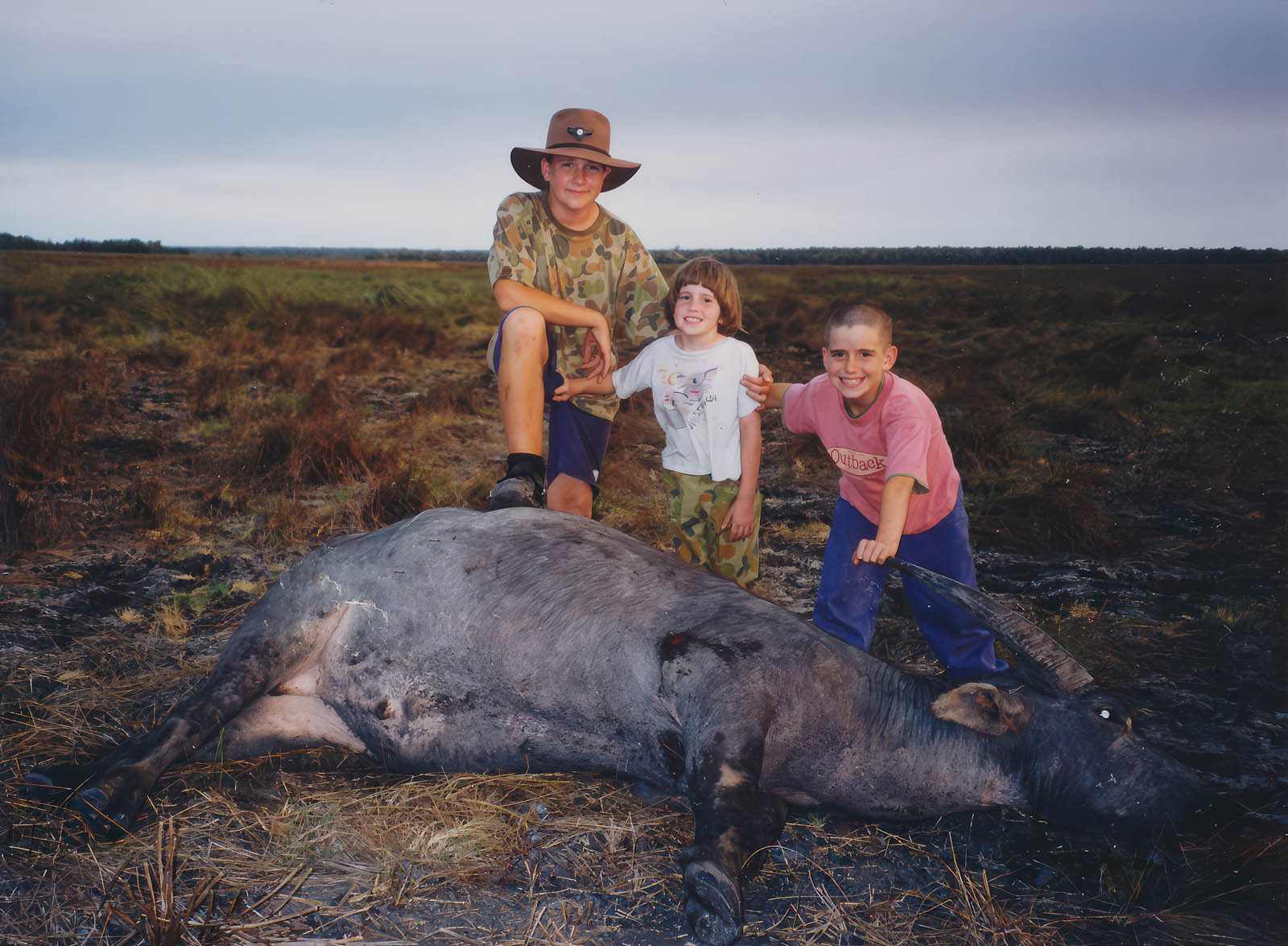
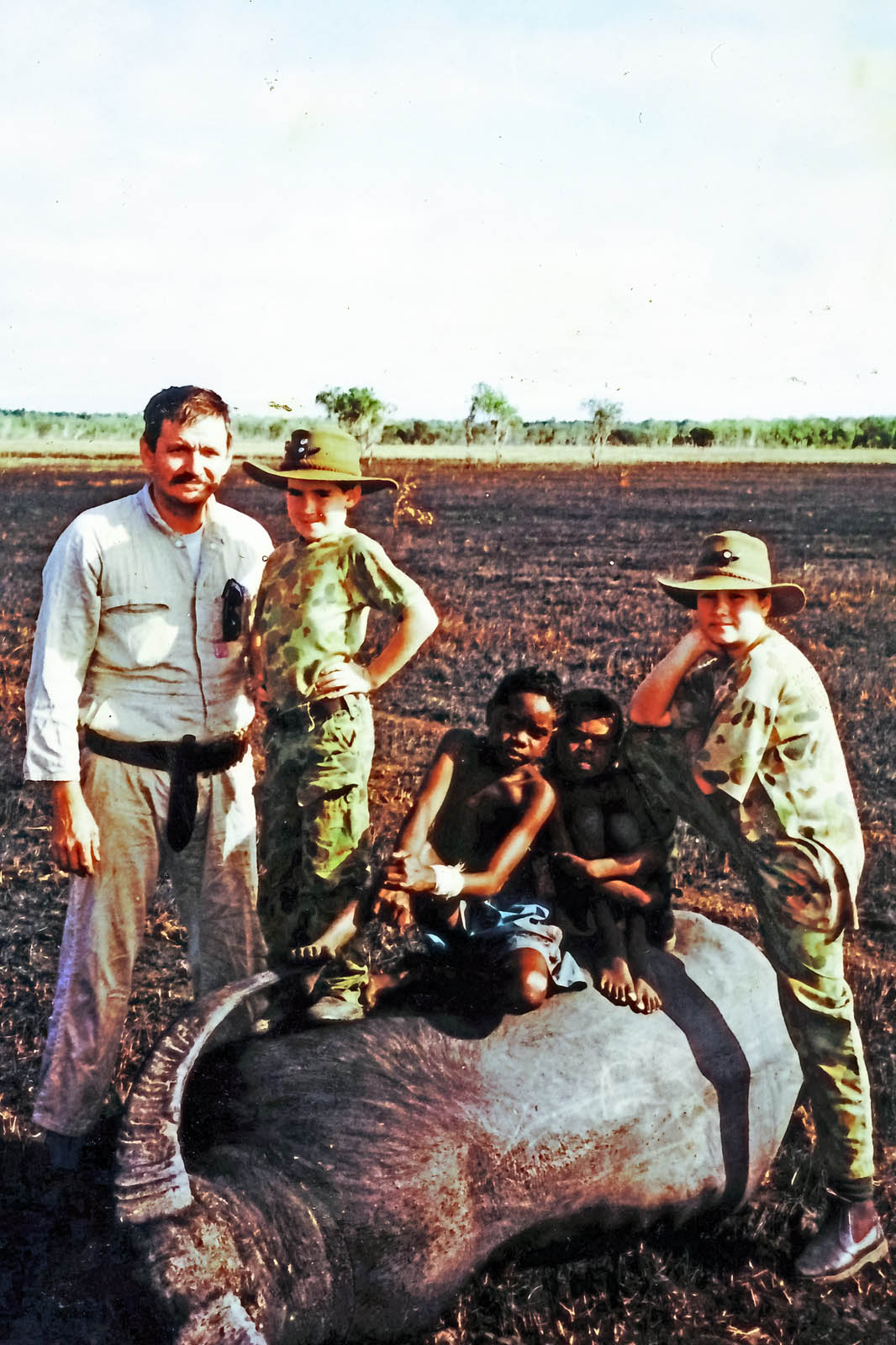
My two boys were with me, then in their twenties. As kids, when we lived there, they’d driven this track with me deep into the vast wilderness of Arnhem Land many times. We’d enjoyed camping and hunting with the Yolngu, traditional owners and custodians of the land. Our family had been adopted into Yolngu culture, so we’d a treasure-trove of fond memories from the adventures we’d enjoyed with them. It was more than a decade since the boys had been there, so with both now grown men about to depart for distant shores, the idea of a return trip to Arnhem Land had germinated.
I’d kept in touch with Mickey, my friend and hunting buddy and a senior figure in the custodianship of the area. He was keen for a reunion and to take us on a safari into a place rarely visited by the Yolngu in modern times. It took some time but the necessary permits for our trip had come through, so here we were. Mickey duly arrived in a battered Troopy accompanied by two young men. The same age as my lads, they’d been our companions on lots of hunting, fishing and camping outings. It was great to see them again, all grown up and very fit-looking young fellas. They’d both joined Norforce where their bush knowledge and skills would be an asset. We talked late into the night.
Later next day, when Mickey returned from the long trek to return the young men, we discussed the planned trip. We’d be travelling off the beaten track, through his mother-country where he’d last been decades earlier on long walks with his family, learning of important sites and lore. To his knowledge no-one had been there since, so he was eager to revisit and show us his special country.
The plan had been to do a long, circuitous walk and arrive back to meet the taxi. But Mickey explained it had been an unusually dry season, something we’d noted signs of on the drive out. The first part of the trek would have little or no water in the small rock pools, with any remaining pools most likely fouled by pigs and buffaloes wallowing. He proposed driving cross-country in the battered Troopy to a permanent lake where his people had camped for eons, after which the country would be kinder with more wetlands and water points. The unusually dry year meant many areas would be accessible by vehicle, making a more extensive trip possible. I used my maps and GPS, with Mickey’s directions, to locate the lake which was about 30kms away, though he assured me he didn’t need GPS guidance as he’d know the terrain.
He suggested we load up and get going, as we’d be driving well into the night under a full moon (the trip was planned with that in mind). I wasn’t unduly surprised to discover the old Troopy’s lights weren’t working, though Mickey was unphased. He reckoned with the full moon and his knowledge of country, there’d be no problem navigating to the lake at night.
So off we went. I sat beside Mickey with map and GPS, keeping track of our progress as we bounced around vigorously, Mickey glancing at the skyline which obviously gave him the guidance required. We lurched over rocks and fallen trees, pushing through groves of saplings and pandanus at times. Whenever we veered off the direct line it was for good reason, avoiding impassable steep gullies and gorges.
Once around such obstacles, Mickey would unerringly steer us back on track. He didn’t ask for confirmation of his chosen path and progress and I offered none. After several long hours he told us the lake was less than a kilometre ahead and we’d see it in the moonlight once we crested the slight ridge ahead. He was spot on.
It was the early hours of the morning when we pulled up. We unpacked our gear by the shore as Mickey went off aways to light a small fire and sit cross-legged by it. I could hear him softly murmuring in Yolngu, clearly performing some ceremony. On returning he appeared happy and relaxed, informing us he’d told the guardian ancestral spirits we were visiting and meant no harm or disrespect. He assured us we were now known and welcomed to the country.
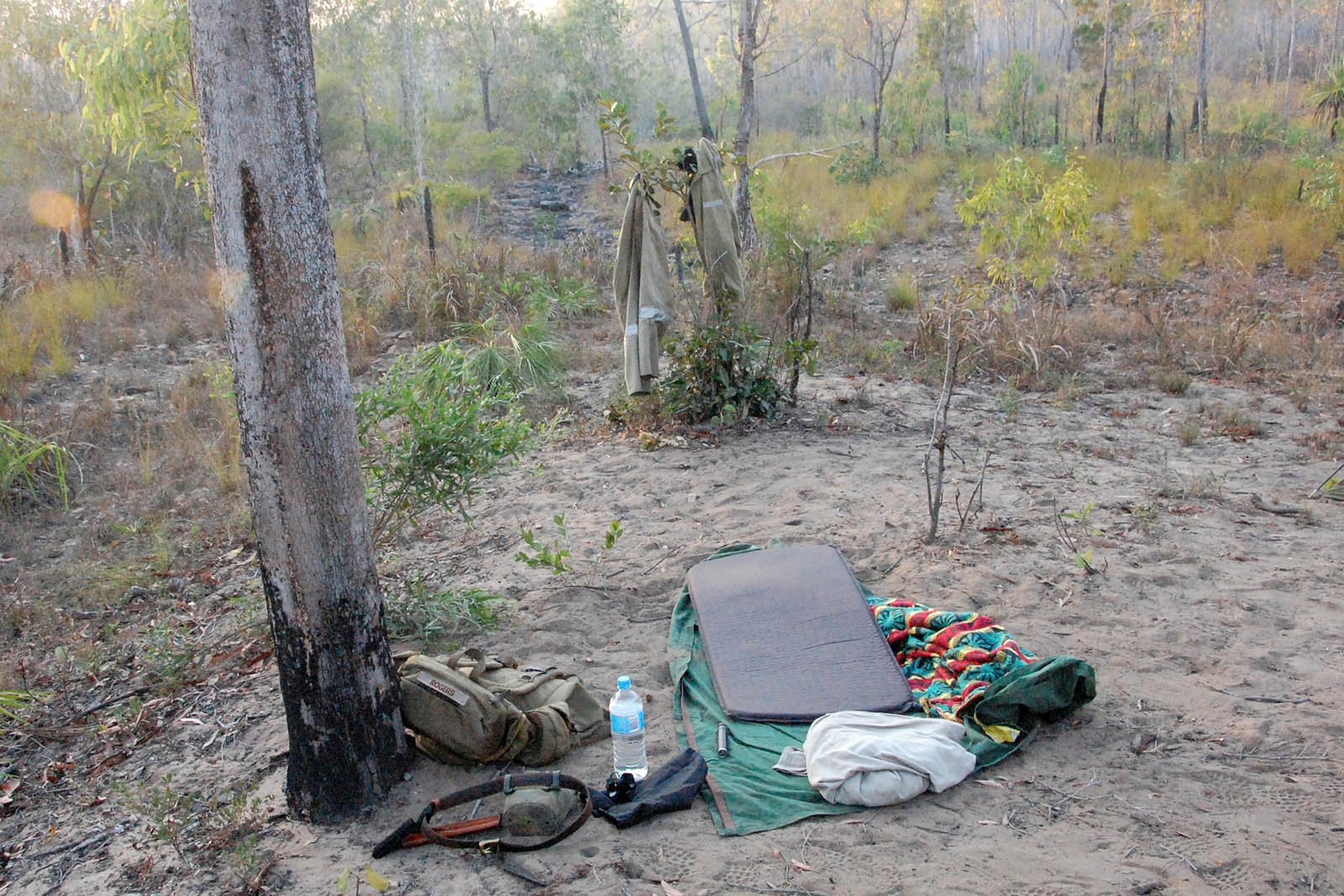
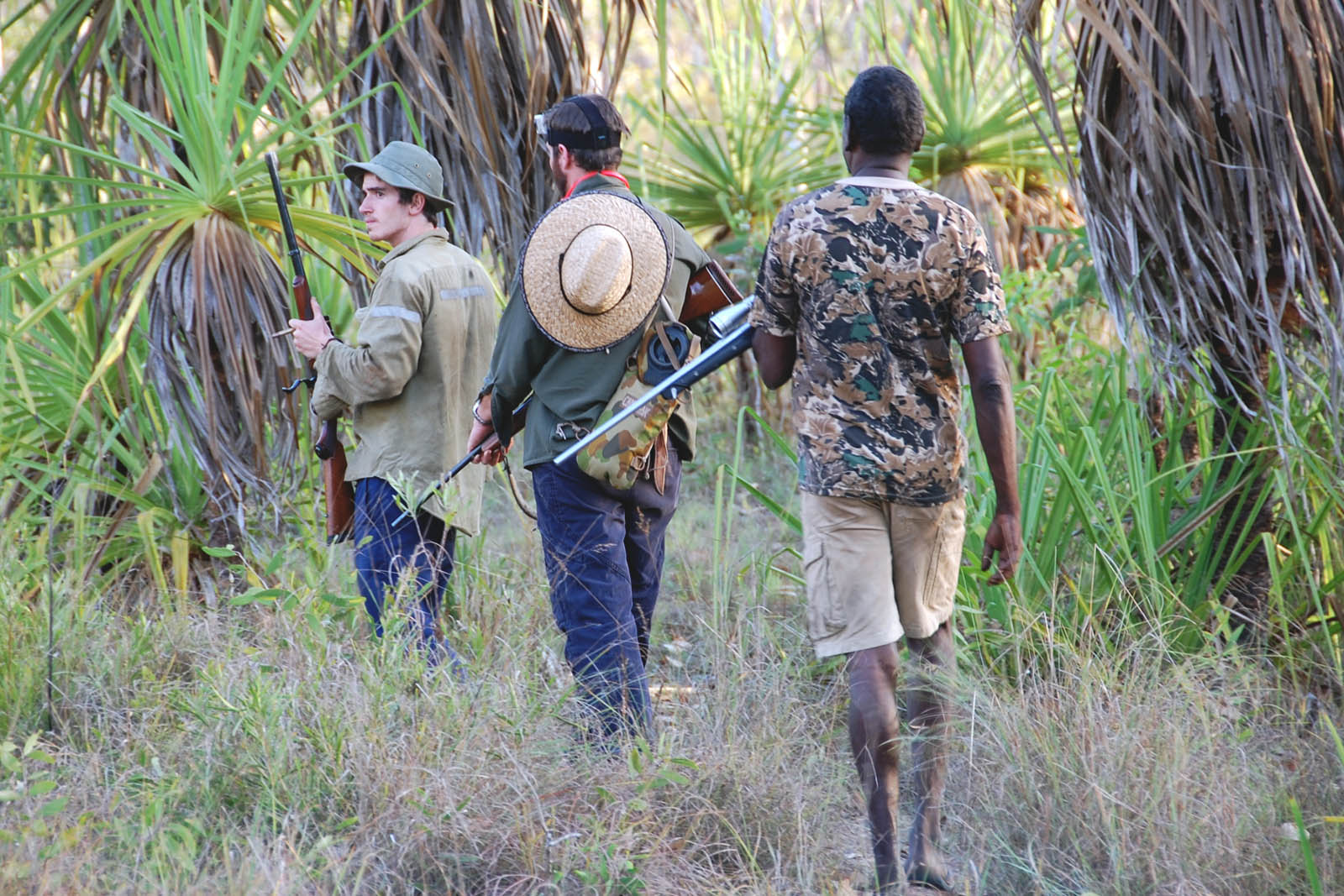
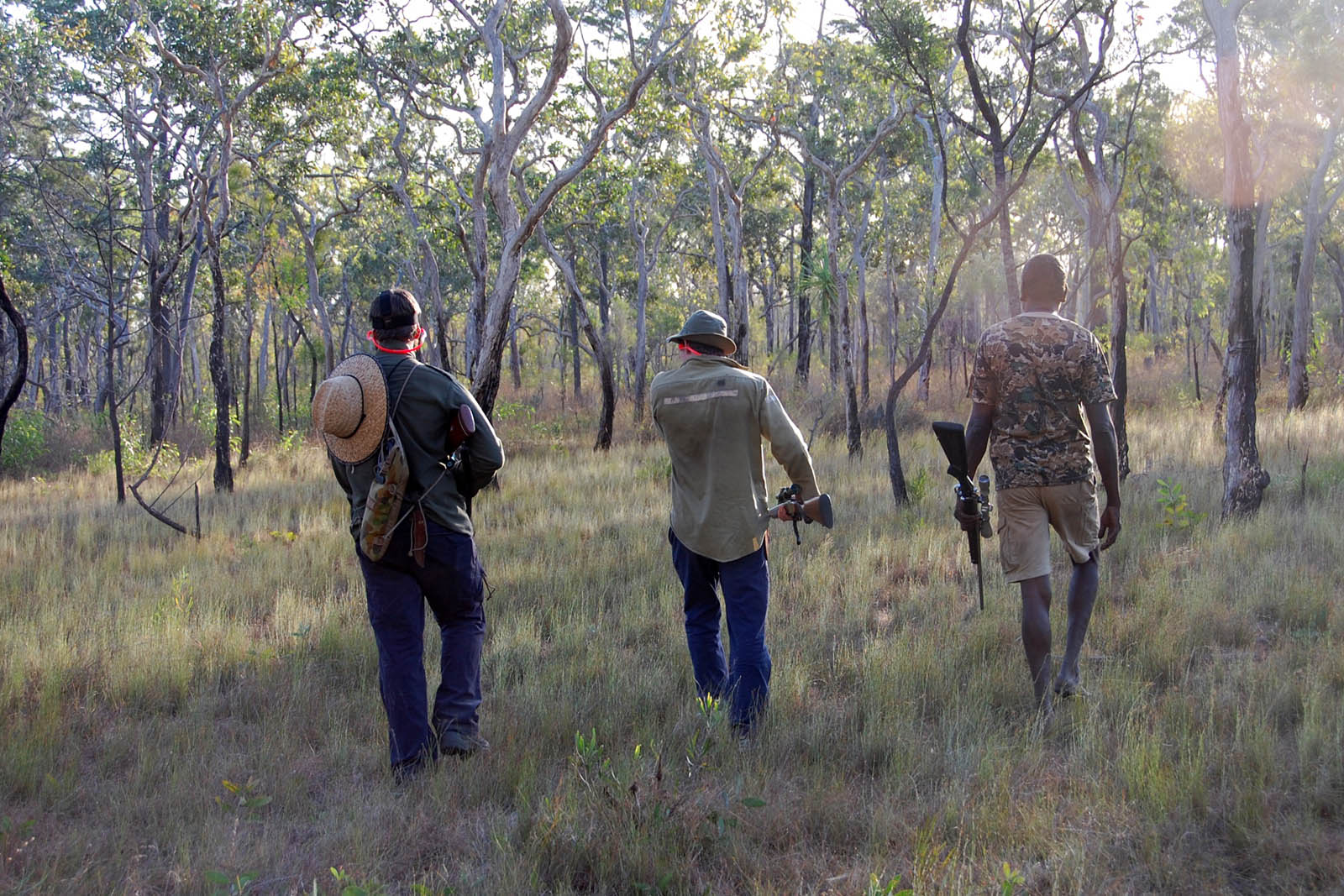
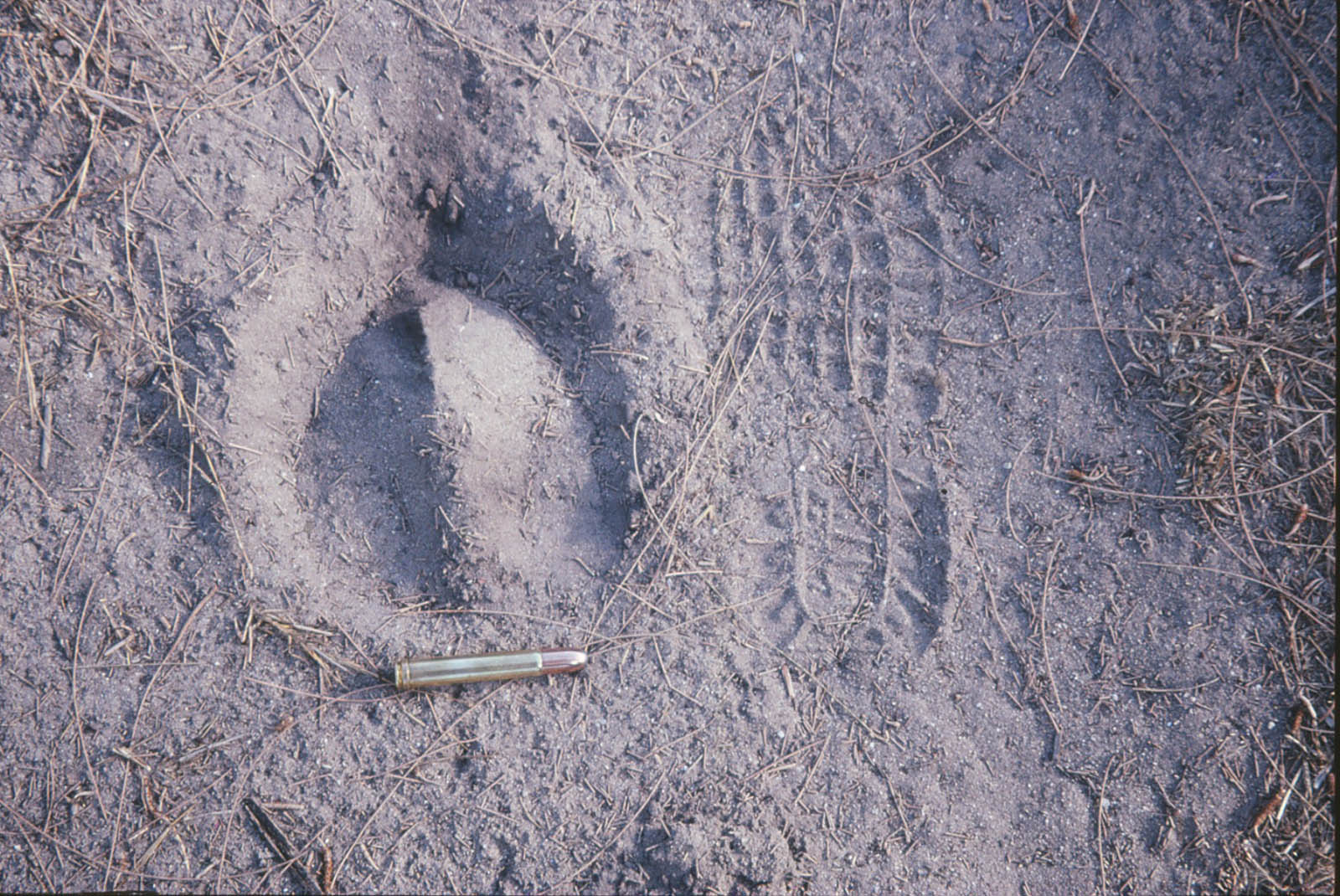
That was a pleasant thought to drift off to sleep with, lying on the soft sand of the creek bed under a benign full moon, deep in ancient Arnhem Land. It set the tone for the remainder of the trip. Around sunrise we brewed a pot of coffee and shared a few muesli bars. It didn’t take long to roll up our bedding and stow the backpacks in the Troopy and, after perusing the map, we agreed on our next location. The boys set off with GPS and rifles to hunt their way along the creek system and we’d rendezvous mid-afternoon. There was plenty of buffalo, pig and wild cattle sign and we’d spotted a few in the distance.
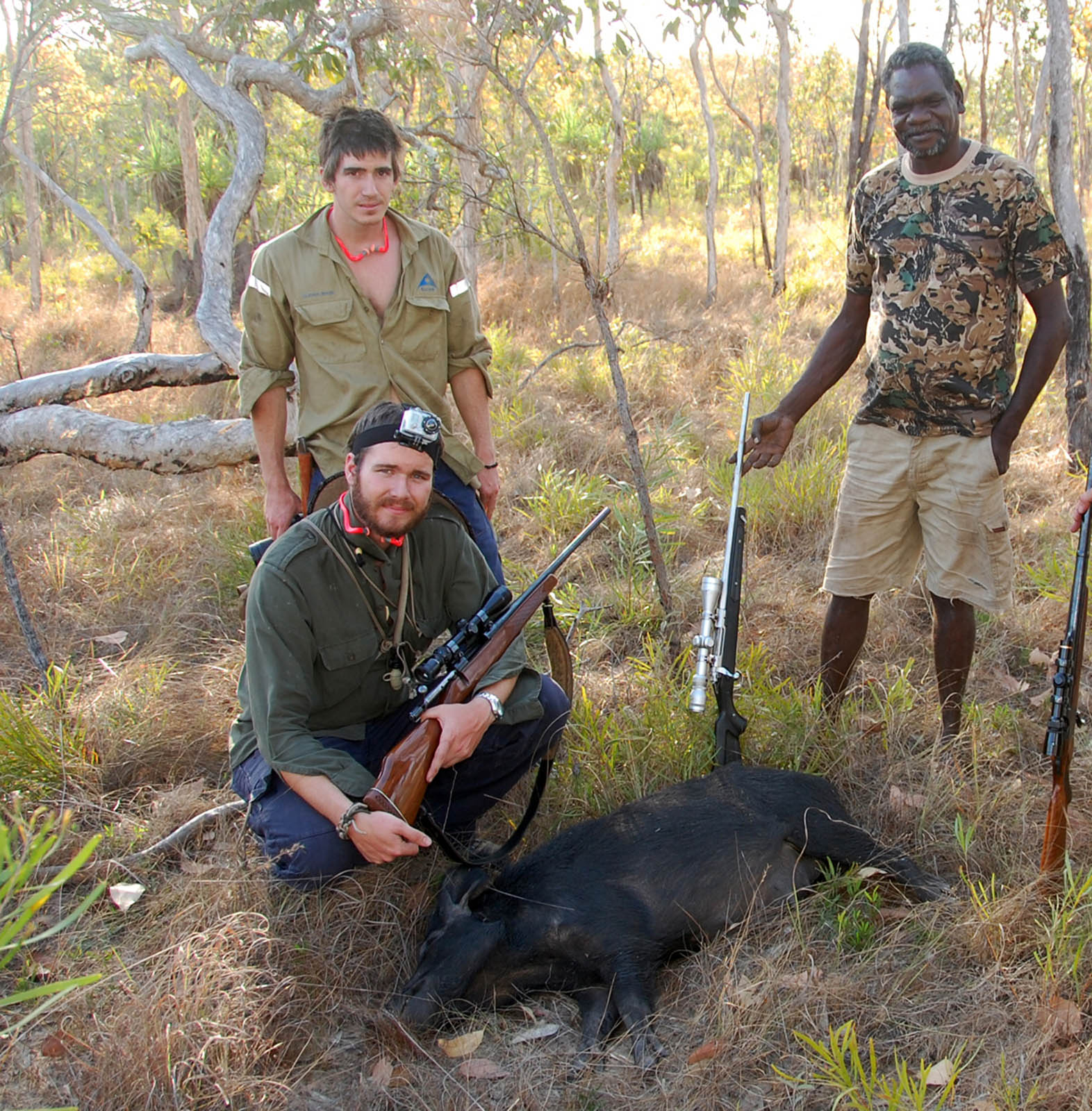
Mickey and I hadn’t motored far when we heard the boom of the 7mm Rem Magnum. The boys had encountered feral pigs at the first big waterhole and we’d go on to find many more and take our toll on them in the days ahead. One thing was clear – these pigs hadn’t seen humans in generations, as they exhibited none of the wariness we were used to dealing with. The permanent water and adjacent lush floodplains had produced a sizeable population, all in great condition. Mickey disapprovingly surveyed the damage to the creek system and flood plains, telling me when he’d walked through this country last, as a teenager, pigs were a rarity.
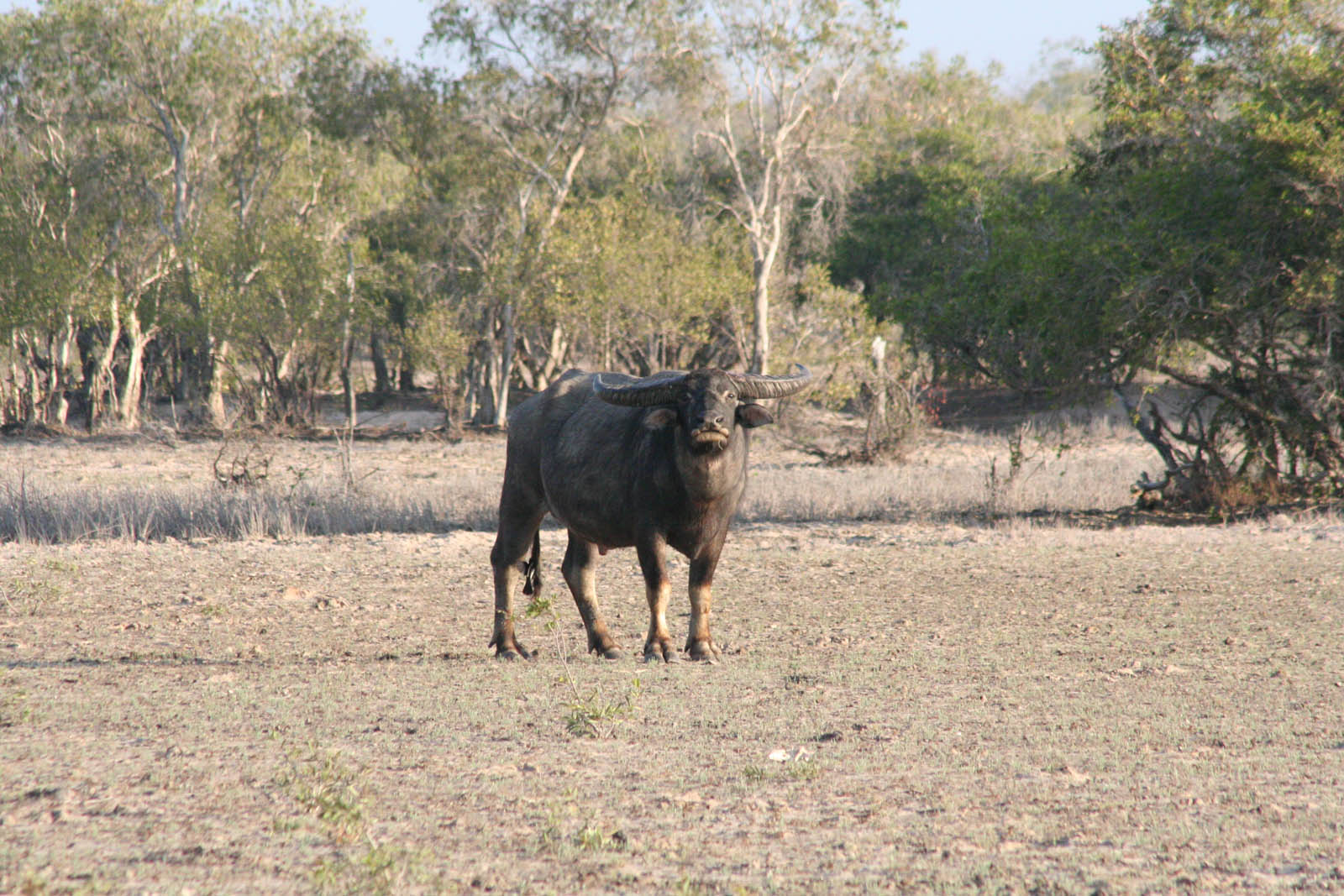
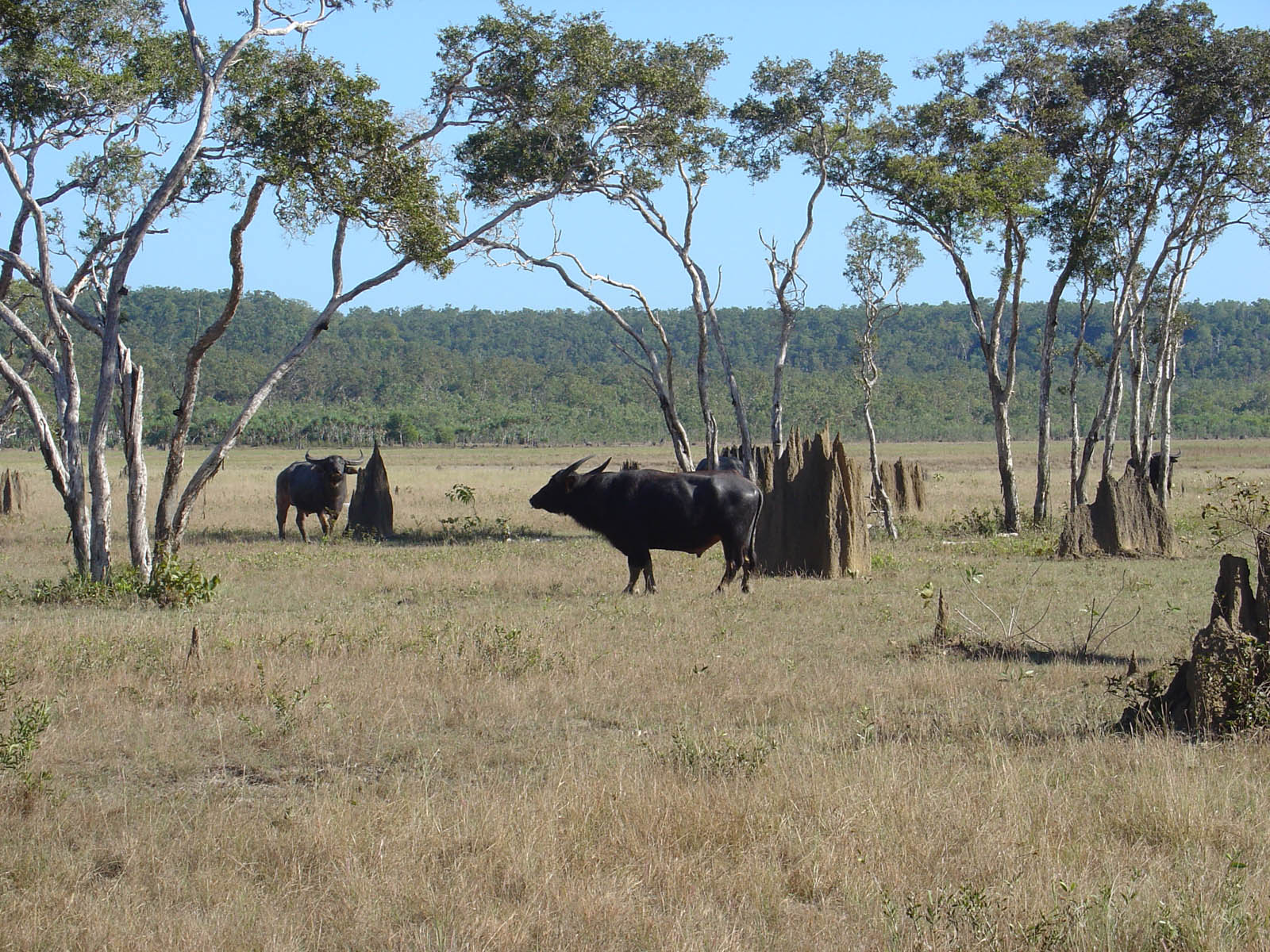
He asked how much ammo we’d brought which wasn’t that much, given the foot safari plan. Yet the ability to get so close to unalarmed pigs meant we took one per round, so the boys made the most of what we had. There were plenty of buffalo about too, all rather lean and more so than usual. The long dry season had severely shrunk the swamps and wetlands and, unlike the pigs’, the buffaloes’ food supply had largely withered away. We also encountered wild cattle which were lean too, though in better shape than the buffalo. They ranged a lot further, wandering up on to the escarpment plateaus where they found more forage.
Mickey and I poked slowly along the edge of the vast flood plain, diverting every so often to follow a feeder gully back up into the escarpment. As the trees became bigger and thicker, we’d park the Troopy and proceed on foot. I could see Mickey was enjoying a trip down memory lane, as he showed me overhangs in the low escarpment where his family (and many generations of Yolngu before them) had camped.
Aboriginal people leave a very light footprint on the land, so you had to look closely to see slight signs of their long presence. The overhang blackened by smoke from millennia of campfires, occasionally a few arranged stones, a little wall art here and there. Mickey explained how some of these sites were family camps, others were men’s business where circumcision ceremonies had taken place.
There were also women’s business areas which he pointed out from a distance, though it wouldn’t be appropriate for us to venture there. At another location, in the fissures of the escarpment face, bleached human bones and skulls were visible, wrapped in fraying old paperbark bindings. Mickey told me that place was old and unused even when he was young.
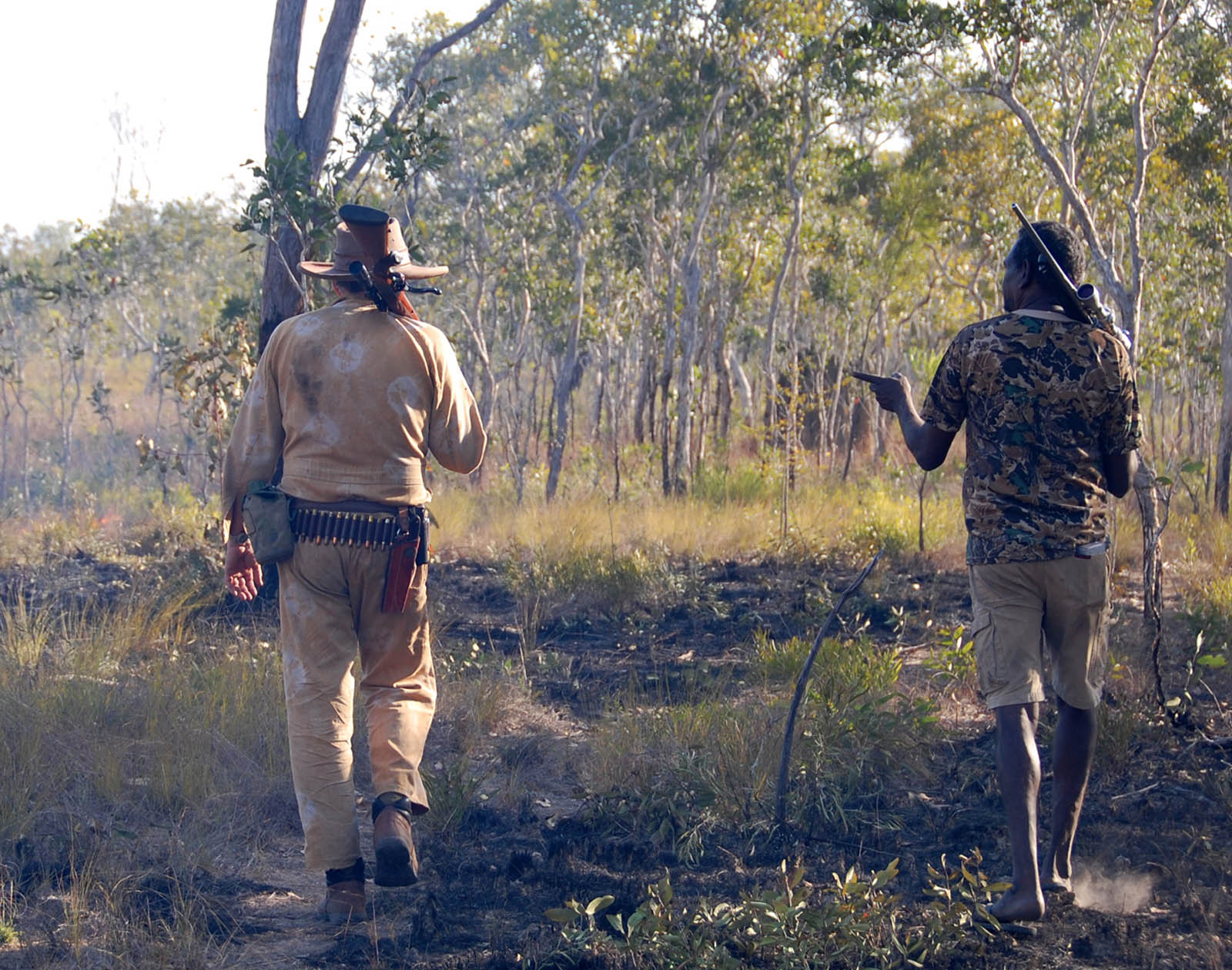
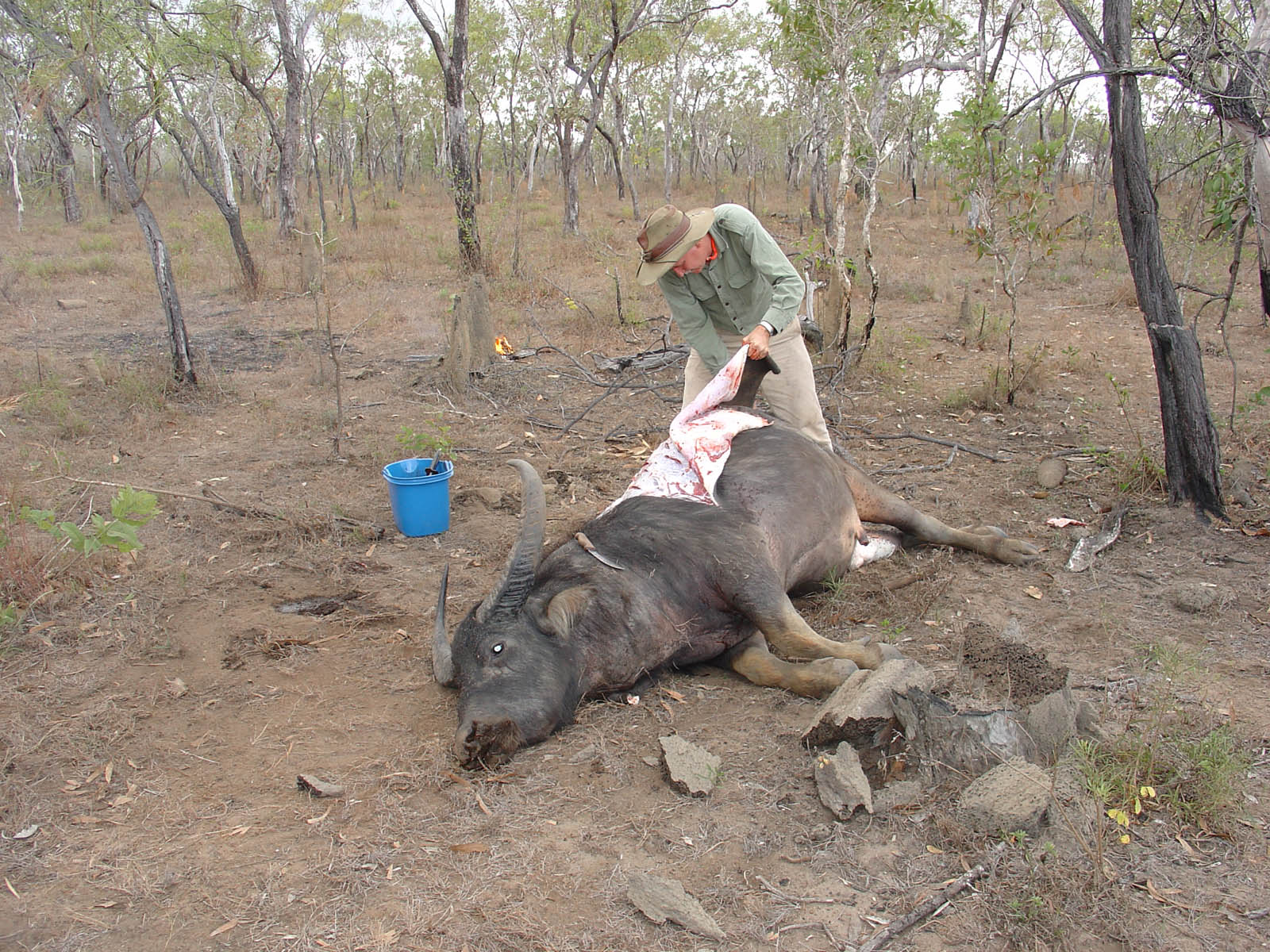
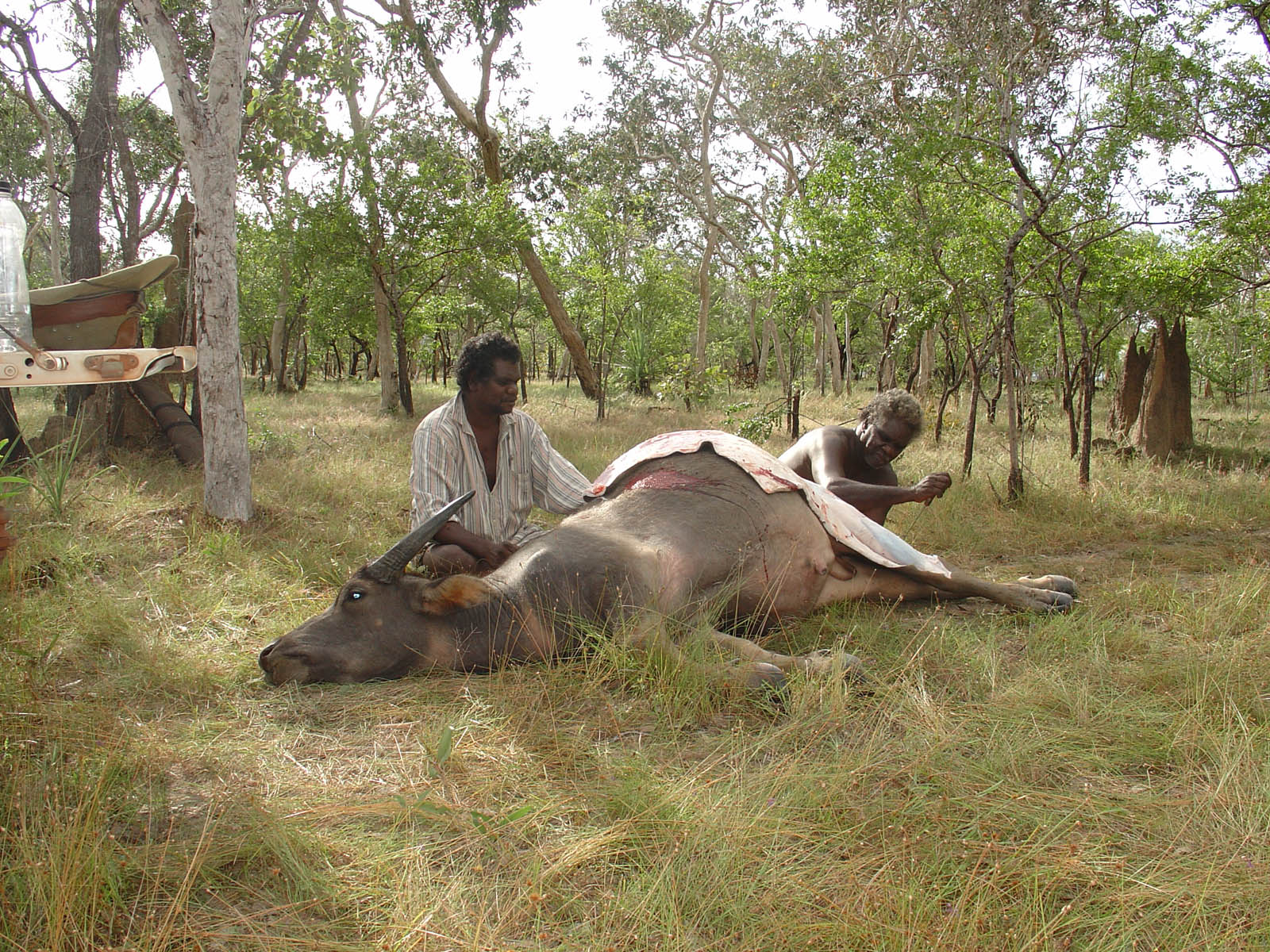
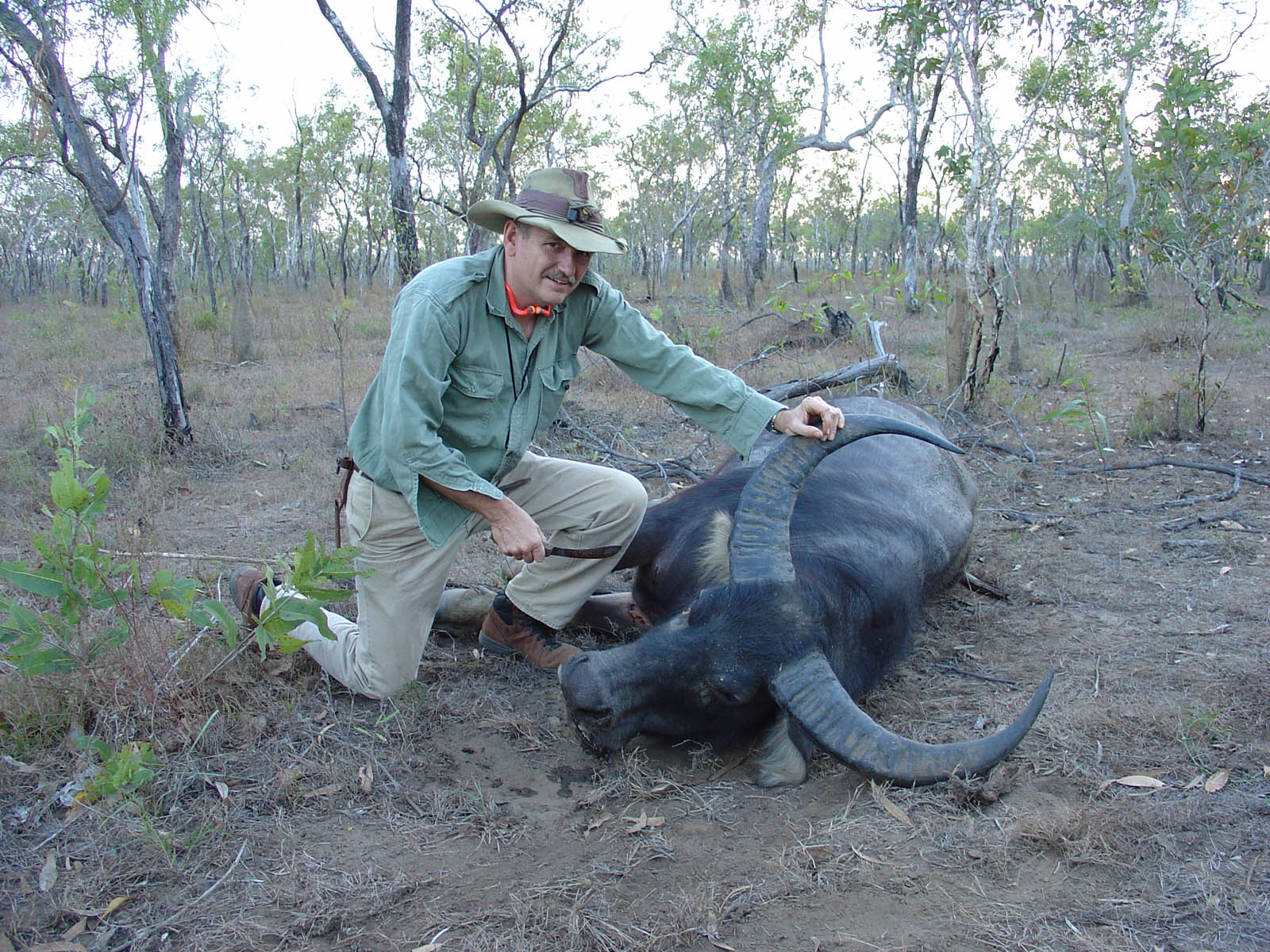
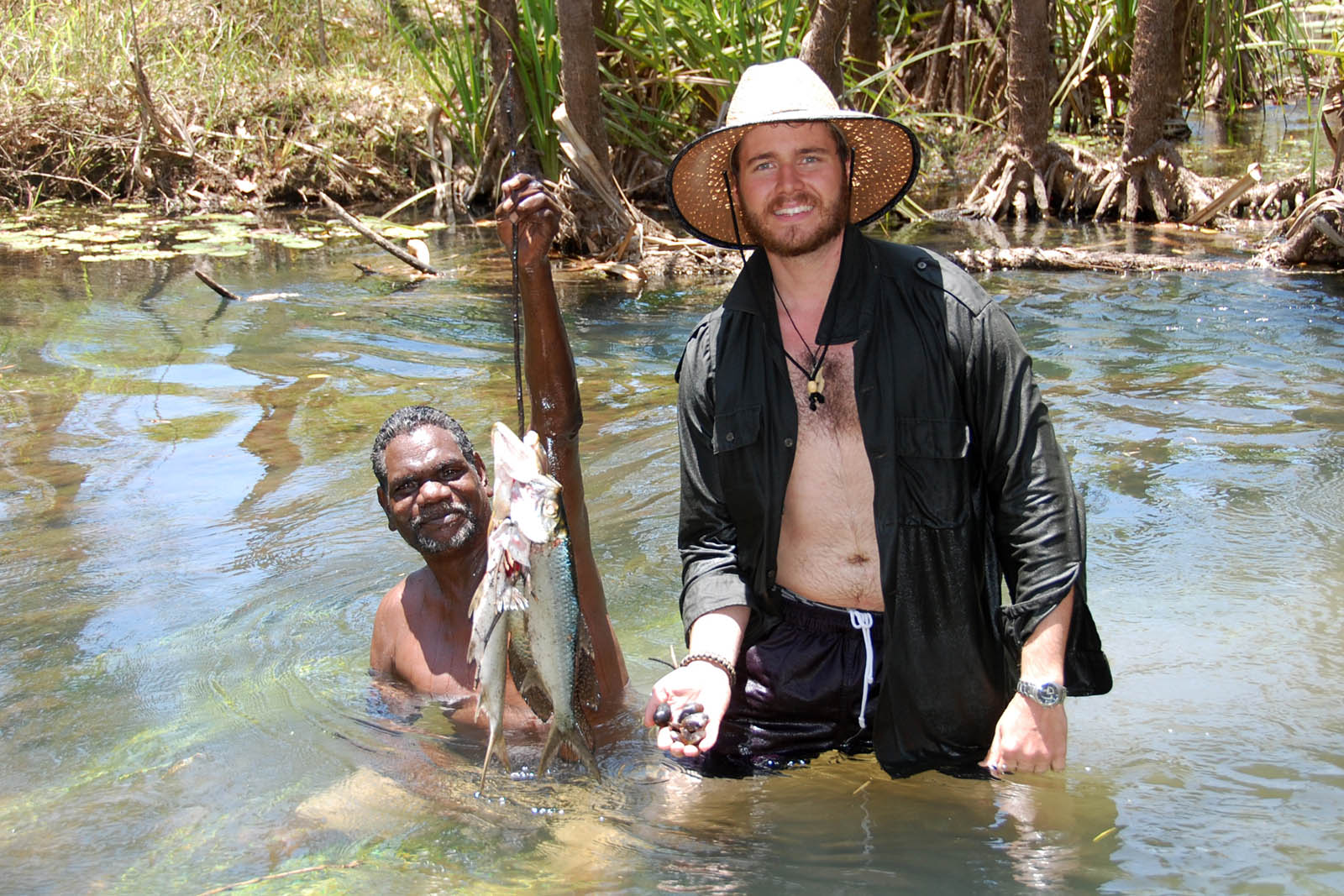
I carried my 458 Win Magnum, the goal being to harvest a bullock if we came across any wild cattle, failing that a young buffalo would provide us with enough meat for the rest of the trip. We hadn’t brought much food as our intention was to live off the land as we went. With Mickey’s bush skills we could easily survive without meat, so he gave lessons in finding, preparing and eating bush tucker in what was a welcome refresher course.
Years earlier when visiting similar country, he’d shown the boys many bush tucker opportunities, as well as teaching them how to find suitable shrubs and make spears from them. After culling a few buffalo which were wrecking special waterholes, I passed the 458 to the boys as, in the remaining days, Mickey wanted them to cull as many buffalo and pigs as they could.
On the final day he drove us back to the rendezvous point and waited until the taxi arrived, the driver appearing more than a little surprised to find us there. We bid Mickey farewell and, despite the rough track, soon fell asleep on the long trip back to the airport. Our long-awaited return to Arnhem Land had been rewarding, memorable and tiring in equal measure.