

John Maxwell finds things are happening in South Australia
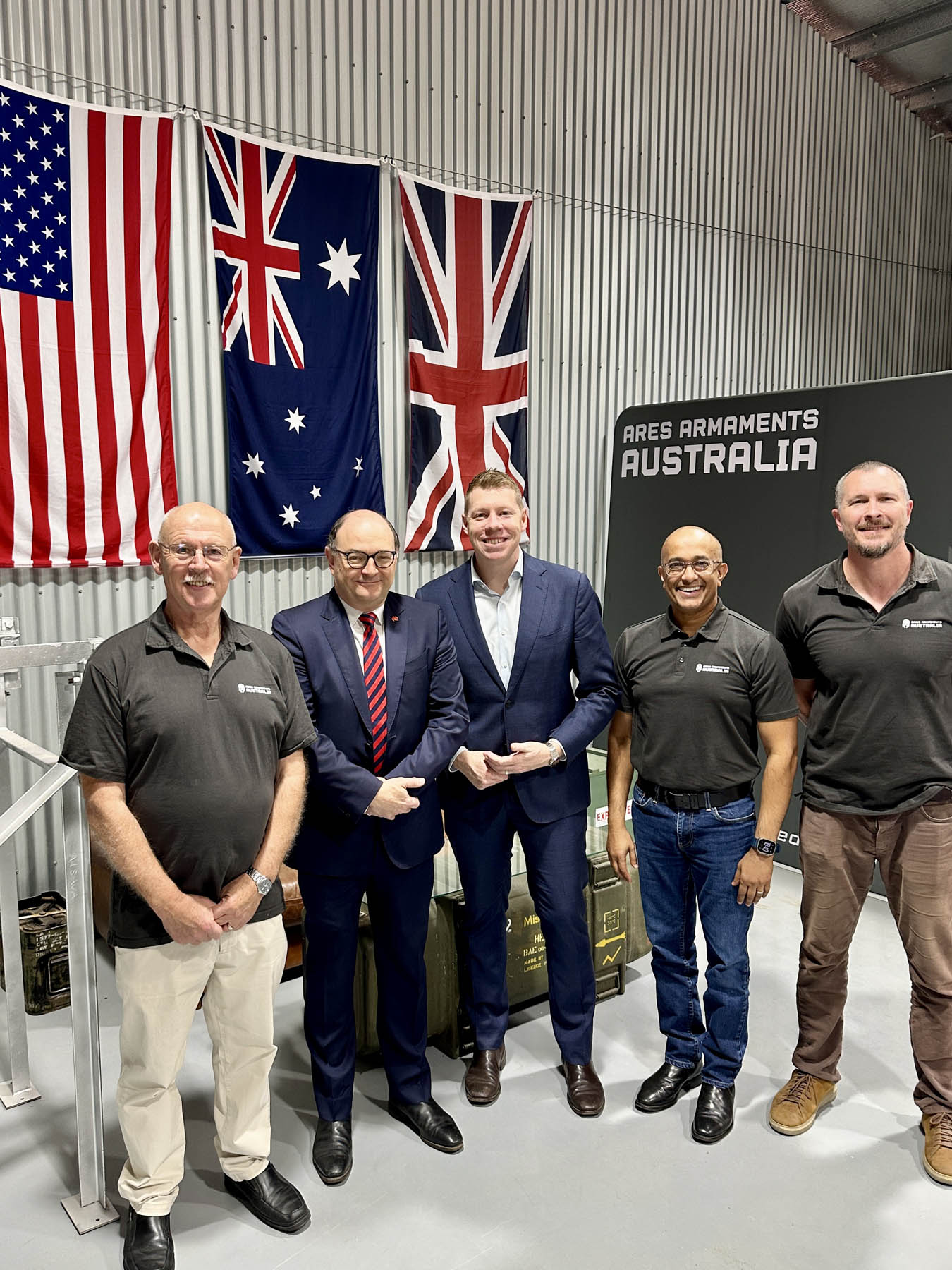
Australian shooters would be familiar with our major producer of munitions, Defence company Thales which manufactures high quality ammunition and propellant powders for sporting shooters but mostly for the Australian Defence Force (ADF). Now a newcomer has arrived on the scene in the shape of ARES Armaments of Adelaide, which produces munitions for military and police customers though not yet the Australian civilian shooting market. But that could change.
“Possibly in the future. I think the priority now is making sure there’s enough ammo for law enforcement agencies to train regularly,” ARES chief executive officer Jason Murray told Australian Shooter. ARES sees itself at the forefront of a renaissance of Australian munitions manufacturing. “One hundred per cent. That’s what have been pushing for since we started,” he said. “What we’re hoping for is to start growing from grassroots an Australian munitions manufacturing capability.”
The rise of a second manufacturer was likely inconceivable just three or four years ago. What’s changed is the rest of the world with the emergence of a more insular US, a rising China and conflicts in the Middle East and Ukraine. No longer can Australia be comfortable with once assured munitions supply chain.
“Doing it now is possible because of the geopolitical situation we find ourselves in,” Mr Murray said. ARES is just over a year old, with current capacity to produce up to five million rounds of rifle ammunition a year working a single dayshift on week days only. “We’ve a small team of 13 comprising veterans and ex-cops but have set up from the start with the mindset of being a prime contractor.”
ARES came about, he explained, after he realised no non-standard ammunition was being manufactured in Australia. “From a law enforcement perspective or for any sort of special application, absolutely 100 per of the ammunition is imported,” he said. “We wanted to address that with the ability to ballistically match ammunition natures and provide a research and developemnt on the ground capability in Australia.”
Mr Murray, a former Army Reservist, longtime Defence company executive and competitive shooter, said Thales produces amazing quality small arms ammunition for the ADF in quantity, but with less capacity to produce smaller quantities of non-standard munitions. “We’re very agile. If a client needs a small order that’s outside their capacity then we’re very happy to help. We can reconfigure production lines quickly to whatever calibres are required.” he said.
ARES can now produce a range of ammunition natures including 9mm, 40 S&W, 5.56/223, 7.62/308, 6.5 Creedmoor, 277 Fury, 300 Blackout, 300WM, 300NM, 338NM, 338LAP, 50BMG, 12G lethal and less lethal. And it’s not just for Australia. “We’re responding to a couple of European government requests and the numbers are considerable,” Mr Murray said. “The only people who can supply that are established US and European manufacturers.”
To make this ammo ARES sources components where it can, from international suppliers and from Thales which produces cartridge cases, projectiles and propellant powders but, significantly, not primers which are imported from the US. Australia produced small arms primers through two world wars until around the turn of the century when local production ceased. As Australian reloaders well know, during the component shortage of recent years primers were hard to come by, expensive and with some imports of questionable quality.
The ability to produce small arms ammunition for the ADF is a fundamental strategic capability, yet the absence of domestic manufacture of primers would appear to be a significant shortcoming. “One thing we do need in Australia is someone to start making primers. That would be fantastic,” Mr Murray said. And that’s not all. ARES sources projectiles from all the big name suppliers and makes its own lathe-turned projectiles for specialist natures of long-range ammunition.
“We try to do as much as we possibly can locally, which is almost non-existent. There just hasn’t been a market,” he said. It would be a real bonus, he said, if there were more Australian companies producing projectiles and cases. “I’d love to see more Australian projectile manufacturers. We’d be really happy to talk to any manufacturer about custom-designed law enforcement and military projectiles again because no-one’s doing it,” he said. “We’re happy to help out. If a small company needed a solid order to secure investment to buy a machine, we’d absolutely support them.”
For military use, projectiles must comply with the 1899 Hague Convention which bans the use of bullets designed to expand on impact, creating a more devastating wound. In practice that means military ammo is full metal jacket (FMJ), though there are no such restrictions on police or hunters. The former typically use hollow-point ammunition, designed to expand on impact to rapidly incapacitate the target and avoid over-penetration which could endanger bystanders.
Mr Murray said almost every law enforcement client had a different view of what ammunition they wanted for their various firearms. Australia has a long and haphazard history of domestic munitions manufacture, mostly to support the Defence forces but also sporting shooters. In 1888, the Colonial Ammunition Company (CAC) of New Zealand founded an ammunition factory in Footscray, Melbourne, initially producing components which were assembled into completed ammunition in England then shipped back to Australia.
During World War One, CAC turned out roughly two million rounds of .303 rifle ammunition a year. It was acquired by the government in 1927 then, with federation, the Commonwealth took overall responsibility for national Defence and the Armed Forces. At the 1907 Colonial Conference in London, then PM Alfred Deakin argued Australia couldn’t rely on supply of weapons and munitions from England and needed its own manufacturing capabilities. Thus were founded the government explosives factory in Maribyrnong, Victoria and small arms factory at Lithgow, NSW.
Australia’s munitions manufacturing capabilities expanded exponentially during World War One, shrunk during the inter-war period then expanded again in World War Two. During that war, Australian production was vast and diverse with everything from warships to tanks, artillery, small arms and munitions. We designed and built our own aircraft and infantry weapons. After WWII the armaments industry again decreased, in some cases switching to production of civilian wares such as sporting rifles and refrigerators. This was an industry created to meet wartime requirements yet facing reduced and uncertain demand.
In 1984 this all became the Office of Defence Production and in 1989 that was corporatised to become Australian Defence Industries (ADI). Munitions production was centralised at Mulwala and the new plant at Benalla, facilities which remain government-owned but contractor-operated. And there’ve been others catering to the civil munitions market. Winchester Australia was established at Geelong in 1967, producing cartridges for sporting shooters, though that ceased in 2019 with production relocating to Winchester sites in the US.
The Bertram Bullet Company of Seymour, Victoria produces cartridge cases and some projectiles for current and obsolete firearms, with significant export sales into the US and Europe. Similarly, Woodleigh Bullets turns out high-end hunting projectiles, also with substantial exports.
One reason more haven’t started manufacturing munitions is the regulatory burden which seems to apply to anything firearms-related. “It’s hard enough as it is and has been incredibly difficult, one of the most complex businesses I’ve ever had to set up due to legislation and compliance,” Mr Murray said. “As soon as you produce in a commercial context, you have to have every single thing certified, insured, compliant and approved through multiple layers of regulations. On average I reckon 90 per cent of the effort on a daily basis is nothing to do with making ammunition. Commercially it’s an incredibly complex landscape you have to navigate.”
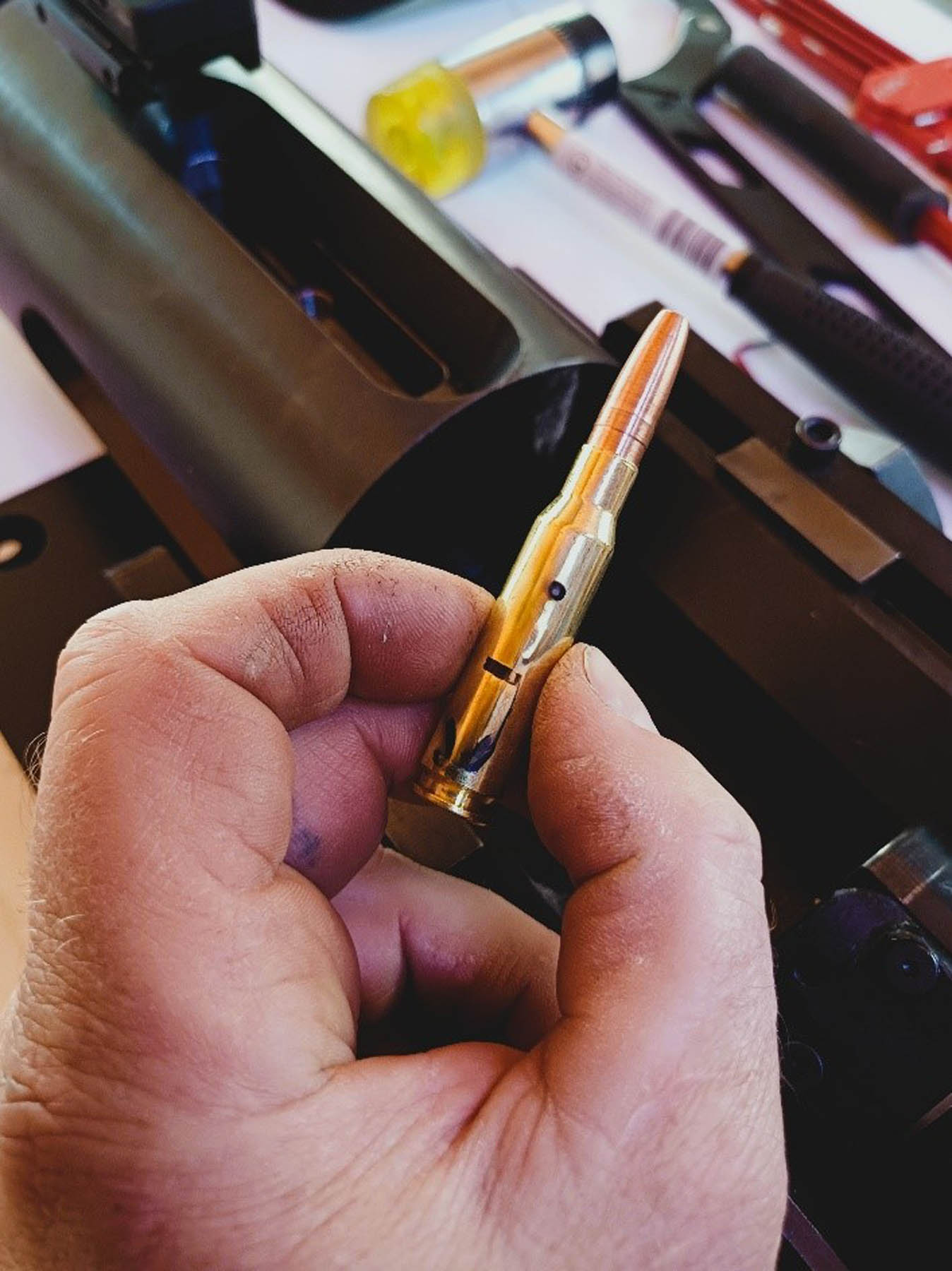
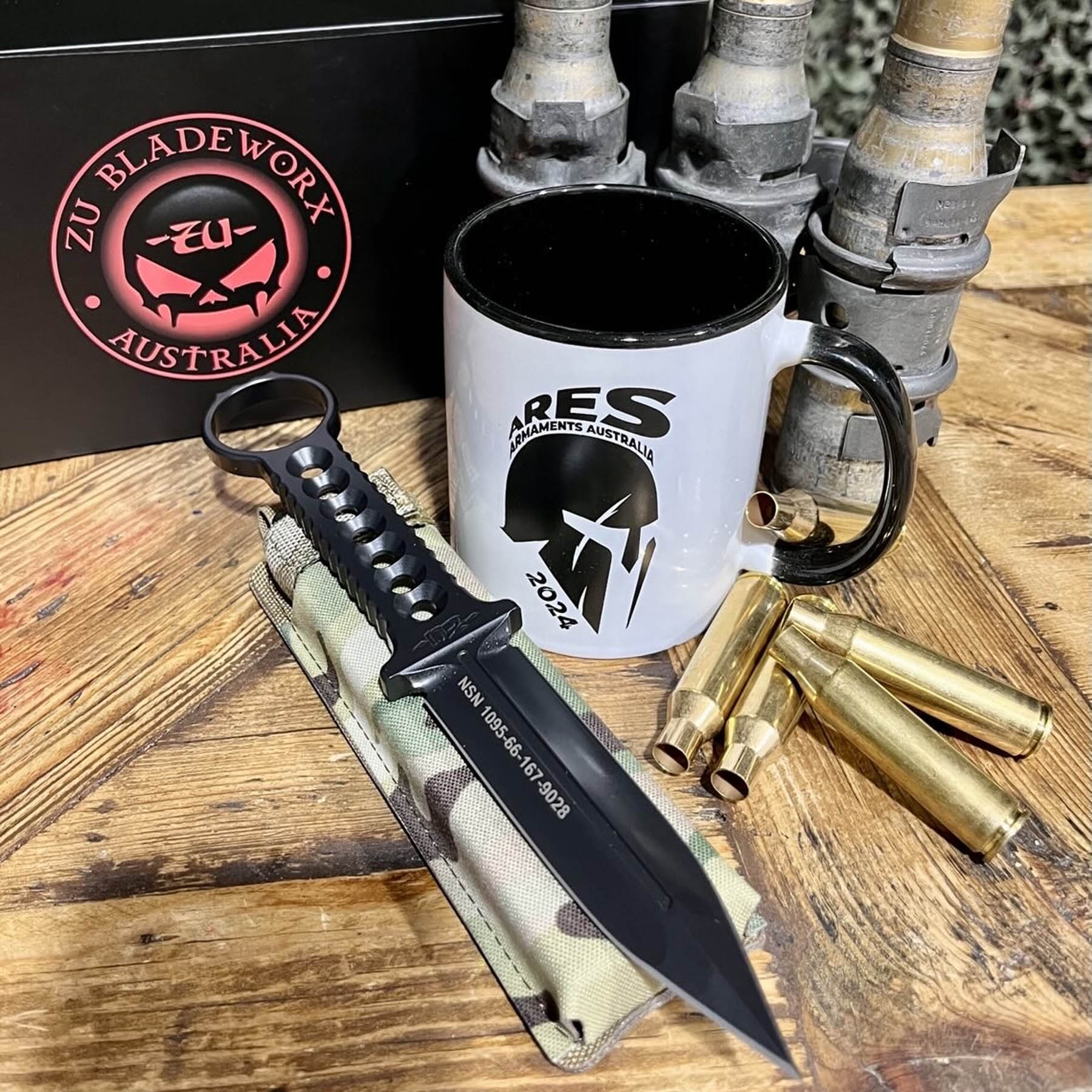
But ARES isn’t just munitions. In early June they partnered with Zu Bladeworx, the Australian firm chosen to supply the ADF with a new fighting knife. It also has another interesting project in the works and has produced what it says is a world first counter-drone 7.62 NATO round called Rooster, in conjunction with their testing partner, Canberra firm Electro Optic Systems which produces the Slinger counter-UAS remote weapon station.
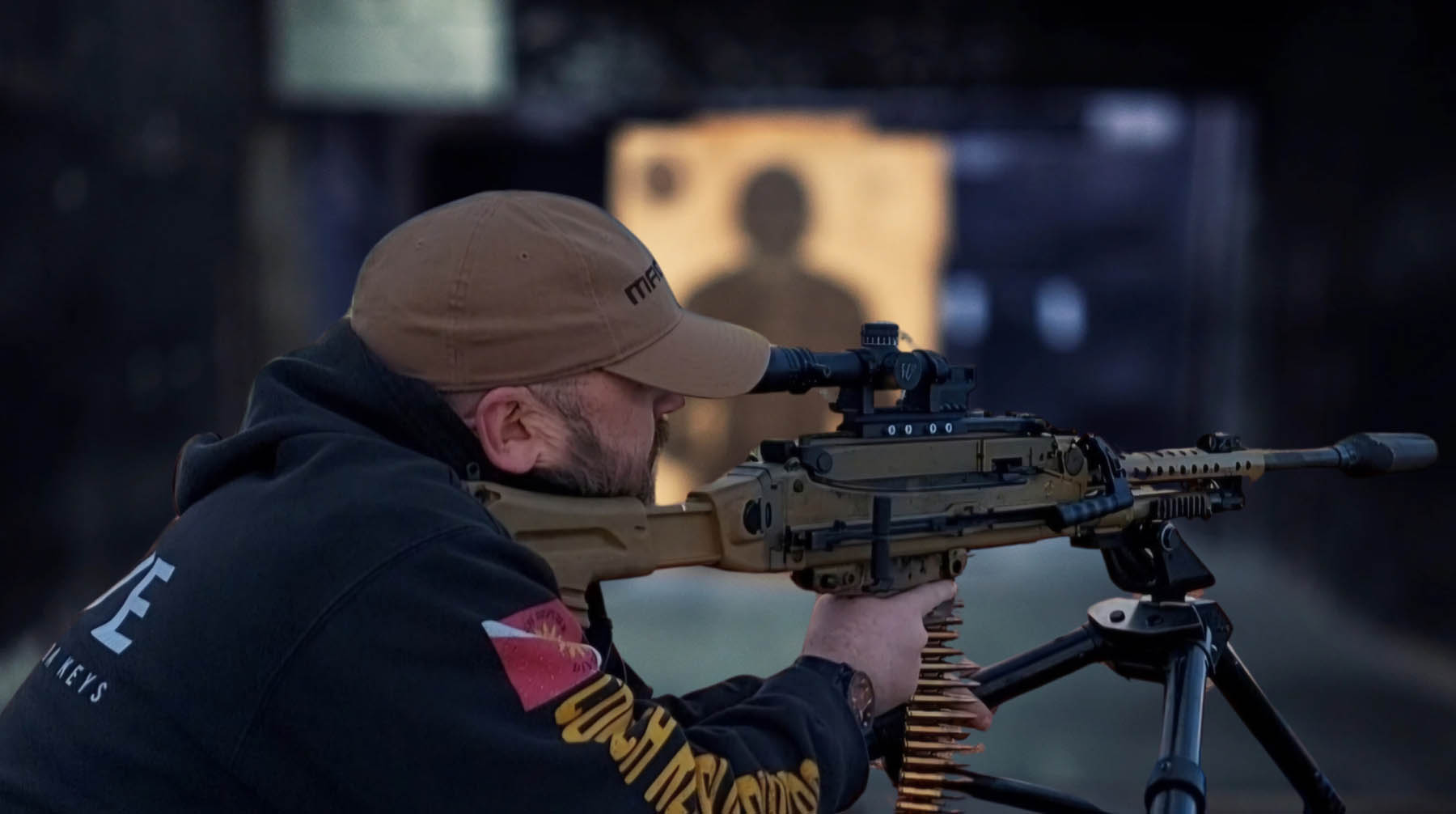
Slinger is equipped with a 30mm M230LF Bushmaster cannon firing the Northrop Grumman M1211 high explosive proximity fused round. These are expensive, reportedly costing well over $1000 a time, yet highly effective and capable of one or two-shot kills on drones beyond two kilometres. Slinger usually also carries a secondary armament, typically a MAG 58 or M134 Mini-gun in 7.62 NATO calibre, able to engage drones at closer range. However, 7.62 NATO projectiles remain lethal at several kilometres, making their use risky in populated areas.
ARES’ objective was to develop a projectile which fragmented beyond a certain distance, reducing the risk of collateral harm. “Our intent was to design a round which increases support in depth but has the ability to magically fragment in flight at a specified range,” Mr Murray said.
Right now ARES doesn’t have its own unique headstamp with cartridges marked according to their particular manufacturer. “The plan is once we get up to major quantities with some of the contracts we’re looking at right now, then we can have our own headstamp. We’re still coming out of the gates and getting our systems set up,” Mr Murray said. “We’ll get there but at the moment we’re just a little Aussie battler having a crack.”