

Daniel O’Dea trials a budget scope with premium credentials
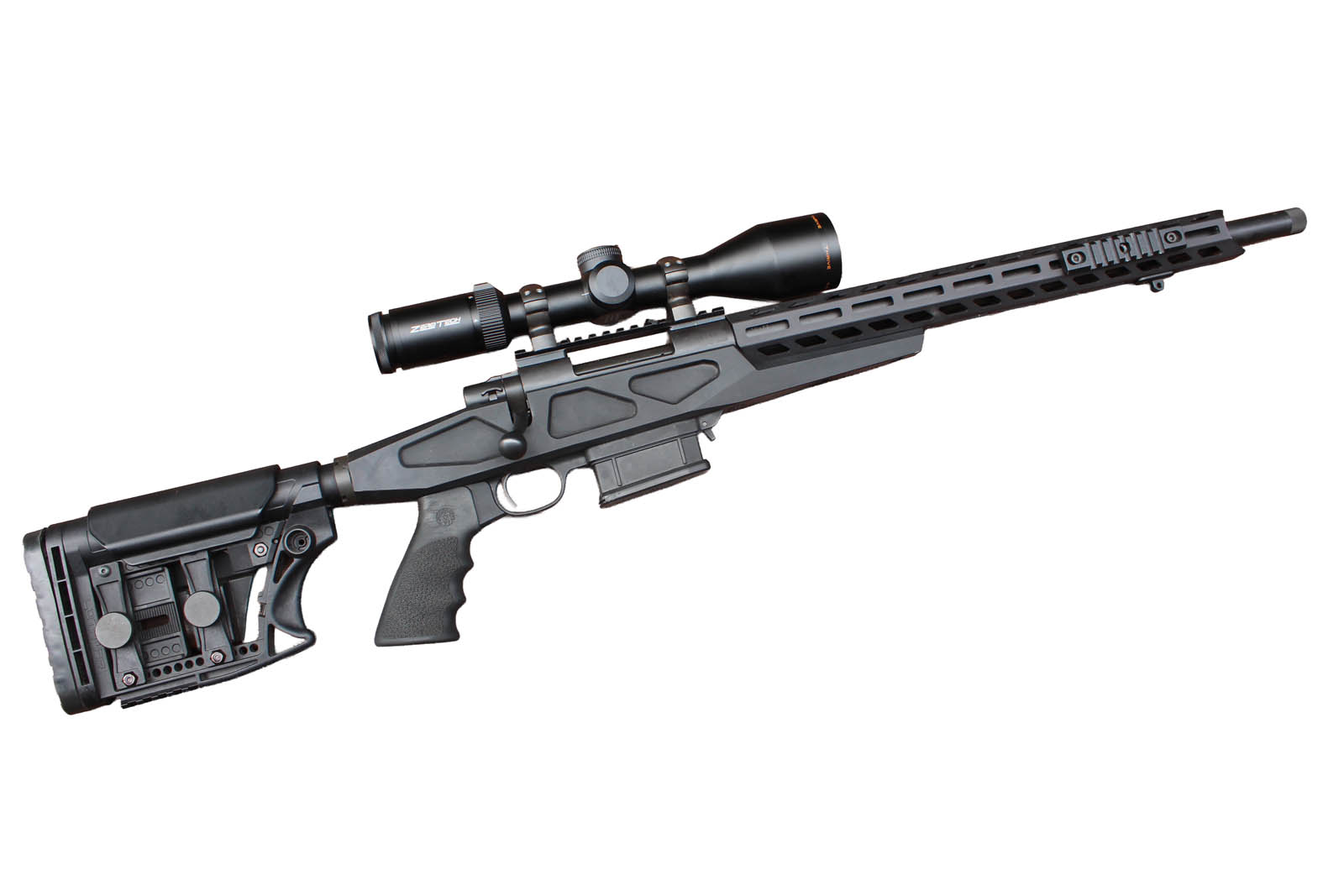
As a gun writer and reviewer, it’s not uncommon to find myself changing optics on certain rifles in my inventory which I use specifically for test and evaluation. One of those rifles, a Howa in .223 Remington, I recently grabbed to do some testing. All bagged up with a tag on the outside, I didn’t think twice when I packed it into the truck to head for the range.
All set up and ready to go, imagine my surprise when I opened the bag to find I’d no optic on the rifle at all! The mounts lay vacated, the previous resident having been returned to an optics supplier from a previous review. Thankfully, the problem was resolved when I remembered I had a ZeroTech scope on the shelf which had been waiting it’s turn for a run.
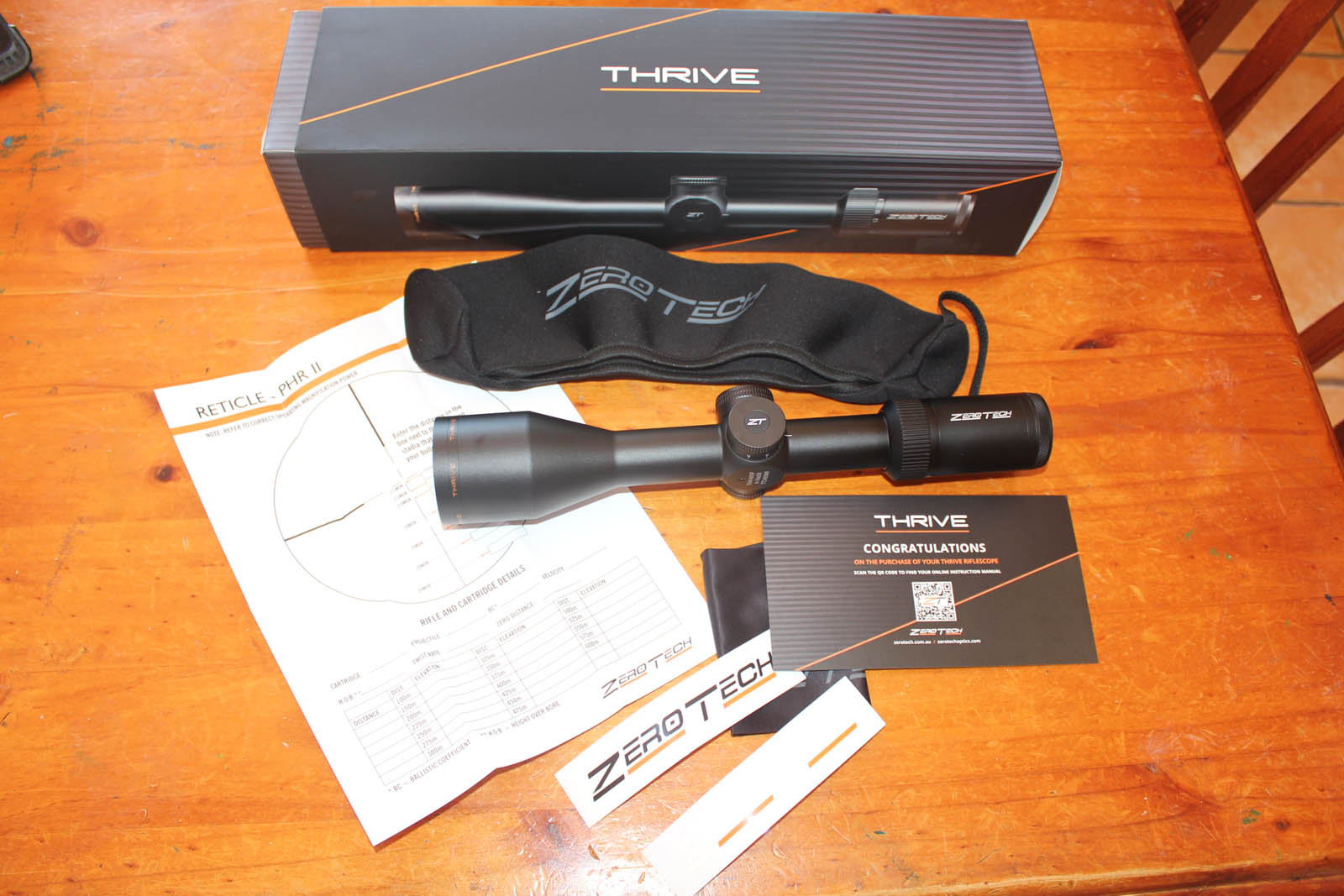
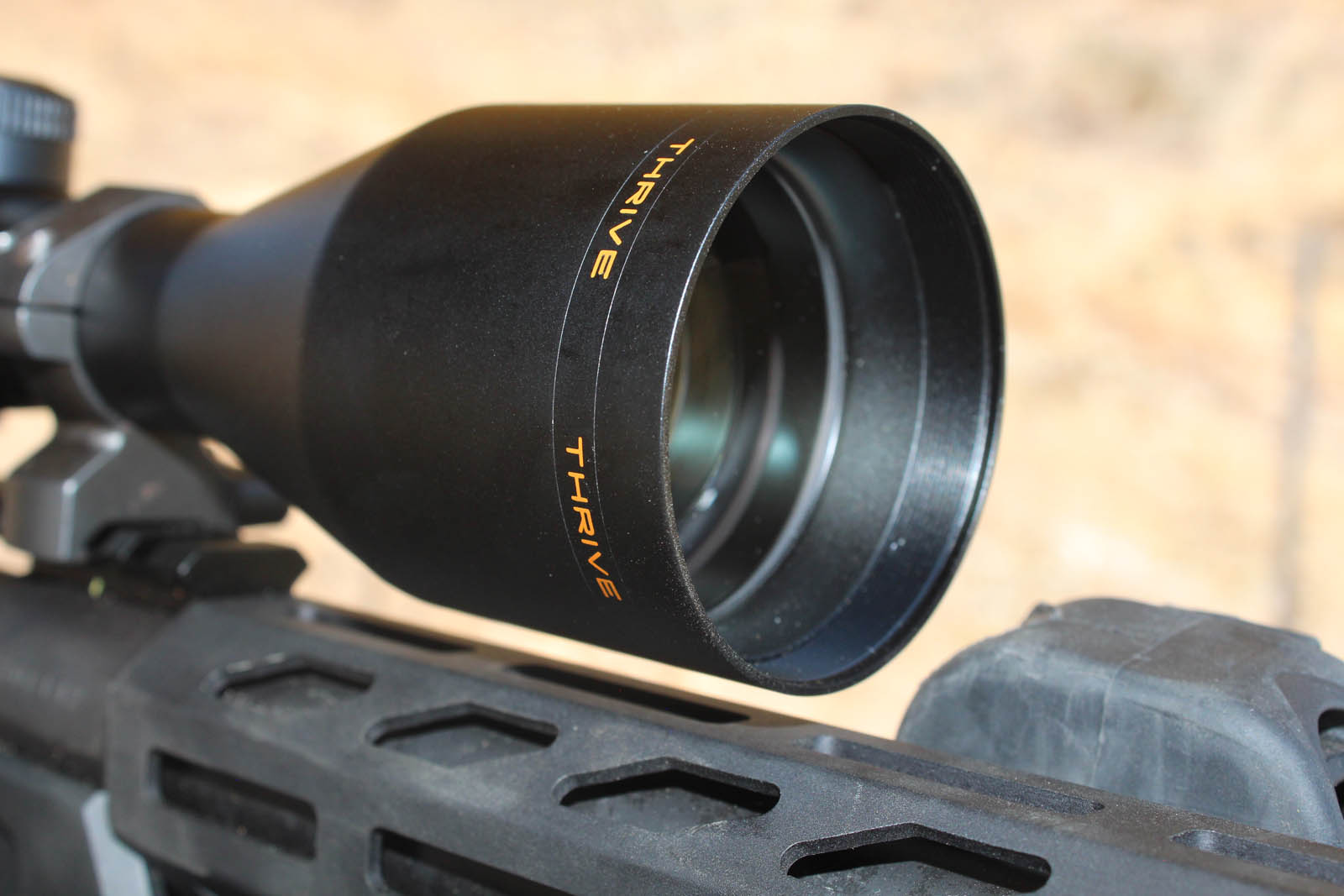
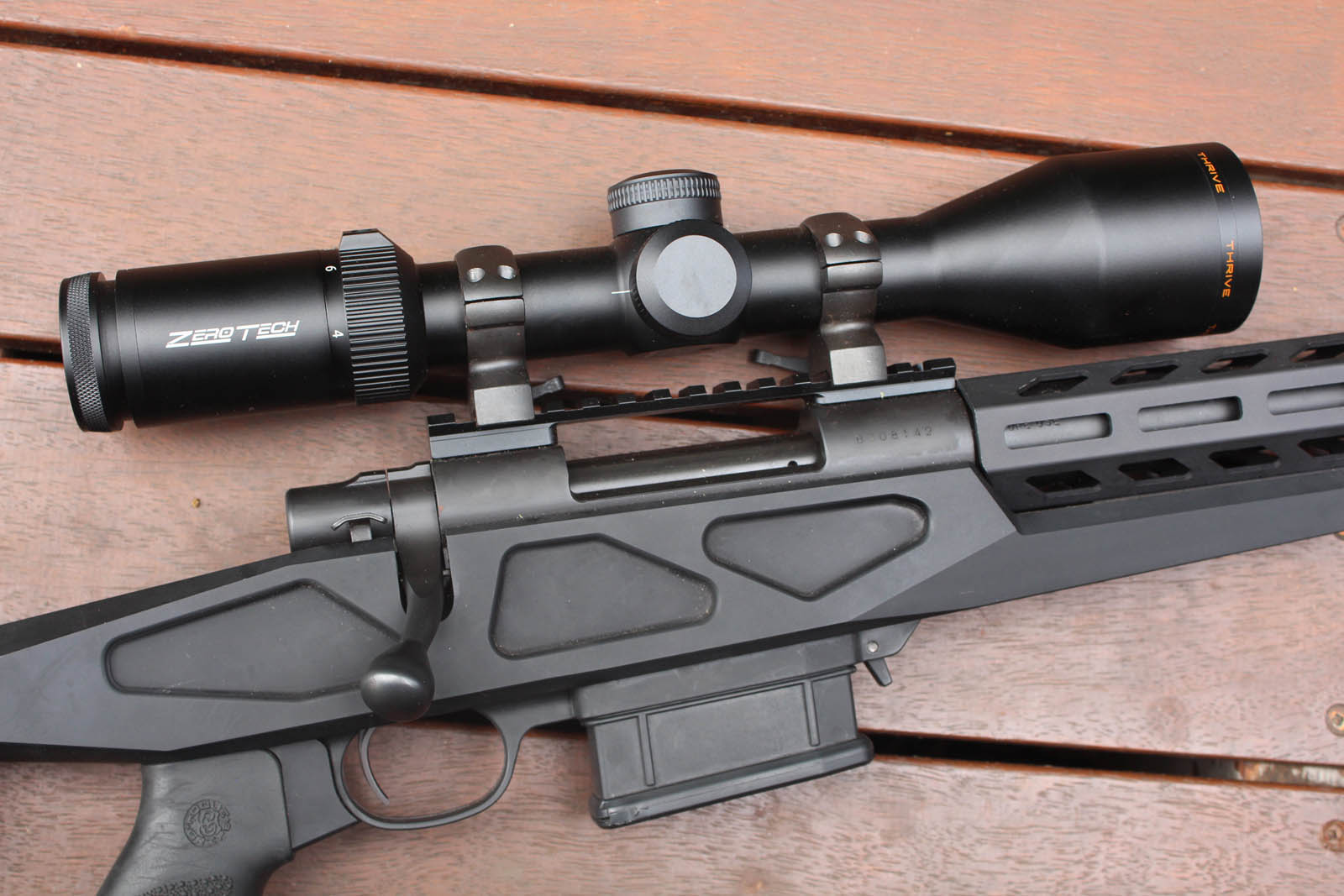
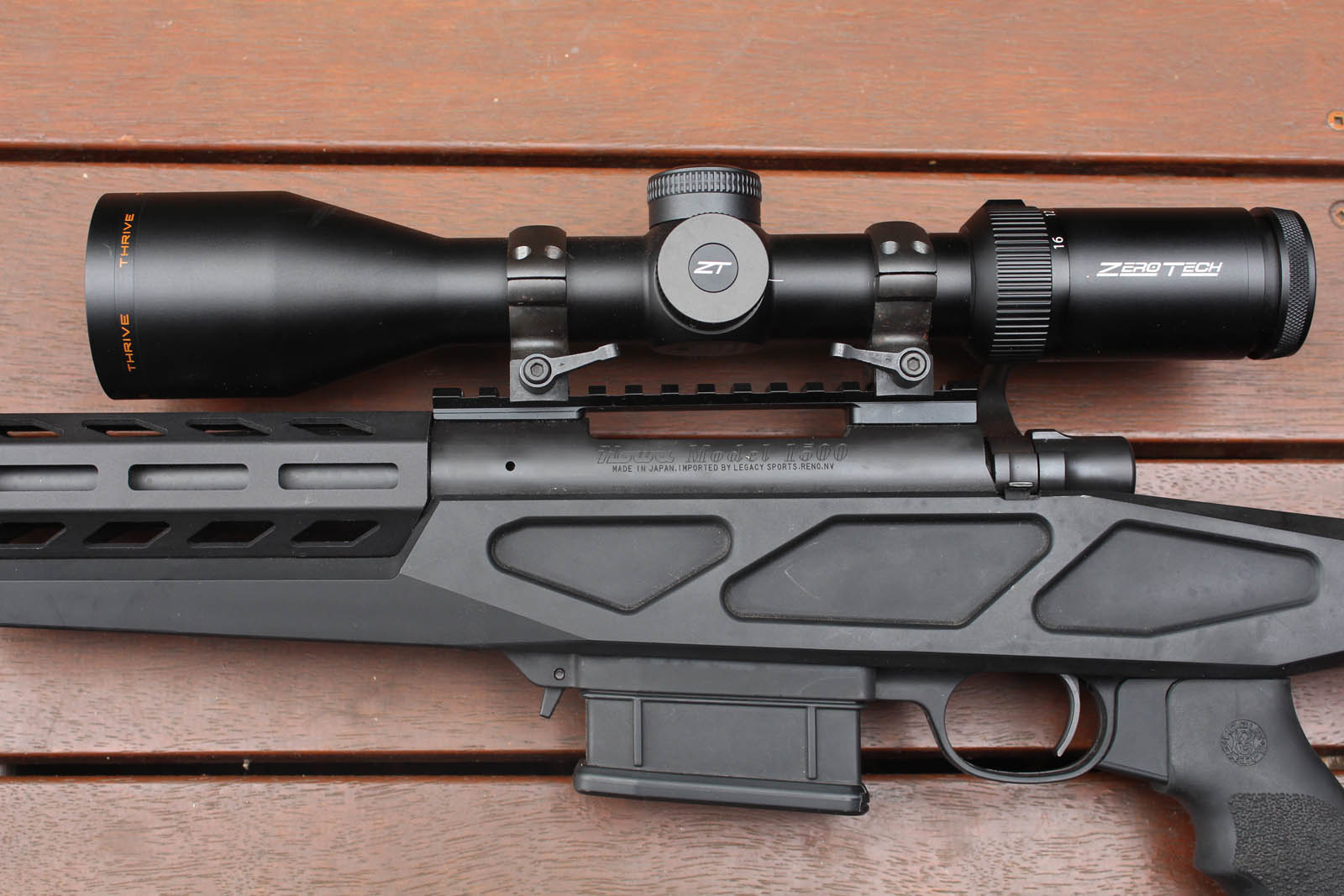
The scope in question was a ZeroTech Thrive in 4-16×50 and, with a 30mm tube, it would drop in nicely to the mounts already in place. Perfect. And I say that in more ways than one. You see when choosing a fit-for-purpose scope for a rifle, a few things need to be considered.
For a while now I’ve seen a trend towards people fitting too much scope. Back in the ’80s if you had a scope at all, 4x or 6x seemed plenty for most and I’d hazard a guess 3-9x was likely the most common variable scope at the time. If you lived behind a spotlight collecting fox pelts with a .222 or .17 Rem you might have a fixed 8×56, a popular choice delivering a maximum usable exit pupil for good light transition. It was generally only benchrest shooters who might have something more than 12x.
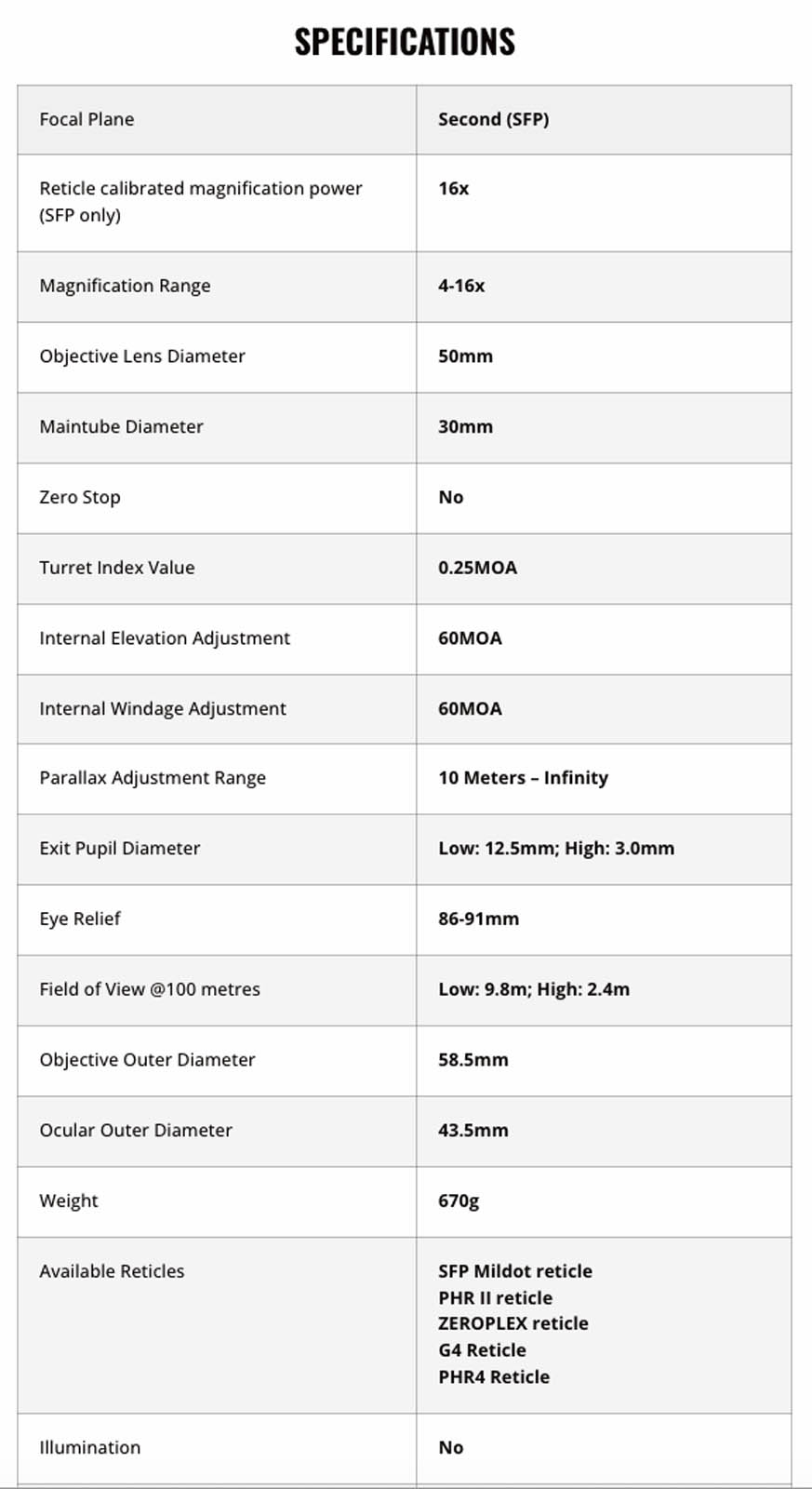
It’s true that rangefinders and ballistic reticles have extended the range you might ethically engage targets. Yet for most, anything beyond 200m is still going to be a long shot, so big magnification isn’t really necessary, especially on a .223 Remington. In this case being a 4-16, the Thrive would offer the more than enough magnification if you needed to stretch the legs at the top end (16x), while offering a generous field of view set on 4x when up close in the thick stuff. Likewise, the combination of a 50mm objective and 30mm tube do increase light transmission, making it a good choice in lowlight or indeed behind the old electric dog for spotlighting.
Surprisingly, for the magnification offered the Thrive is also relatively compact. At 331mm in length and weighing 670g, it has an external diameter of 59mm at the objective and 49mm at the ocular housings respectively. With just 143mm of combined 30mm tube and turret between the two housings, it would be well suited and proportionate when fitted to any short to medium-length rifle action.
The scope is of the second focal plane variety, meaning the reticle remains the same size regardless of magnification adjustment. This remains the world standard for hunters, despite the growing popularity of first focal plane optics for use in some other applications. Eye relief too is more than adequate at 86-91mm, magnification dependant.
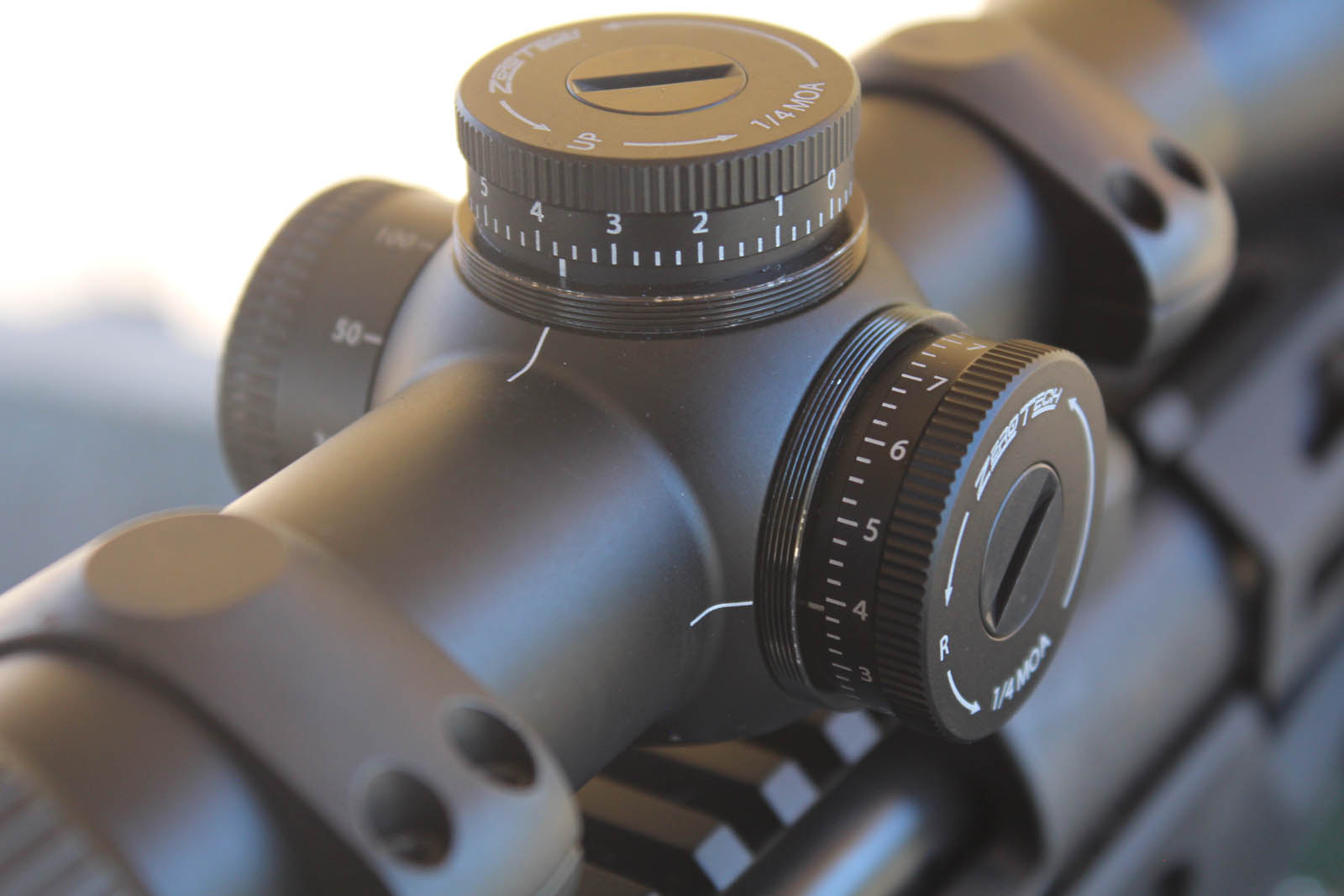
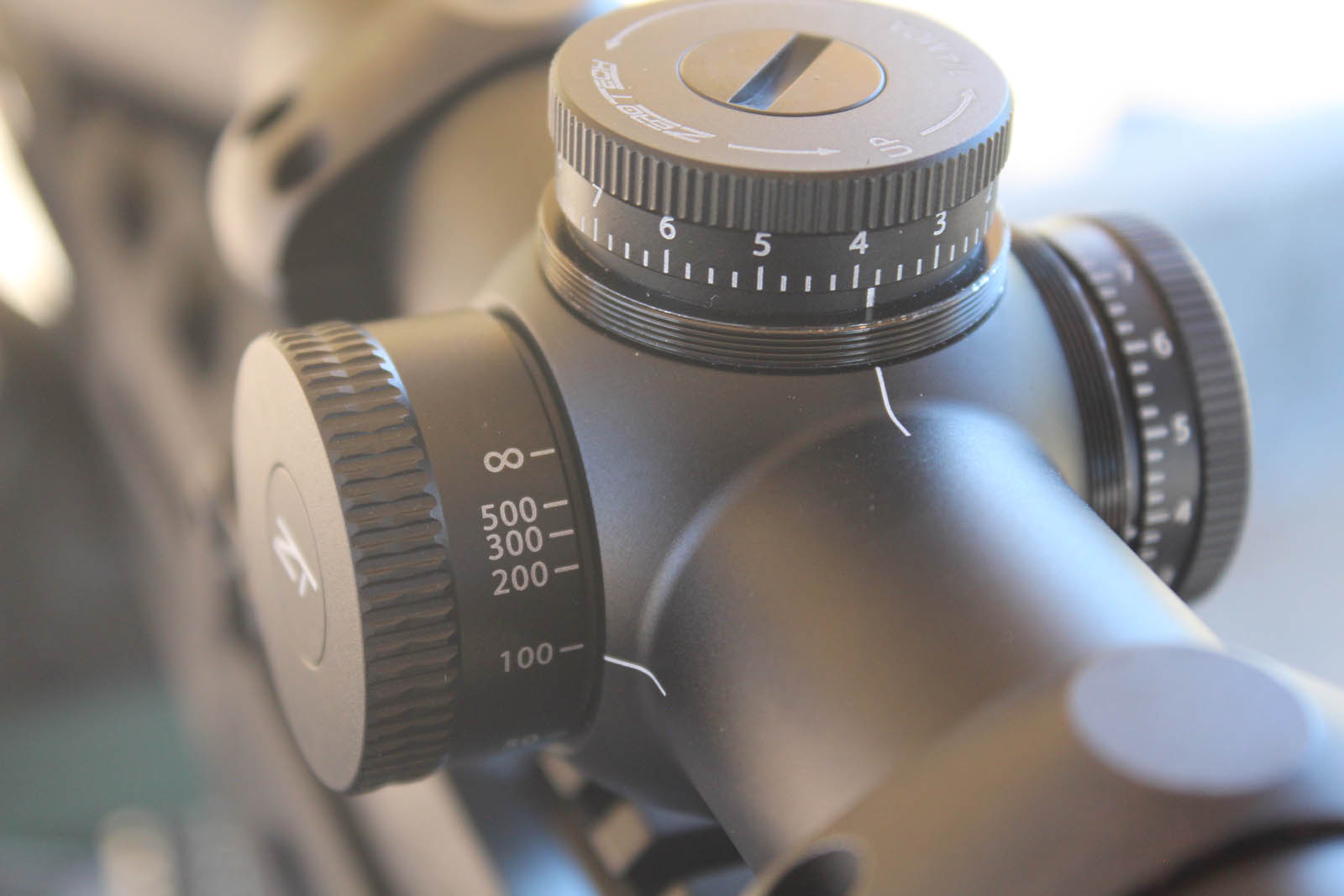
Elevation and windage adjustments are provided in .25 MOA graduations and are both audible and tactile, meaning you can hear and feel each fine click. Internally the turret gives 60 MOA of both elevation and windage, so plenty of adjustment. Screw-on turret caps cover target-style towers which are clearly marked and generous in size for easy adjustment. And while this model offers no zero stop, turrets can be zeroed once sighted-in by removal and replacement to align the ‘O’ markings on the turret. This is done easily using a screwdriver or coin.
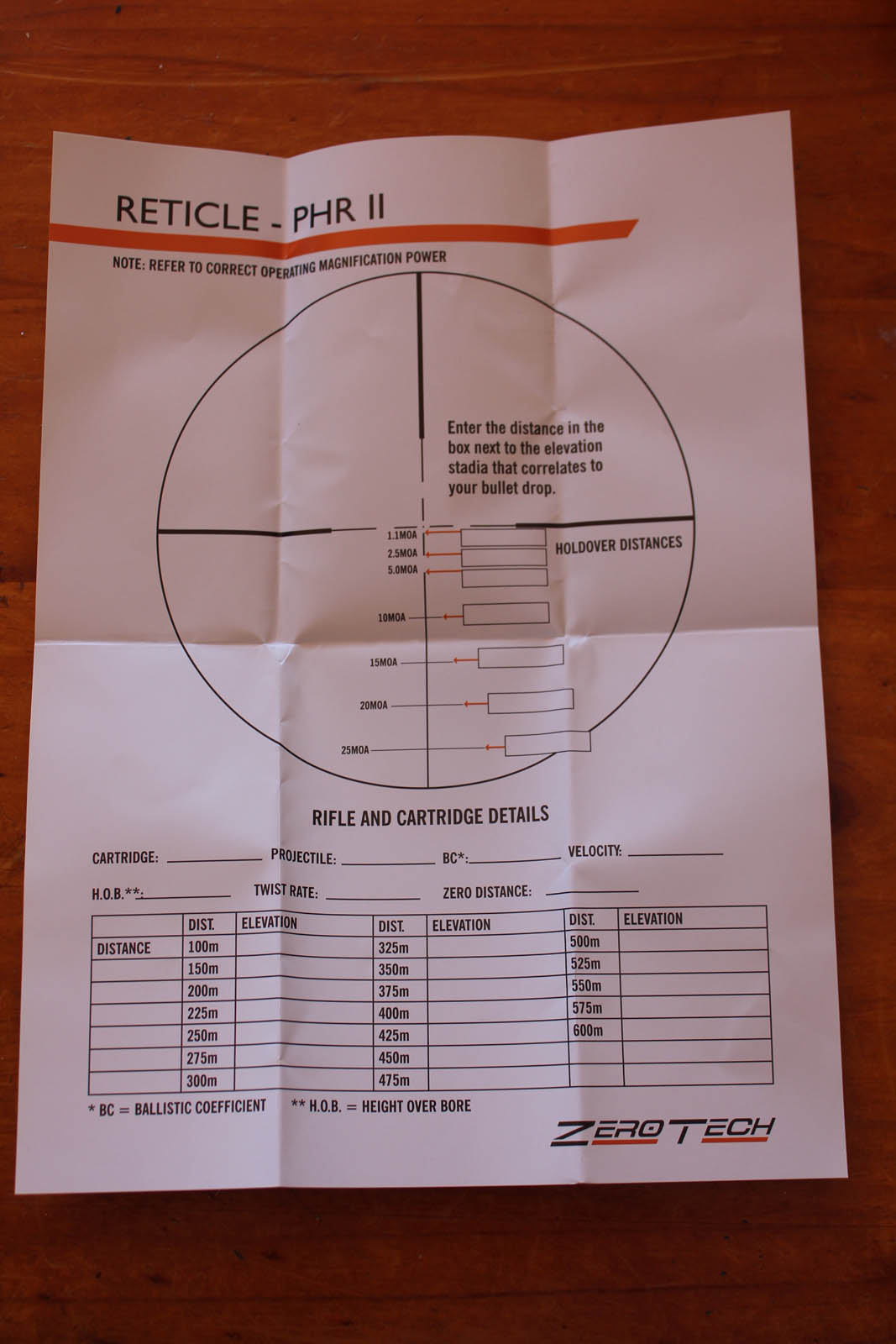
The Thrive 4-16×50 is available (at my last count) with no less than five reticle options, from basic plex-style to mildot to ballistic type. The supplied scope came with ZeroTech’s PHR II reticle, which features marks and hash bars representing 0, 1.1, 2.5, 5.0, 10, 15, 20 and 25 MOA in drop respectively. There’s a data sheet on which you can record what these values represent with your chosen calibre and load choice, with additional copies printable from the ZeroTech website.
Likewise, the website carries a specification sheet detailing the value of every hash, mark, gap and space you’ll find on the reticle if you really want to be technical. As far as ballistic reticles are concerned, this one’s not cluttered or overly complicated, so in my opinion offers an advantage over the standard plex, especially when mixed with calibres or projectile choices which may present a curvier trajectory.
The scope’s turret has a third wheel (turret dial) on the left, to adjust parallax from as close as 10m to infinity. This close-in parallax adjustment also makes the Thrive good for fitment to air rifles. And according to the website it’s built to withstand the shock of even magnum grade spring-powered air rifles, well known as destroyers of less durable optics.
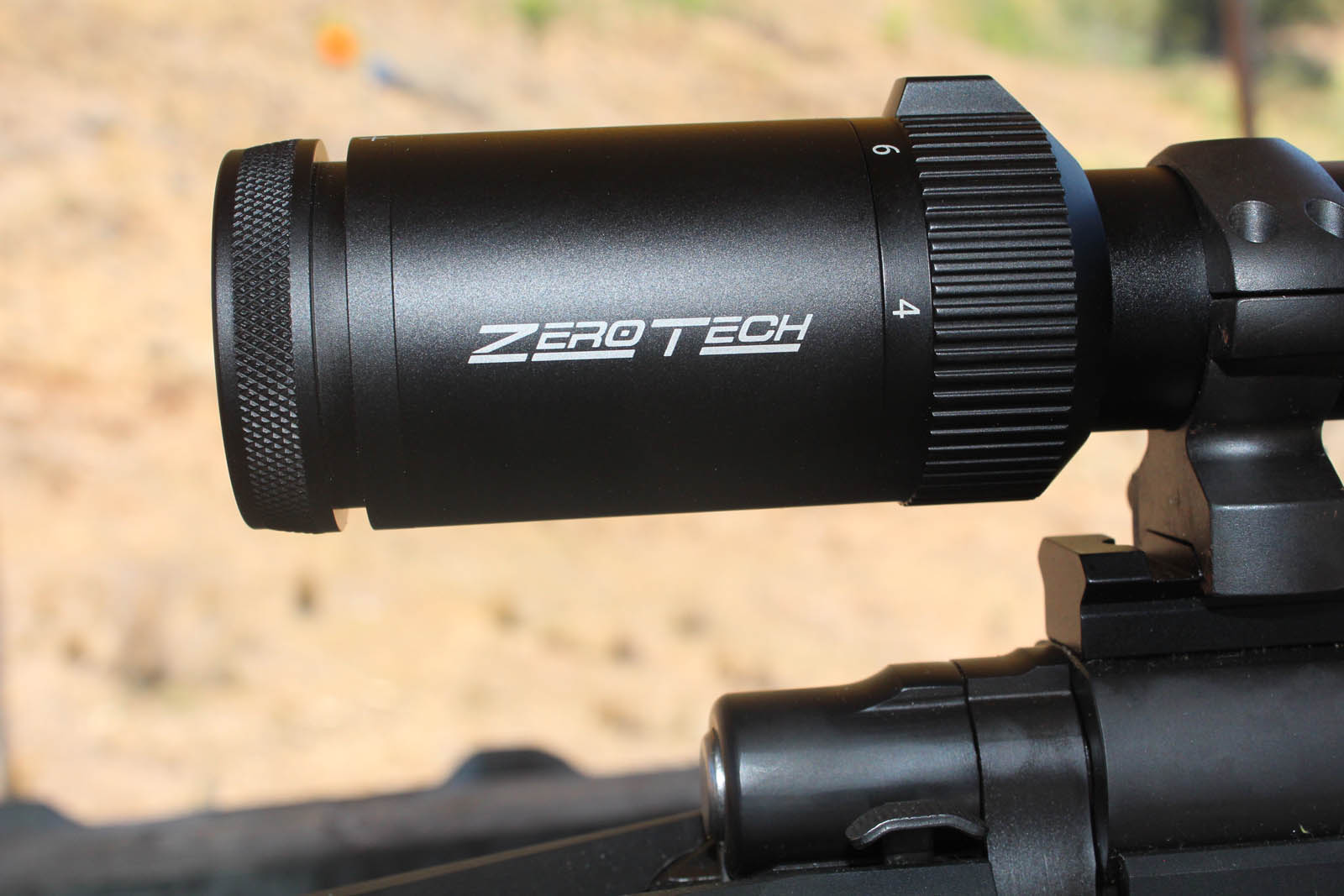
Fitting the unit up I also noticed the ocular lens includes diopter adjustment via a knurled ring ZeroTech refer to as a ‘Fast Focus Diopter’. Likewise the power change ring is ribbed for good grip, so for ergonomics the Thrive gets a big tick all around.
With the rifle locked down in my Caldwell Lead Sled, it didn’t take long to have the rifle on paper and indeed sighted-in. The Thrive passed the obligatory tracking tests one might carry out, with all adjustments failing within the margin of error (my shooting ability) when adjusting from point of aim to point of impact or vertically for hold over. Large dial adjustments up, down, left and right all showed no adverse effect on point of impact when returned to zero. In the field the optics are bright, clear and the package seems to punch above its price point.
To be honest, modern lens quality never ceases to amaze me, with respect to what we see today in budget priced scopes. And I say budget priced not to disparage, simply to point out we’re talking about a unit starting at less than $500 retail. After all, when ‘given the budget’, it’s easy to spend four or five times that on a top-shelf optic of similar magnification and features these days.
In the good old days (the ’80s for me), the difference between cheap and high-quality optics was like chalk and cheese. With some exceptions back then, a budget or cheaper scope might likely pass on a bright sunny day, yet could be cloudy or next to useless in low light and perhaps not so much built to last. Today it’s feels like premium scopes have gone from great to brilliant, while budget lines have gone from poor or fair to great. Don’t get me wrong, my advice with optics will always be to buy the very best you can afford, though the gap now seems a good bit closer.
As testimony to their belief in the product, ZeroTech offers a rather amazing lifetime warranty of ‘Any Owner, Any Problem, Always Covered’. It’s an unconditional lifetime repair or replacement deal, with no registration or proof of purchase required and fully transferable. You can literally sell it in 10 years’ time and the new owner has full warranty. For the time I’ve had with it, the ZeroTech Thrive presents as well-priced, featured-packed with a warranty giving ultimate peace of mind should something go wrong. More at www.zerotech.com.au