
Senior correspondent Rod Pascoe assesses a matched pair of Walther PDP pistols, courtesy of newly-appointed distributor SJS Trading of Melbourne
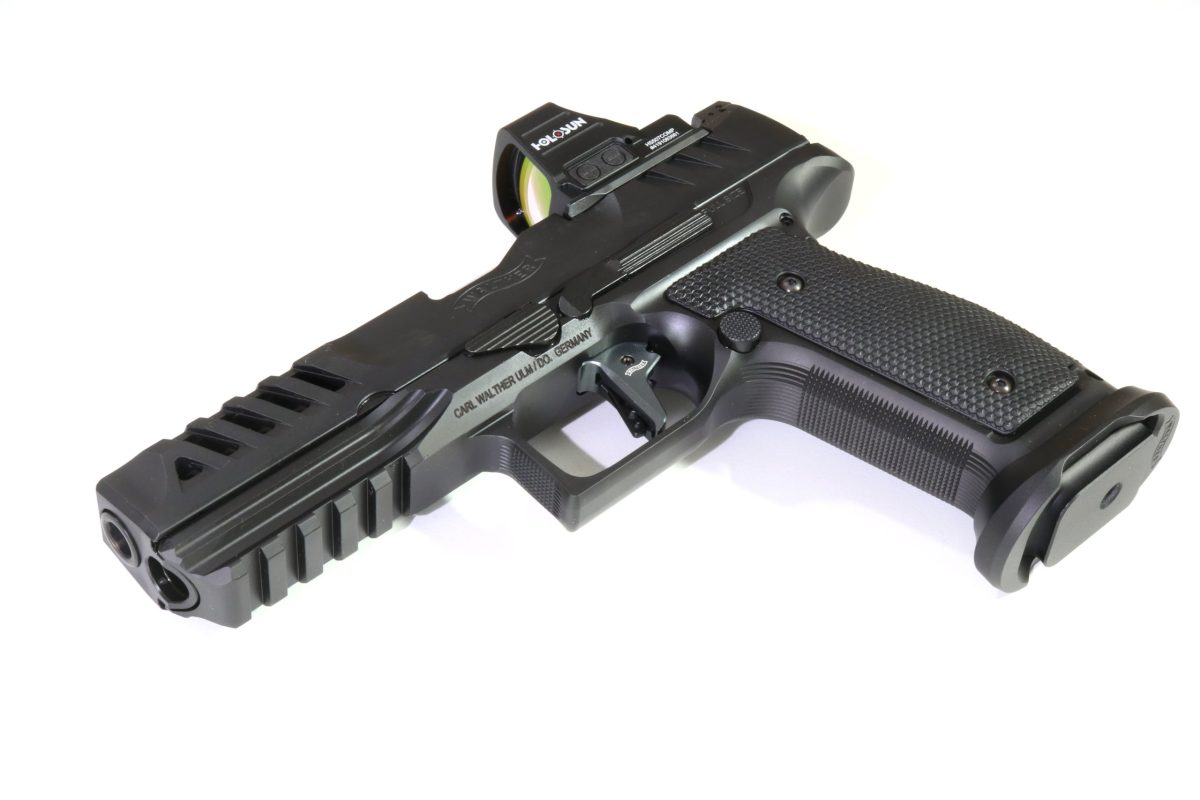
These pistols are Walther PDP full-size, striker-fired, self-loading, optics-ready and match grade, the main difference being one has a polymer frame and the other steel. Both have polygonal rifled barrels chambered for 9mm Luger (aka 9x19mm) and are supplied with three 10-round magazines with extended bases to complement the aluminium mag wells. The chambers have a step which prevents gasses escaping to the rear on firing.
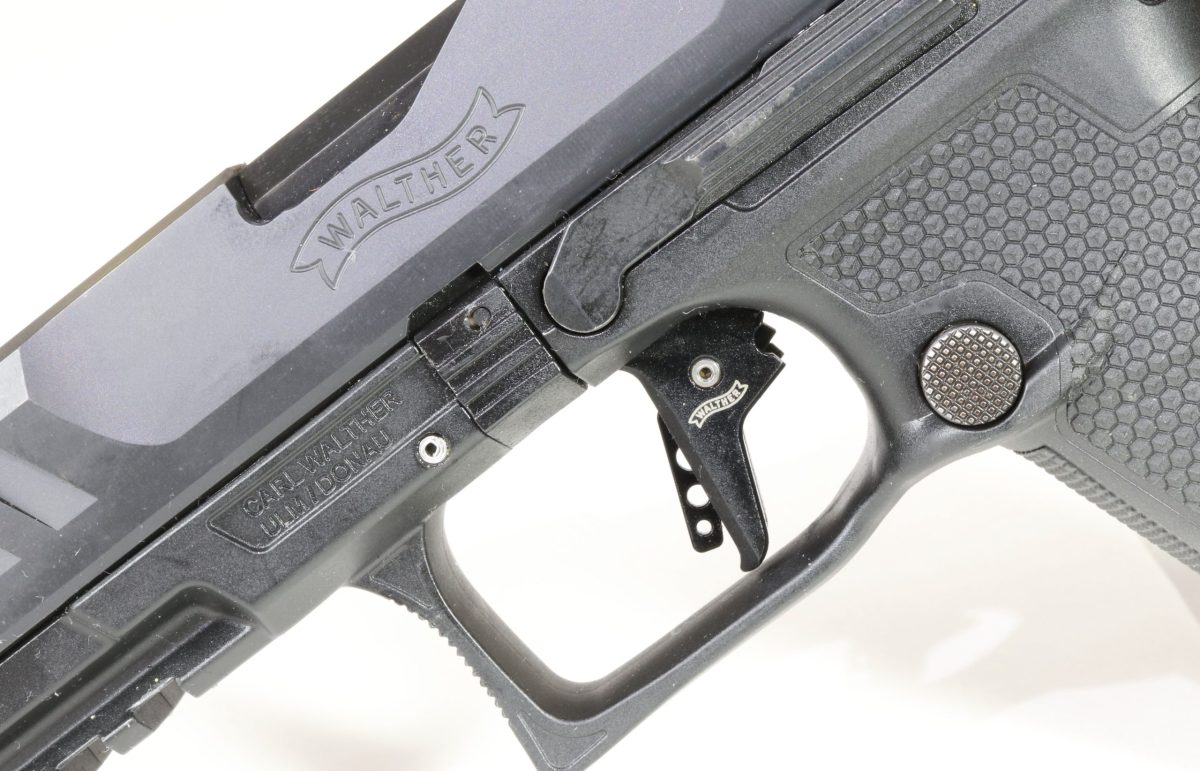
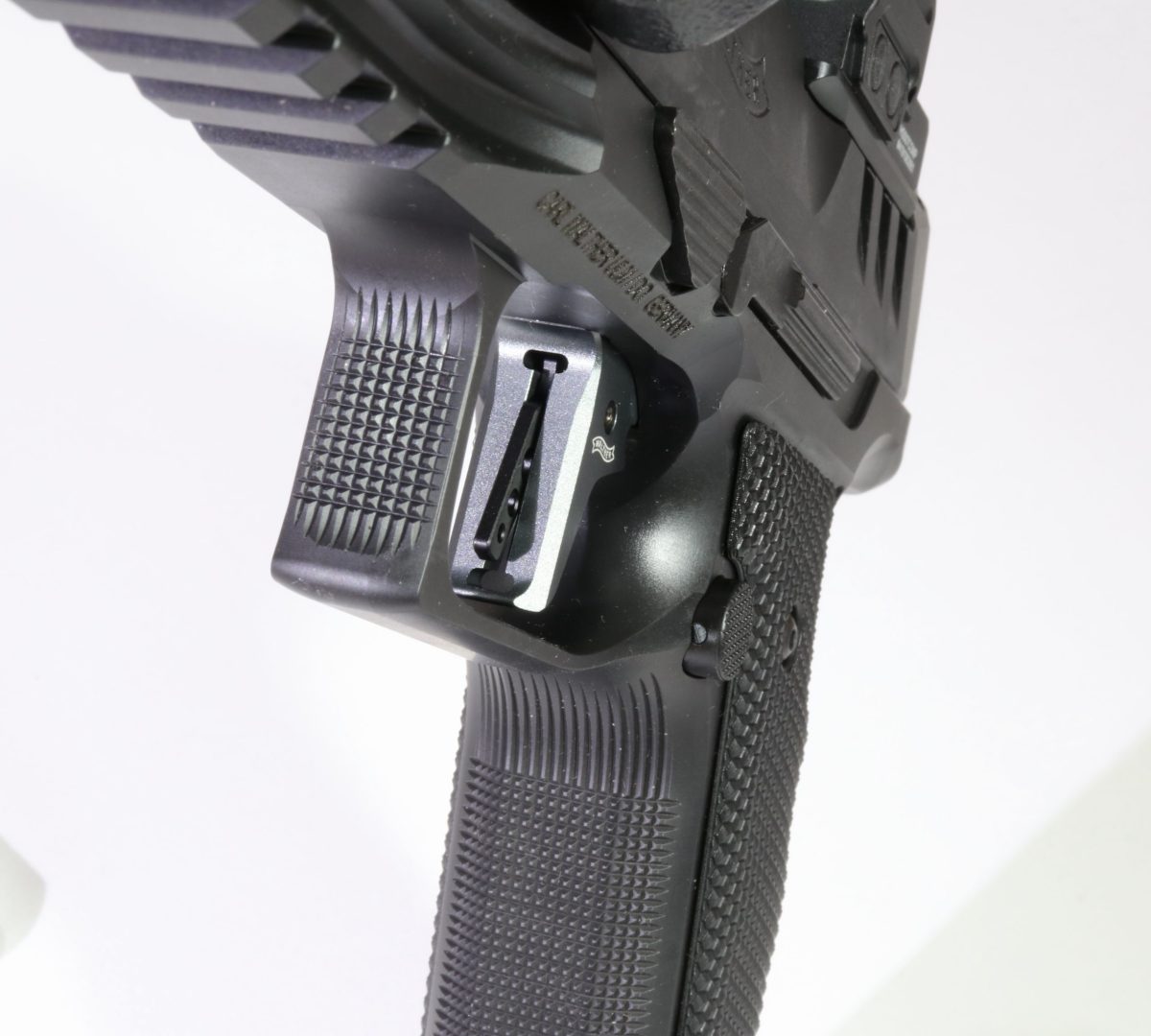
The PDPs are fitted with long, ambidextrous slide stop levers and large, round magazine releases buttons which can be changed over for left handers. The external extractor on the right of the slide doubles as a loaded chamber indicator, while the presence of a cartridge in the chamber exposes a coloured portion of the extractor claw. Multi-slotted accessory rails are provided underneath the frames for attaching torches, training aids and weights. Unlike the PDP’s forerunner the PPQ, these pistols are fitted with the Dynamic Performance Trigger (DPT) as standard, something previously available only as a drop-in aftermarket accessory in earlier PDP and PPQ models.
It’s fair to say the major improvement in these models is the trigger. To a pistol shooter the trigger is the centre of the universe and the first thing tested for appraisal. The DPT firing mechanism has been refined to where the take-up has been shortened, to produce a crisp and precise break and a shorter and smoother than expected trigger reset. All this with a trigger weight of less than 5lbs which lets off at precisely 90 degrees from horizontal.
Apart from some cosmetic differences, both incorporate most of the earlier features which proved successful on the PPQ. I refer to that one as it was the ground-breaking model which changed the direction for Walther, turning basic ‘defence’ handguns into something comfortable in the hands of sporting shooters. Features such as the deep front and rear slide serrations, trigger guard and grip texture have been retained. Both recoil springs are of the flat wire type which are captive on the guide rods, while these PDP models house an adjustable rear sight which, unlike the PPQ, remains on the slide when an optical sight is fitted.
In the hand both feel good in terms of balance, weight and grip angle, highly familiar to me as a long-term PPQ shooter. Two models of Holosun reflex dot sights were also supplied by SJS Trading for the review and will be discussed later. So having explored their similarities, let’s look at these PDP models individually.
The polymer-framed PDP pistols were reviewed in these pages when first released, and received the much-coveted ‘Handgun of the Year 2021’ award from renowned US magazine Guns & Ammo. Walther has since increased the number of models, so now both compact and full-sized steel and polymer frames are available in a variety of barrel lengths and sight options. There are eight PDP models available from SJS Trading, including four steel with attractive finishes such as the PDP Vintage with its colour case-hardened appearance.
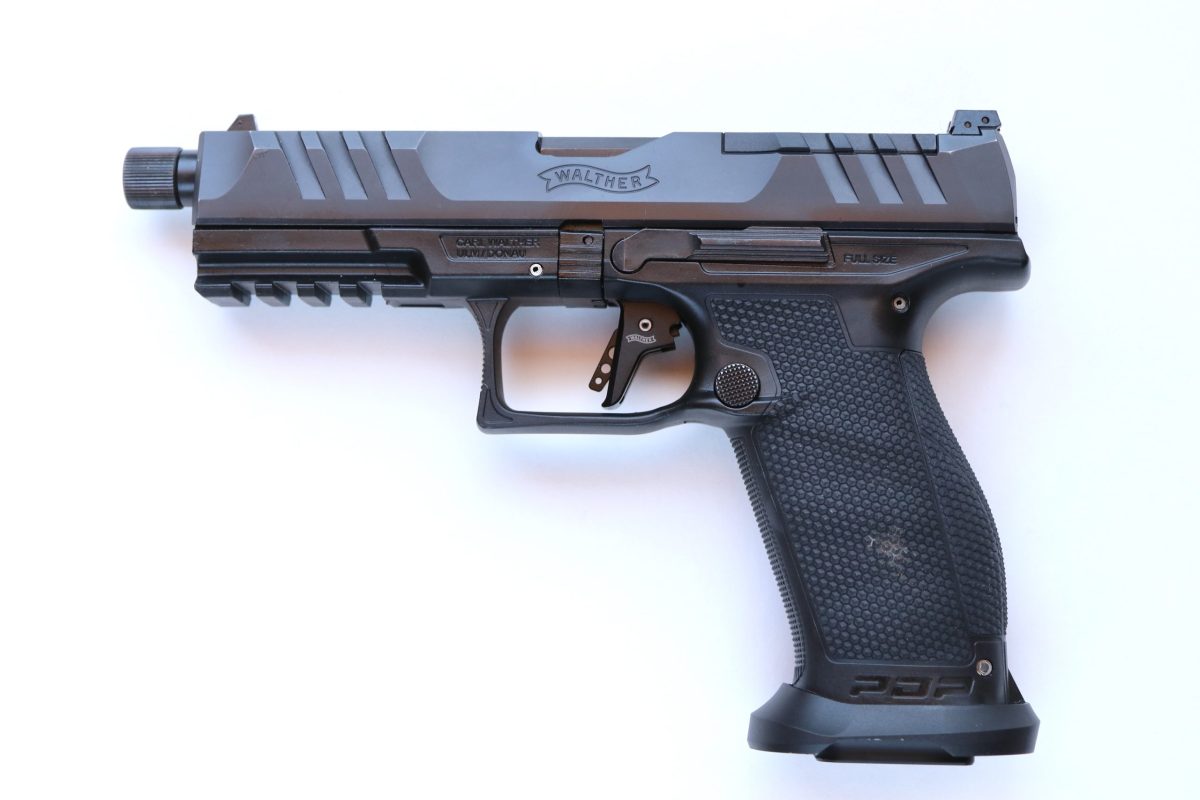
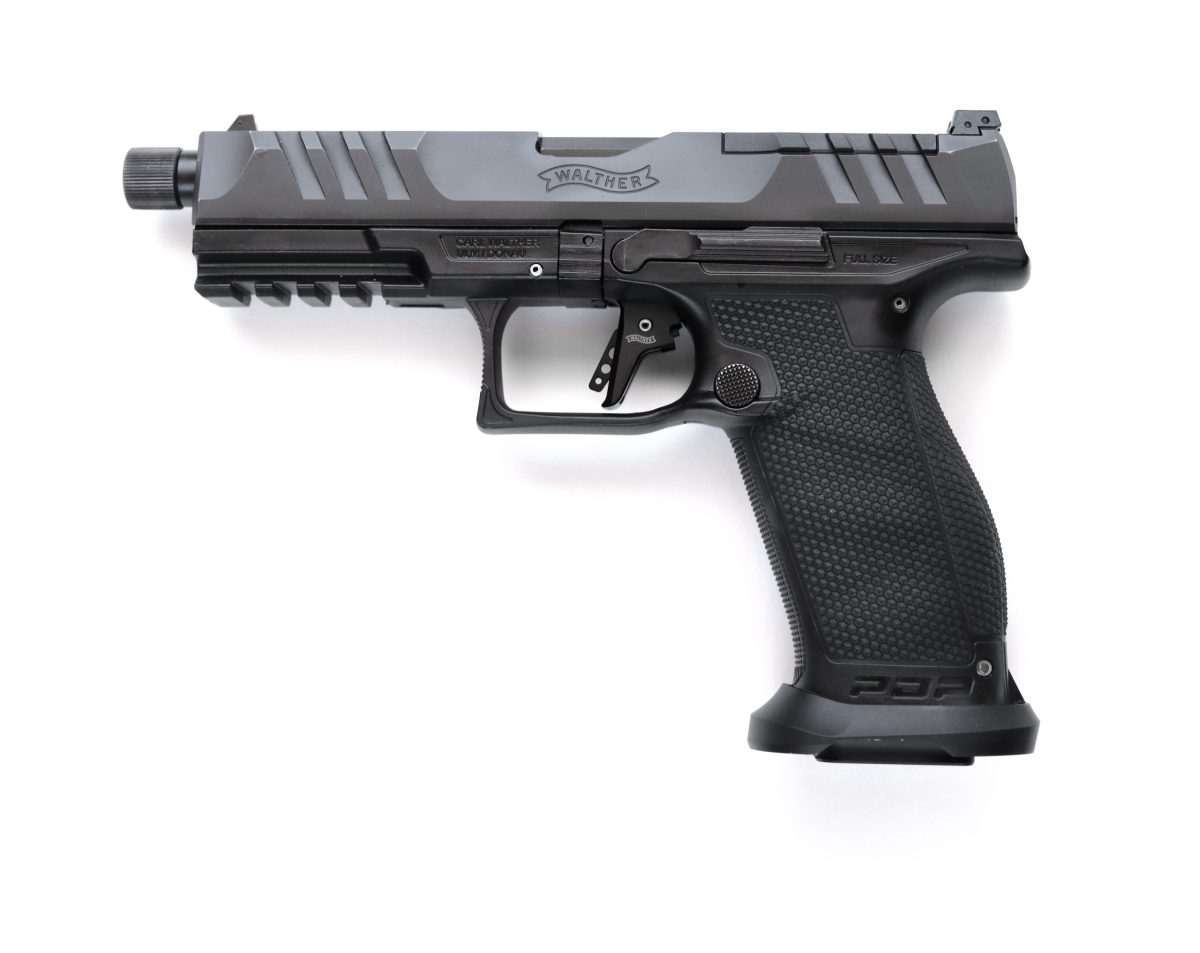
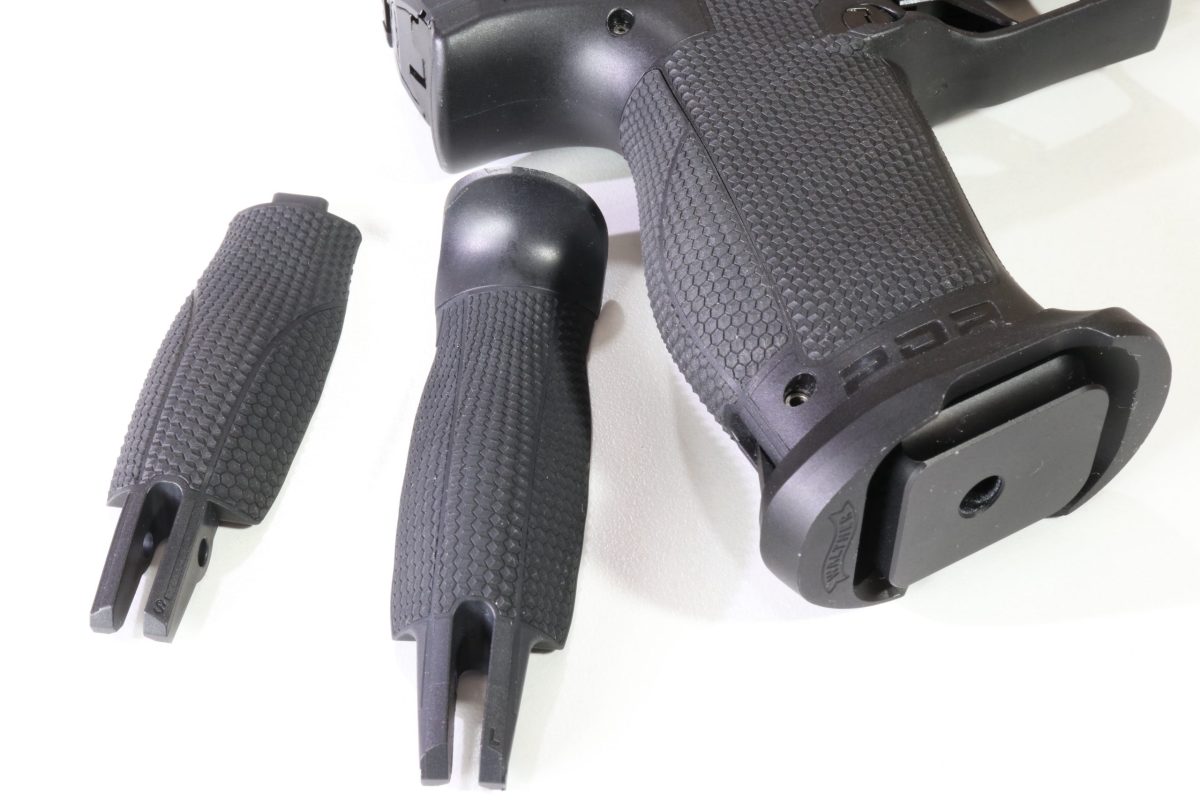
The polymer-framed pistol reviewed here is the PDP Full Size 5.1^ Pro SD, considered ‘match’ grade by virtue of the DPT trigger as standard, its full-size frame and 5.1^ barrel (it’s also threaded hence the extra length). The grip backstrap has a choice of three sizes, one also modifies the beavertail shape.
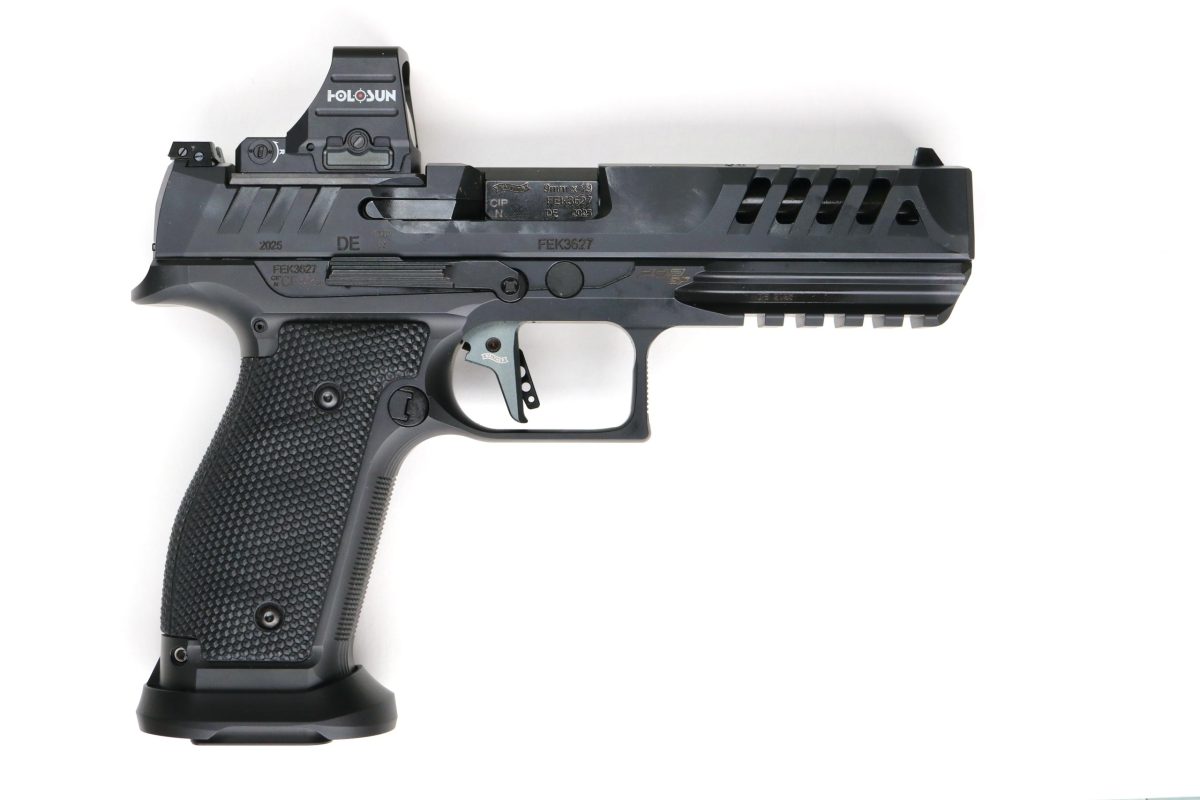
It’s not until you pick up the PDP Steel Frame (SF) Match Full Size 5^ model you really appreciate what the fuss is all about. It’s heavy – and I mean that in a good way. The weight and balance of this one reminds me of what pistols used to feel like before the polymer revolution of the 1980s. At 1.3kg compared to the polymer frame of just 835 grams, the SF is truly made for competition.
Unlike the polymer farmed version reviewed, the front slide serrations are cut all the way through, helping with weight distribution and barrel cooling. It has a wraparound one-piece grip with the same deep texture that’s sticky yet comfortable. The 5^ barrel has a loaded chamber indicator where a small part of the brass case is visible in the top of the chamber.
At the range
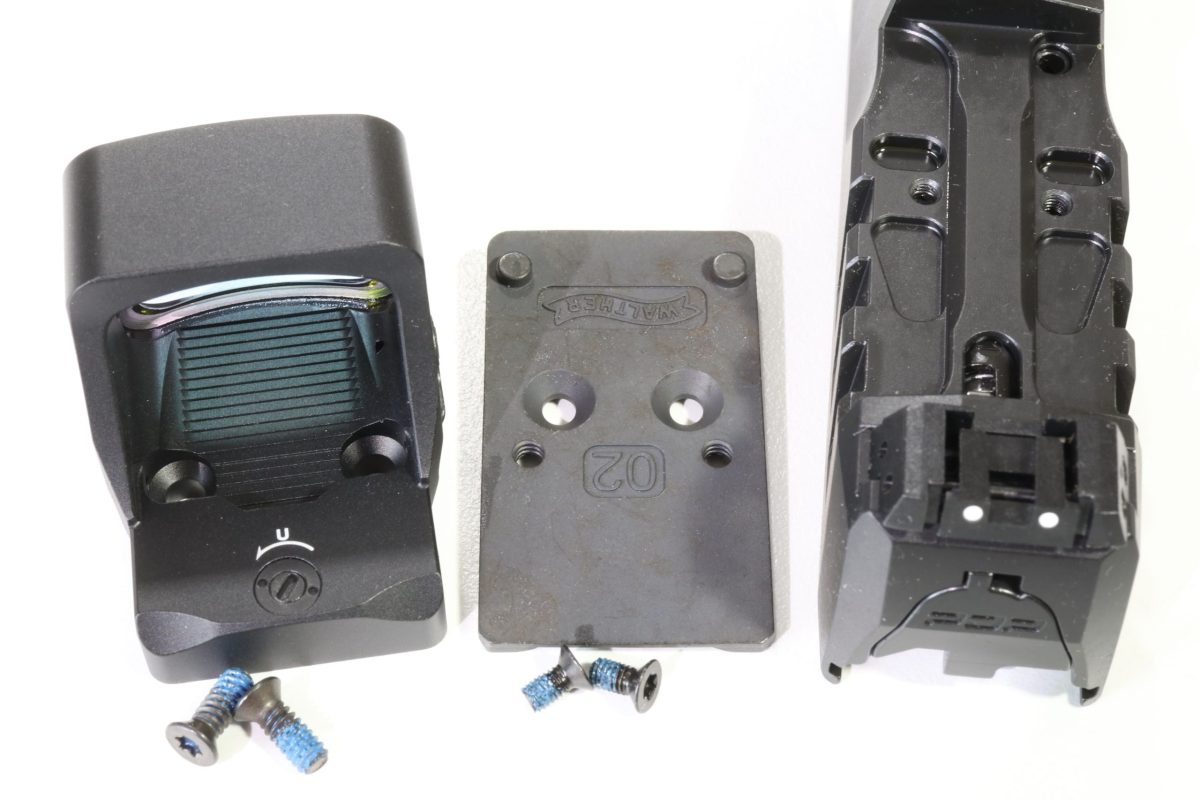
I fitted one of the Holosun dot sights, the popular 507 Competition, to the steel-framed PDP which came with the matching optic adaptor plate No.02, required for that sight. These plates can be supplied to the customer’s requirements at time of ordering or as an aftermarket accessory for around $140.
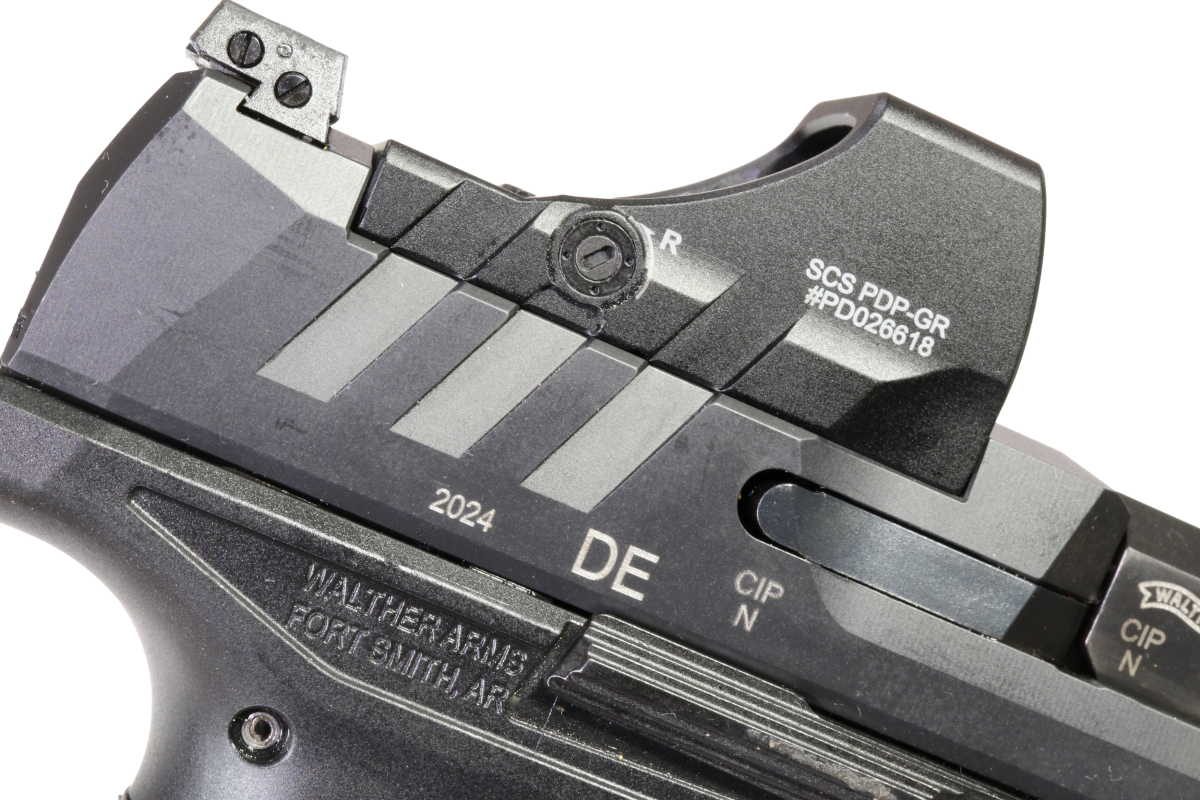
Both dot sights feature a choice of reticles with the option of either green or red. The 507 has a large window measuring 1.1 x 0.87^, standard for competition use. The other Holosun sight, SCS-PDP, is specific to the PDP and I attached it directly to the optic cut-out of the polymer-framed pistol for testing. The SCS-PDP doesn’t require an adaptor plate so the sight mounts lower in the slide, allowing the shooter to co-witnesses both the dot and open sights. A nice touch that which, combined with a smaller window, produces an overall lower profile of the pistol.
The trigger reset of the DPT is surprisingly short and it took me a while to get used to resetting after each shot without releasing it fully. This way each trigger squeeze feels identical, similar to what you’d expect on a single-action hammer gun.
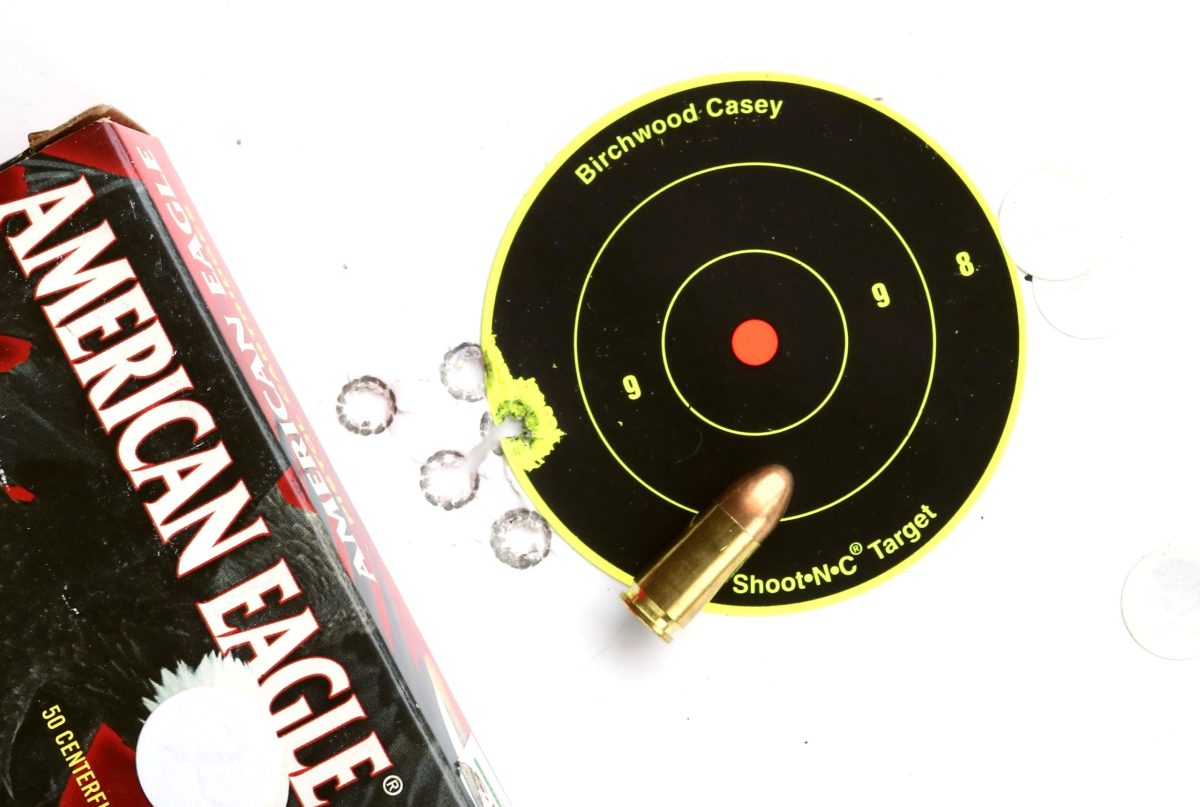
Seven commercially loaded ammunitions of varying bullet weights and types were tested on both PDP models from a bag rest at 25m, the best of those later reshot from a barricade at 25 yards on Service Pistol targets. The PDP SF was also tested with the factory open sights with excellent results. I found the white dots either side of the rear sight notch distracting, though they do have a place where fast target acquisition is required.
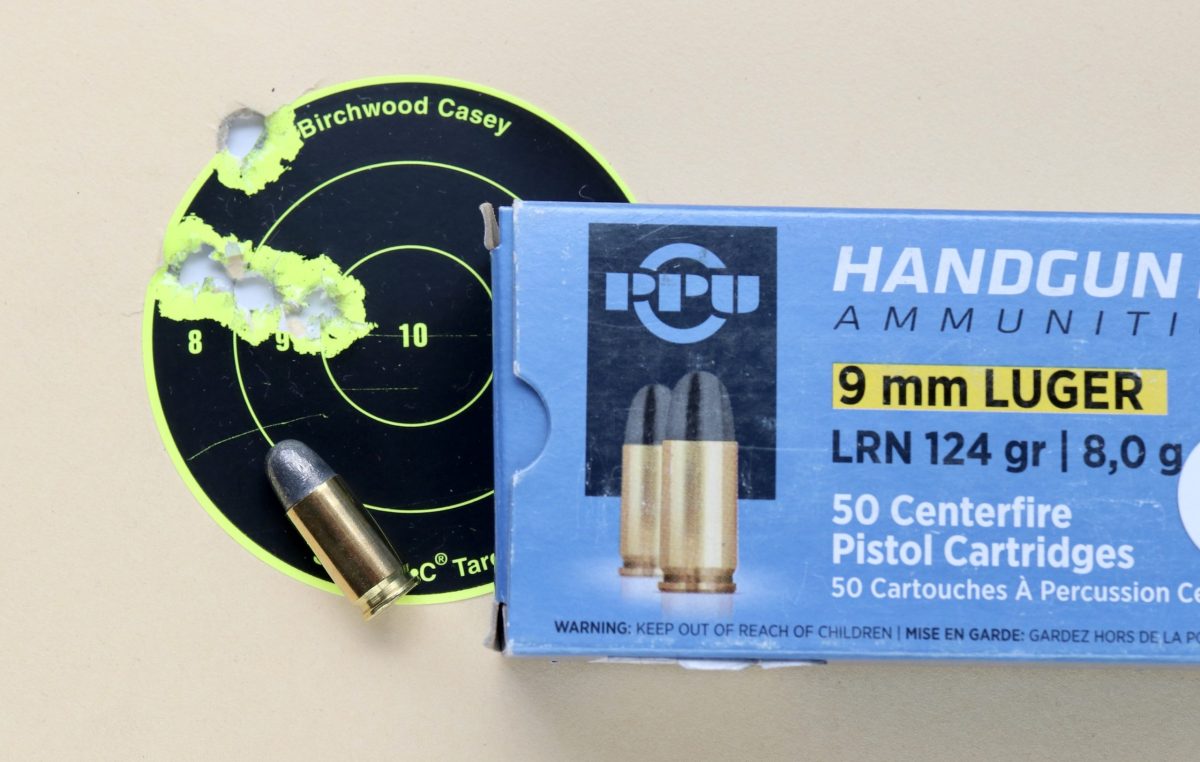
Factory loads used included American Eagle (Federal) 115gn FMJ; PPU 124gn lead RN; Winchester 125gn lead RN; Winchester 124gn FMJ; Sellier & Bellot 115gn non-tox FMJ; Federal 115gn Syntec range and Federal 124gn Syntec range. All rounds performed as expected for commercially-loaded ammo and both pistols functioned faultlessly.
Summary
At time of writing, retail price for the PDP Full Size 5.1^ Pro SD was $2400. A number of gun shops are also offering this one with a Holosun SCS-PDP reflex sight as a package for around $3200. Other polymer-framed PDPs, other than the 5.1” Pro, are between $1500 and $1700. Retail price for the PDP Full Size Steel Frame Match was around the $4000 mark though again, packages are available including the Holosun 507 Competition for about $5000.
I believe these PDPs are value for money and compete well with other European pistols of the same standard – and they’re versatile. The ability to make a firearm which serves more than one segment of the market is first and foremost in the minds of most gunmakers. Another important marketing criteria today is a pistol should also be able to meet the technical requirements of certain popular events, such as International Practical Shooting Confederation (IPSC) and other competitions with a Production division. This division caters to off-the-shelf handguns which haven’t been modified or customised and fall into a group of reliable and readily available pistols.
Steel Challenge and WA1500 have matches specifically for revolvers and self-loaders fitted with reflex dot sights. IPSC, along with other disciplines such as Action Pistol, also has a Production Optics division, so producing pistols which are ‘optics ready’ has almost become a mandatory feature.
All the Walther PDP range of pistols available to target shooters in Australia fit the bill for the many competitions with a Production division. But on top of that they cater those who appreciate high quality, European-built handguns that’ll shoot accurately, reliably and last forever.