


Chris Redlich enjoys success with a nifty budget Ruger
I’m not going to lie and say it was a match made in heaven or love at first sight. In fact, this wasn’t my first encounter with such a rifle, yet what really caught my eye was its slimline appearance for such a big bore. The invitation arose to review the new Ruger American ‘Go Wild’ and, having recently enjoyed the Scout version in .223.Rem, I was keen to test its big brother in a similar arrangement. But what really had me hooked was the chambering in .450 Bushmaster.
.450 Bushmaster
This joins the popular 300 Blackout as another cartridge on a growing list of straight-walled, big bore, short-action calibres designed to function through AR15-platform rifles. I was surprised to learn the .450BM has been around for almost two decades and, despite being a joint project between US companies Hornady and (aptly-named) Bushmaster, was a cartridge purely meant for what the name suggests – bush use.
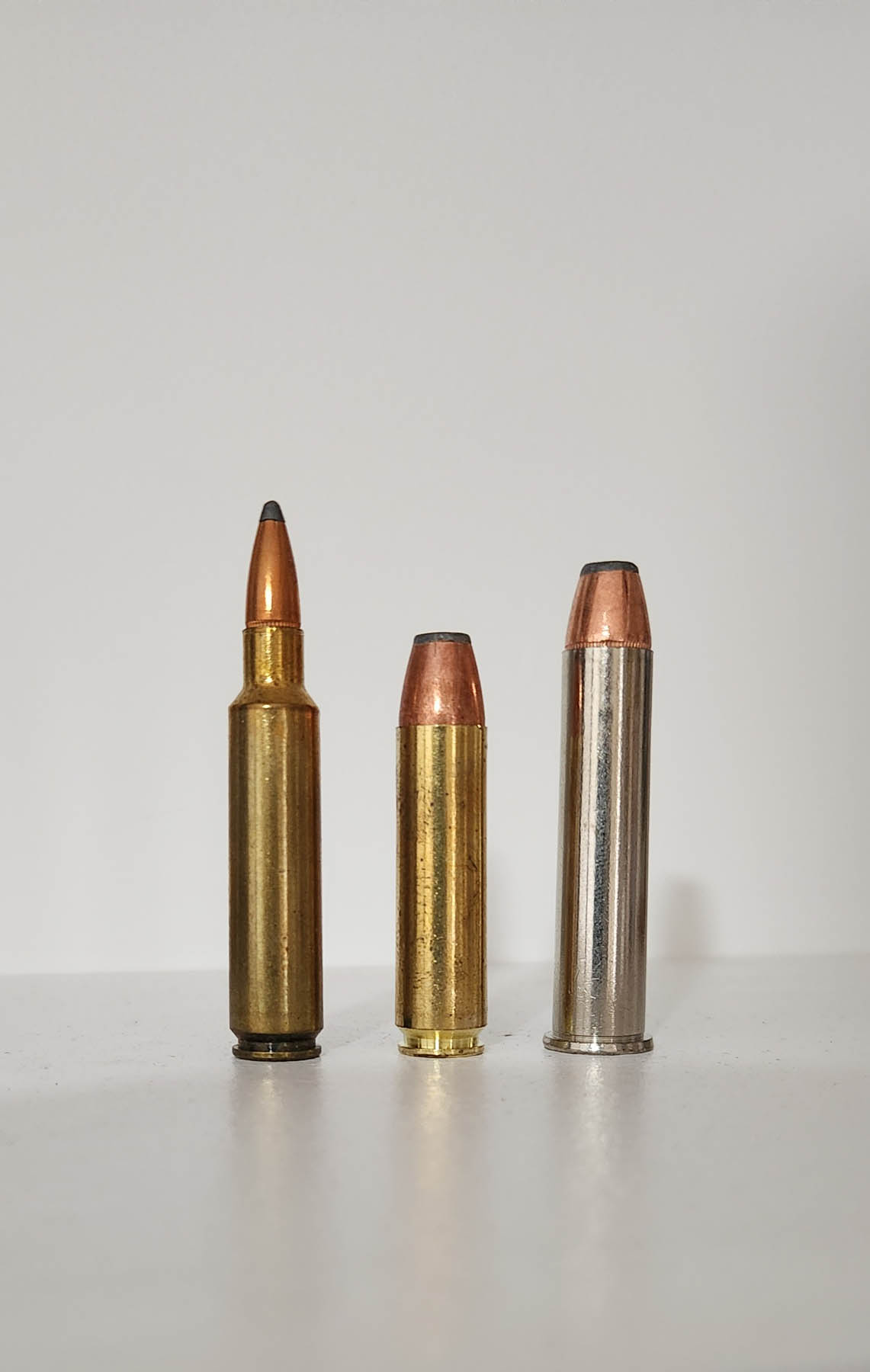
Although these new AR-designated cartridges share a similar overall length to the .223 Rem, they’re by no means targeted at long-range use like the popular little Remington. Interestingly, the .450 Bushmaster shares DNA with another, lesser known long-range calibre, the .284 Winchester. The latter is a favourite of mine and the reason why I went to the bother of building a custom hunting rifle in that chambering. It has what’s known as a rebated rim, where the case walls are larger in diameter to the base.
Like the .284 Win, the .450 Bushmaster case head diameter measures the same as a .308 Winchester, making it a compatible offering for commercial rifles. At first glance the .450 BM looks a little bit like the .45/70 Govt, though really much closer to a pistol round on steroids because of its straight walls. The .450 BM is ballistically similar to the .45/70 using light bullets, though the latter’s heritage round outperforms the former with modern, heavier 300-grain loads. I’ve enjoyed surprising accuracy from the .45/70 Govt using Federal ammunition and while distributor Nioa cautioned me on my expectations, I was nonetheless keen to see how the .450 BM would perform in the American.
The rifle
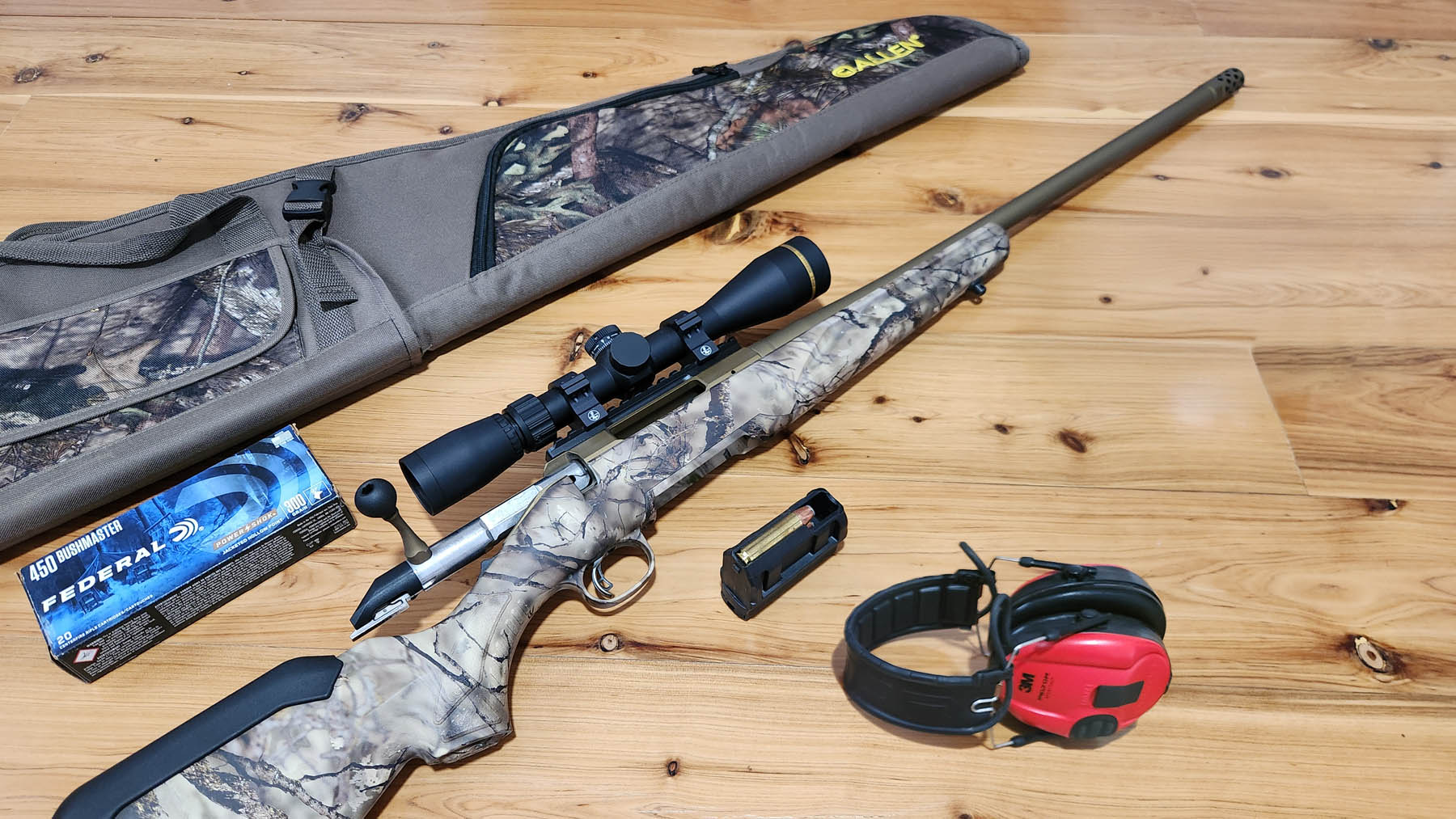
Unlike Ruger’s popular M77 controlled round feed, the American Gen 2 is a push-feed action and improved version of the Gen 1. The American rifle family have chrome moly barrels with the benchmark standard of cold hammer-forged rifling. The 22” Sporter profile barrel on this one is deceptively light and easy to point, most likely something to do with the noticeably gaping .45 calibre hole down the middle of the tube which has reduced its weight. I suspect the Go Wild in smaller chamberings such as 6.5 Creedmoor may weigh a tad more with the same profile barrel.
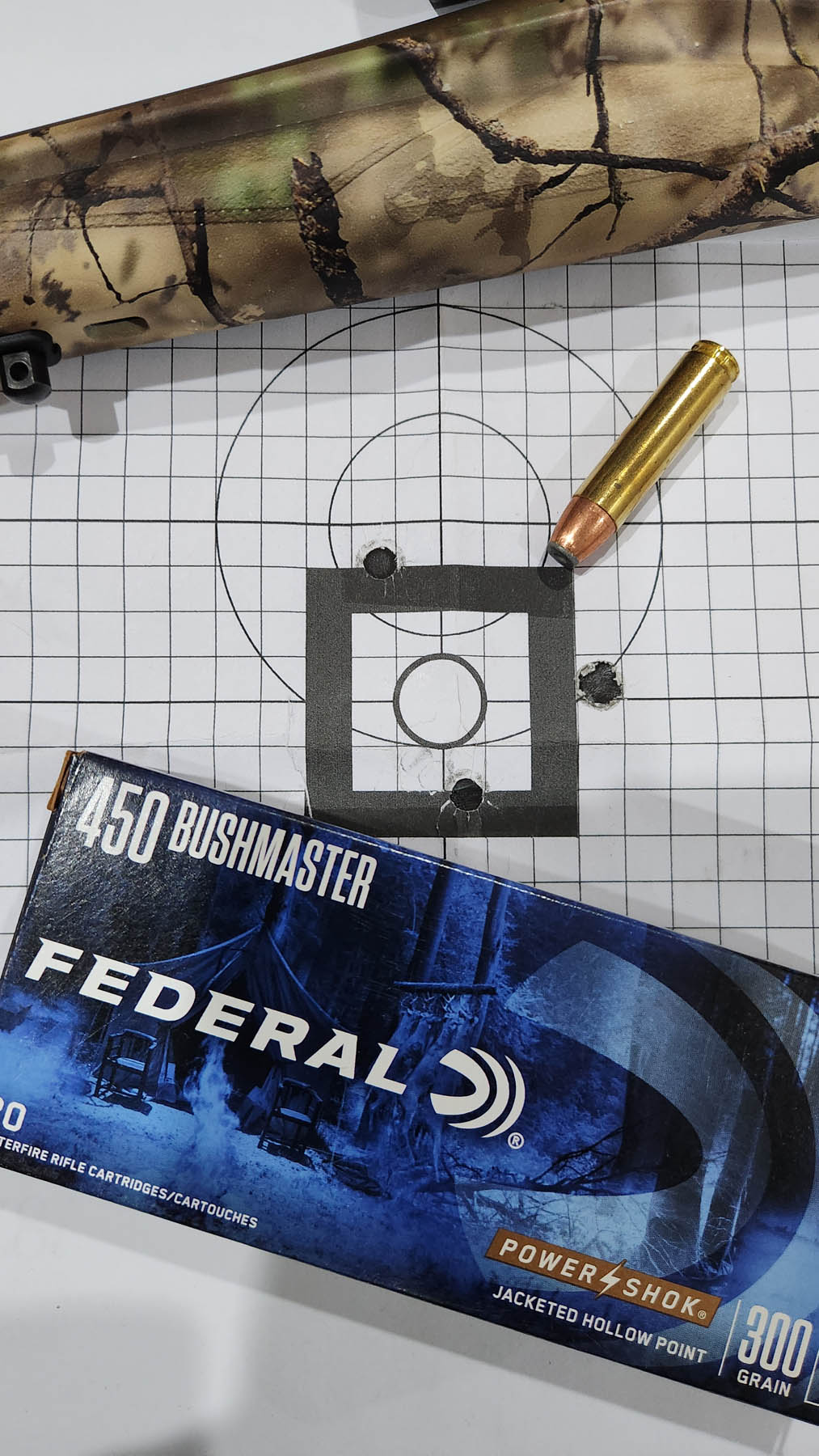
The .450 Bushmaster shoots big bullets and the rifle’s slow right-hand twist of 1-in-16” ensures most in the weight range of 250 to 300-grain will suitably stabilise. Nioa supplied 300-grain Federals and, after their own extensive testing, were convinced they were the best match for this outfit. I’m not recoil sensitive but the threaded muzzle end accommodates a removable, multi-port brake which not only looks the part, it tames muzzle jump well with heavy bullets. But a word of warning: Don’t forget hearing protection with this little powerhouse or your ears will hate you. What’s interesting is the brake (22mm in diameter) was noticeably larger than muzzle end of the barrel. In fact, the barrel subtlety tapers from its parallel mid-section of 18.77mm up to where the rear of the brake makes contact, yet matches the overall contour nicely.
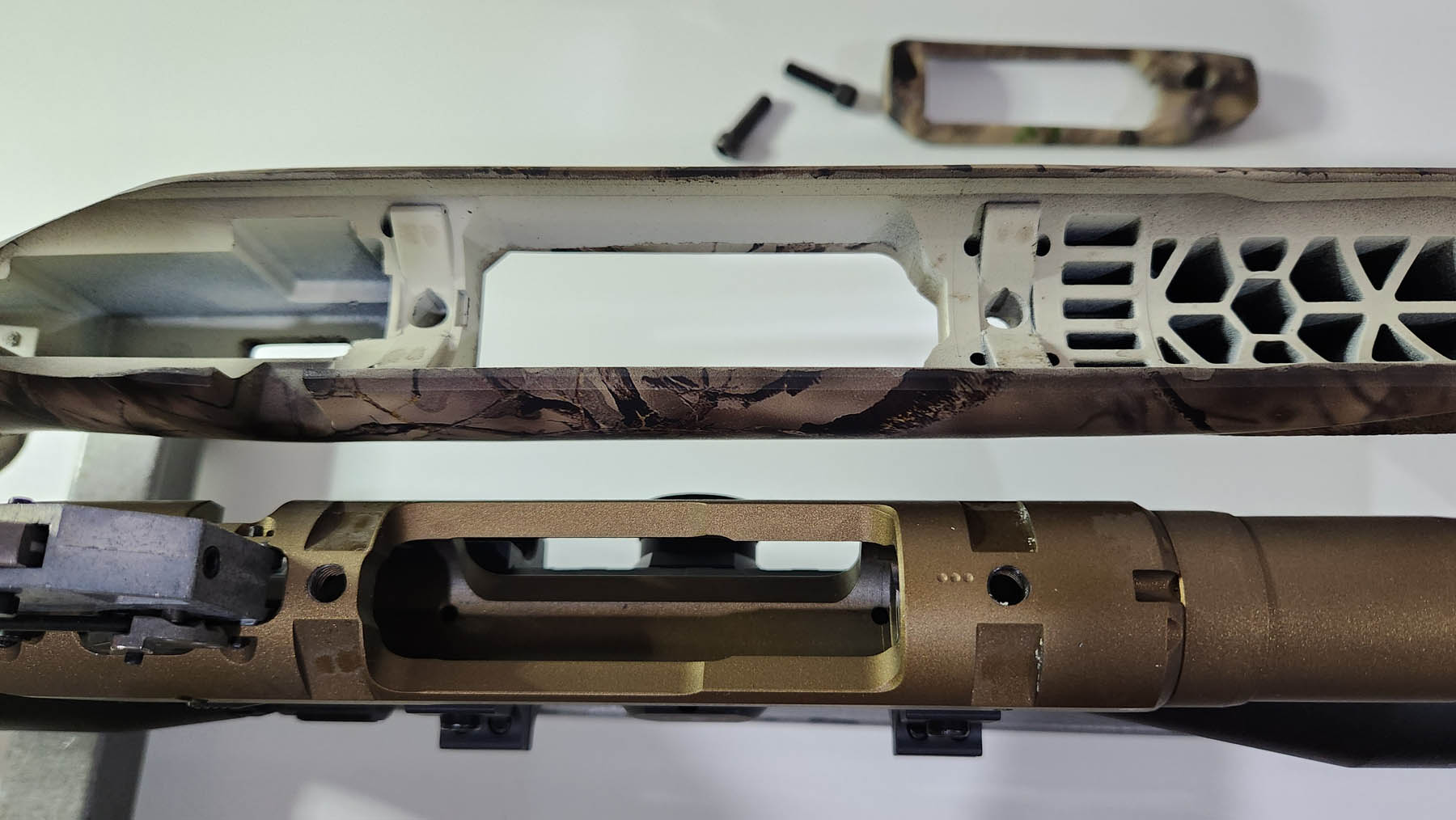
All metalwork on the American range are protected by Cerakote. This one, being the Go Wild version, refers to the new camo style of the stock and gold/bronze-like colouring on all metallic parts. I’m not a big fan of the bronze though it does match the stock well. The single piece cylindrical receiver beds to the stock via four, angular milled recesses, mating with an integral synthetic bedding block system and fastened by two action screws between the opposing recesses. Once secured the entire barrel is free-floating forward of the front screw and block.
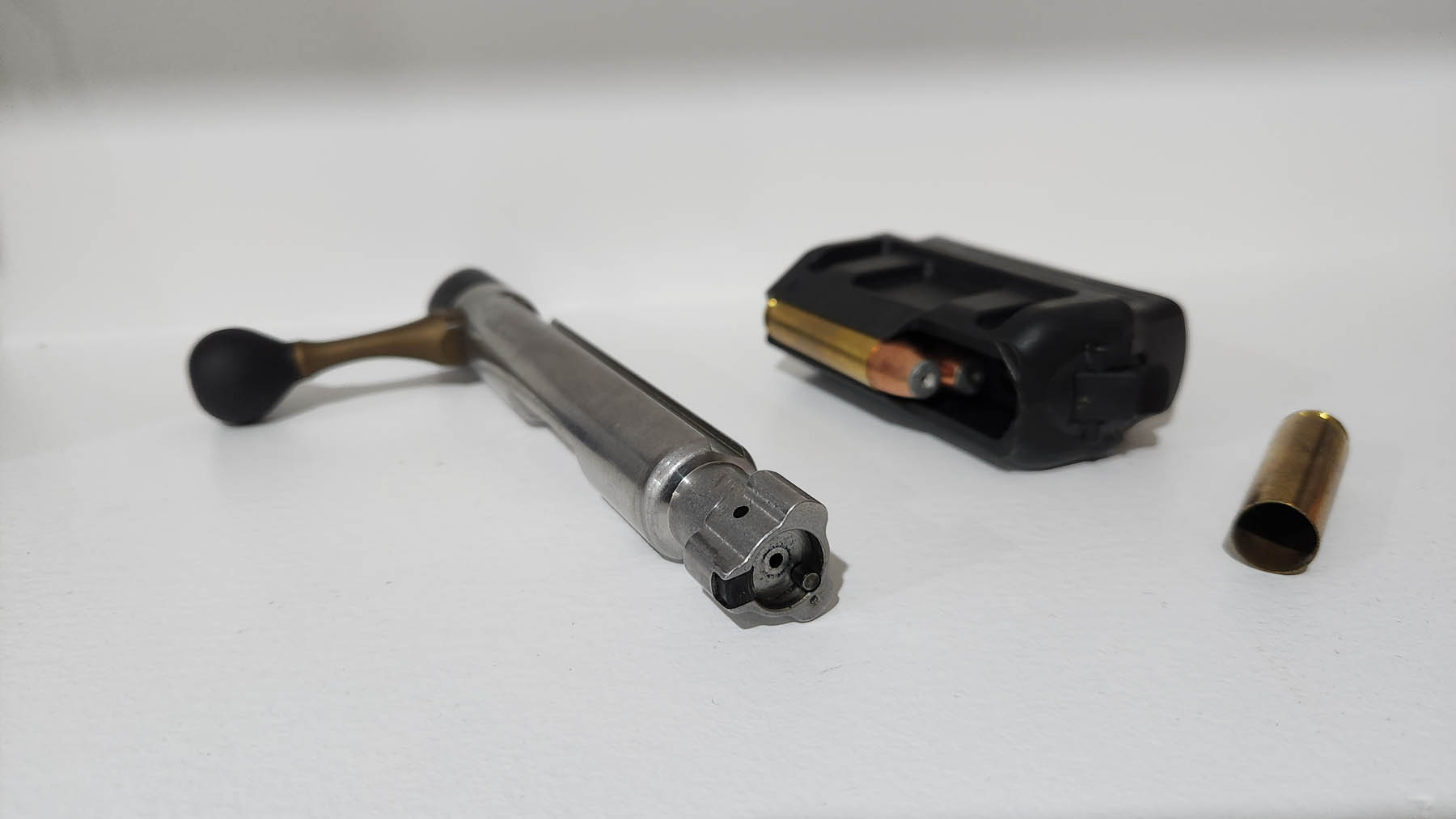
Although the American Go Wild rifle is a budget offering, Ruger have done a wonderful job of presentation. I reckon if you’re going to build a budget rifle, build one that sells, and the feel of the bolt reinforces a quality product. The three-lug design enables a short, 70-degree throw and while having a no frills finish, the stainless CNC-machined bolt moved smoothly through the entire action cycle, while the large claw and plunge ejector removed and threw spent cases clear.
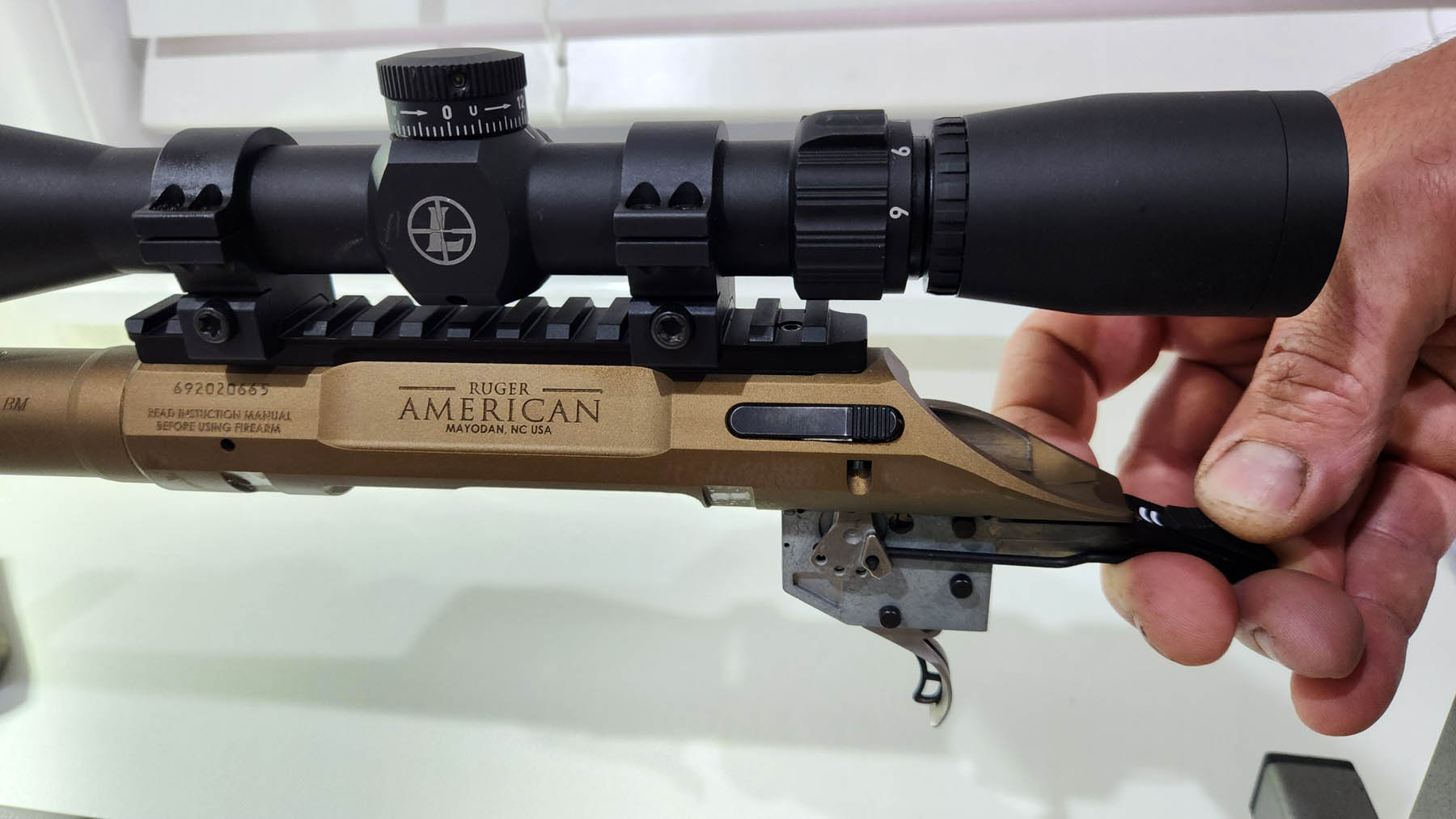
Despite the large bolt knob and rear shroud being of not-so-glamorous plastic, they make up one per cent of overall weight reduction. And while it didn’t occur during testing, the plastic bolt knob on this one had a habit of unwinding during cycling. I persisted with regular tightening but if it was my own rifle, I’d apply a daub of silicone or Loctite to prevent further loosening. The inclusion of a full Picatinny rail on all American models proves Ruger have built them for utility and makes for versatile scope mounting. This one came with a Leupold VX-Freedom 4-12×40 Duplex (package offering) and capped off the outfit well.
The polymer composite stock is ready for work, while its new Go Wild camo blends with Aussie bush and is a welcome improvement on the original drab colouring on the original Gen 1. The upgraded rippled lines of the new stock are contoured to promote a positive grip in tough conditions, something I came to appreciate during testing. Like its Ruger cousins the American stock is ambidextrous but, instead of a straight comb (as on the M77), it’s gently raised and connects firmly to the cheek.
Ruger don’t supply the extra bits with the rifle, though the modular nature of buttstock allows for further customising with optional spacers. I found the cheekpiece and length of pull on this one satisfactory at the supplied height for comfortable offhand shooting, while the rear sling-swivel sitting flush in the buttstock gave a snag-free rest when using gun bags.
Ruger’s Marksman trigger is similar to Savage’s AccuTrigger and does take some getting used to. It’s a two-stage affair that’s user adjustable from three to five pounds. I’d prefer rifle makers lowered their pressures to at least a two-pound minimum but, for whatever reason, it’s a rarity. Despite my complaint it came set at 3.5lbs and I managed it. The three-stage slide safety, which uses a push/pull connecting rod and rotating locking toggle, is at the rear of the tang and controlled easily by the tip of the thumb. All three stages clicked positively with ‘safe’ identified by two highly visible white lines (one for trigger safe and two for bolt lock) and a single red line for ‘fire’.
Range and hunting
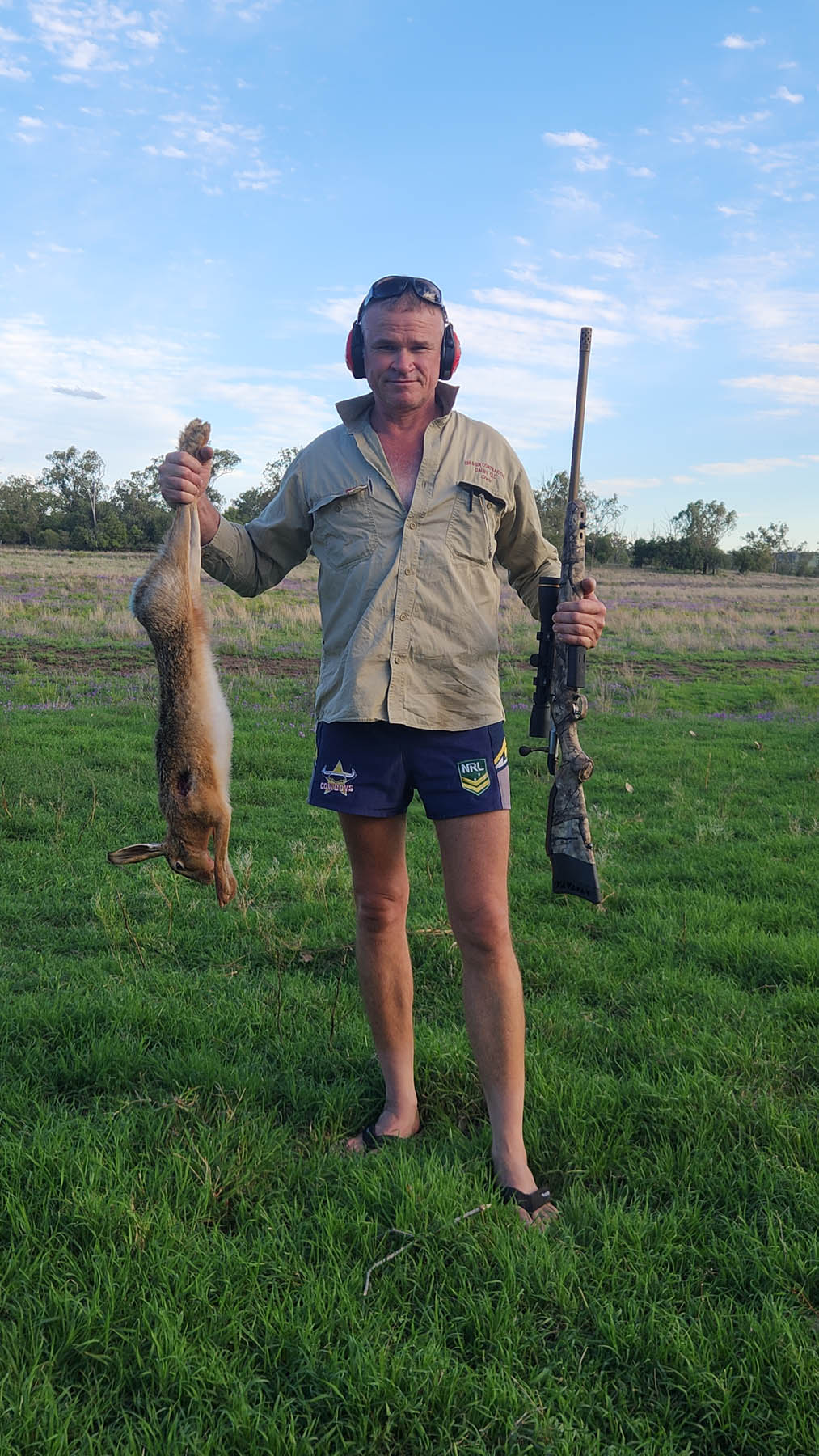
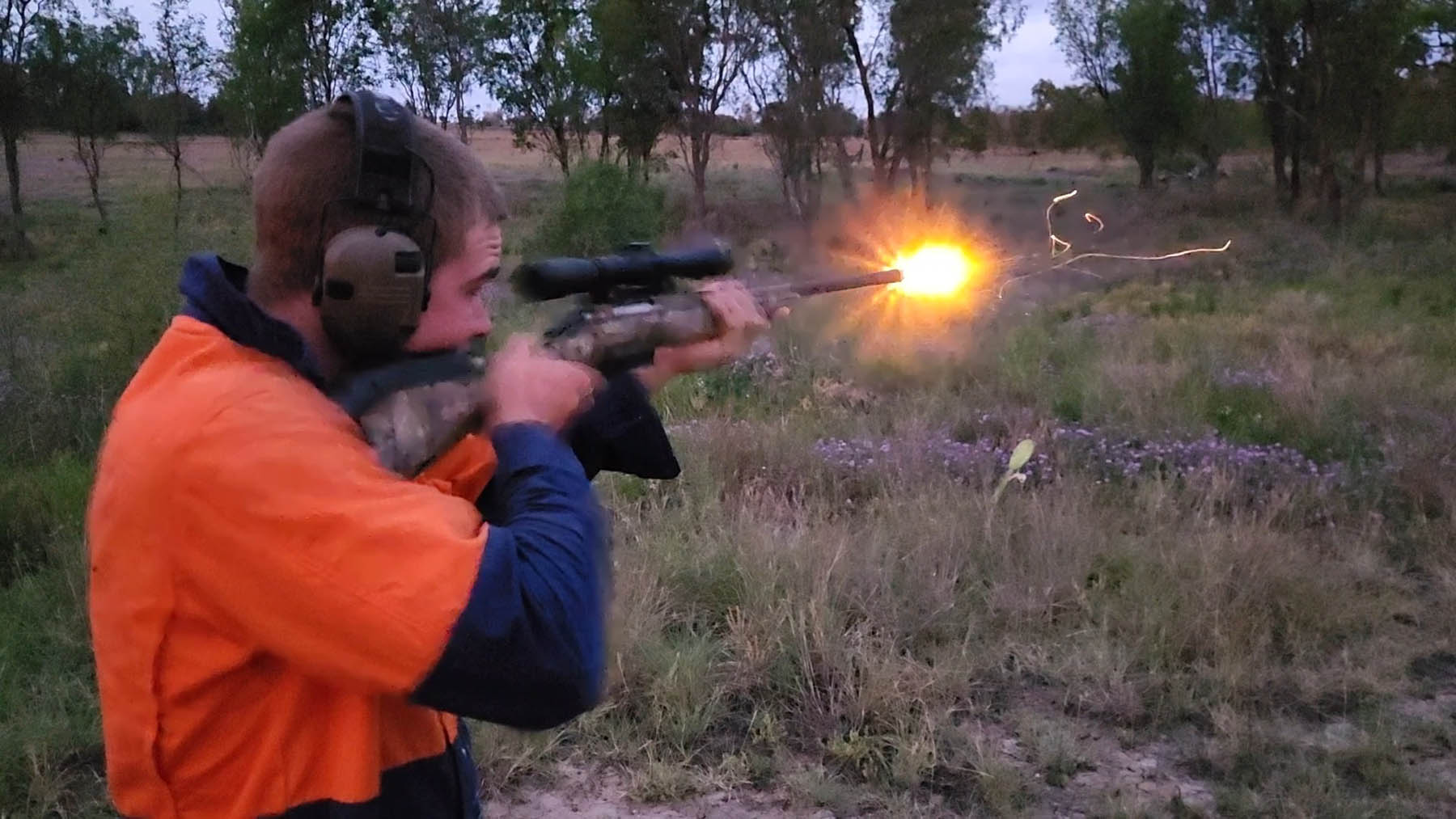
After zeroing, my efforts to tighten groups below MOA with the 300-grain Federals were in vain. However, consistency proved to be an important outcome as all groups hovered just below and above two MOA with no flyers, making it adequate for hunting mobs of pigs. I trialled the rifle from all positions and, despite the scary number of 450 which seems to elicit a squint from some, the entire outfit at a mere 3.4kg (scoped and loaded), pointed beautifully and shot comfortably. In fact a couple of running hares couldn’t outrun me and the rifle at 100m shooting offhand, reinforced importance of the fitted muzzle brake which greatly reduced barrel jump.
The .450 BM cartridge may have been overkill on hares, yet worked just as well on numerous pigs which, after all, is its intended purpose. Yet I noticed during fast bolt action, the flat-nosed hollow points would occasionally misalign on the feed ramp when chambering, causing me to make slow and deliberate cycling to prevent it happening again. This can be a common occurrence in bolt rifles where broad-tipped, straight-walled cartridges are more at home in a lever gun fed by a tubular magazine.
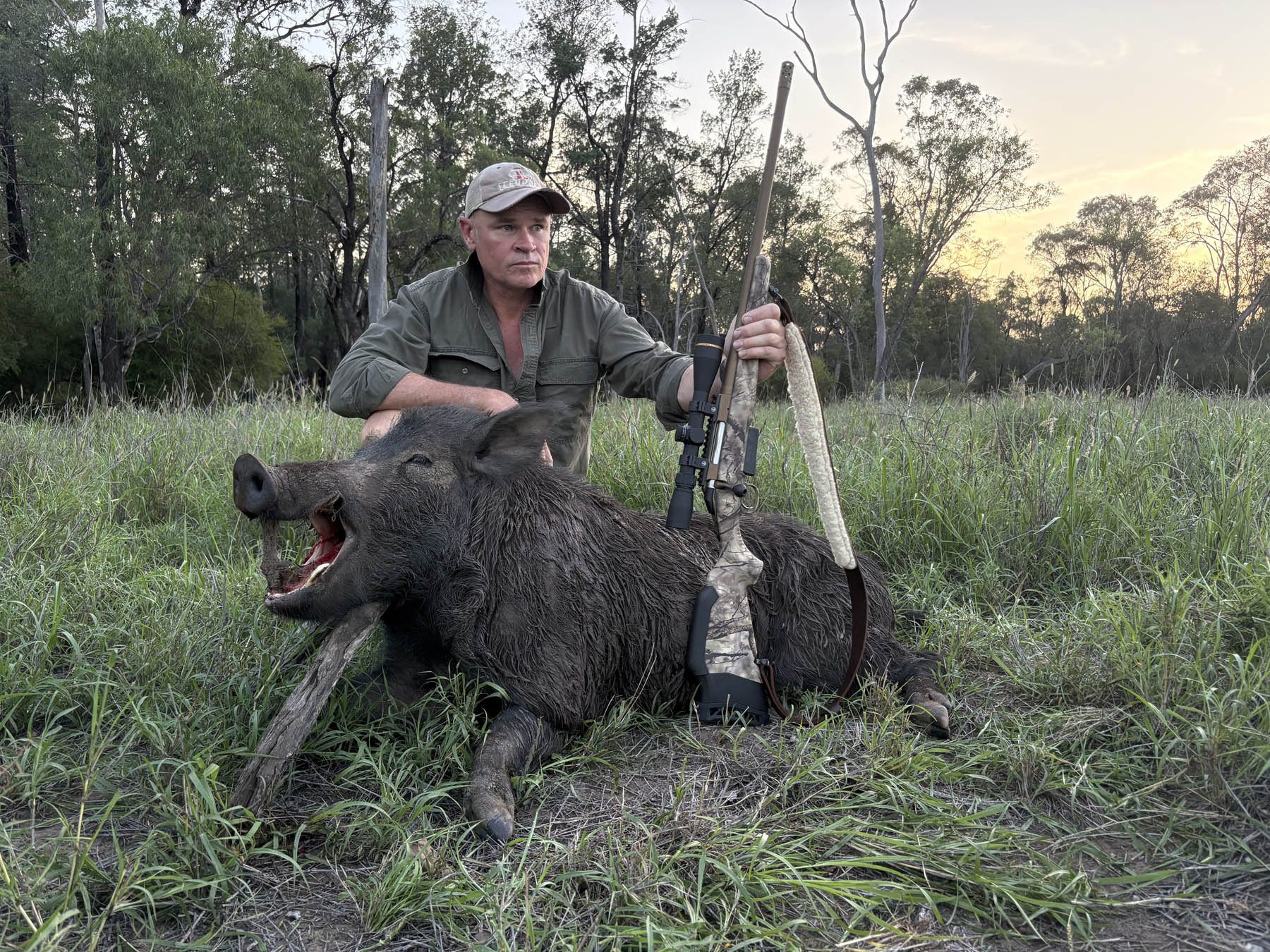
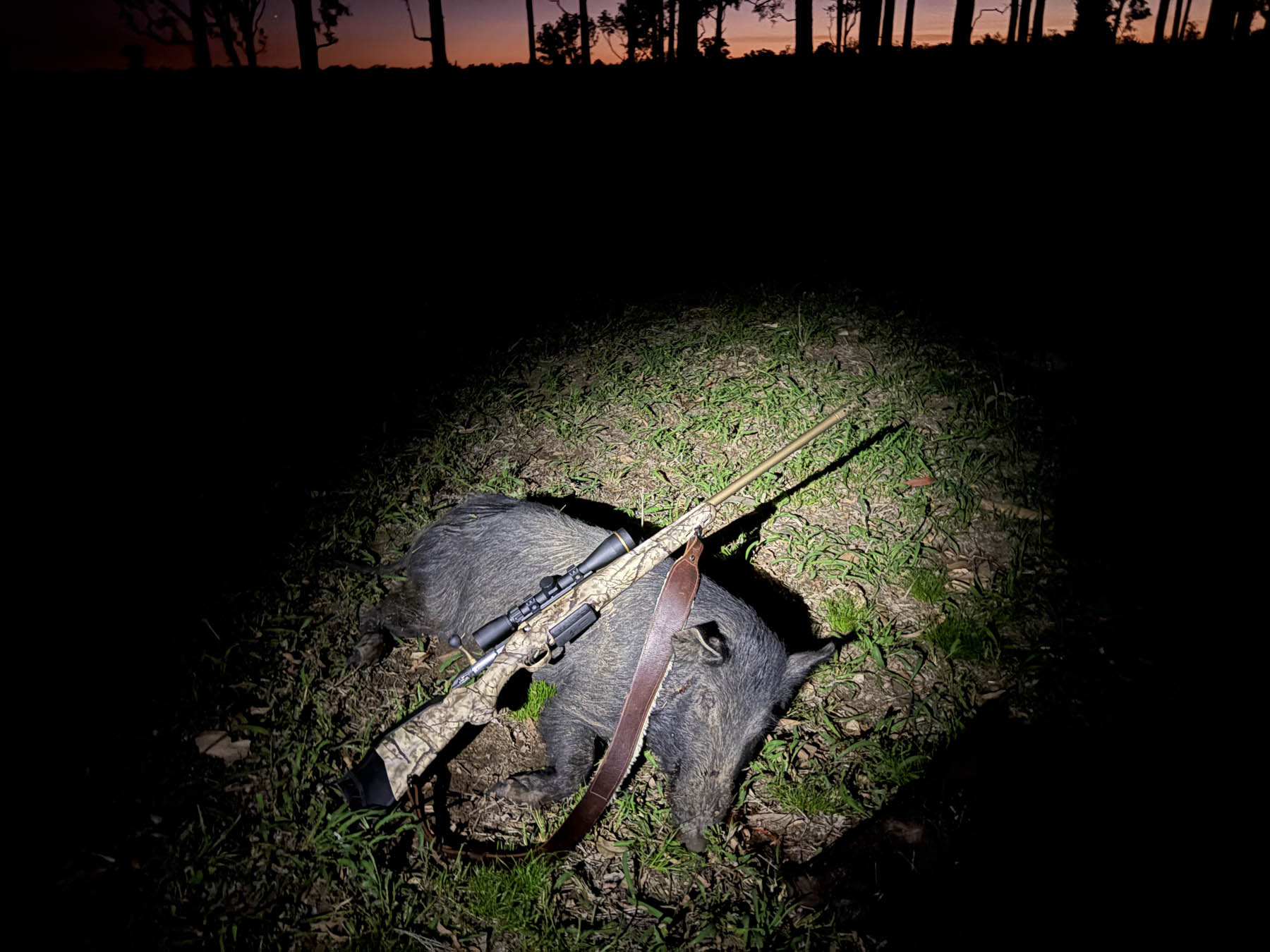
On a recent work trip to western Queensland, my son Carl and I made the most of an invitation to shoot as many pigs as we like, so seized the chance to test the American. With temperatures around 40C, pigs don’t venture out until late in the day and, fortunately for us, this coincided with our knockoff. Like clockwork, several mobs were busted in the evening and, between the two of us, contributed to a population reduction including one of the biggest boars I’ve ever shot. Accuracy on paper didn’t count for much in the end, as I also managed to floor a running boar at 150m, while allowing for lead and compensating drop.
Finally
While not as refined as my wife’s timber-stocked M77, the all US-made American Gen 2 Go Wild is a well-built budget rifle retailing for around $1000 ($1600 for Leupold VX-Freedom package). However, for a calibre such as .450 BM targeting pig hunters, this rifle needs a bigger magazine capacity than three. I can’t speak for everyone but, when busting mobs of pigs, my aim is to drop as many as possible without the interruption of a mag change.
I guess that’s the inconvenience we’ve had to shoulder since losing the privilege of owning fast repeaters, for which the .450 BM was originally intended. Yet old-design lever rifles will certainly benefit from this chambering. My recommendation for a five-shot magazine (minimum for the .450 BM) should be Ruger’s consideration for future American models.
That said, the fat little .450 BM generates enough energy from the 560mm barrel, that 250 and 300-grain bullets with their large frontal impact should drop a red deer with one shot out to 100m and beyond, that for the higher velocity .308 Win chambering. For the complete American Gen 2 model configurations and chamberings available in Australia, visit www.nioa.com.au. Special thanks to the professional staff at The Open Range in Toowoomba for facilitating review rifle transactions.