LIVING THE DREAM
Shooting sports athletes from Australia often faces challenges as, unlike their counterparts from countries like Italy, China and the US who are entirely government funded, they often have to balance work, family, training and competition.
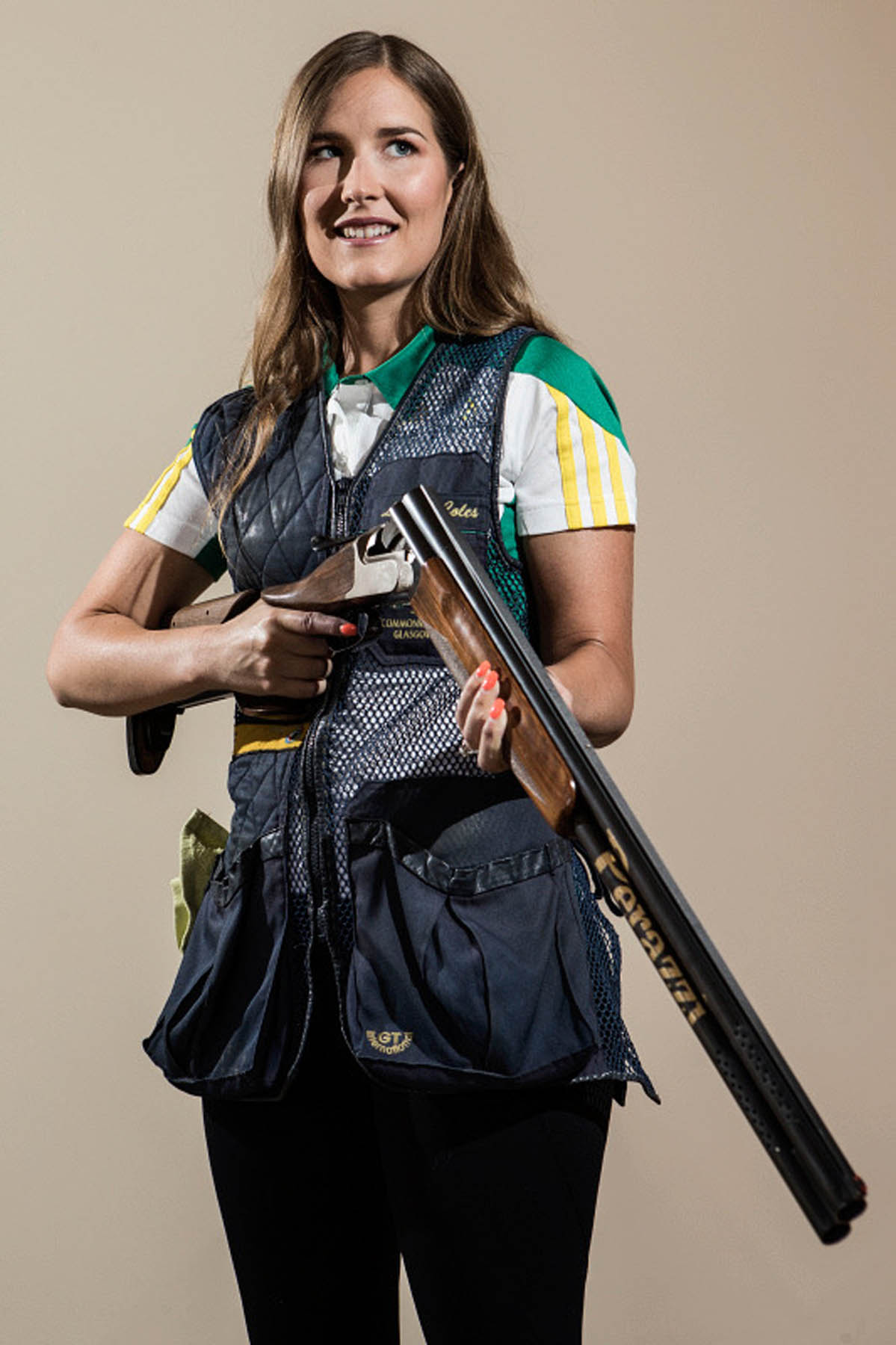
Laura Coles is an accomplished Australian Olympian and Commonwealth Games athlete, business owner, qualified exercise physiologist and mother. From growing up riding horses around Busselton in WA, to being a self-taught athlete, Laura sat with Charlotte Fox to tell her story from first picking up a gun to becoming an elite shooter.
Tell us a bit about yourself
I grew up on a couple of acres in Busselton which is a lovely little country town. Guns have been around the family my entire life and I’ve early memories of helping dad reload rifle shells when I was about three. He’d hunt rabbits, bring them home and skin them and I’d play with the pelts, so firearms have never been unfamiliar to me.
Following changes to firearm regulations in the 1990s, my grandfather didn’t want to install a gun safe so dad took over his firearms from when he was a clay target shooter in Esperance. He also had an old Trap gun he hadn’t used in a while, which triggered dad’s curiosity to try it at the clay target club in Busselton.
He really enjoyed the experience, so I went with him the following week and still remember my first shot. Previously I’d only used a .22 and air rifle so my first shot with a 12-gauge shotgun was a bit of a shock. I had to take time to process whether I wanted to shoot anymore, so I gave it five minutes and decided on a round of Trap. I was terrible and shot about three out of 25!
What did you most enjoy initially?
Spending time with my dad. It was something we could do together. He was a rifle shooter and hadn’t done much clay target, so we were learning at the same time which was fun.
You’ve been to both the Olympics and Commonwealth Games. What’s your discipline?
I shoot Olympic Skeet. Most people in WA start with American Skeet, which I did for five years then transitioned to Olympic Skeet, which I found hard. American targets are doing about 50km/h, whereas Olympic targets are up around 89-92km/h.
There’s also a different shot sequence. In American Skeet you only shoot pairs of targets on pads one, two, six and seven. In Olympic Skeet you shoot pairs (two targets released simultaneously) on every station except for pad eight, which is a more challenging sequence. American Skeet targets come out when you call for them but in Olympic, they might come out immediately or up to three seconds later, which can seem like an eternity.
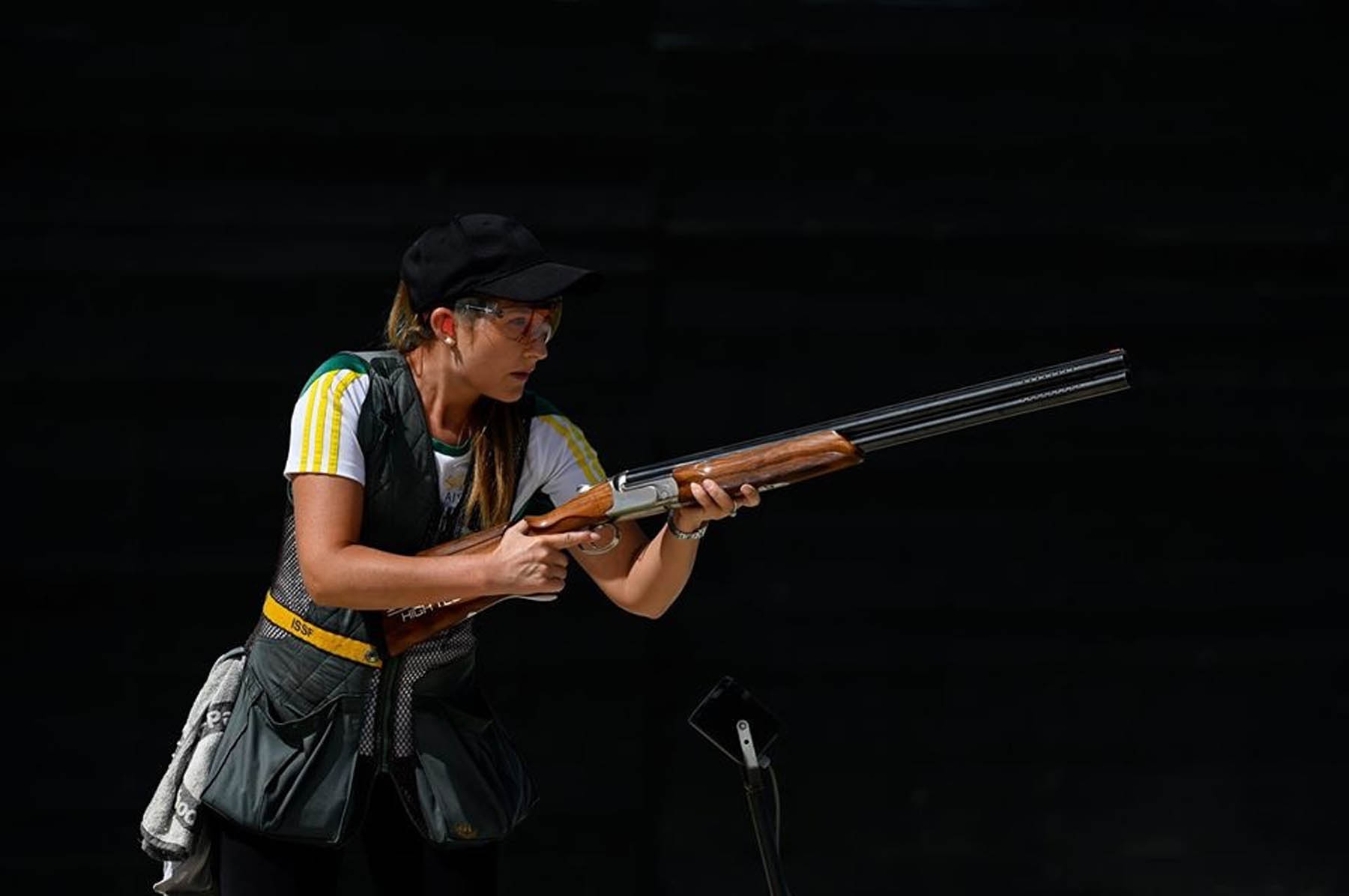
You also start with the gun off your shoulder in Olympic Skeet, at a marker which is about the same level as the bottom of your elbow. You can only bring the gun to your shoulder when you see that target emerge. I found that change the hardest.
When and why did you swap?
I swapped in 2007 and made the change so I could compete in more competitions, including the Olympics. When I was five I told mum I wanted to go to the Olympics, though at the time I thought it would be in horse riding. In WA we don’t have a history of successful athletes in Olympic Skeet. Robin Bailey won Commonwealth Games bronze in New Zealand in 1974, but no-one from WA had made an Olympic team in clay target shooting before.
What was that experience like?
I met quite a bit of resistance to the idea of changing. I was given a million reasons why I couldn’t do it including being too small, too expensive, I lived on the wrong side of the country and there was no-one here to teach me. Luckily my greatest strength isn’t the ability to shoot. I don’t have heaps of natural ability, my real strength is resilience, persistence and determination.
Is tenacity what helped you overcome those perceived barriers?
It was. It’s completely up to you whether you want to take on board that information. It’s just someone’s opinion and it’s up to you if you let that stop you from trying or not. It can be disappointing to hear someone doesn’t think you can do something, yet only you can determine your actions and outcome. Since I made the Olympics in 2020, I proved success in this discipline is possible. Now there’s lots of interest from people looking to set their own Olympic goals here in Perth, which is nice to see.
How did you develop skills to reach elite level?
Watched lots of YouTube videos! I’d study girls shooting finals at World Cups and similar events, watch their technique then experiment by trying different stances through trial and error. My shooting journey is probably still like that as I don’t have a technical coach.
Describe the Commonwealth and Olympic Games.
The two are very different. The Commonwealths are known as the ‘Friendly Games’ which I agree with. They’ve such a great atmosphere, still very competitive obviously, though I found my opponents really nice. You have sports of all different types, which brings together athletes from diverse backgrounds who are all really good at what they do.
The Olympics are intense, very serious and the pinnacle for most athletes. Everyone is doing all they can to ensure they don’t waste that opportunity. It’s a huge journey to qualify, so athletes give everything, which is a lot of pressure.
You went to a Covid-delayed Olympics in Tokyo. What was that like?
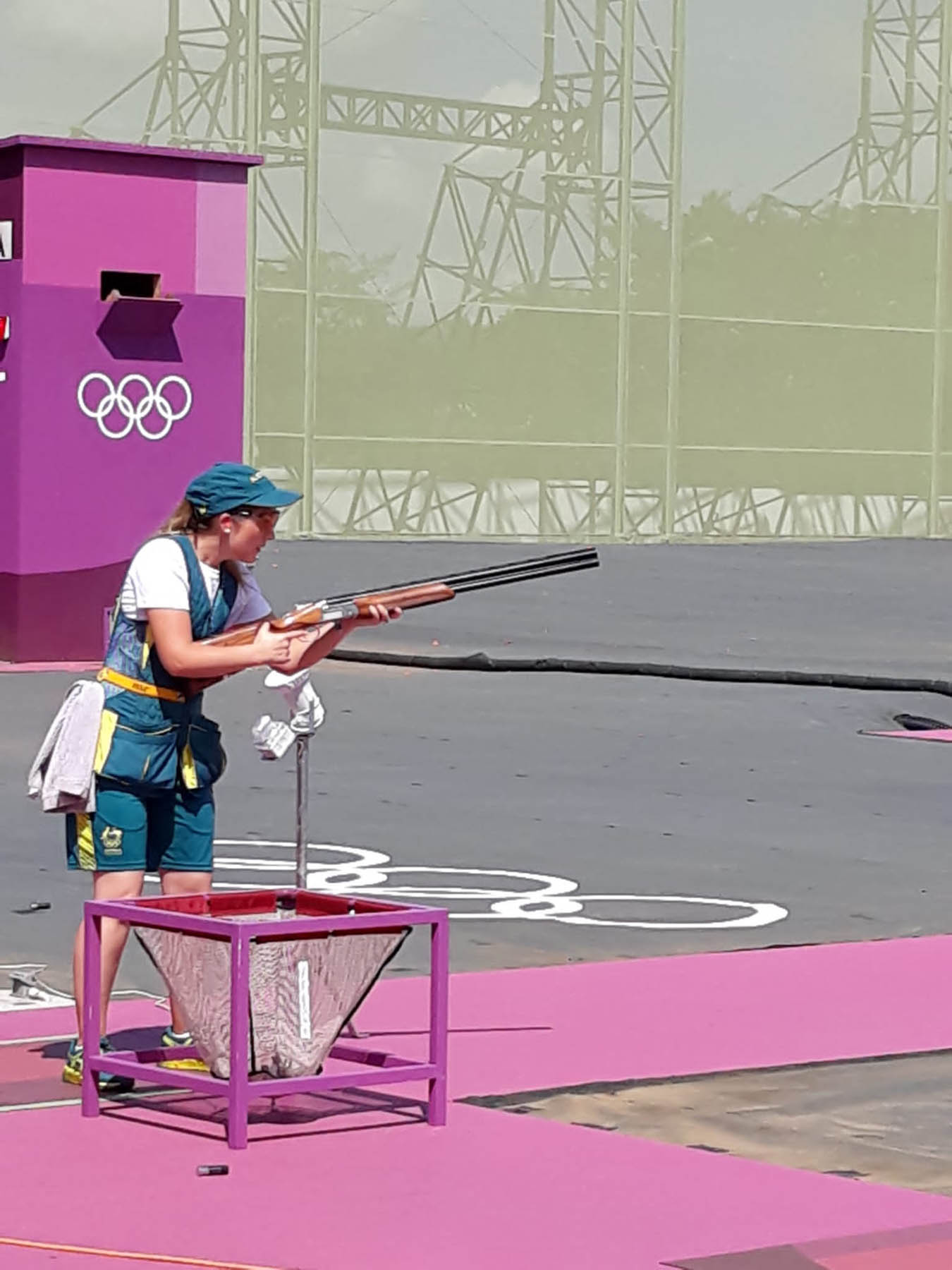
Unusual. It’s the only Olympics I’ve been to so I don’t have anything to compare it to, but everything about Tokyo was different and a bit stressful. We just managed to squeeze in our qualification, though it was up in the air as to whether that event in Sydney would even go ahead. Eventually they allowed it in a modified format, where only those in the running to qualify for the Games could compete.
Once we had the qualification done I went straight back to Perth and, within a couple of days, our state border was closed. Then a few days later the Australian team withdrew as Tokyo was still trying to go ahead in 2020. It didn’t take long for organisers to realise it just wasn’t possible.
It was difficult to keep training through that and maintain motivation and a positive frame of mind. On top of that, I’d difficulty accessing training facilities as when Covid outbreaks would occur, one of the first restrictions would be to close gun clubs. Up to that point the biggest break I’d had from shooting was two weeks, then during Covid I couldn’t access my training ground for 10 weeks. I used the situation to relearn things and ultimately become a better athlete.
What’s your favourite sporting moment?
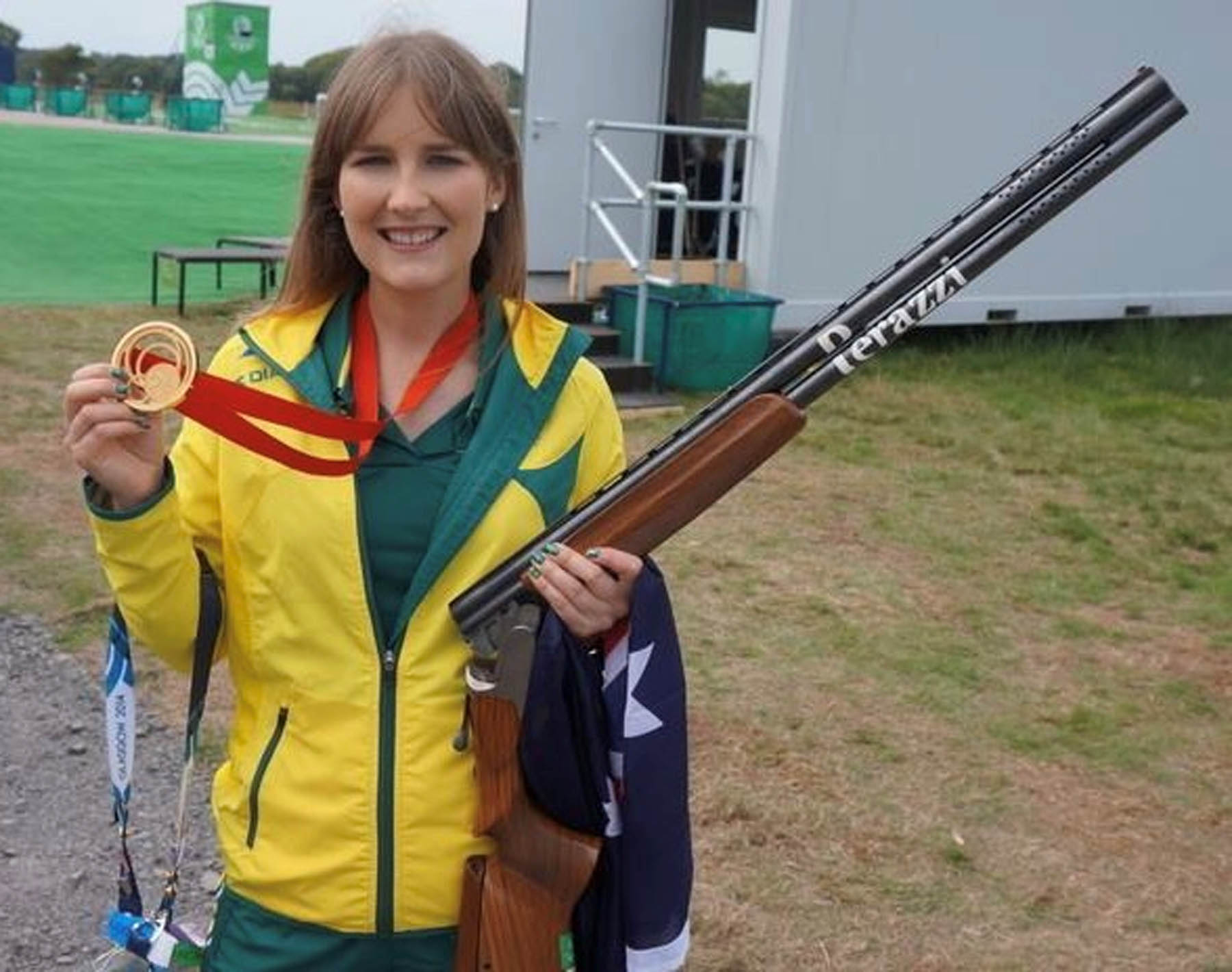
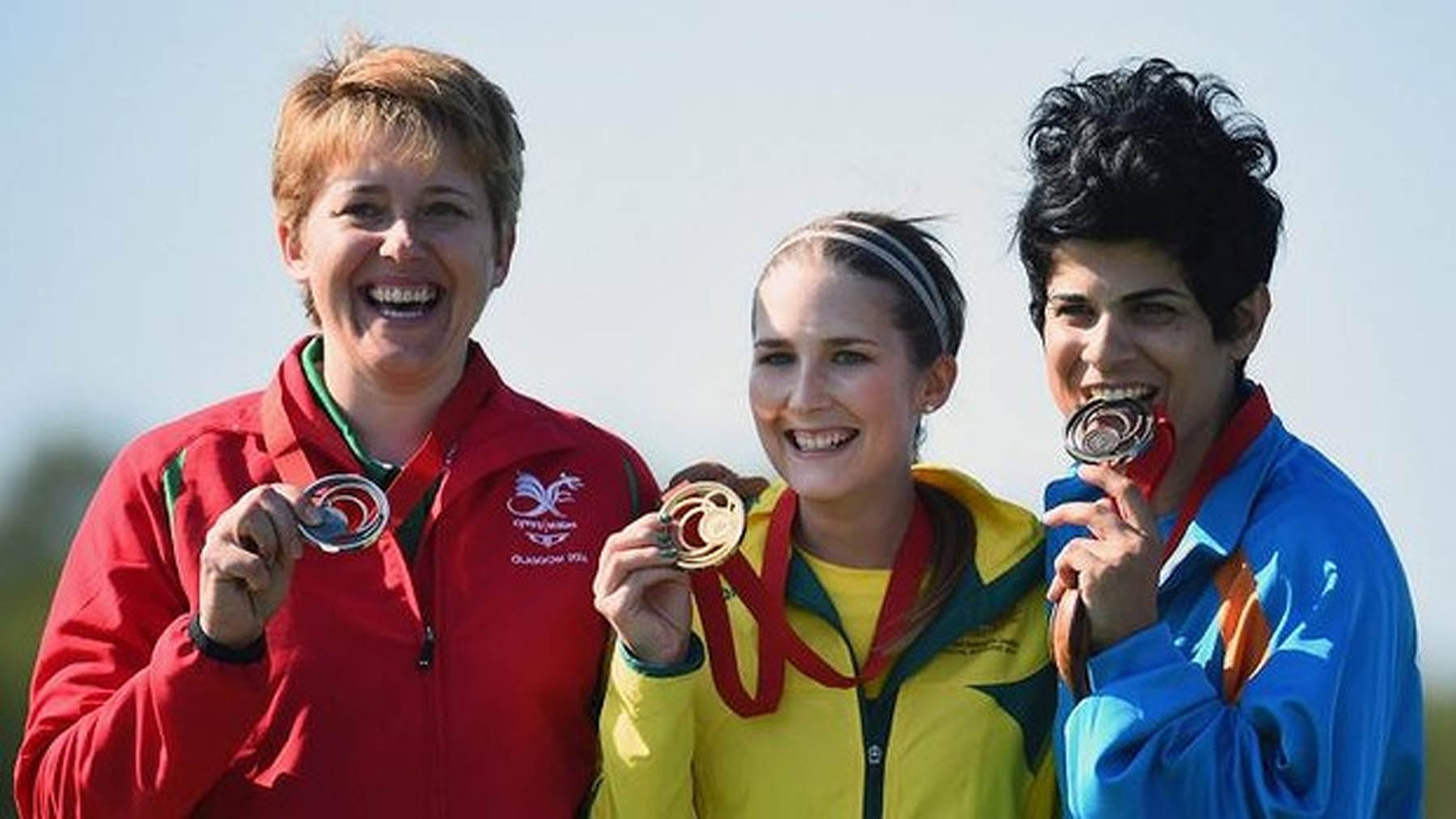
I can’t go past winning Commonwealth gold in Glasgow. I’d seen shooters compete in those events on TV and thought I’d probably only ever dream about being one of them. I was so lucky I had my parents there to witness it, which made it even better.
Talk us through that competition.
I’d so many moments of doubt, as I think lots of athletes do at times. You have good and bad training days and I had a terrible one the day before my competition. I’d gone against a coach’s wishes and attended the opening ceremony, which I really wanted to do, so by the time I got back to our village it was very late.
I had to be up at 6am for my final training session before competition and shot like a tired person, which was terrifying. I slept like a log that night and was relaxed as I felt that competition wasn’t going to be mine, so I focused on enjoying the experience. The crowd applauded my last target and I didn’t know why as I hadn’t shot a perfect round. Then it turned out I’d qualified in first place for the final.
The goal Shooting Australia gave me was to make the final by being in the top six. So I’d qualified for the final, ticked that off the list and didn’t have any expectation on my shoulders. I came first in the semi-final which guaranteed me a medal, so when it came to the gold medal match I was shooting freely.
I was in the zone but had no idea what big of a deal it would be to win a Commonwealth Games gold medal. After winning I’d go straight into a live TV interview where I was so shy and inexperienced, but it was a fantastic feeling.
When did you realise you’d won?
I remember this vividly. At that time it was a random draw for where you shot in that final. I was second shooter and had to follow the girl in front, which meant when I got on that last pad I knew what she’d shot and what I had to do. I needed two targets out of four to draw and three to win. When I stepped up to that pad I hit both targets on my first pair, so I knew I’d drawn with her.
I remember my mind going from being fairly calm and focused to having a real moment of panic, thinking: “I can either miss both targets and go into a shoot-off or hit one and I’m a Commonwealth Games gold medallist.” I had to put those thoughts aside and go back to following my process. I remember calling for that second pair, hitting my first target and thinking: “Oh my God, I just won a Commonwealth Games gold medal!” Then I missed my second target, which I kicked myself about for two weeks.
For anyone looking to get into shooting, what do you suggest?
Contact your local gun club whether it’s clay target, rifle or pistol, through their website or social media. Clubs are run by incredible volunteers, so online is a great way to chat with them initially. Some clubs publish competition schedules, so you can check out a competition and decide if it’s something you’d like to try. Shooting’s such an inclusive sport, that’s one of our strengths, which provides a fantastic opportunity for people to have a go.