

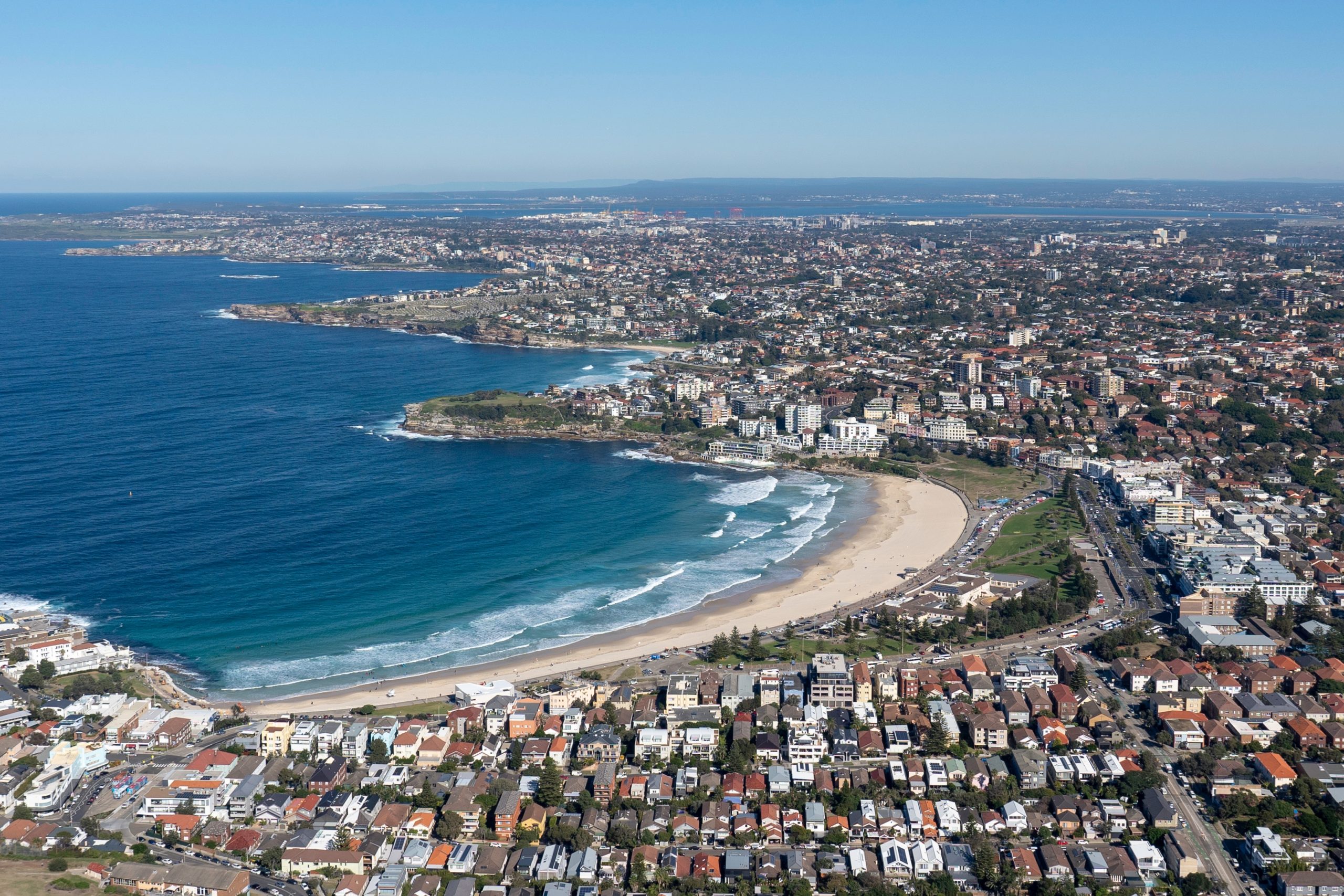
Every Australian shooter will be familiar with what occurred at Bondi on December 14 when two ISIS-inspired terrorists, a father and son, opened fire on a Jewish celebration, murdering 15 people. One was shot dead by police, the other wounded and arrested. This was Australia’s worst-ever terror attack and biggest mass shooting since the 1996 Port Arthur tragedy when a demented gunman killed 35, leading to national gun law reforms which included banning of semi-automatic rifles and shotguns.
At Bondi the shooters used legally acquired longarms, with the father holding a NSW licence for Class A and B firearms. Police haven’t officially disclosed which firearms were used but the son was videoed using what looked like a Beretta BRX1 straight-pull rifle, possibly in .308 Winchester, equipped with some form of red dot sight.
They also used a pair of Stoeger M3000 M3K 12-gauge straight-pull shotguns, at least one illegally modified with an extended magazine tube to increase capacity to 10. The father was carrying such a firearm when he was tackled by one of the heroes of the hour, Ahmed al-Ahmed, an unarmed 43-year-old Syrian Australian.
The Italian-made Beretta BRX1 is a high-end sporting rifle retailing for more than $2600 at one prominent outlet. Stoeger is a US company, though its M3000 shotguns are made in Turkey, as are the large number of other straight-pull and button-release shotguns sold under various brand names across Australia. These retailed for around $800.
The Commonwealth and NSW governments moved quickly with a fresh buyback, limits of how many guns may be owned, bans and reclassification of some (from category B to C) and changes to licensing. But unlike 1996 when all states and territories were onboard with the National Firearms Agreement, this time it’s different.
The ACT has adopted laws similar to NSW, though not an exact duplicate. Queensland has said ‘no way’ to the buyback, though it has tightened some provisions. Western Australia was already onboard, Victoria is conducting a review while South Australia has expressed in-principle support. So far neither Tasmania or the Northern Territory are on board.
The holdouts seem to be less than enthusiastic about a scheme that’ll cost them a fortune (even with a 50-50 split with the Commonwealth), require a vast bureaucratic effort, is wildly unpopular with shooters and will surely contribute to a surge in support for parties such as One Nation, just as happened post-1996. So all this has some way to go, though NSW will be leading the way, standing up a buyback scheme.
Already there are consequences which likely weren’t foreseen. In NSW, applications for new firearms licences have soared, rising by more than 70 per cent from December 16 to January 16, compared with the same period the previous year. That includes a 1400 per cent increase in applications for Category C licences (from 15 to 226), presumably from gun owners seeking to retain otherwise banned firearms. The number of NSW shooters seeking collectors’ licences rose 7000 per cent to 144. Anecdotally, there’s been an increase in partners of shooters applying for firearms licences.
None of this appears to have impacted the criminal use of firearms in the slightest. On January 30, NSW police announced the arrest of seven men on drug and gun charges. In a series of raids, officers seized heroin and meth worth more than $3 million, three firearms, a ballistic vest and more than 800 rounds of ammunition.
On February 12, a man was wounded in a drive-by shooting in Sydney’s south-west. The previous day, two men were arrested for another public place shooting in south-west Sydney last July, the same day a shot was fired into a home in Bankstown.
On February 8 three men performed a home invasion in western Sydney, firing a shot, one of them later arrested. The same day, a group of men fired a shot during another home invasion in western Sydney, with one subsequently arrested when the getaway car crashed into a fence just down the road.
On February 4, police arrested a man in connection with the shooting murder of a man in inner Sydney last November and on February 3, announced two members of the Brothers for Life crime gang had been charged with firearms offences. That followed an investigation by the NSW Police Raptor Squad which targets organised crime groups. That’s just a sample of incidents in Sydney in one month.
The worst incident in NSW occurred late January in Lake Cargelligo in the state’s central west, when a man on bail for domestic violence offences shot dead three people, one his pregnant former partner. He never held a NSW firearms licence and remains on the run.
As I’ve noted previously, criminals will take any guns they can lay their hands on but, for serious gang warfare, what’s obviously preferred are handguns and assault weapons, neither readily available and costly when they are. One solution is for crims to attempt to import complete guns. In mid-January, Australian Federal Police announced the arrest of a man who tried to import two dismantled handguns concealed inside remote-control cars sent from Arizona.
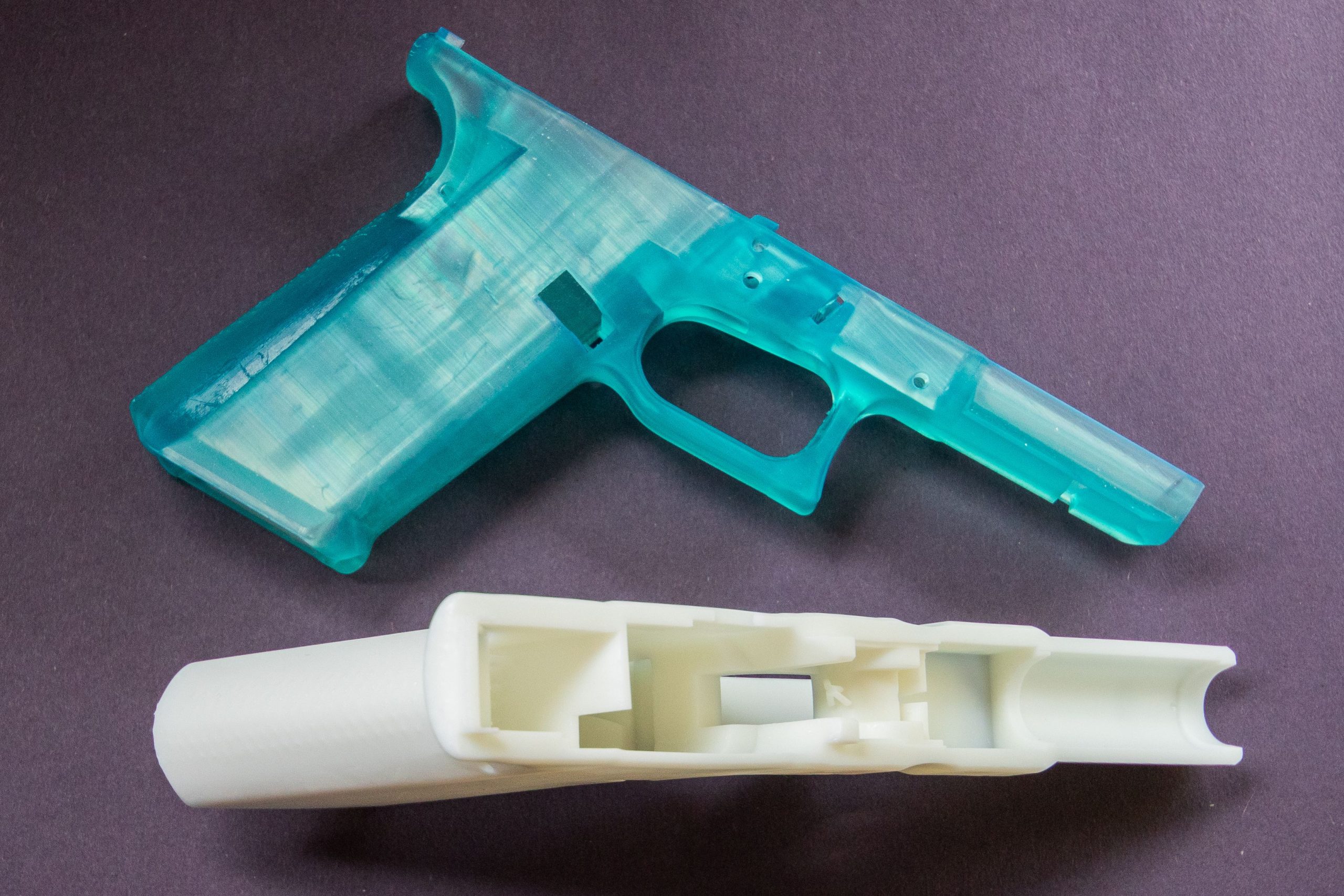
Another method is illicit manufacture, once a niche capability but of growing prevalence and of serious concern to law enforcement. Despite popular perception that to 3D print a gun all that’s needed is a 3D printer and plans downloaded from the internet, that’s not so. For a viable home-built gun, some metallic parts are required including springs, pins and barrels and, for handguns, slides. With the appropriate tools these can all be made in a home workshop. Alternatively, genuine factory-made components can be imported from the vast US market, though doing this is highly illegal in every Australian jurisdiction.
Here’s NSW Assistant Police Commissioner Scott Cook who told The Sydney Morning Herald last year, that hybrid weapons using 3D-printed and official gun parts are untraced, unregistered and redefining Australia’s gangland. “Traditionally, crooks used to steal firearms from registered gun owners. That grey market, where firearms drift out of the highly regulated market into the black market, is less prevalent now because criminals can simply import parts, which are much harder to detect,” he said last year. “[Manufacturers] sell them to organised crime groups who use them in the violence we’ve seen play out in the streets. And so it’s a brewing problem not just for NSW but the country.”
In a series of busts last year, police in Sydney seized an AR-15 and an SKS in a raid on an underworld gunmaker which also netted a handgun and dozens of 3D-printed pistol magazines, ammunition and various frames and slides. In another underworld facility, police located an industrial CNC milling machine, 3D printer and large quantities of magazines, slides, barrels and ammunition.
Academic Professor David Bright, a criminologist from Deakin University, told the ABC the most effective 3D weapons were being assembled with authentic gun parts. “These firearms are just as good, just as deadly as factory-made firearms,” he said. “Individuals can produce firearms which can be automatic, semi-automatic, can 3D print magazines which can be inserted into these firearms and make them incredibly lethal.” He called on the government to compel internet service providers to block the downloading of 3D gun blueprints from overseas websites.
Another suggestion is all 3D printers sold in Australia be modified so they can’t print guns. Would any of this work? Maybe, though the Commonwealth is well into its social media ban on under-16s, which has demonstrated motivated individuals can usually find a way to bypass any online restrictions.
Before the Bondi atrocity, some jurisdictions had banned possession of 3D firearm blueprints. Post-Bondi other states and territories are likely to follow. What may also happen is an accelerated rollout of the National Firearms Registry, though it’s already happening and slated for operation by mid-2028.
One new measure, if in place previously, may have prevented one Bondi gunman (the father) from being issued a firearms licence. That’s proposed cross-checking of firearms licence applications with records of the Australian Security Intelligence Organisation (ASIO), which means someone could be denied a gun licence based on security risk. ASIO was certainly aware of the son’s flirtation with Islamist extremism, though in 2019 concluded he didn’t harbour violent intentions.
Following the attack, ASIO director-general Mike Burgess launched an internal review, affirming the 2019 decision, though adding the pair “did not adhere to or intend to engage in violent extremism at that time”. Even so, would NSW have issued a firearms licence to a man had it been known his son harboured extremist leanings? Maybe not. Way back in 1973, NSW introduced a system of Firearms Prohibition Orders (FPOs), with major changes introduced in 2013 allowing police to search FPO subjects, their premises or vehicles without a warrant and without needing reasonable grounds.
FPOs bar a person from possessing firearms, parts or ammunition if, in the opinion of the NSW Police Commissioner, the individual is not a fit person in the public interest to possess a firearm. An FPO even bars someone from residing anywhere a firearm is kept. NSW police are big on FPOs, with more than 300 issued just in the second half of last year, this especially directed at those engaged in organised crime, particularly outlaw motorcycle gangs.
Police cite a wide range of FPO offence criteria (murder, armed robbery, drug dealing) though nothing specifically relating to security or terrorism offences. However, a 2016 study by the NSW Ombudsman found a significant overlap between Sydney crime groups and those with terror associations.
Out of 516 people searched under FPO powers, 83 were linked to listed terrorist organisations such as Islamic State, Al-Qaeda, Abu Sayyaf Group and Jemaah Islamiyah, or police had recorded concerns regarding the person’s radical or extremist ideology. In the case of the Bondi attackers, this would appear to have been a missed opportunity.