

As we move towards the end of 2025, we also plough headlong into a variety of state elections, with the first being South Australia in March next year.
As the campaigning for these elections ramp up, so to do the parlour games and public relation stunts from members trying desperately to gain or retain their seats.
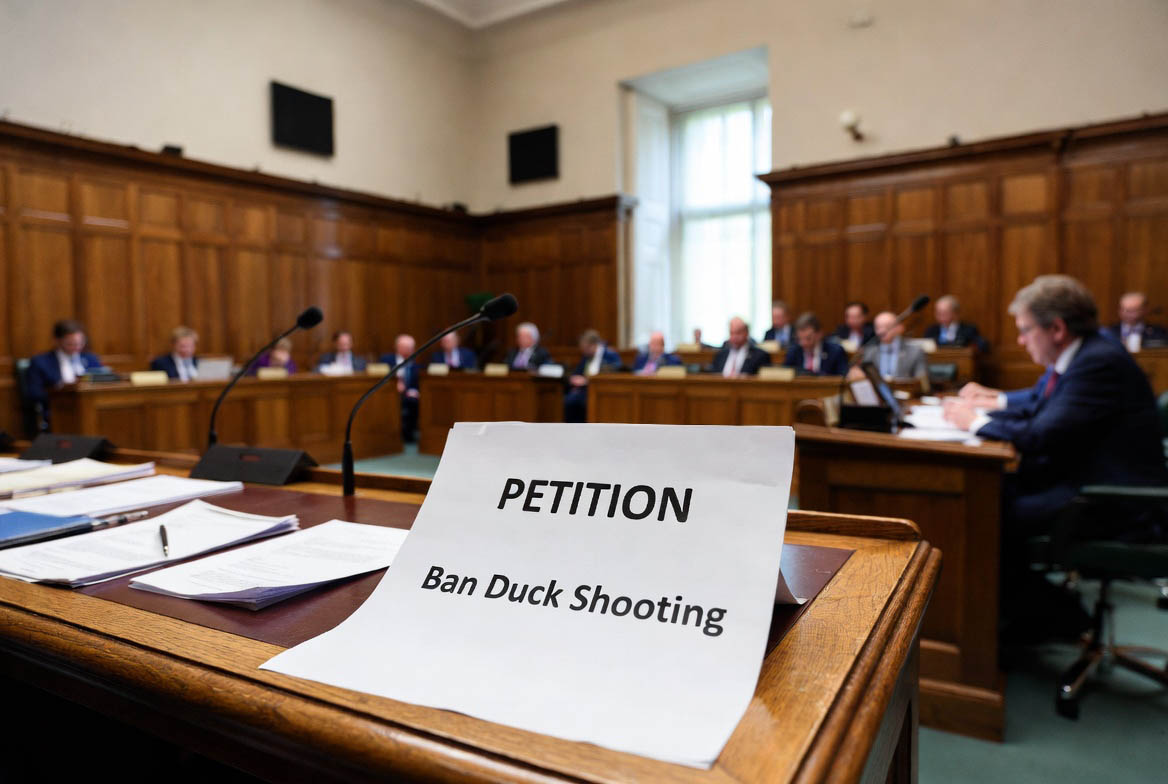
Recently, a backbench MP from a marginal seat in South Australia posted a Facebook video about how she had tabled a petition in Parliament advocating to ban “duck shooting”.
This is a futile and misleading action – let me explain why.
The member for Davenport, which covers part of outer suburban Adelaide and the southern foothills of the Adelaide Hills, presented a petition to Parliament on 13 November, signed by 22,500 residents of South Australia “requesting the house to urge the government to prohibit duck shooting in South Australia”.
In explaining this petition she said “Today, I received and tabled a petition signed by 22,500 South Australians, the largest petition received by this parliament this term, calling for an end to recreational duck shooting in our state—22,500 South Australians from every region and every walk of life, all saying with one voice that this outdated cruelty must end. That is an extraordinary act of civic participation and it deserves recognition in this chamber.
She also stated this is “people power in its purest form”. I’d assert this is potentially politicking in its purest form.
In very basic terms, when a member presents a petition to the South Australian Parliament the following happens:
- It is referred to the Minister responsible for the matters raised, and the Minister may respond to a petition in any way they see fit.
- If a single petition has over 10,000 signatures, it is referred to the relevant Parliamentary standing committee, with the committee required to investigate the petition and report back to both Houses. The responsible Minister in each House is then required to table a response and make a statement outlining what, if any, action is to be taken in relation to the petition.
The hitch in this is that the last sitting day for the South Australian Parliament is the 27 November 2025 (or 4 December 2025 if they use the optional sitting week), which will also be the last sitting day until the state election. After this point, the Parliamentary session ends and is formally closed, and the House is dissolved for an election.
What this also means is:
- All bills, motions, and other business before the House are ended. This means they would need to be formally reintroduced in the next session to be considered again.
- All committees, including joint committees, lose their power to meet and transact business.
- Members’ parliamentary duties are concluded until an election is run and won and next session is summoned.
- Government (including Ministers) go into “caretaker” mode, where routine government business continues, but significant new initiatives are avoided.
This means the Member for Davenport’s motion cannot be considered by a committee, nor can the Minister take any significant policy action. It’s a dead duck.
So, why would a politician do this?
We can only guess why a backbench MP would do this, but a couple of options are that they don’t know how Parliament works, which would be depressing, or it’s a PR stunt.
Where it could be a strategic PR stunt is if the MP potentially believes they are at risk of losing votes to the Greens in March and so wants to demonstrate their commitment to a cause that’s important to this demographic. If that’s the case, they have convinced over 22,000 people to sign a petition believing it would be discussed by the state’s lawmakers, knowing it would die in a few weeks with no real action.
Either way, the outcome is good for our members, but a cautionary tale for voters. Big public actions that seem cathartic and bold don’t always lead to good outcomes.
It’s similar to people who march into politicians’ offices to shout and yell, only to be escorted out and never taken seriously again. Good politics and good advocacy come down to knowing the business and being able to influence decision making, not just make a scene.