

Daniel O’Dea celebrates the latest Anschutz triumph
German firearms firm Anschutz is perhaps not as prominent a brand as it once was in Australia. When I was growing up during the 1970s and ’80s and chamberings such as the .222 Remington and .22 Hornet were among the most popular calibres, if you came across one it would just as likely be an Anschutz. Likewise, when it came .22 rimfires they were among one of the most popular choices. You need only check the used ads on any of the gun sales websites and you’ll find plenty of Anschutz rifles of this vintage still going strong 50 years on.
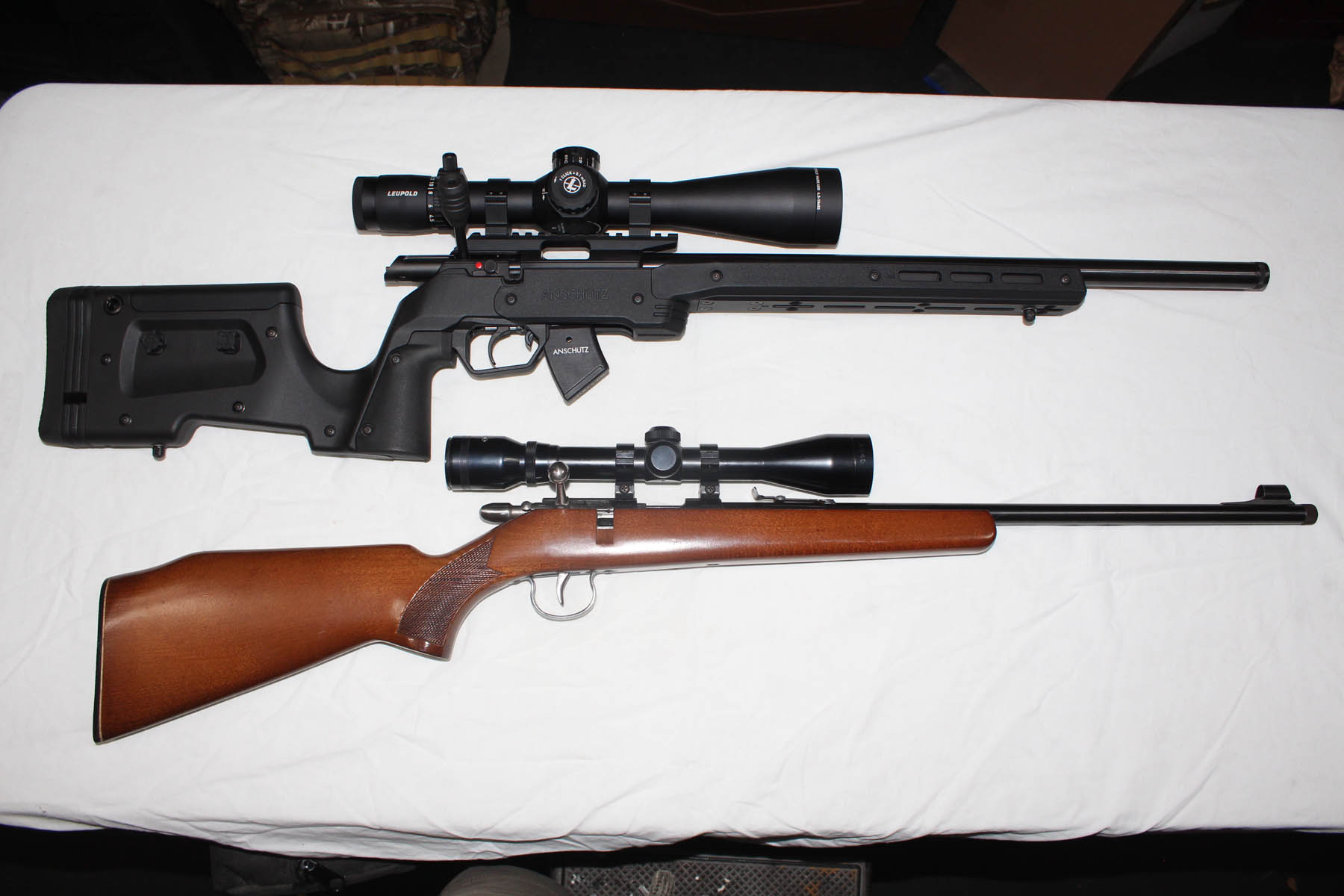
When I was about 15 and growing up in Sydney, I recall dragging my dad into Shooters’ Home in George St. The single-shot Anschutz I picked up that day for $110 was the first rifle I’d own chambered in .22LR, (I started with a .22 Magnum but the ammo was too dear) and 40 years on I still have it.
Sporting rifles weren’t cheap in those days (comparatively) with the Anschutz brand reasonably priced and well known for both quality and accuracy. My single-shot was pretty basic and not too different in form or function to the myriad of other single-shot .22s of the day. It was a good honest product. Anschutz though has since found their niche, still making quality hunting rifles yet more developing into premium brand specializing in state-of-the-art target rifles. Be it benchrest, biathlon or just about any recognized target match out there, Anschutz will likely have a purpose-built rifle for it.
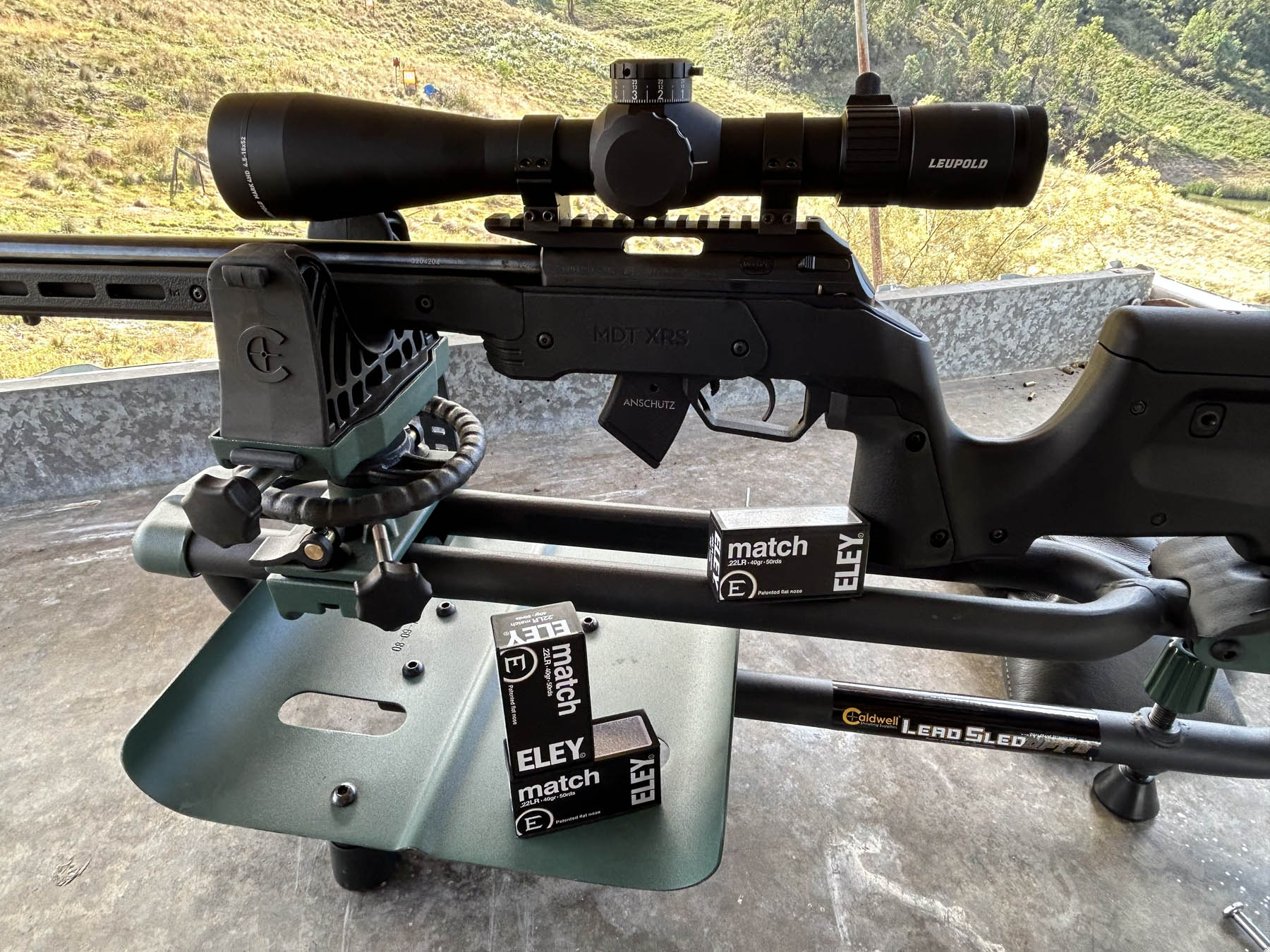
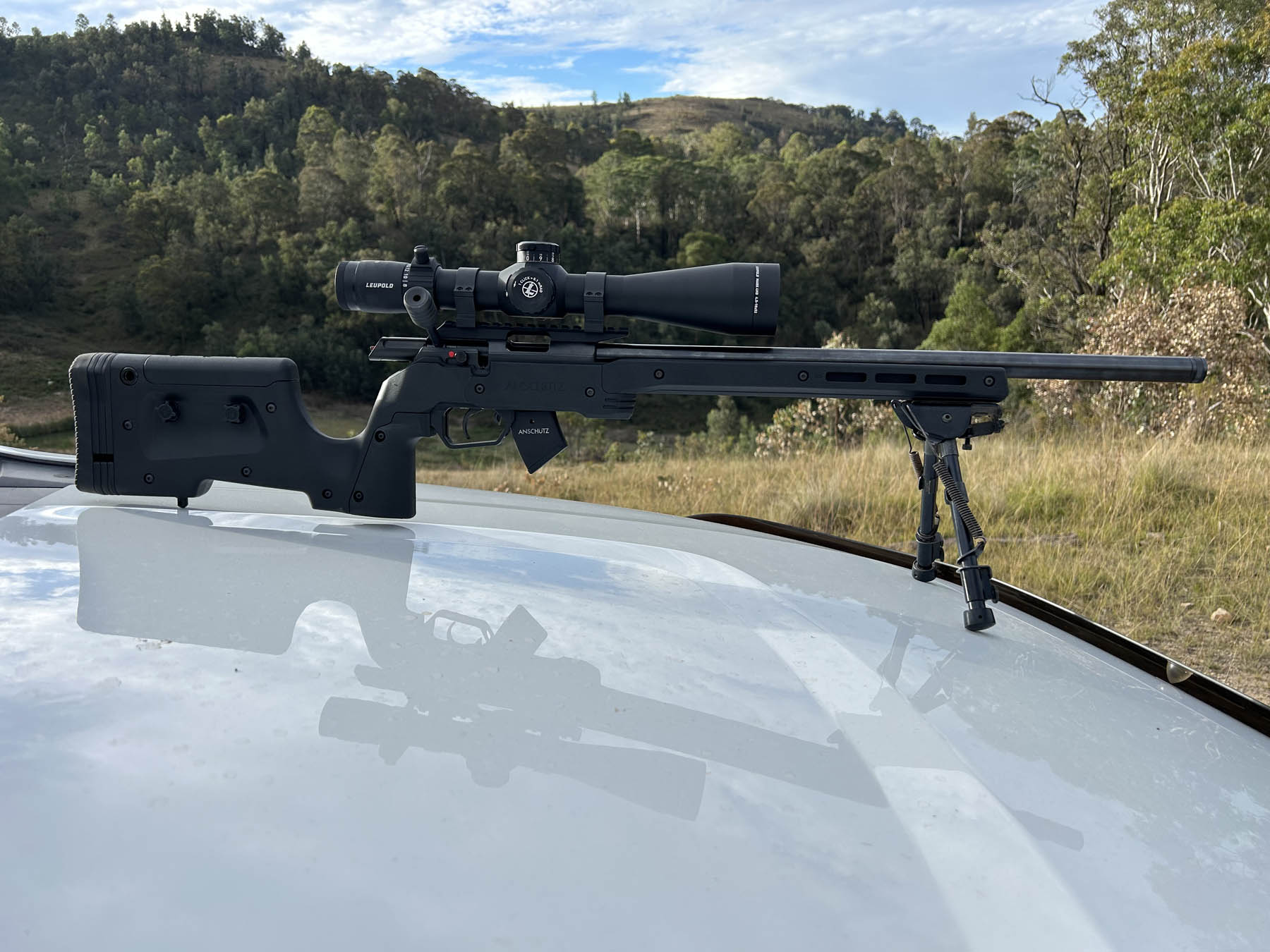
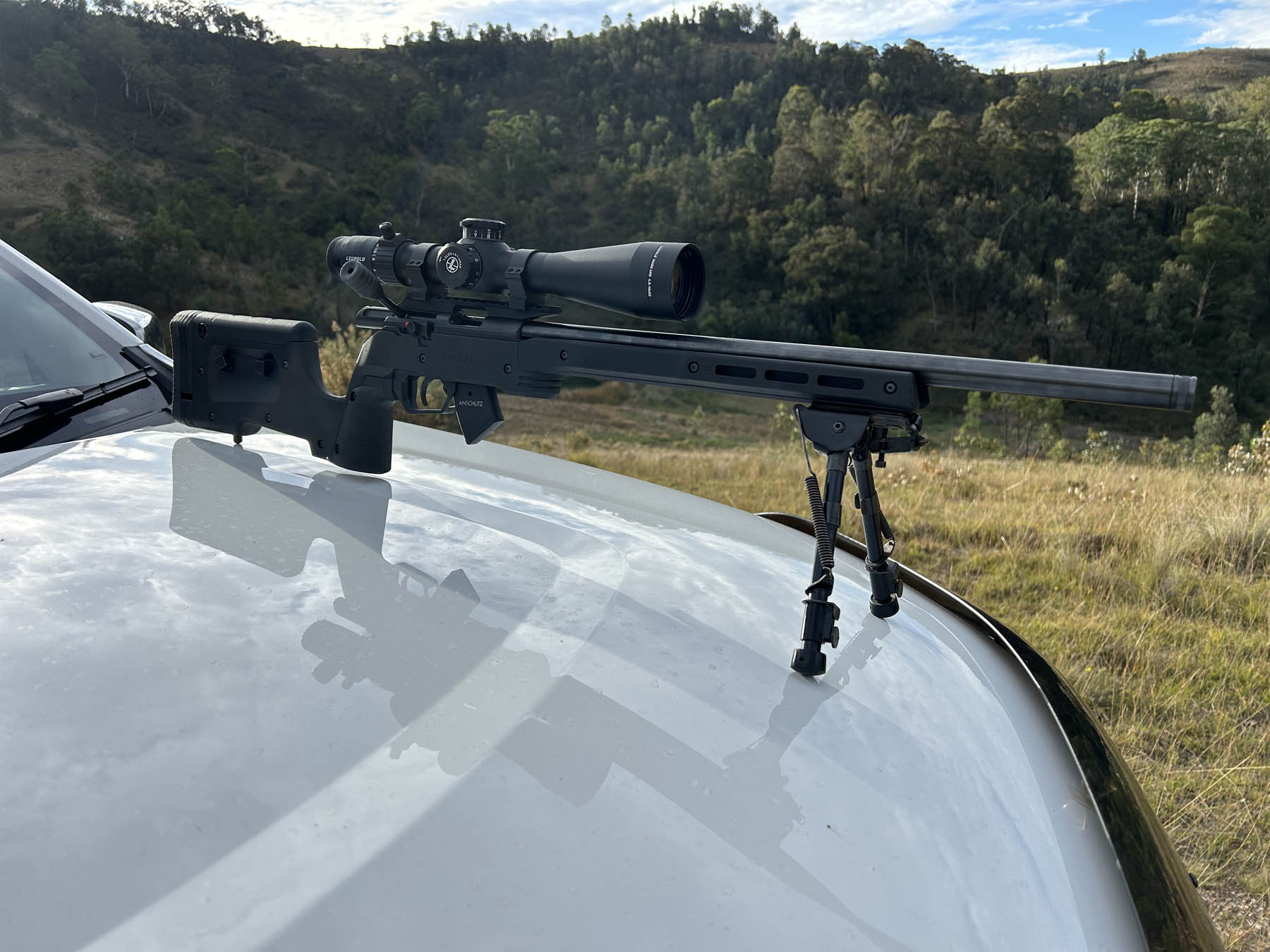
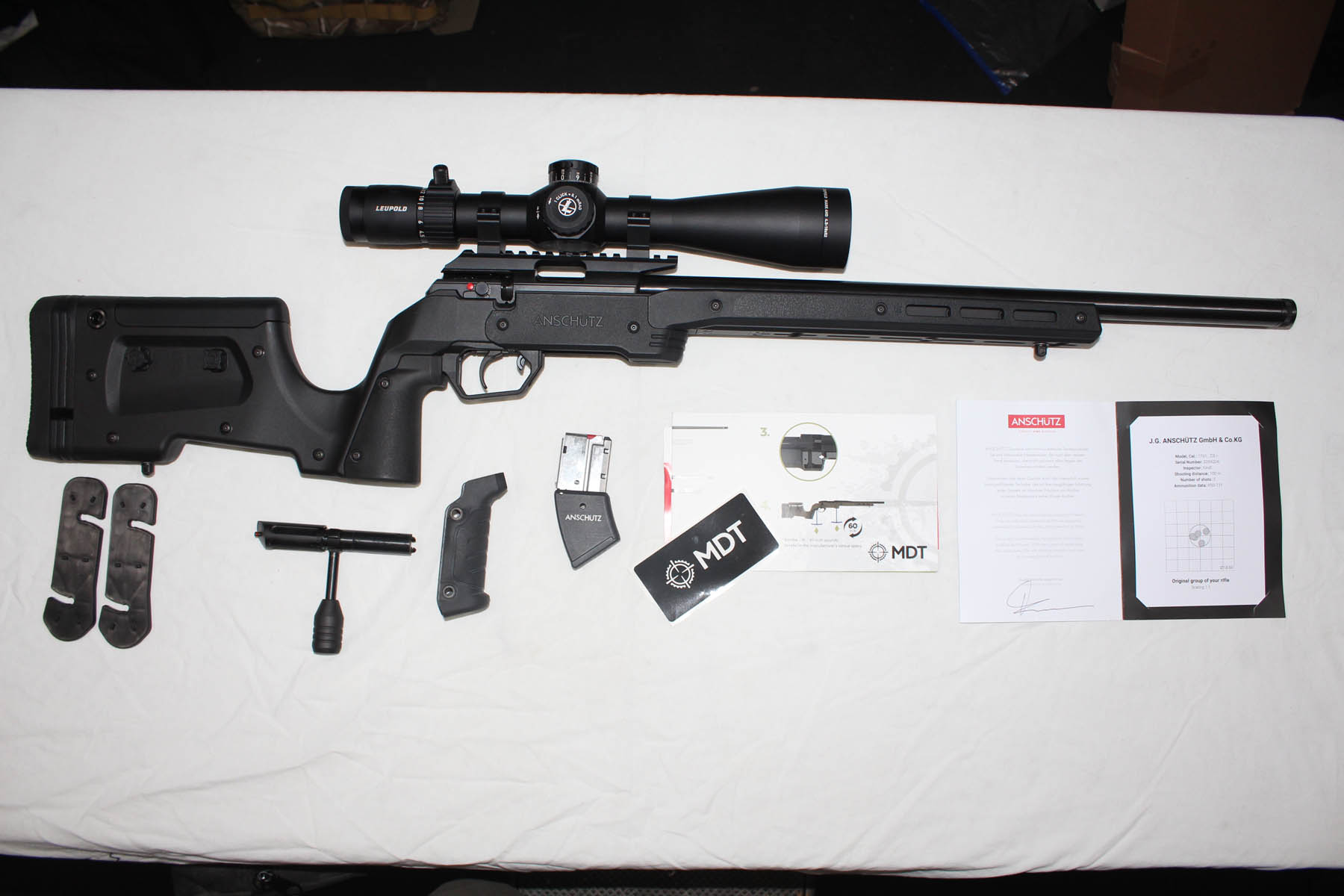
Australian distributor Nioa provided Australian Shooter with an Anschutz Model 1761 APR XRS which, quoting from their website: “Was specially developed for the small calibre PRS (Precision Rifle Series) disciplines.” Straight from the supplied hard case this rifle really looks the business. Anschutz start with their 1761 high-precision rimfire action mated to a 544mm heavy duty target barrel, that action with its self-centring three locking-lugged bolt renowned as both smooth and supremely accurate.
A match-grade rifle needs a match-grade trigger which, in this case, is an Anschutz single-stage 5061 D APR, adjustable from 750g to 1200g it’s factory set on the former. The trigger system is quite some piece of engineering in its own right, said to include more than 50 individual precision parts, adjustability also including the option to move the trigger tongue forward and aft or swivel from left or right.
As a long-range rifle the action is appropriately topped with a full-length 30MOA Picatinny rail, while the whole barrelled action package sits neatly in an MDT XRS chassis system. For those unfamiliar, such MDT stocks/chassis systems in my opinion provide the perfect balance between all the modern chassis rifle benefits, while maintaining similar but improved ergonomics when compared to a more traditional stock system. MDT themselves promote the system as a ‘hybrid stock’ and “features of a chassis with traditional feel”. The high-grade 6061 alloy chassis core provides rock solid V-Block bedding and a fully free-floating barrel, without the rest of it presenting as some type of modern alloy skeleton.
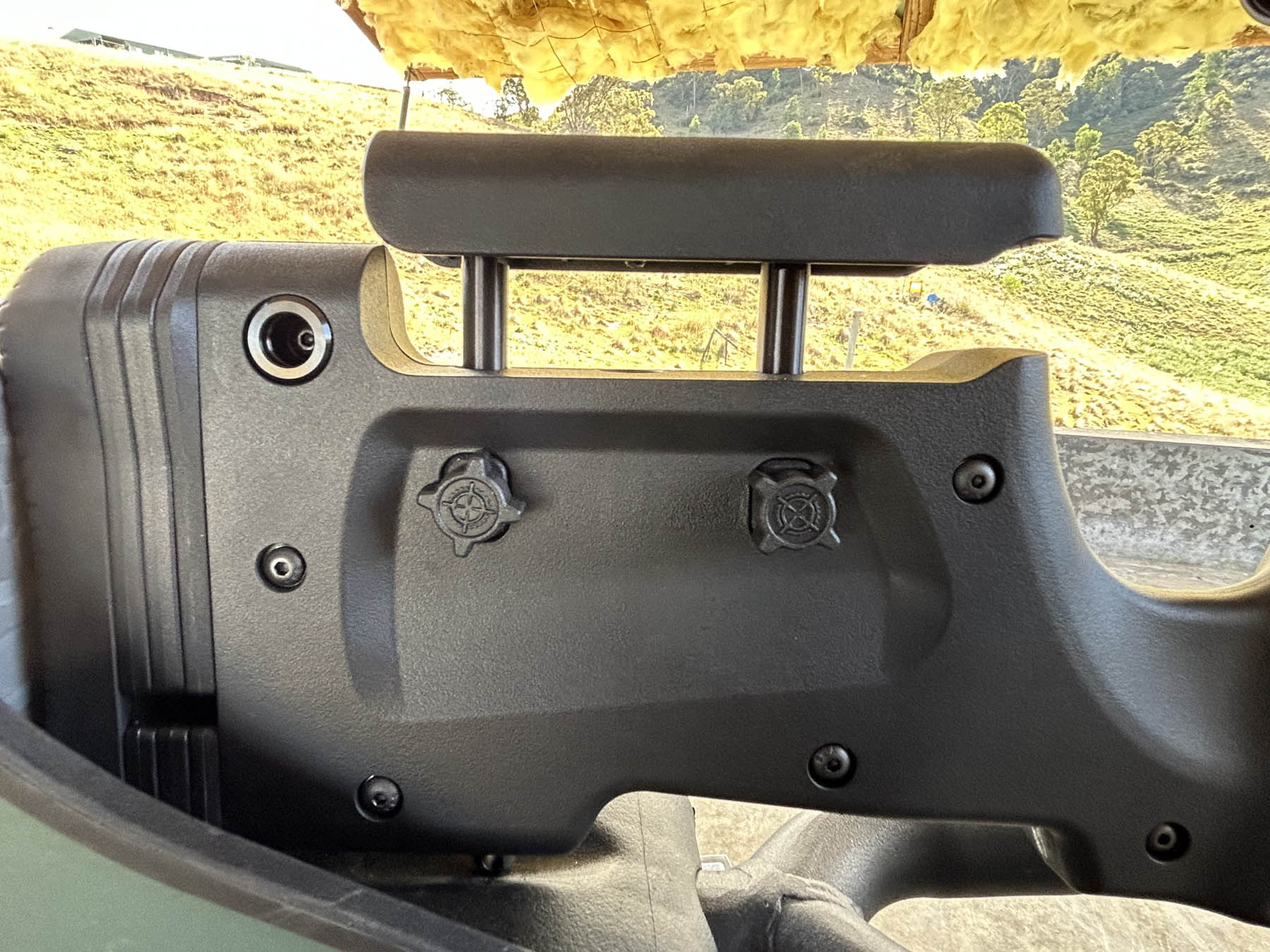
Even with the traditional bent the stock in no way lacks features. Length of pull is adjustable via five quarter-inch extension plates which sit between the butt and rubber kick pad, while an adjustable cheekpiece can be raised or lowered via two small screw knobs without tools. The ergonomic pistol grip incorporates a thumb-rest and interchangeable grip panel which allow for a choice of angled or vertical grip styles (both included). The 12” fore-end includes M-Lok for ease of accessory or rail fitments while a barrier stop, QD studs and cups are among other neat features.
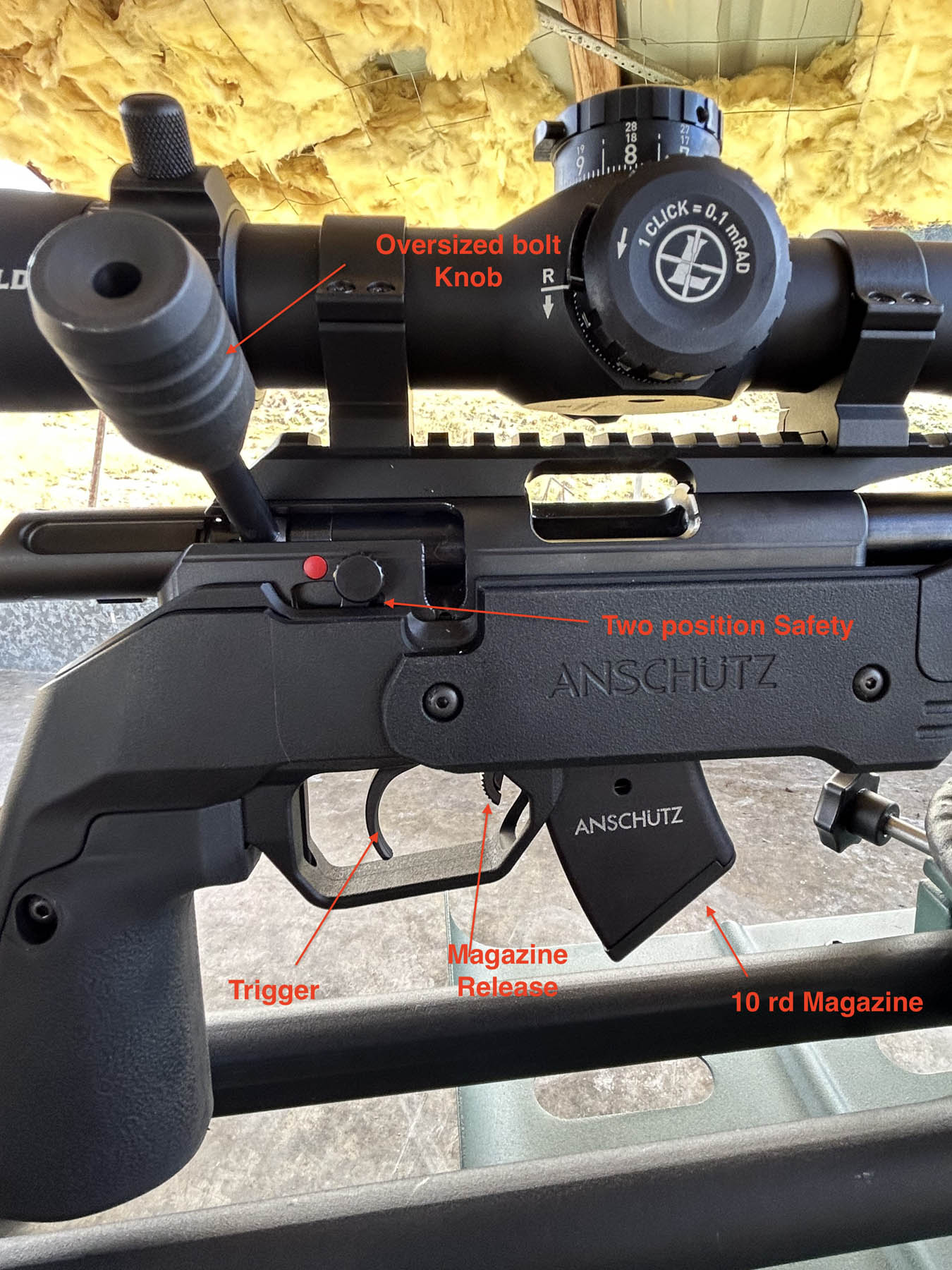
The rifle’s fed via a single 10-round magazine combining a stainless steel body with an extended polymer base incorporating a ‘non-slip waffle’ pattern. According to Anschutz it’s said to be “insensitive to dust, dirt and water” which is probably a good thing, as the last thing you want is an overly-sensitive magazine!
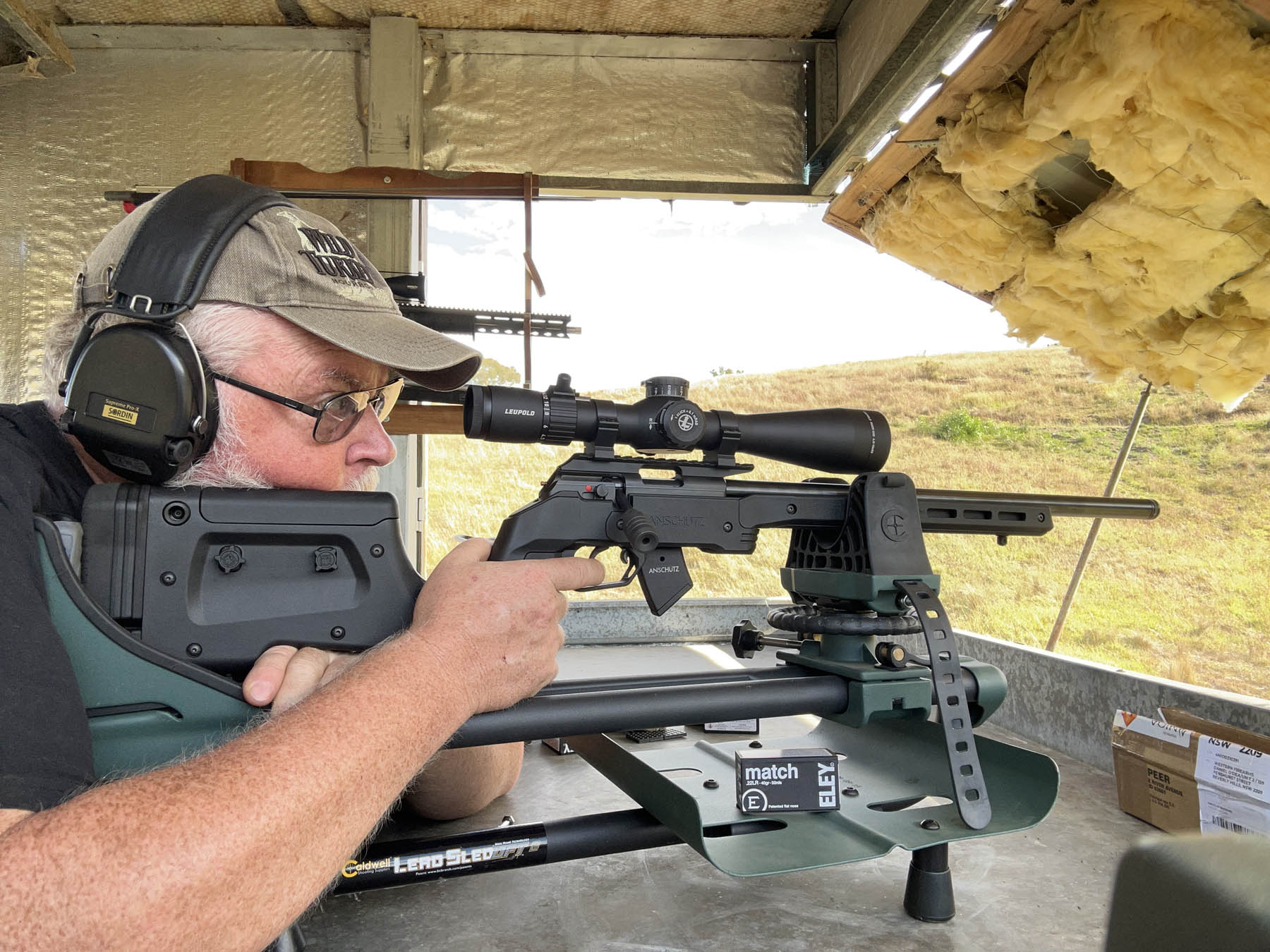
A precision rifle deserves a precision scope and Nioa didn’t disappoint, the rifle arriving fitted with an excellent Leupold Mark 4HD 4.5-18×52. With plenty of magnification, 34mm main tube and oversized turrets featuring 36 MIL (125 MOA) of elevation adjustment, you couldn’t ask for much more optics-wise on a long-range .22 rimfire rifle. Fittingly, a supply of Eley Match .22LR ammunition completed the package for testing.
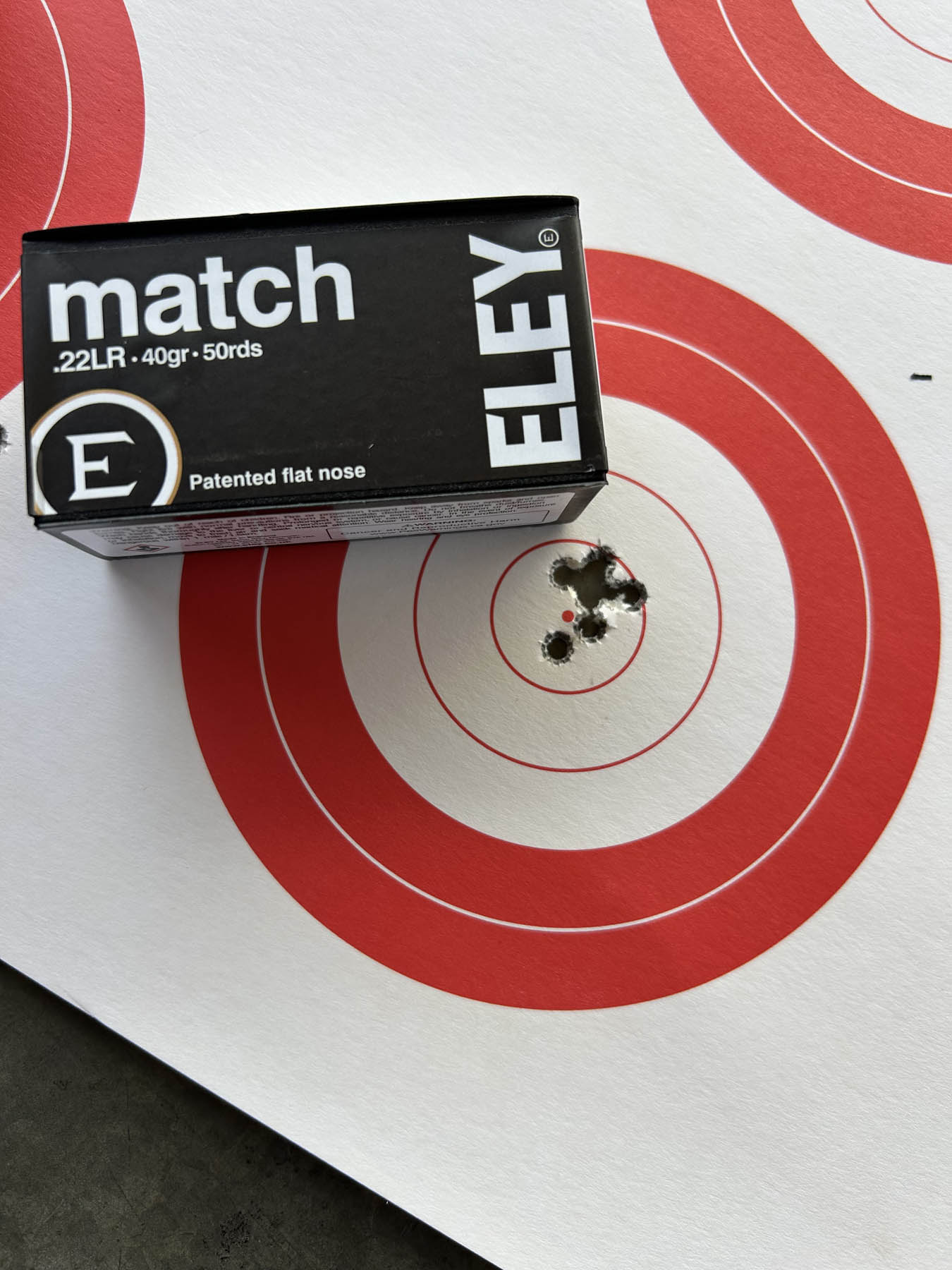
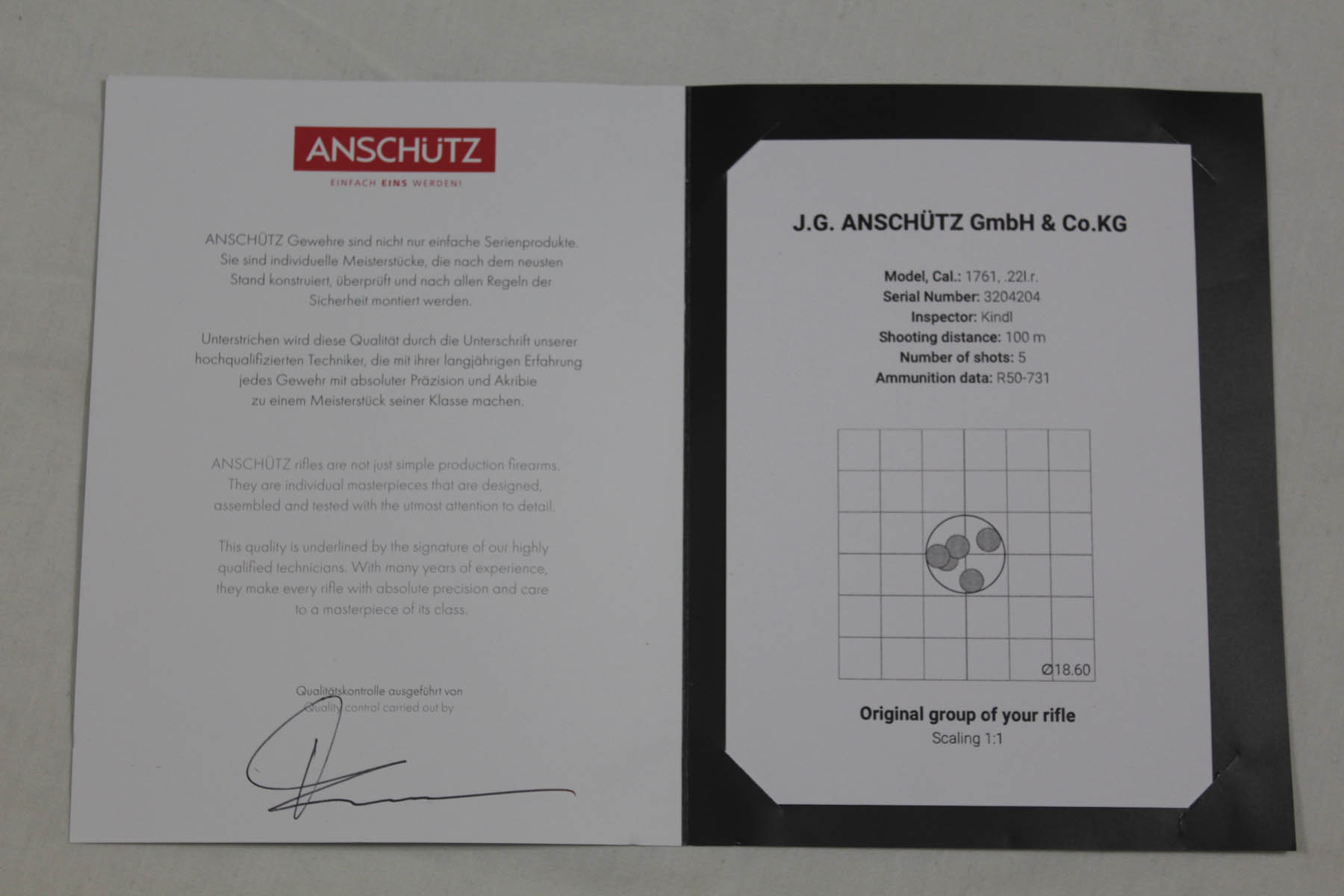
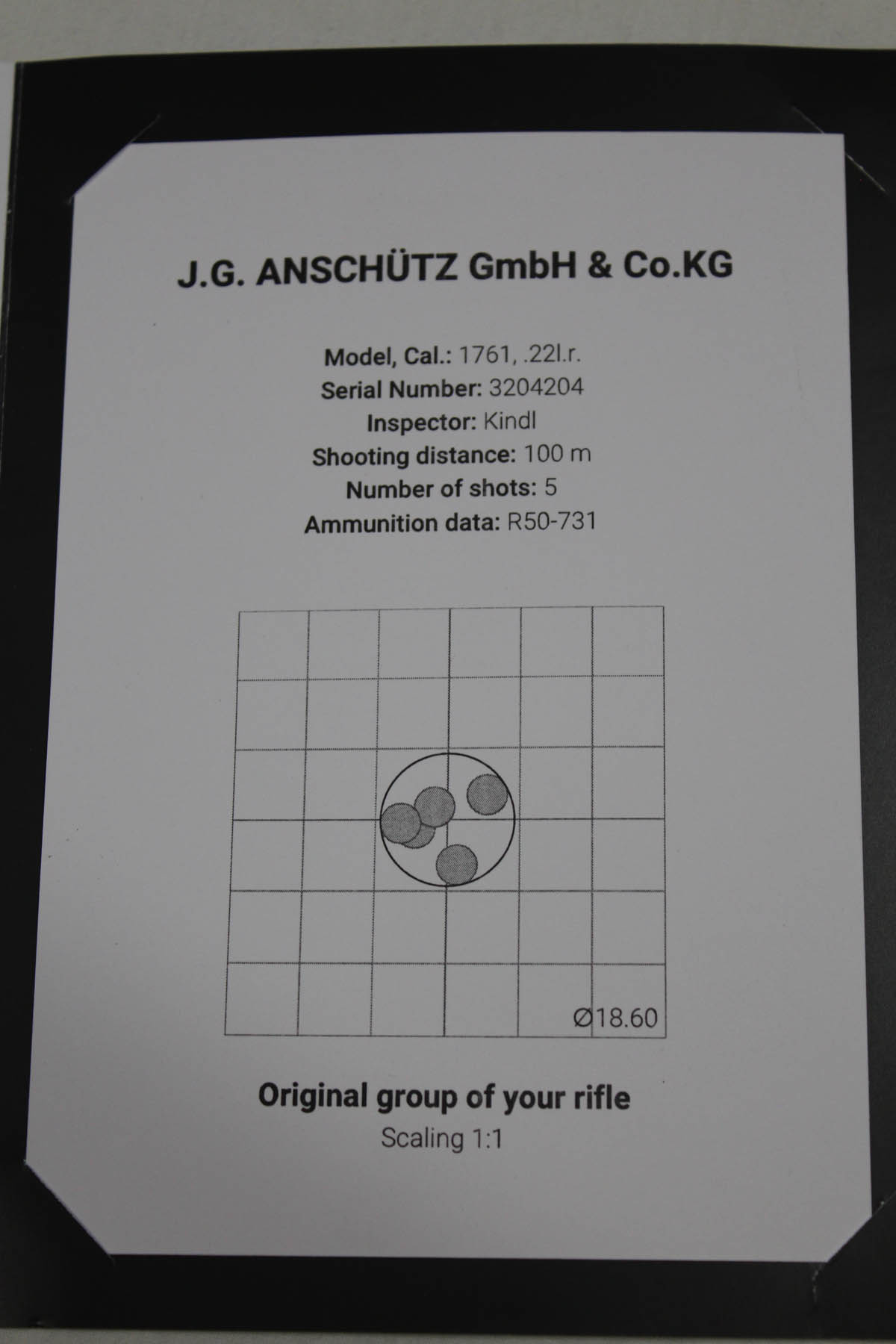
As part of their Quality Assurance program each Anschutz rifle includes a card with a factory test-target facsimile, the one for the test rifle presenting an 18.60mm group measured edge-to-edge with the distance listed as 100m. The card also includes information such as model details, serial number, ammo used and inspector’s name. Of course ‘inspector’ would be the correct terminology, as groups for factory testing are shot with the barrelled action mounted in a special barrel vice in a climate-controlled indoor range (there’s a YouTube video of this). Naturally this is the most consistent way a factory can demonstrate what the rifle’s capable of as it removes all human variables. I mention this only to point out you shouldn’t be concerned if you can’t replicate the test group.
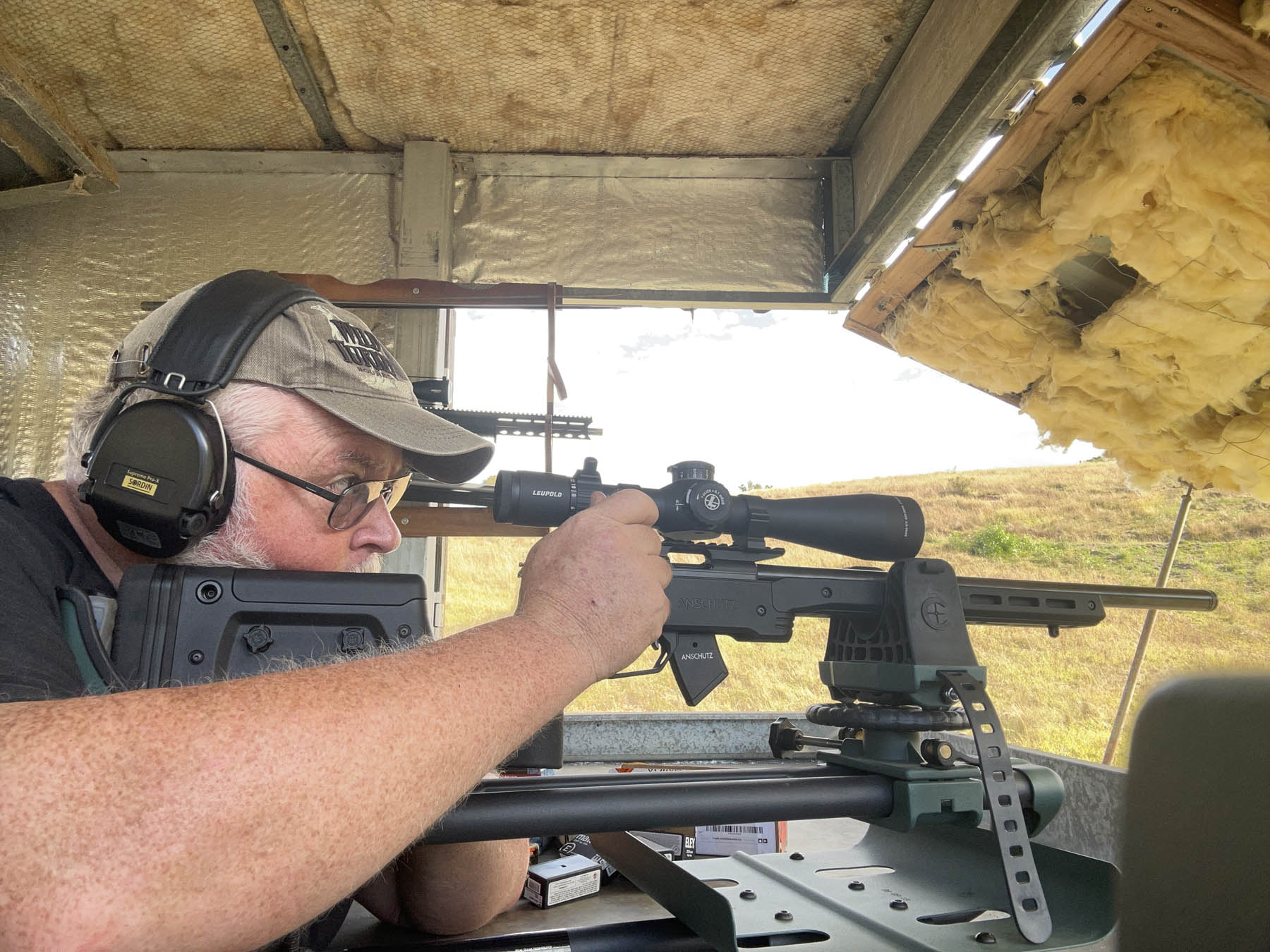
Needless to say Anschutz have a proven track record in producing highly accurate rifles, the volume of competitions won with their products impossible to calculate. In the case of the review gun, even with my meagre abilities I was able to produce some very tight 10-shot groups around the same size as the test target, albeit at 50m yet still representing superb accuracy. Off the bench and using a fair bit of elevation available on the Leupold Mark 4HD optic, I was even able to land rounds on the hanging plates of my 200m metal plate rack, not bad for a .22LR. Basically, in the case of the Anschutz you’re almost guaranteed the level of accuracy will rely more on the shooter’s ability than anything else.
In operation as a match-grade target rifle the Anschutz is most happily fed a diet of appropriate match-grade ammo (the supplied Eley Match rounds fed smoothly and consistently). Out of interest I did try some other non-match ammo in case some might be considering such a rifle for tactical bunny-busting or similar. Most fed equally as well, though I’d note the rifle didn’t particularly like some of the flatter nose hollow-point projectiles. These included Winchester Power points, which seemed to present higher on the feed ramp when cycling and didn’t want to go into the chamber. Goes without saying that as with any rifle, best test it with ammo to be used before match day or going afield.
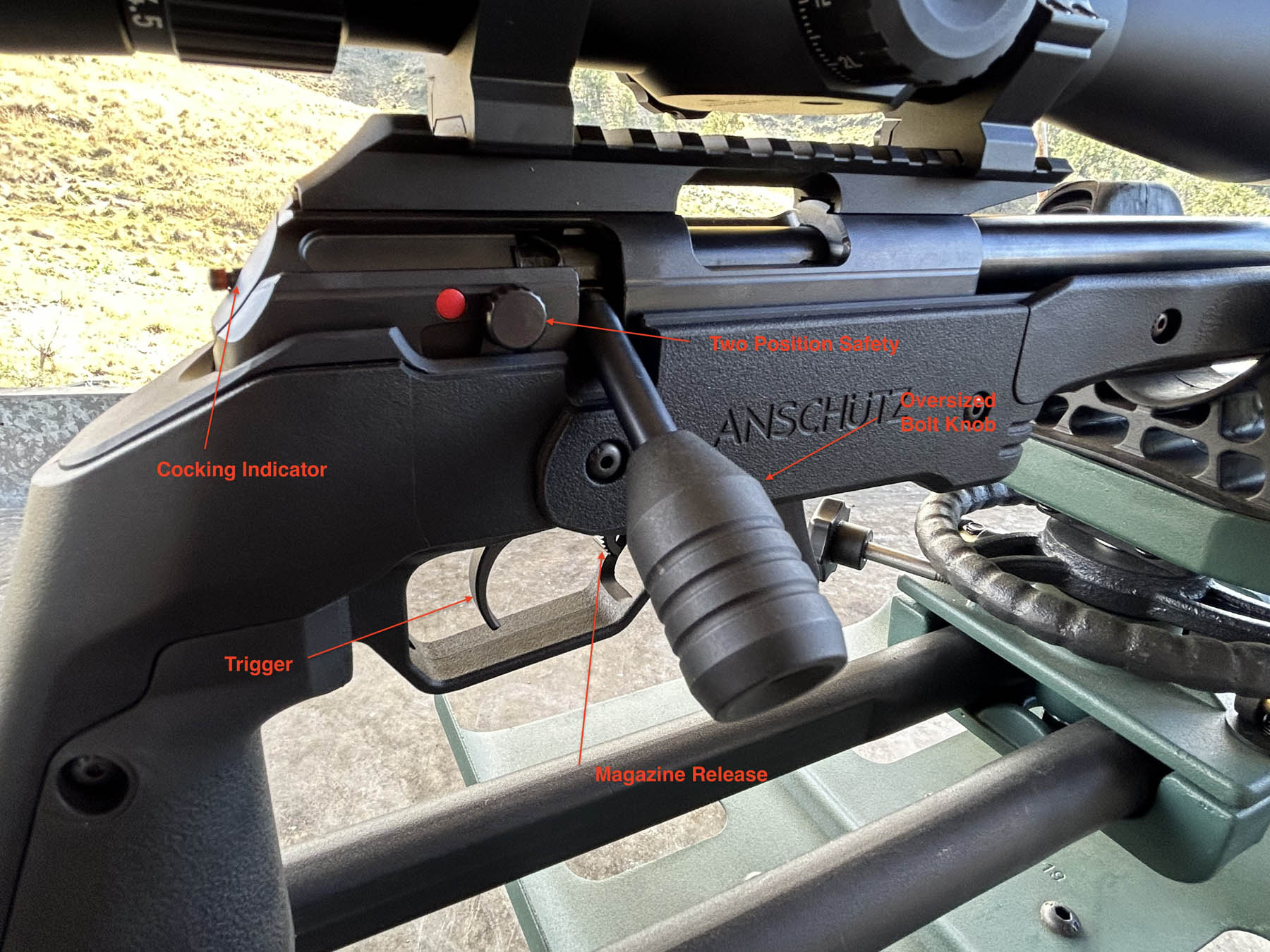
I’m a big fan of MDT products, having one of their stocks on a 6.5 Creedmoor. Both ergonomics and features are excellent and I really like the feel. The full pistol grip fills the hand, providing dynamic control when working barricades or obstacles as may be found in some precision rifle competitions, while the flat fore-end sits stable on bag or rest. The oversized bolt handle on the 1761 APR XRS can be found instinctively for short, sharp reloads, likewise the large knurled button on the two-position safety lever thumbs with ease.
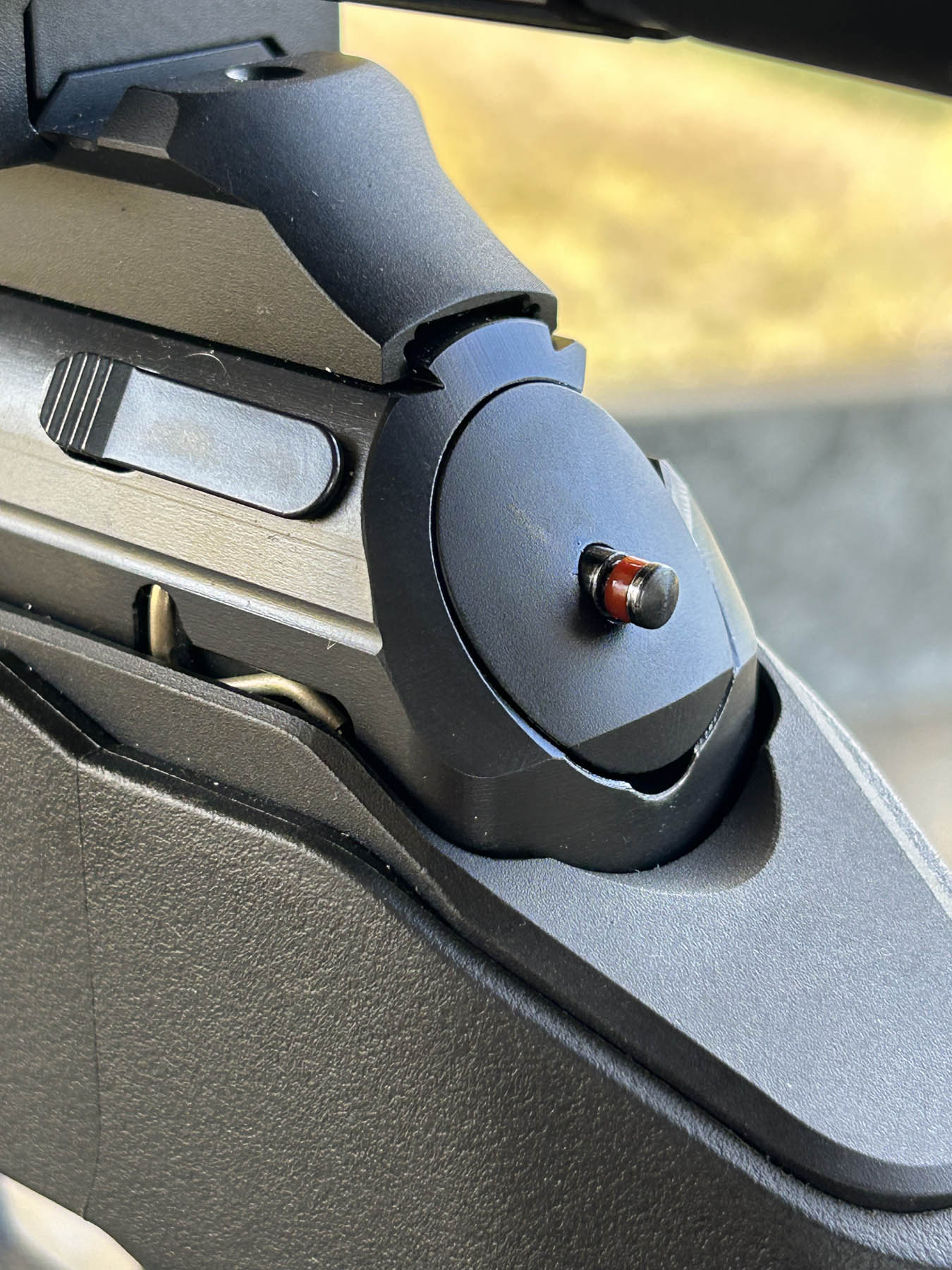
A cocking indicator protruding from the rear of the bolt gives both a visual and tactile reference of the rifle’s condition, while a tap with the nail of your trigger finger on the magazine release, found forward in the trigger guard, will have the magazine falling free. The trigger is crisp and precise with the whole package well thought-out and built to purpose.
The Model 1761 APR XRS represents a huge departure from the basic single-shot I proudly walked out on to George St with all those years ago, but the Anschutz reputation of extremely well-built and accurate firearms rings just as loudly. More at www.nioa.com.au