


Rod Pascoe tests a lever-action with a difference
American-made lever-action rifles were adopted fairly early in Australia’s development, when settlers were being attracted from around the world by news of the country’s gold mining boom. While the British and Europeans introduced many percussion handguns and long-arms earlier on, miners from the US brought firearms later in the 19th century, following the invention of the self-contained metallic cartridge.
Later on we learned Australia happened to be one of the biggest adopters of lever-action rifles outside the US and they quickly became a favourite, particularly in hunting circles, with dozens of manufacturers still producing rifles and carbines keeping the appearance as close as possible to the classic lever-gun models.
Lever-action rifles typically have tubular magazines under the barrel to hold the ammunition, which is pushed back along the tube towards the action by a coiled spring. Not only does this system conveniently keep all the ammo internal, it maintains a slim profile of the rifle. Loading centrefire rifles is usually through a loading gate on the right side of the action, pushing one round at a time into the rear of the spring-loaded tubular magazine.
But most rimfire lever rifles have a tube magazine that’s fed from the front, after first removing a magazine follower either partially or fully. This isn’t a quick way of refilling the magazine and is a little clumsy, probably the reason rimfire lever-guns were never as popular as their centrefire counterparts.
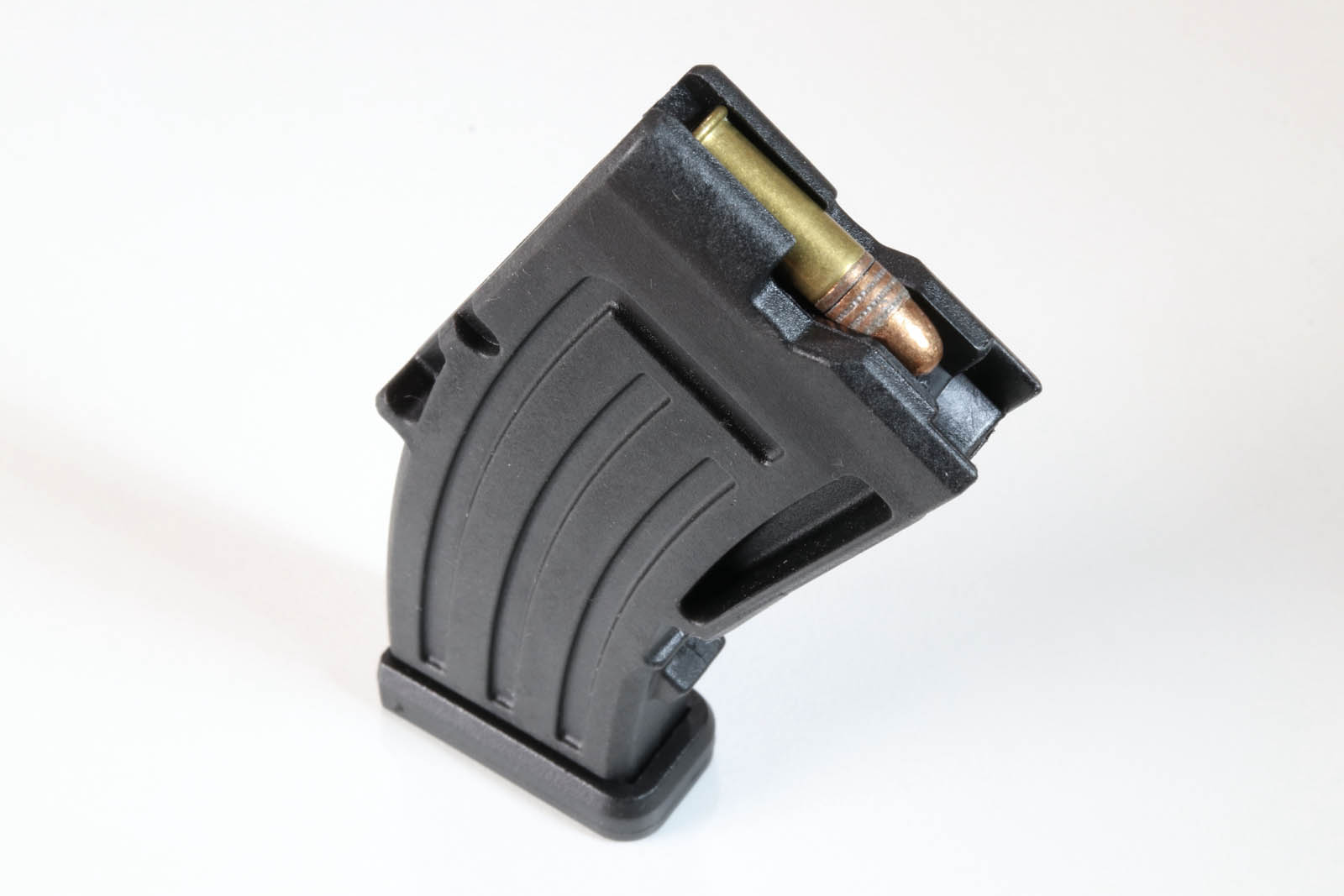
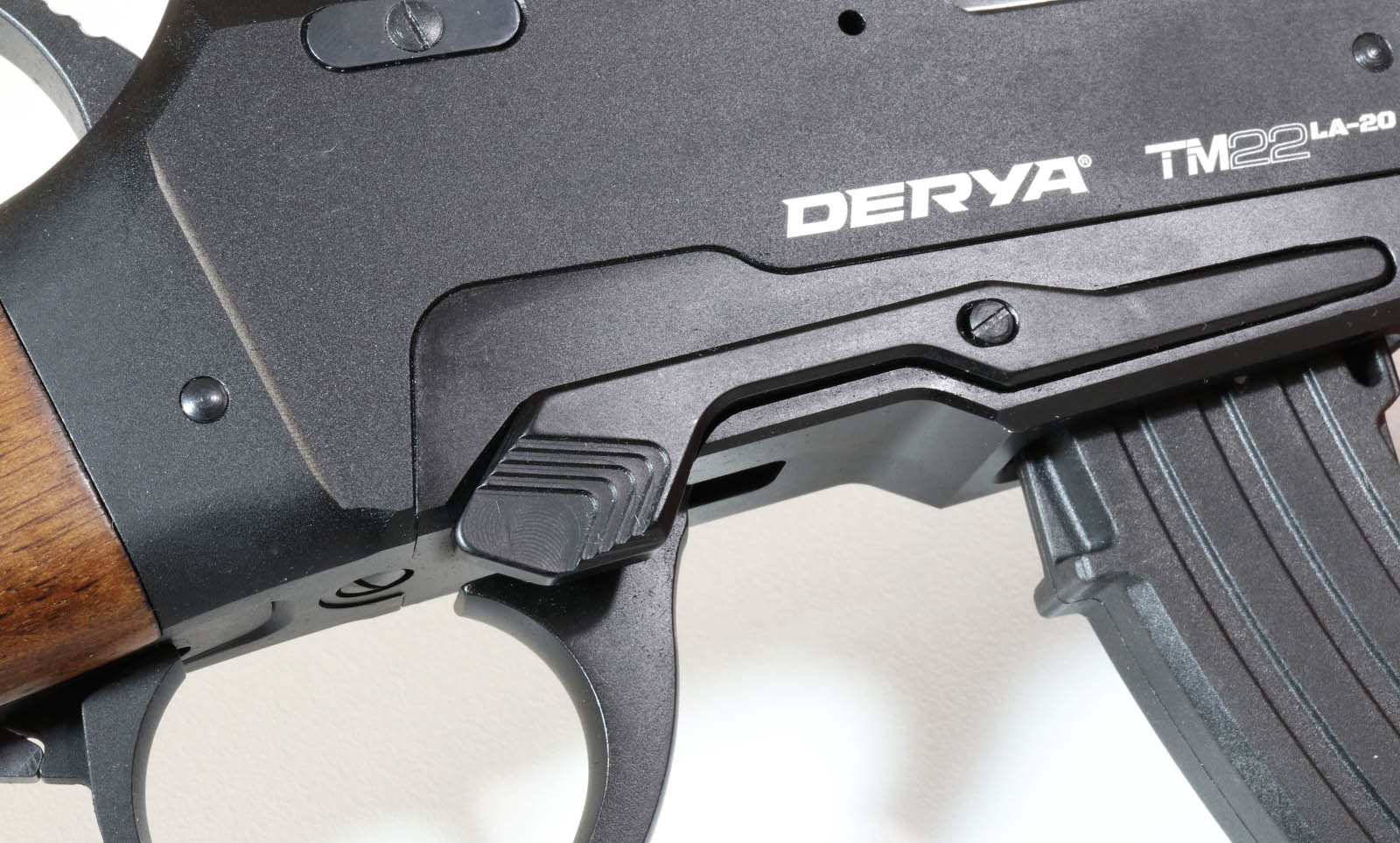
Derya Arms of Turkey decided to change all that and have come up with a box magazine feeding system instead of the tube, at the same time keeping as close to the traditional lever-gun shape and operation. With the help of Australian distributor Hunt’s Shooting Supplies on the central tablelands of New South Wales, Australian Shooter was able to take a close look at this interesting rifle and put it to the test.
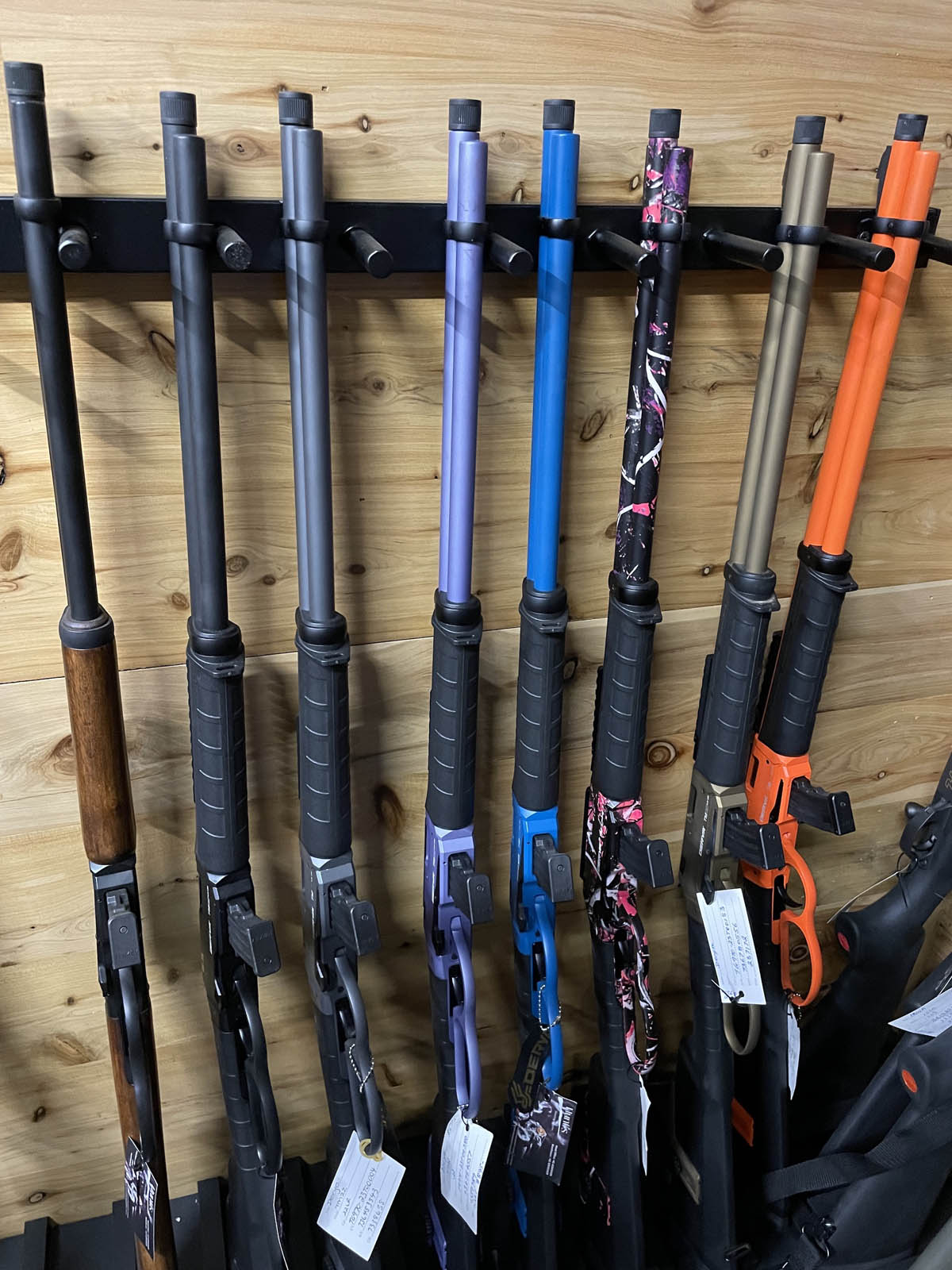
The range of Derya TM-22 LA-20 rifles all share the same action and barrel but offer a choice of colour schemes in actions, barrels and synthetic stocks, which include an adjustable comb and straight grip. Yet there’s also a walnut model and that’s the one which appealed to me, not just for its traditional timber furniture, but the fact the stock is more friendly to ambidextrous use than the synthetic stock versions. Why is this important? All will be revealed.
The lever itself is traditionally shaped with a rounded loop. It has a shorter and lighter stroke than a rifle with a tube-fed magazine, which has additional moving parts and more complex feeding operation. A tube under the barrel not only keeps the appearance of the traditional rifle magazine, it adds weight and balance to the overall package.
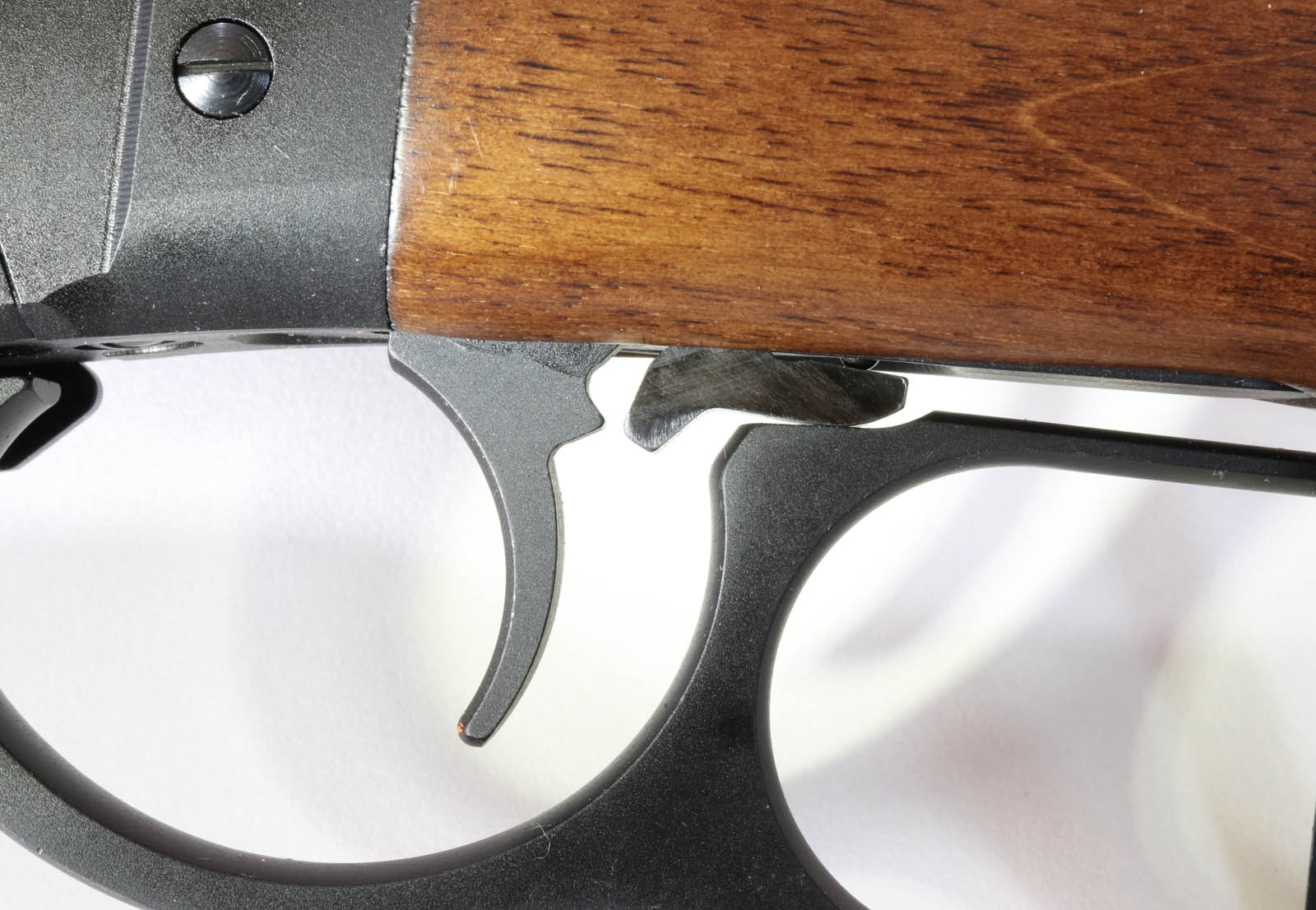
The upshot of this is shooters familiar with the traditional lever operation will have to get used to a slightly different ‘feel’. Added to that feel is the addition of a trigger safety that’s spring loaded, requiring the lever to be fully squeezed up to the pistol grip before the trigger is free to release. And the action can’t be closed when the magazine’s empty, acting as a reminder to reload as well as the safety aspect of displaying an empty chamber.
The bolt face houses two horizontally opposed extractors, typical in .22LR bolt-action rifles. A fixed ejector sits at the end of the bolt’s stroke, to throw the empty round well clear of the side-eject action opening. Once the bolt moves forward, it picks up a new round from the top of the polymer 10-shot magazine and feeds it into the chamber.
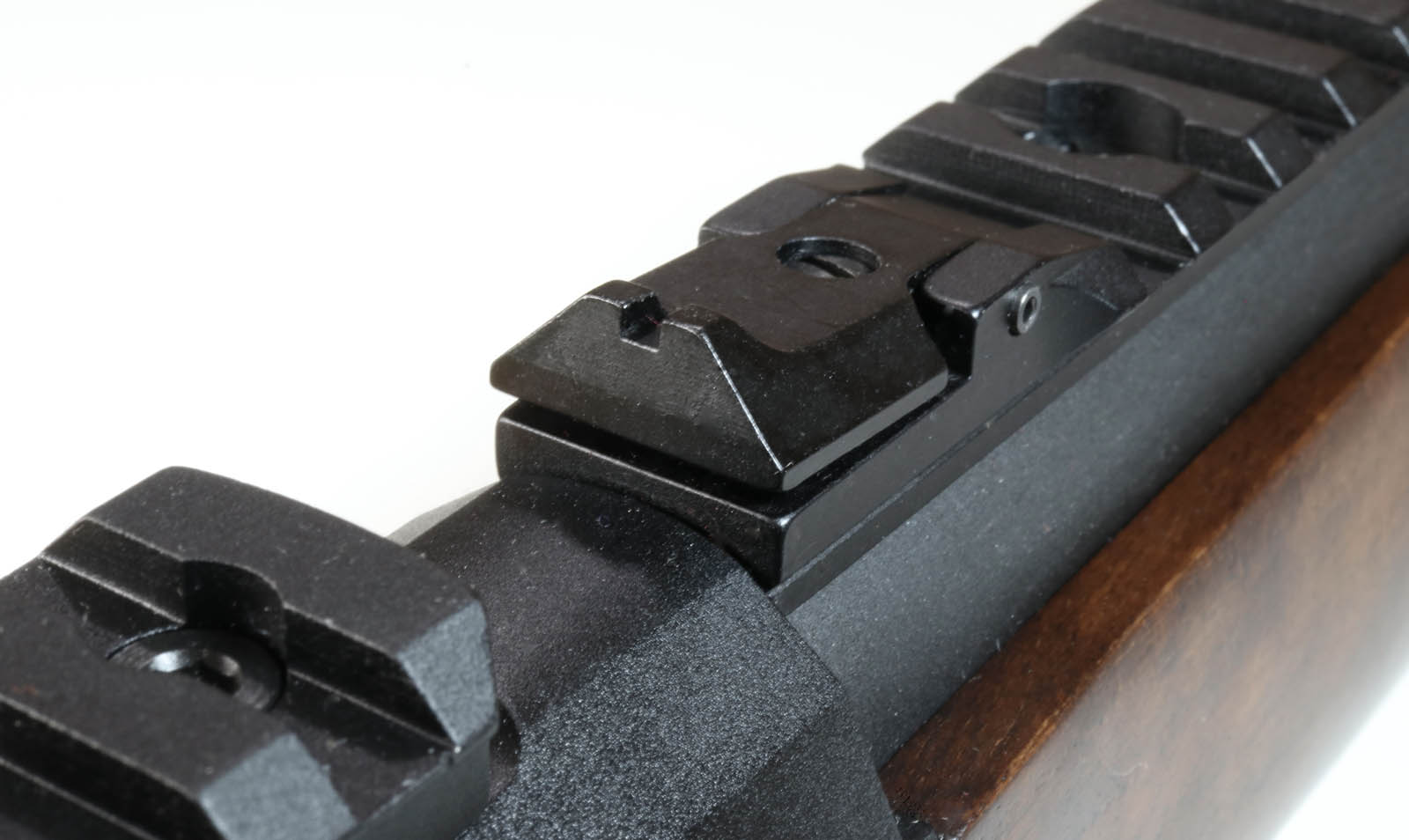
Interestingly there are two sight rails, one on the barrel and one on top of the receiver. Early versions only had the forward Picatinny rail to cater to the growing demand for red dot sights in lieu of open sights, as traditionally found on lever-action rifles. At the request of Hunt’s Shooting Supplies, Derya has added the rear rail to give customers a wider choice of sighting options.
Apart from dot sights the front rail could only accommodate long eye-relief telescopic sights, of which choice and availability are limited, though any standard eye-relief scope can be mounted on the rear rail. The front rail also houses an adjustable open sight, though to use it you first have to remove the rear sight rail as it blocks your view to the open sight (the latter has elevation adjustment only). The magazine release button is large and well positioned for the trigger finger of a right-hander to manipulate.
I stated earlier that despite the range of colourful versions of the TM-22 available, my preference was for the walnut-stocked one. The course of fire for one of the Gallery Rifle matches involves shooting left-handed at various targets, usually in quick time. The walnut stock is more comfortable for left-handed or ambidextrous shooting as the synthetic stock has an adjustable cheek piece, the height of which involves a large knob. Unfortunately for left-handed shooting, this knob sits right against the jaw bone.
At the range
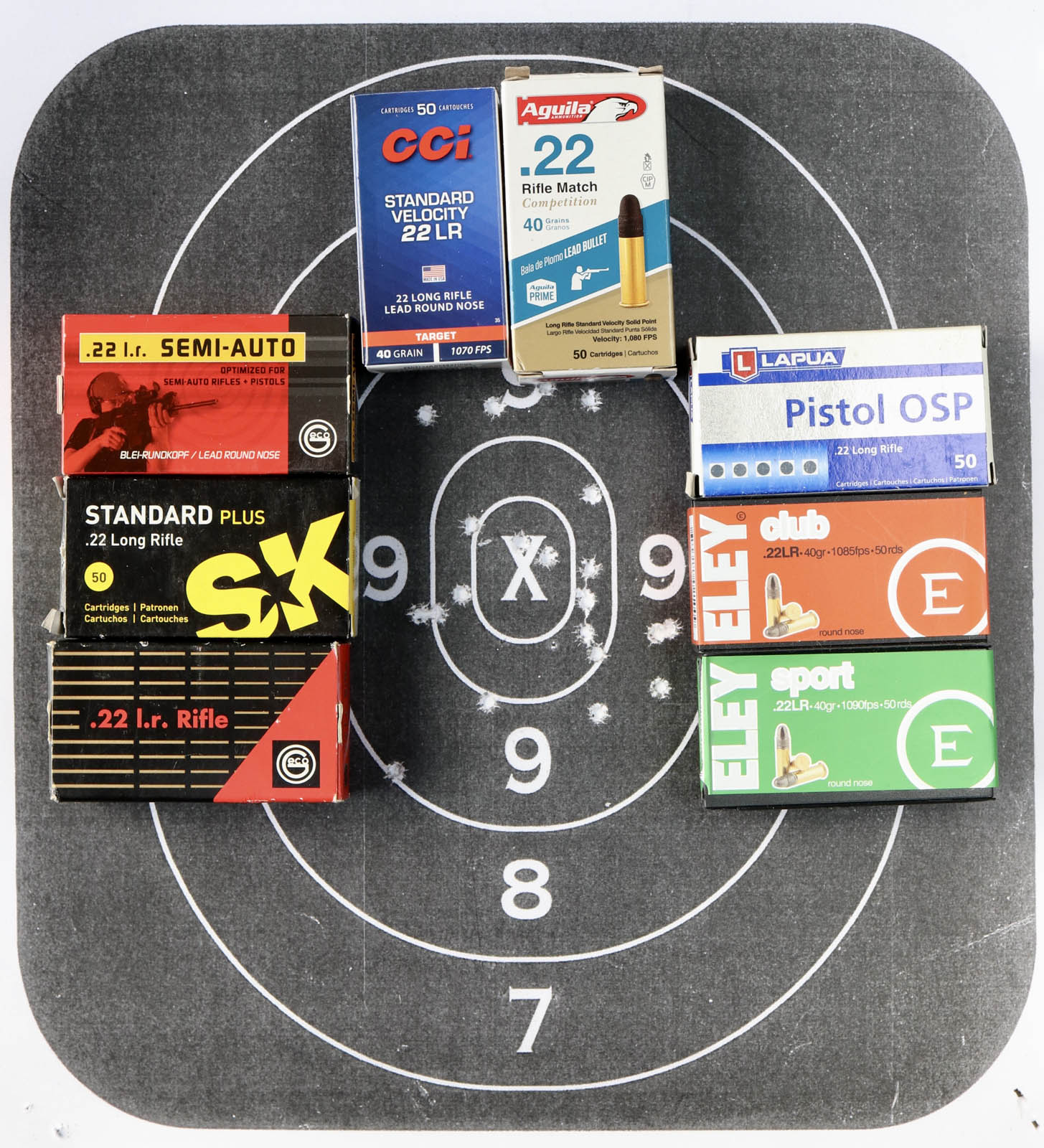
I gathered eight .22 LR ammunition types in the Derya TM-22. My main interest was finding a tack-hole subsonic target round out to 25m, the best of which I later pushed out to 50m. I didn’t test any of the high or hyper-velocity hunting loads, but would suggest paper targets at these distances will at least find an accurate bunny buster.
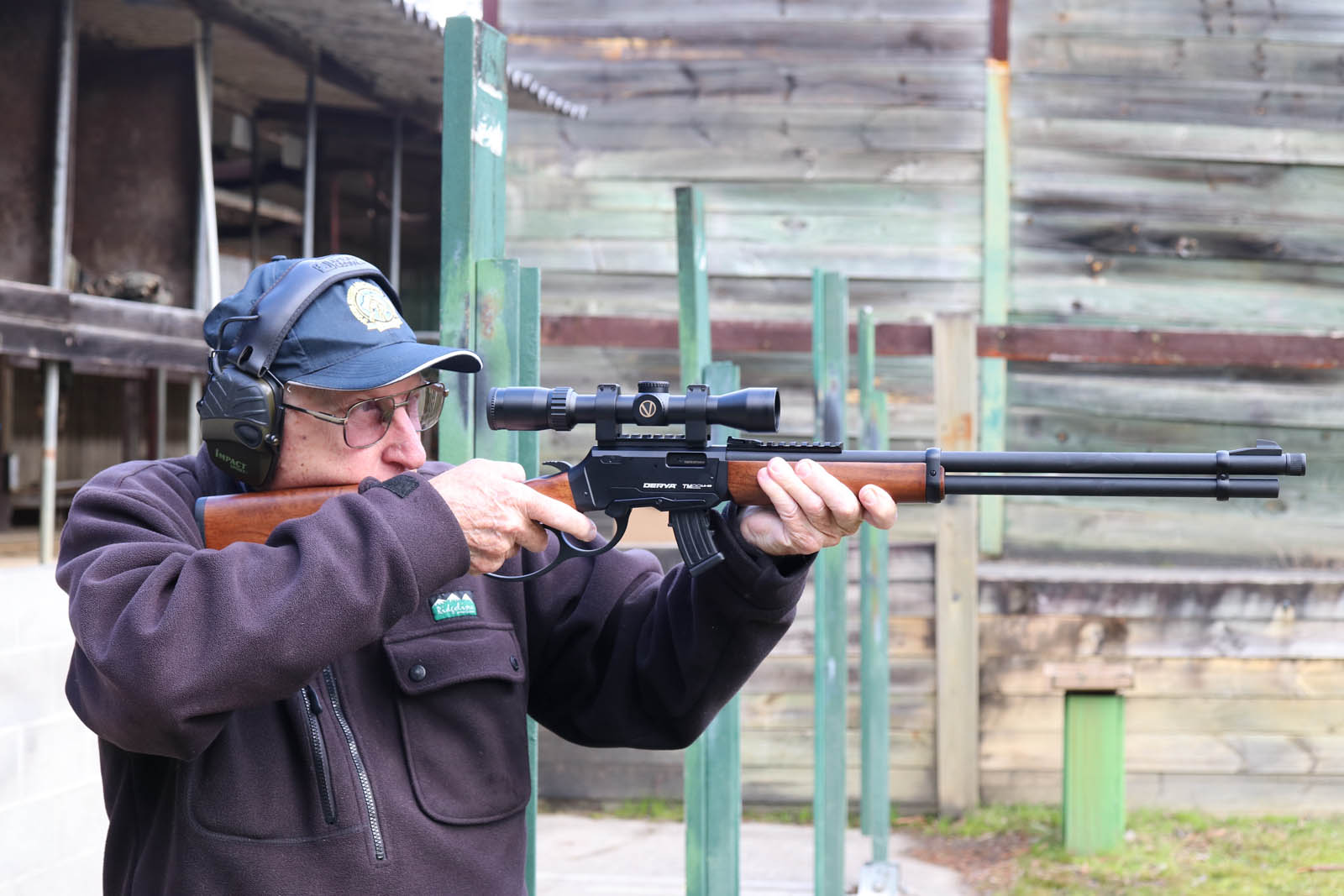
As is typical with load testing in .22s, their precision in one particular firearm, good or bad, isn’t reflective of their performance in another. Sometimes the dearest ammunition isn’t always best. Having said that, one of my all-time favourite rounds didn’t perform as well as expected. I fitted a Vixen 2-8×32 scope and shot from a bag at 50m ISSF precision pistol targets.
One load which did perform well at 25m then went on to shoot equally well at 50 and 100 was Eley Sport. Not the dearest Eley ammunition but it hit the jackpot in the tested rifle, although there was very little between any of the samples tested, other than where the shots printed on the target.
All ammo tested fed, fired, extracted and ejected flawlessly. In order of increasing group size at 25m were Eley Sport, Geco Semi-Auto, Lapua Pistol OSP, Eley Club, Aguila Rifle Match, CCI Standard Velocity, Geco .22 LR Rifle and SK Standard Plus. There were no real failures among them. Note that some of the packets were showing signs of age, so may now be sold under different names and/or packaging.
Conclusion
At around the $940 mark the Derya TM-22 LA-20 is a versatile hunting rifle, as well as being excellent for target competitions where some matches require a box magazine reload. As stated earlier, many manufacturers from all parts of the globe are duplicating the legendary look of the 19th century lever-action rifles, first made popular by US manufacturers. Another recent trend is box magazines aren’t just appearing on rimfire rifles such as the Derya, they’re finding their place on centrefire lever-guns in a growing choice of cartridge options.
SPECIFICATIONS
Model: TM22 Lever-action
Calibre: .22LR
Action: Detachable box magazine lever-action
Capacity: 10 rounds
Barrel length: 500mm (20”)
Overall length: 980mm (38.5”)
Width: 57mm (2.25”)
Weight empty: 2.4kg (5.3lbs)
Finish: Matte parkerised steel/anodized aluminium
Stock: Walnut
Barrel thread: ½x28 UNEF
Distributor: Hunt’s Shooting Supplies, NSW