
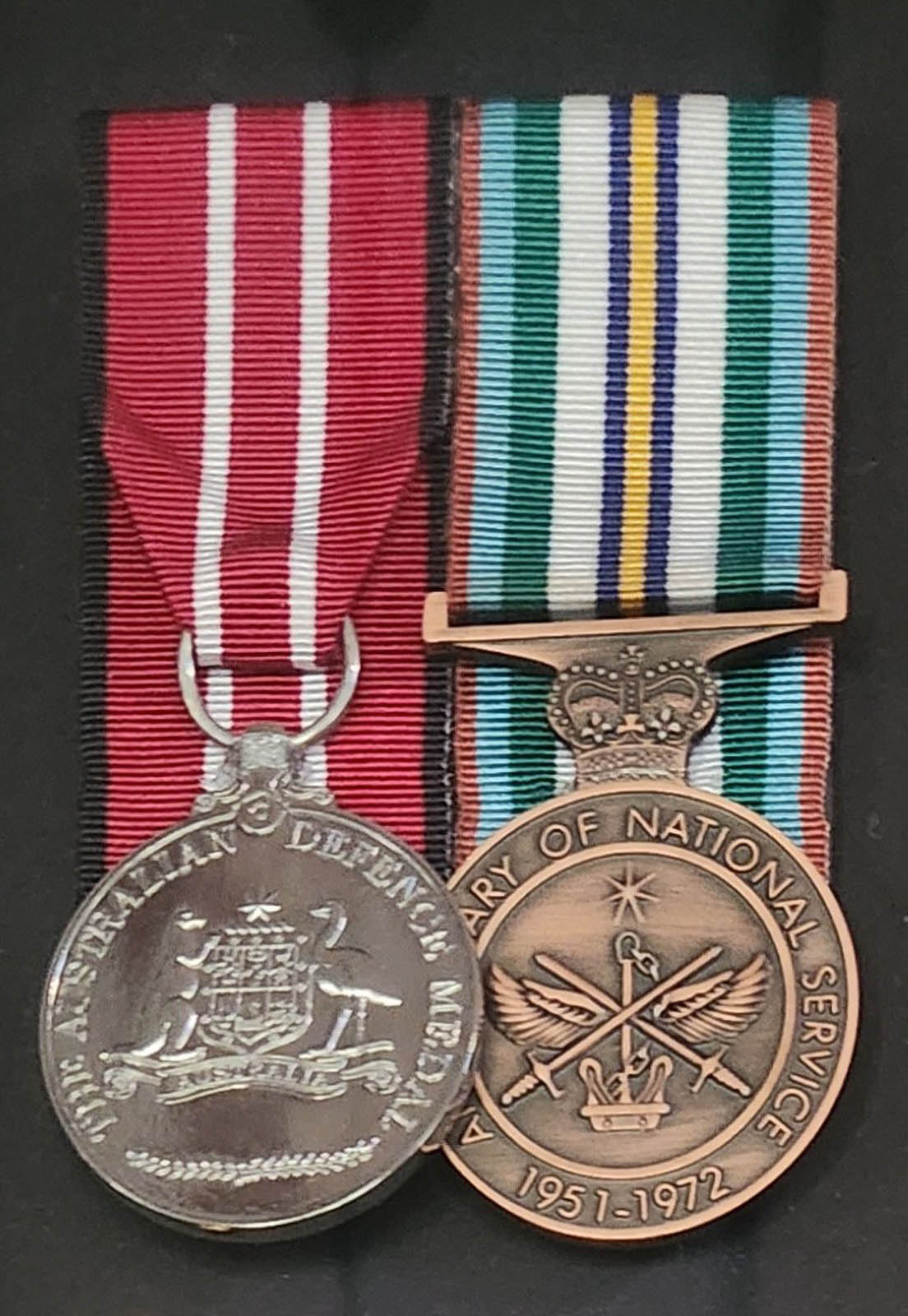
Chris Redlich honours the 60th anniversary of Long Tan and 75 years of National Service
When my parents told me to do something I’d do it: I trusted them and rarely questioned their instruction. If I dared object, my backside bore the brunt of disobedience and, along with it, a reassurance of who’s in charge. For 21 years the youth of Australia were asked to do something by our government, a time which was met with support from some and objection by others.
Objection, however, would come at a cost but so did service. Compulsory conscription has always been controversial but if it wasn’t implemented, the Australian Defence Force would never have had the numbers required to meet our strategic needs during the middle of the last century.
Your Country Needs You!
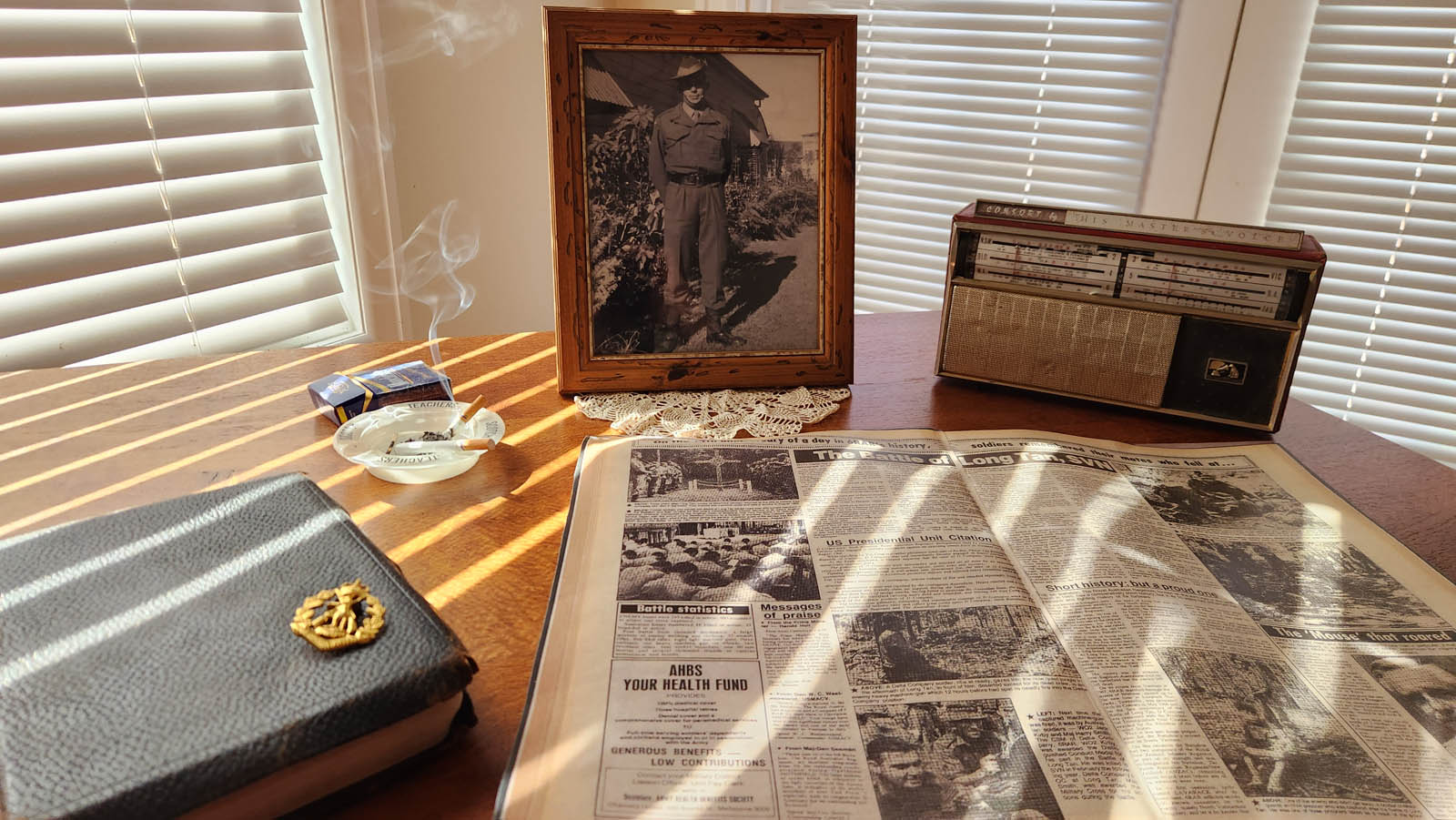
This year marks the 75th anniversary of National Service, as well as 60 years this month since the Battle of Long Tan, where conscripted soldiers played an enormous role and many made the ultimate sacrifice. Throughout two National Service schemes, men from all backgrounds came together as one to fulfill a compulsory, set period of full-time military service or part-time with the CMF (Citizens’ Military Force). Although I’ve had the pleasure of meeting older 1950s-era National Servicemen, affectionately known as ‘Nashos’, the last few years of the 1960s were of personal interest due to Dad’s (Laurie) service in the Australian Army.
As a youngster I was drawn to his old army greens and slouch hat lying around. For reasons of intrigue, my brothers and I were fascinated by filling his ‘slouchy’ with water and watching it drain through the little holes. I also remember marching around proudly in his old army boots (far too big for me), imagining one day I might become an army man, a daydream which influenced my own decision to serve.
The first National Service scheme from 1951-1959 was compulsory for all 18-year-old males. They served with distinction in the Army, Navy and Airforce both at home and, for some, the Korean War. In the second scheme (1965-1972) all 20-year-old males were required to register for National Service of two years full-time in the Australian Regular Army or six years in the CMF. Our forces needed this injection of personnel once more for the Vietnam effort with selection done by lottery.
This consisted of numbered balls representing birthdates drawn from a barrel and, when Dad’s number came up, he left in January 1969. It also created an interesting situation where many young fellas who were recruited together shared the same birthday, while the option for those who chose to abscond from their duty was jail time.
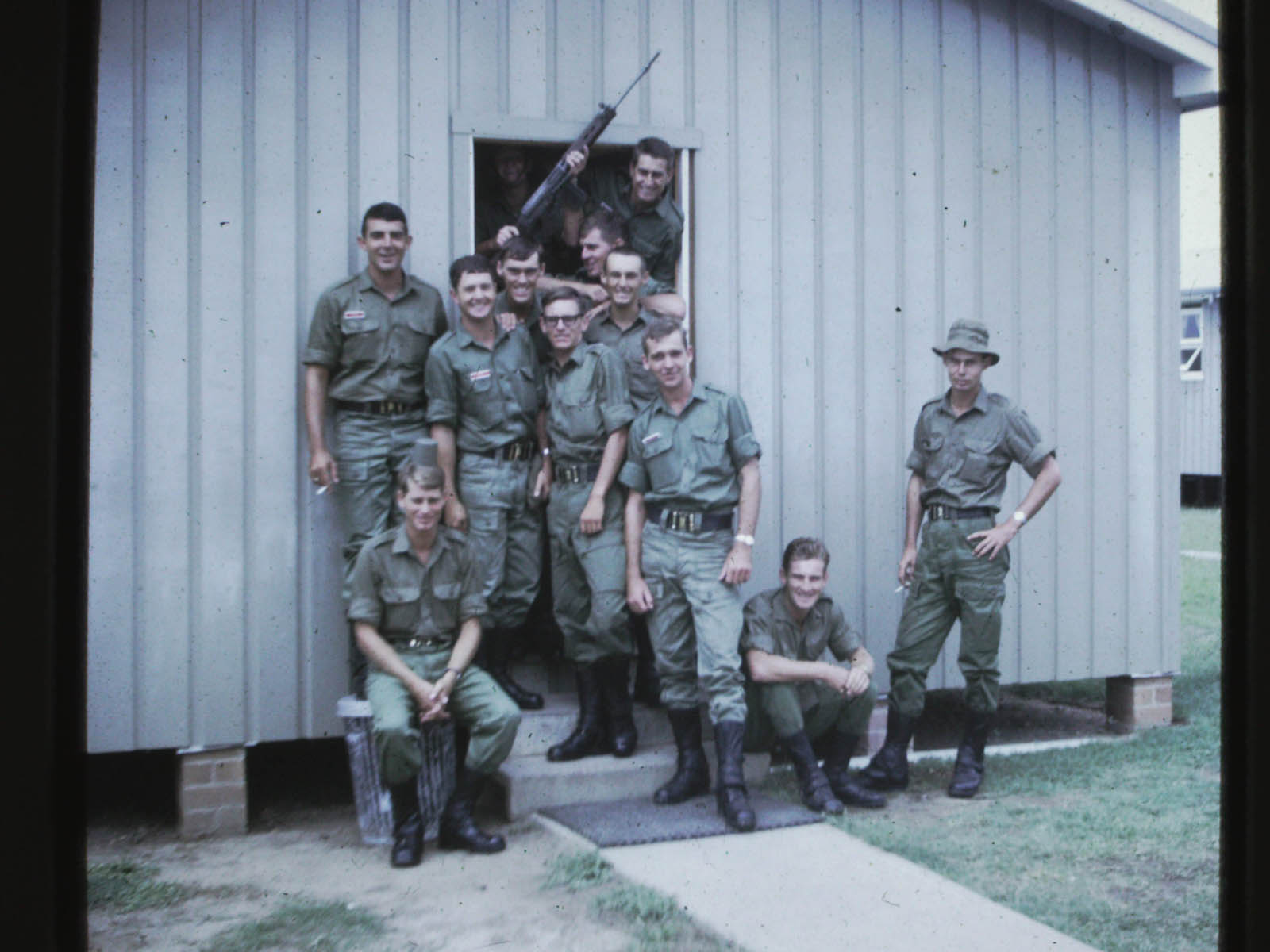
Like regular soldiers, conscripts had a choice of which Corps they’d like to serve and Dad wanted to be a cook. He undertook recruit training with 3rd Recruit Training Battalion (3RTB) at Singleton NSW, then completed Catering Corps training at Bonegilla, Victoria. After an 18-month posting cooking for Military Police in Brisbane, his two-year service ended in 1971. Coincidently, a fellow member of my local RSL branch (the late Len Wirth), also completed the same National Service period as Dad, spending his time as a rifleman training at home with the 9th Battalion, Royal Australian Regiment (9RAR).
By 1970 our commitment to the Vietnam War began reducing, resulting in fewer Nashos being deployed. Yet for many in those earlier years, a 12-month ‘tour of duty’ was a real possibility for all corps soldiers. Our first main force presence of regular army units to South Vietnam were attached to the American 173rd Airborne Brigade at Bien Hoa, which didn’t include Nashos until we had our own Task Force Base in 1966. From the 1965 intake and onwards began a progressive flow of trained and qualified National Servicemen, to bolster Australia’s commitment for following rotations after the 1ATF (1st Australian Task Force) was established at Nui Dat, Phuoc Tuy Province.
Making an impression
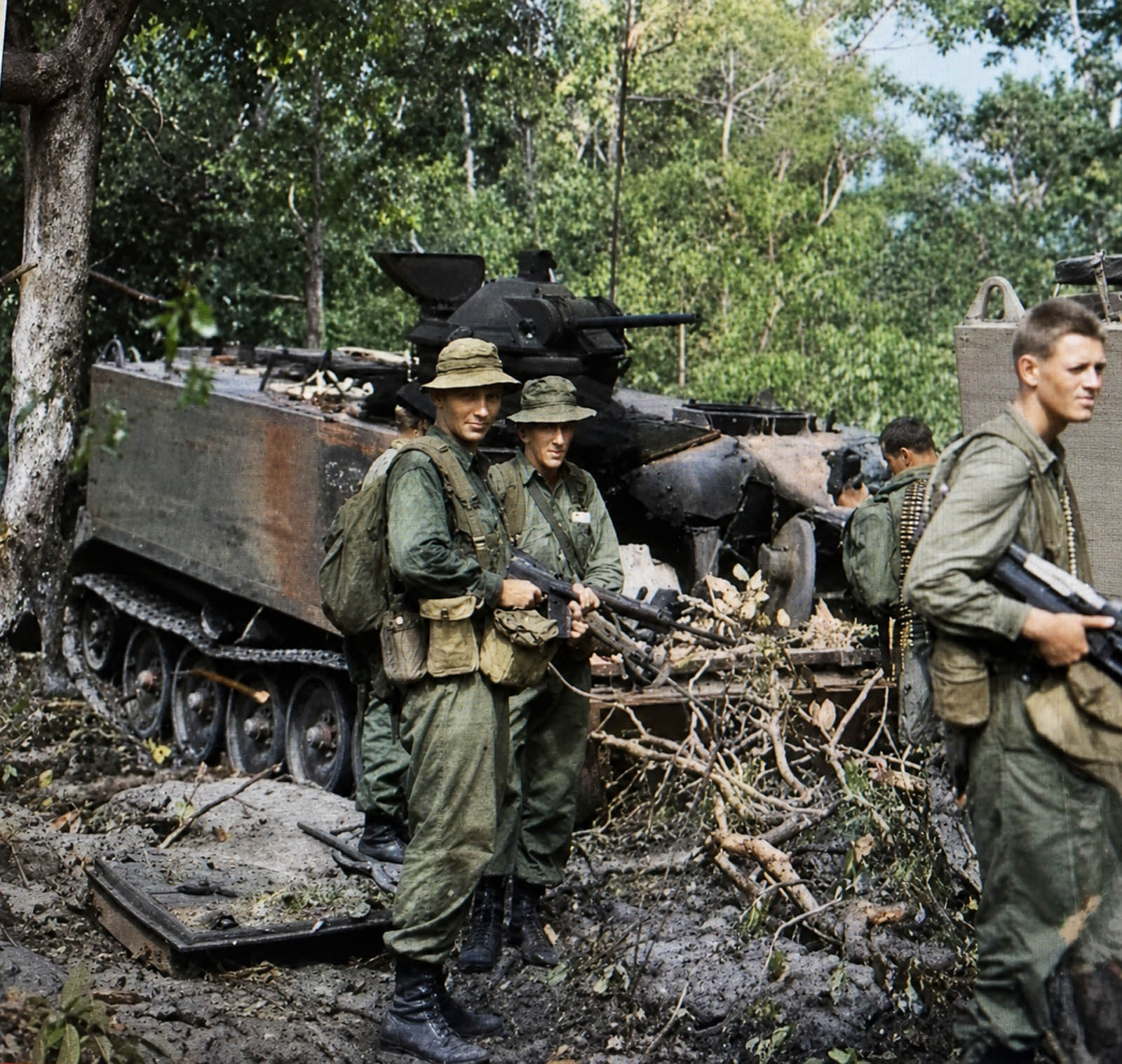
During those early days, Australian and New Zealand troops from 1ATF were soon impressing their US allies as an effective fighting force and deadly opponent to the local Viet Cong. National Servicemen in all combat and logistic units proved their mettle was equal to their regular counterparts and, after a few initial engagements, the first big test awaited just a few kilometres from Nui Dat at a place called Long Tan.
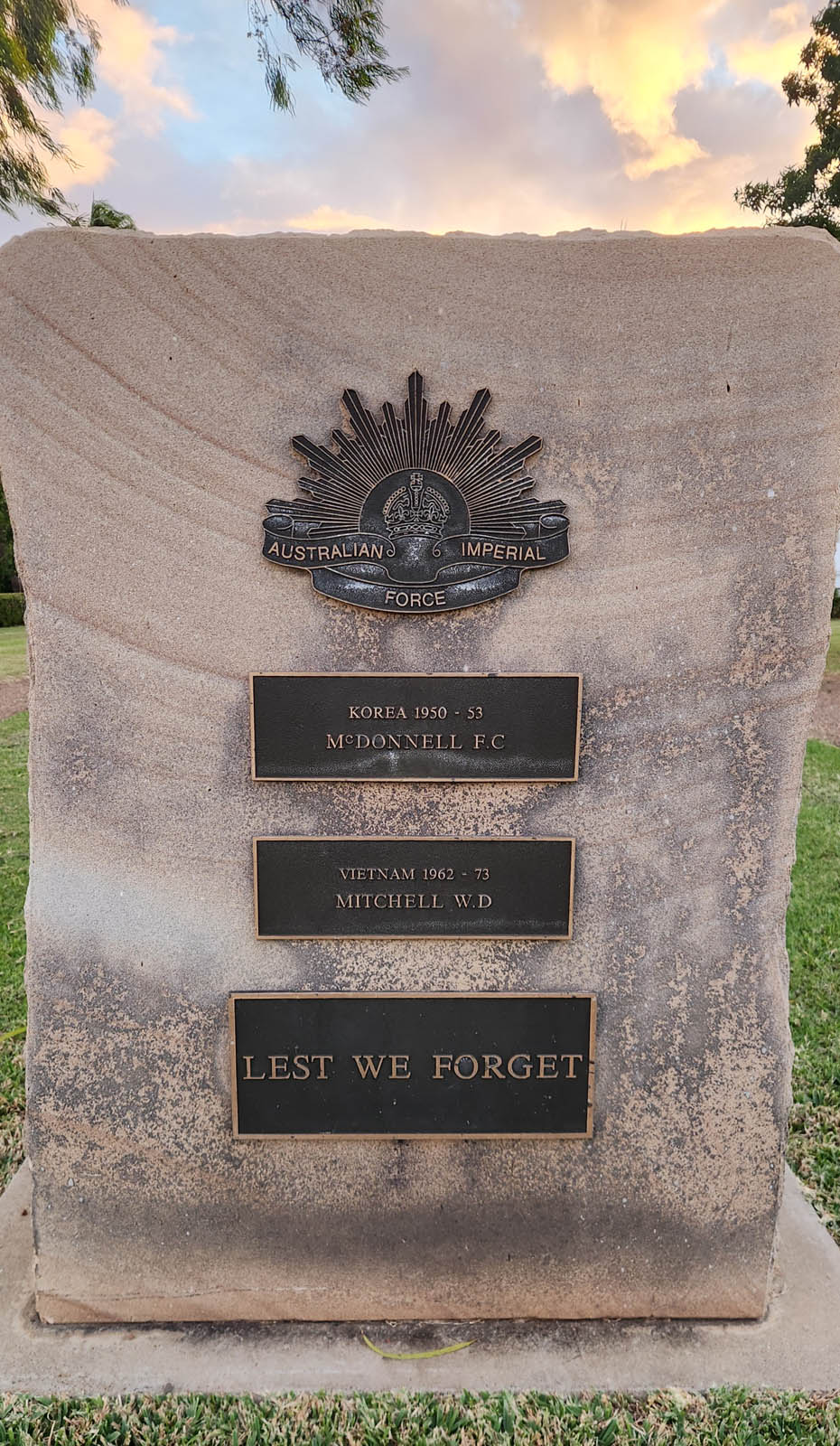
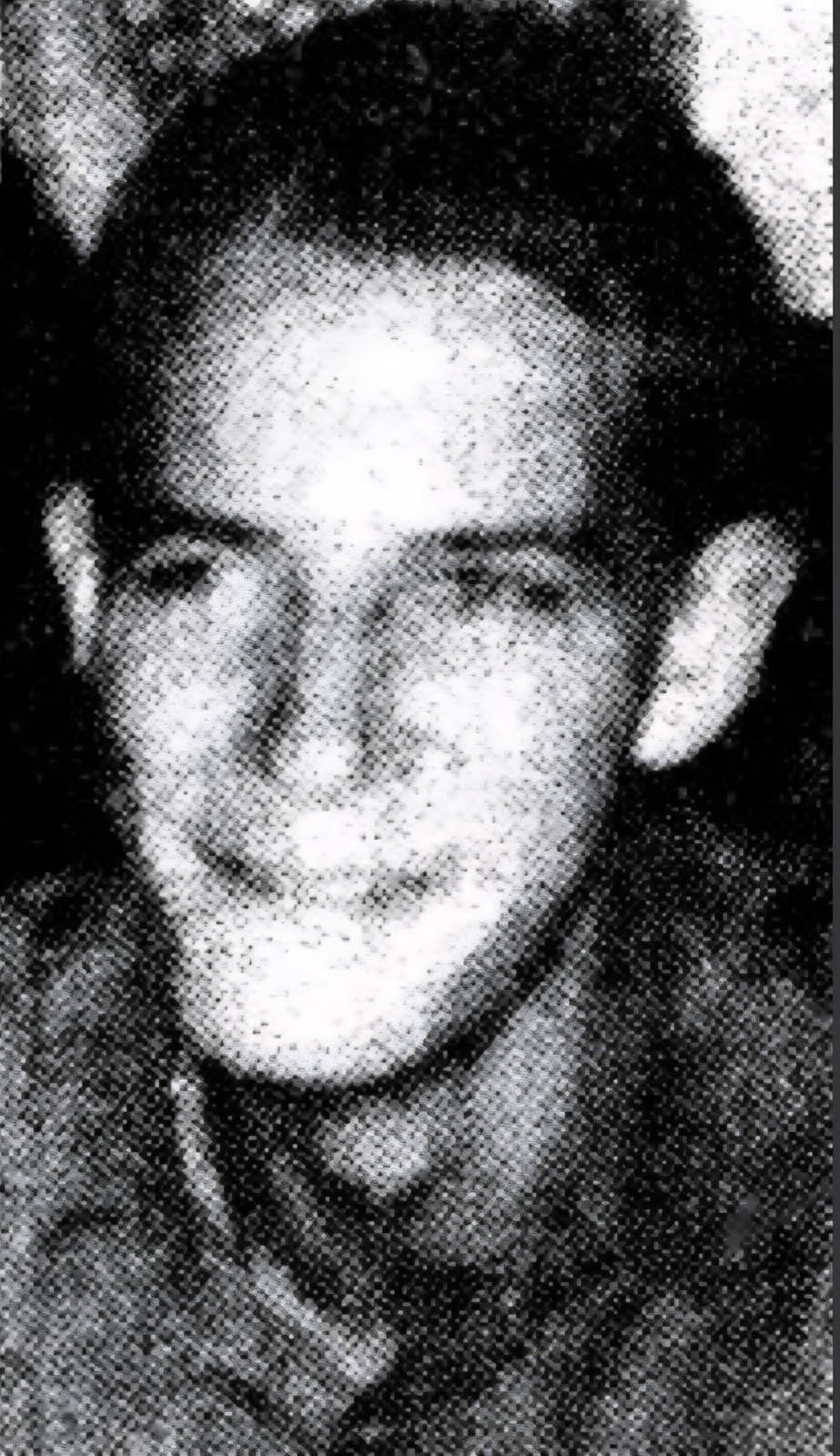
When the honour roll is read on Anzac Day at our hometown service, I recognise many familiar names whose relatives of generations ago died on distant battlefields. One stands out, not because of his name but where he’d served. Of all the local men deployed, Mitchell W.D. is the only one from Dalby in Queensland to have lost his life in Vietnam. Private Warren Mitchell was a National Serviceman, posted as a rifleman to Delta Company, 6th Battalion, Royal Australian Regiment (6RAR).
The bread and butter of an infantry unit is patrolling and, at that time, both 5RAR and 6RAR were sharing the heavy lifting in their tactical area of responsibility (TAOR). On August 18, 1966 the men of Delta Company, under the command of Major Harry Smith, advanced towards Long Tan to relieve Bravo Company. They’d been searching for enemy remnants following the provocative mortar bombardment on the taskforce base in the early hours of the 17th.
Unaware of what lay ahead, Pte. Mitchell and his mates were about to enter a rubber plantation where one of Australia’s most bloody battles of the Vietnam War would unfold. What started as a smaller ‘contact’ for 11 Platoon with roughly six enemy, soon escalated to a fight for all of Delta’s 108 men. They fought for four hours in torrential, monsoonal rain against an estimated 2000-strong combined force of Viet Cong (VC) militia and North Vietnamese Army (NVA) regulars.
Without relentless artillery support from New Zealand, Australian and US guns which disrupted repeated NVA assaults, or the skilled RAAF chopper crews who dropped vital supplies, Delta Company would’ve been overrun before they could reorganise. Late in the battle those men who remained able, tightened formation to create a defensive perimeter around CHQ (company headquarters), along with their wounded to collectively repel further enemy assaults. To the relief of Delta Company, nine Armoured Personnel Carriers (of 1 APC Sqn) carrying soldiers of Alpha Company, arrived with relieving firepower which silenced the belligerent NVA, forcing their immediate withdrawal from the battlefield.
I was keen to learn more of Pte. Mitchell and looked for a connection to his family and veteran friends, though found nothing until I received an unexpected phone call from someone who’d fought at Long Tan. Thanks to connections with the 6RAR Association, my details were passed to Dave Sabben, who was able to reveal more than I knew. 2Lt (Second Lieutenant) Dave Sabben M.G., himself a Nasho, was the OC (officer commanding) 12 Platoon, Delta Company.
He told me that while he didn’t know Pte. Mitchell personally, he knew he’d served with 10 Platoon and was one of four from 2Lt Geoff Kendall’s men to have been killed in action (KIA) during the final stages of the battle. From a 21-year-old clerk to an infantryman in Vietnam, Pte. Warren Mitchell was one of 11 Nashos that day who died for his country in a land vastly different to home.
A few years ago I struck up a friendship with another Nasho who’d served in Vietnam. Phillip Murray from Western Queensland was a 20-year-old ‘ringer’ at Barcaldine, when he received the call-up in 1965. Like many young men of that era, he was excited at the prospect of the army paying for him to see a part of the world he knew nothing about.
After registering for National Service, Phil hitched a ride to Longreach for his medical examination, telling me the trip home had been much faster in a ‘hot’ Ford owned by another Nasho he’d met there. Phil completed his recruit course at Kapooka then Infantry training at Ingleburn, where he became good mates with fellow soldier Frank Topp. Both riflemen were posted to 6RAR and, following mandatory jungle training at Canungra in S.E. Queensland, they flew to Vietnam. Sadly, Pte. Frank Topp was one of many from 11 Platoon to be KIA early in the Battle of Long Tan.
Phil on the other hand was part of the battalion’s reinforcement cycle and was called across to join Alpha Company just one day before the battle. He was among the Alpha Company soldiers transported by APC mentioned earlier, when they arrived to protect their mates and secure the battlefield. Alas, the fighting had taken 18 of our men with 24 wounded, while enemy losses were counted in the hundreds. If there was to be any consolation, 1ATF had asserted tactical authority of the area, while Delta Company deservedly won a US ‘Presidential Unit Citation’ for their efforts.
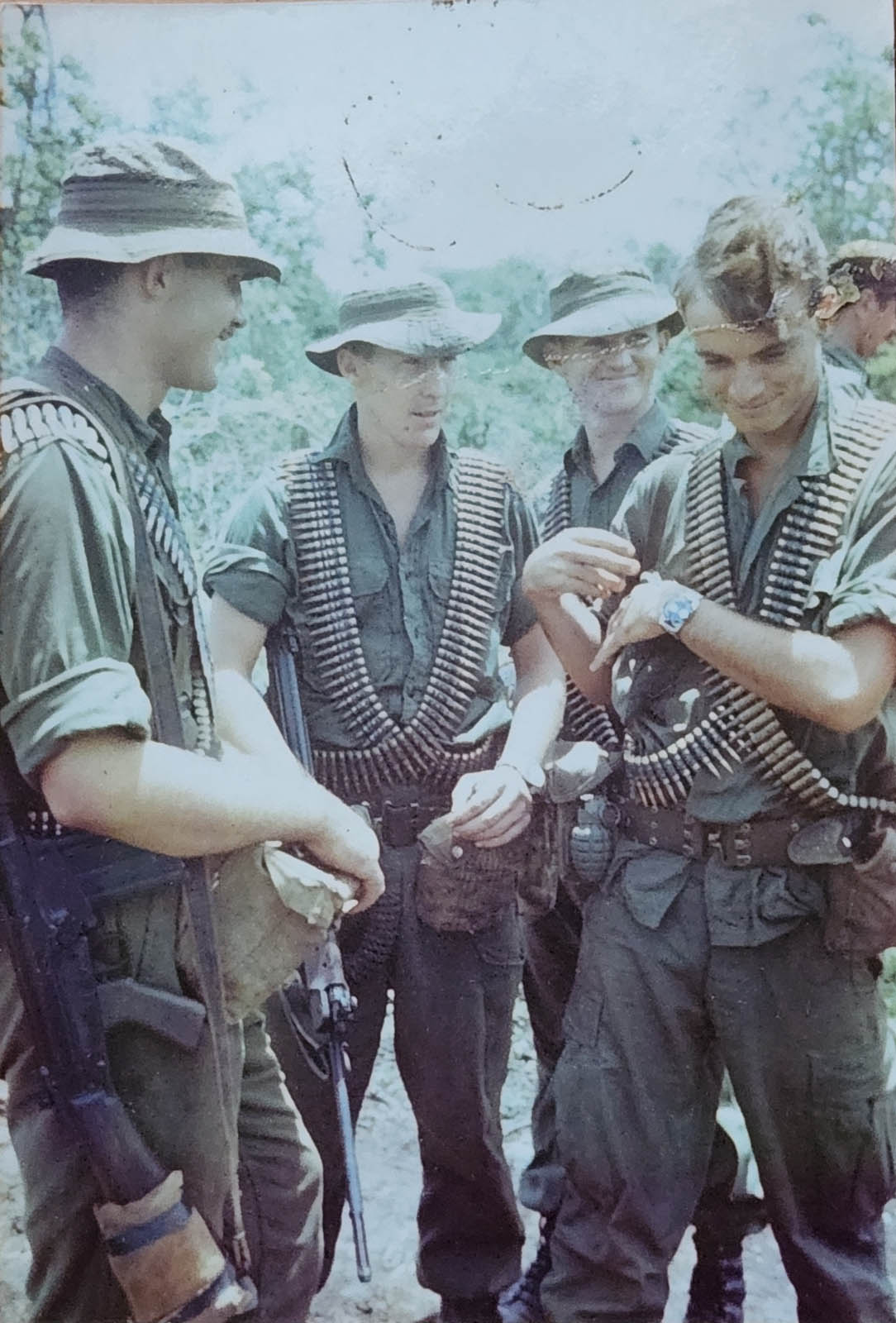
Phil was involved in another serious engagement later in February 1967 during Operation Bribie, where once again 6RAR’s men fought gallantly, sadly not without further casualties. He’d also served alongside Les Hiddins, a career soldier who’d later become a household name as the Bush Tucker Man for his TV survival series. Phil generously shared a few photos with me from his time in South Vietnam including one with Les Hiddins and, with typical familiarity to my Dad’s photos, the Aussie soldiers of the ’60s were easily recognisable by their unique bush hat and SLR.
The iconic SLR
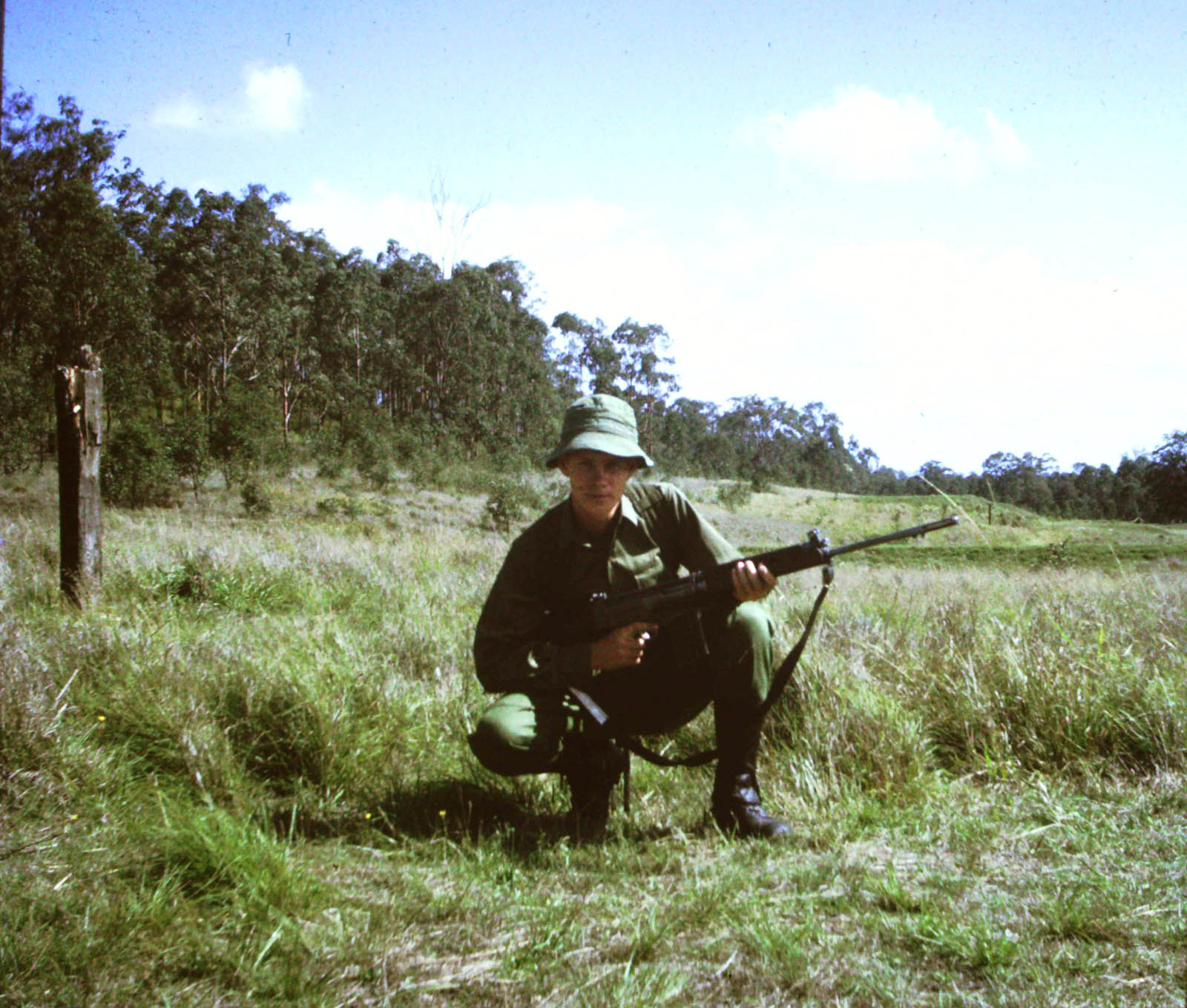
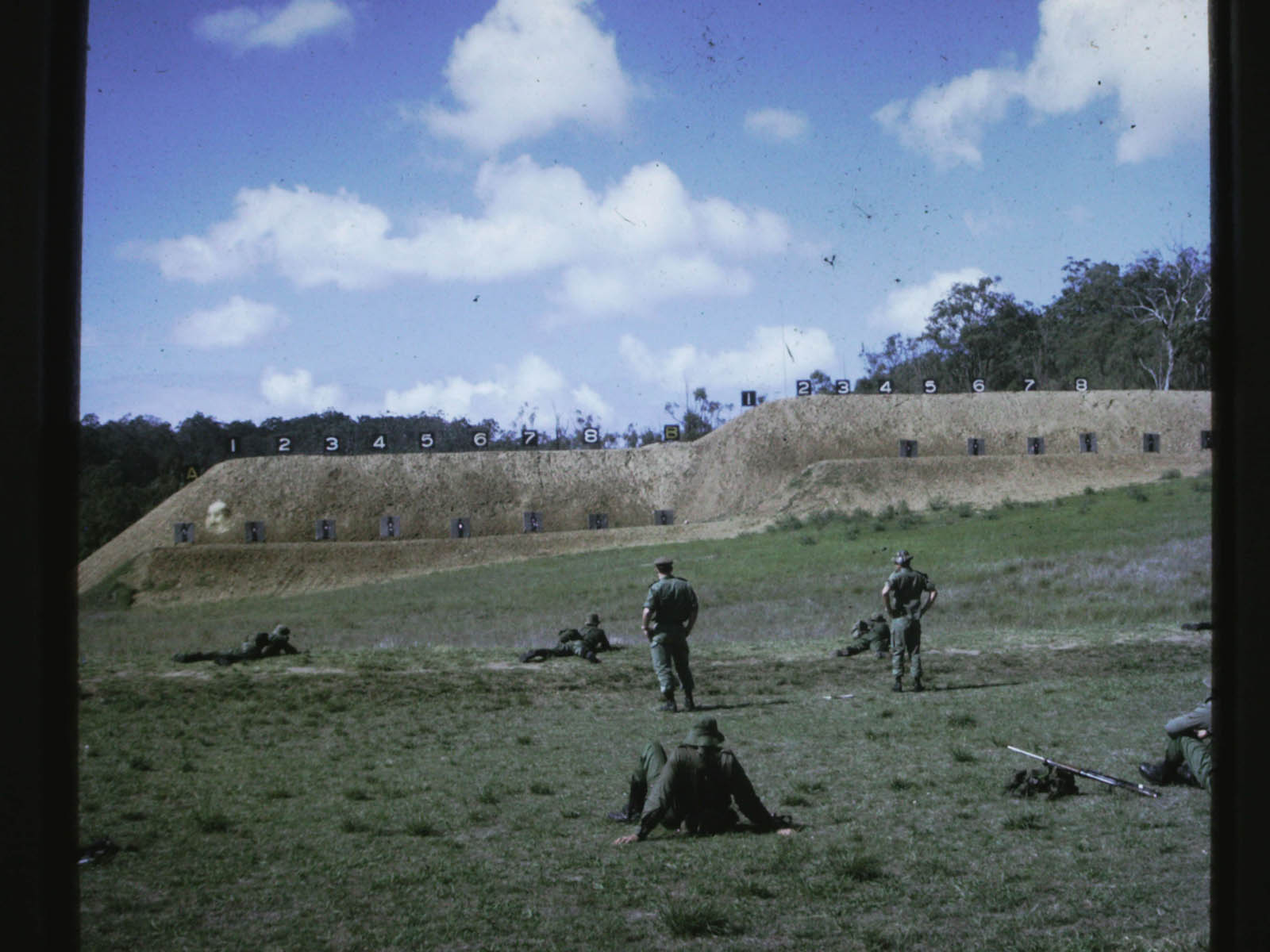
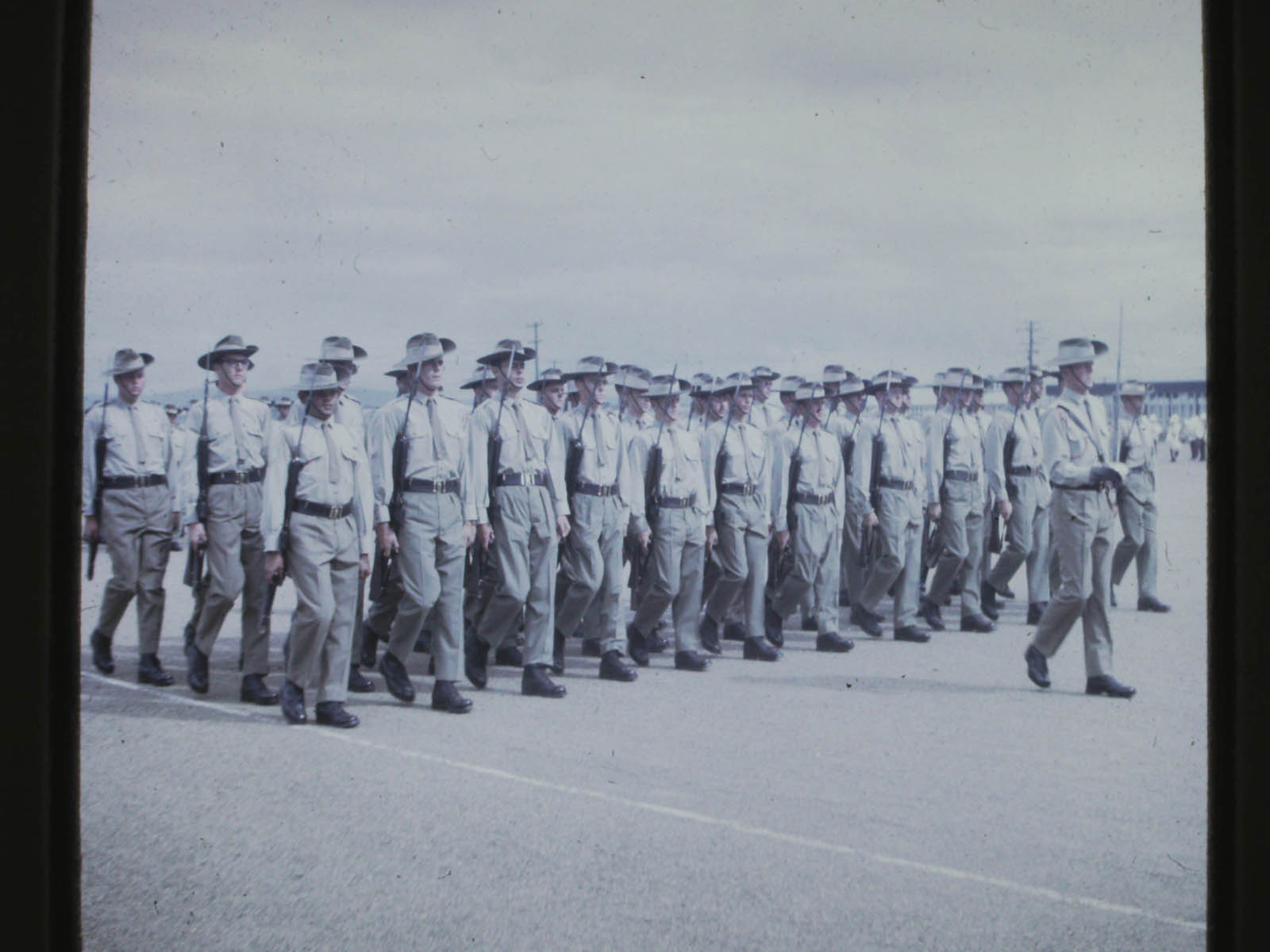
When family ‘slide night’ came around, I was fascinated by the projection of Dad in uniform at the Greta rifle range and on parade with his SLR. I recall him saying that after he’d shot well at the beginning, his Platoon Commander (2Lt Gill), commended him for good marksmanship and asked if he was going to Infantry? To his disappointment, Dad told him he was heading to catering. His shooting declined after that and comically came the remark from Lt Gill: “Just as well you’re going to be a cook, Redlich!”
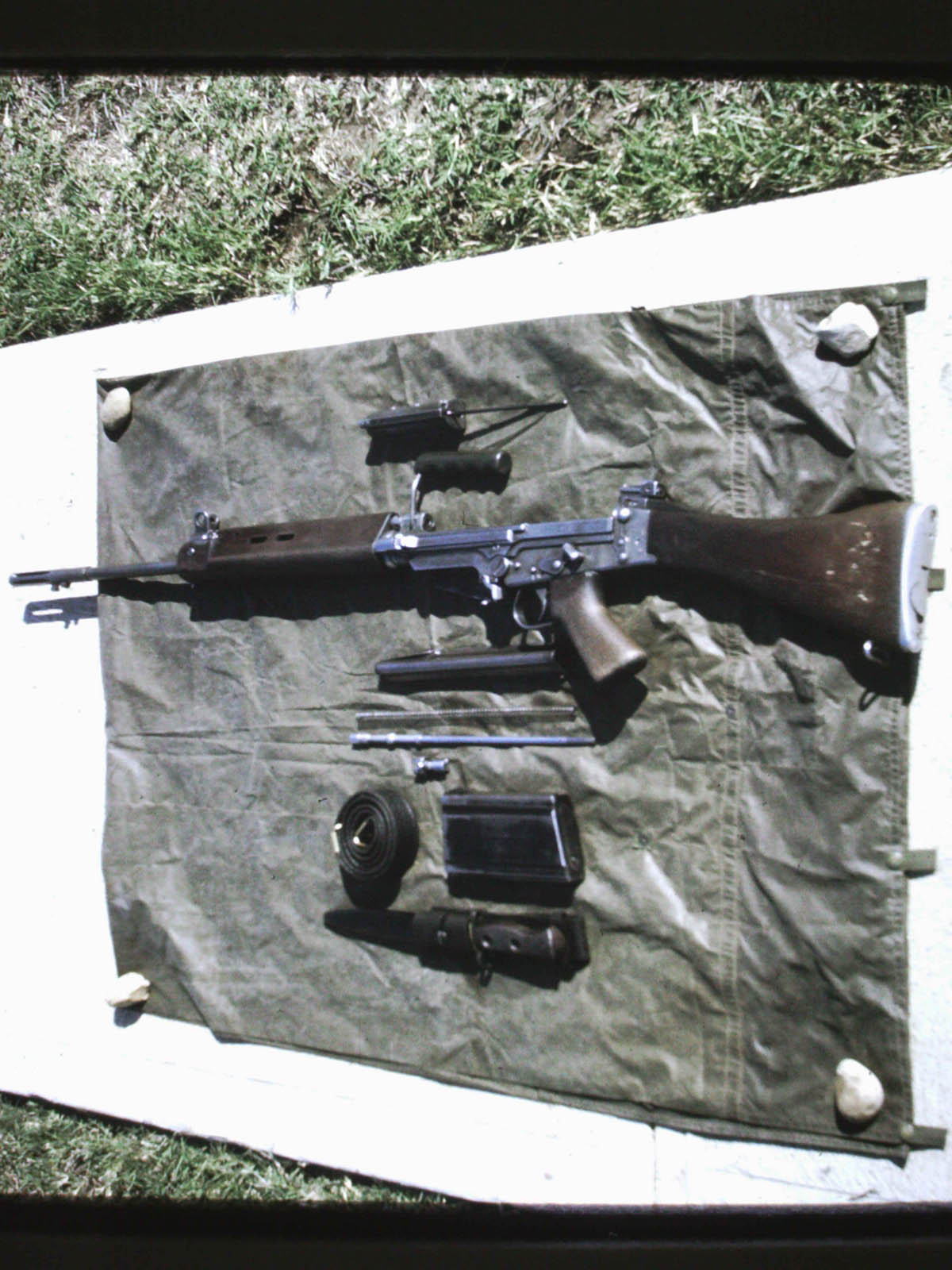
Designated the L1A1 for the UK variant of the original Belgian design FN FAL (Fabrique Nationale-Fusil Automatique Legere), the rifle was known by Australians simply as the SLR. As the abbreviation suggests it was a gas operated, semi-automatic ‘self-loading rifle’ chambered in the 7.62×51 Nato round. It had a 20-round detachable magazine and consisted of many solid machined steel parts. The locally harvested Coachwood buttstock, pistol grip and fore wood of the Lithgow-made rifle was very robust and felt nice in the hand.
Measuring 1143mm it was by no means a compact assault rifle like the 5.56mm M16. Compared to its Lee Enfield .303 predecessor, the SLR was just a few millimetres longer, yet at 5kg (loaded) almost 1kg heavier. The L1A1 SLR was proudly produced under licence in Australia at the Lithgow Small Arms Factory and saw reliable service with our forces for more than 30 years.
Dave Sabben recalls only one SLR malfunctioning during the Battle of Long Tan, telling me they’d had more issues with faulty ammunition (including 5.56mm) which resulted in numerous case head separations. I suspect this may have had something to do with spikes in chamber pressure due to water incursion, though quite possibly a combination of both. I had the pleasure of firing the SLR during my years as an army cadet in the 1980s when things were different.
For a slightly built 13-year-old I felt every ounce of recoil and struggled with its weight when carrying it for long periods. But after carrying a MAG58 machine gun years later, the SLR by comparison wasn’t that heavy after all. The SLR was beautifully balanced when shouldering, earning it popularity with Australian riflemen for accuracy and stopping power until it’s replacement by the F88 Austeyr in 1988.
Their legacy
During the two World Wars, we’d originally gone to support ‘Mother England’ and that commitment was widely accepted by Australians. Sadly, the involvement of our troops in the Vietnam War was divisive, though in that instance our big brother from the US was in conflict and needed our help. After all, the American allies had helped us fight the Imperial Japanese 20 years earlier, so we felt we owed them.
It mattered little what political side you were on or whether you supported the war, National Service didn’t discriminate. There was a job to be done and our youth rolled up their sleeves. When they answered the call their careers, lives and loved ones were put on hold for two years. Many Nashos I knew, including my father, fulfilled their responsibility whether they liked it or not and, when those two years were up, while happy to contribute they were nonetheless keen to return to civilian life.
Furthermore, our veterans should never have had to bear the burden of negative public opinion for decisions by politicians which put them in harm’s way. Unlike my grandfathers who’d returned to a hero’s welcome, it saddens me to think our soldiers mostly weren’t afforded the same recognition on their return from Vietnam.
I believe those who served upheld the ANZAC tradition and made our country proud, not only at home but also in Borneo and many operations before and after the Battle of Long Tan. The least we could say is: “Welcome home and thank you for a job well done.” For those who made the ultimate sacrifice and never returned: “Lest we forget.”
- Special thanks to Dad, Phillip and Gerry Murray of Meandarra, Juanita Connolly at Dalby Library, Dave Sabben MG (author), 6RAR Association, Ross Thornton at Dalby Antiques and Brian Labudda for their valued assistance with information, photos and recollections.