

Cobourg . . . the first time
When my flight from Sydney landed in Darwin in September 2015, it was almost like a homecoming. It was my seventh trip to the Top End and by then it had a very real hold on my heart. Initially I’d gone for a short stint on the Brucellosis and Tuberculosis Eradication Campaign, aerial shooting buffalo and scrub cattle. Later I’d make a couple or three trips as a guest then a guide for Bob Penfold’s Hunt Australia operations, taking international visitors on pig, donkey, camel and buffalo hunts.
I’d also trophy-hunted buffalo with the late Nick Harvey and cull-hunted them in Arnhem Land, on an industry arranged sojourn with Nioa and US company ATK. Not surprisingly, I’d grown to love the place and the opportunities it presented.
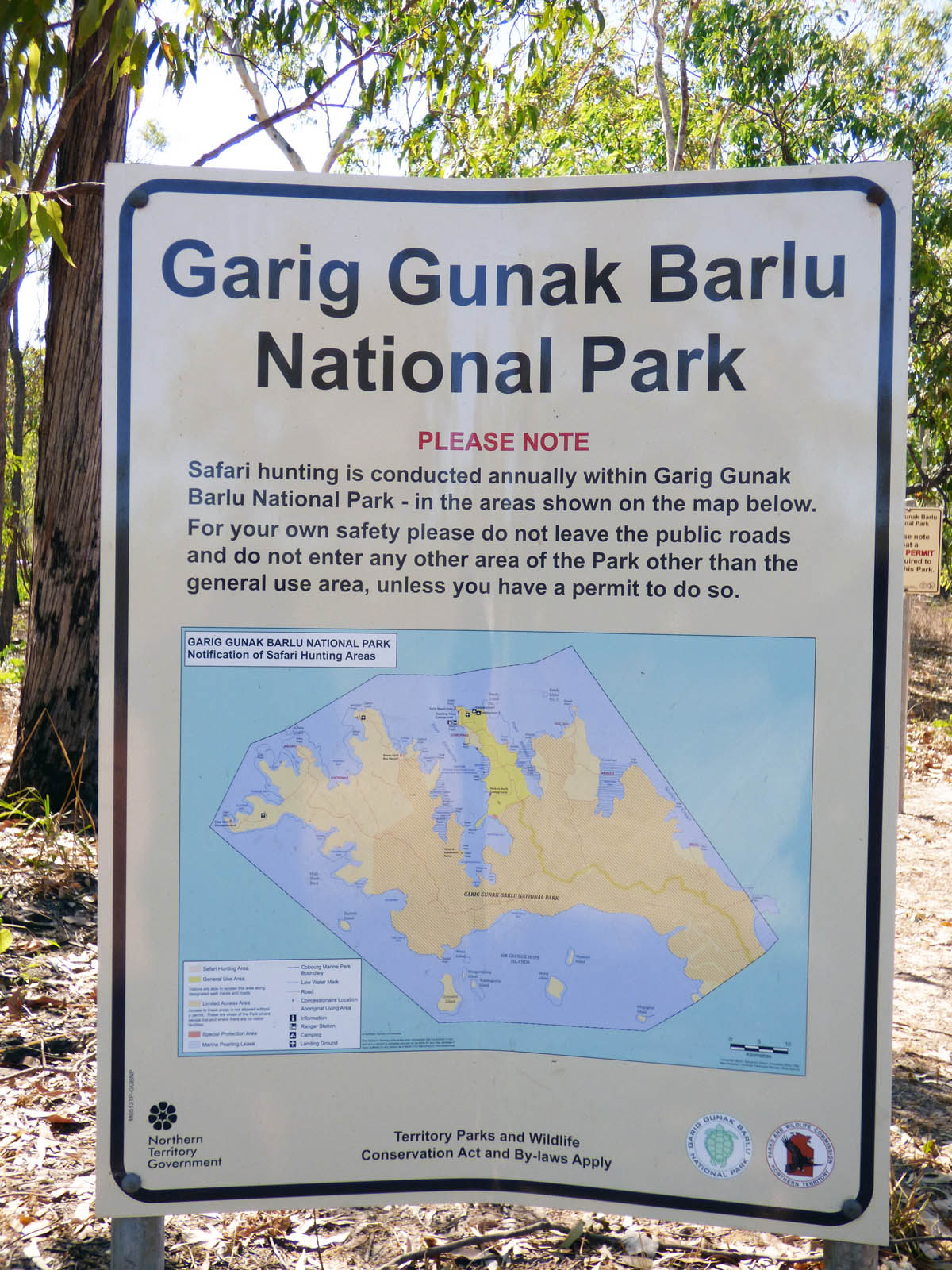
But the 2015 trip was different. This time there was just me and I was breaking new ground, hoping to chalk up a couple of personal firsts. For starters I was going to hunt banteng cattle, a species I’d had my eye on since my first trip north in the mid-1980s. Just as importantly, we were going to hunt on the Cobourg Peninsula, an enticing and remote part of Australia I’d never been to.
Rob Tritten met me at the airport, we collected my luggage and after completing some shopping chores, hit the road. We talked easily, as hunters so often do, and the day was almost over when we crossed the East Alligator River at Cahills Crossing. I counted crocodiles in the reach of water above the causeway, then headed for Rob’s camp a few kilometres over the river. There I met his family and a friend, Jamie Booth, who’d been spending a few weeks.
It was a beautiful place to be as the evening settled down. All of it was picture postcard stuff like you see on promotional adverts, with lagoons and waterholes reflecting the orange afternoon light which painted the rocky abutments of escarpment country. Out across open country, flocks of white cockatoos and corellas wheeled and turned and squalled. Flocks of magpie geese and ducks traded along the skyline, while in a lagoon just down from camp the log-shaped form of a crocodile surfaced for a moment then abruptly disappeared.
As the darkness grew the first of the dingoes began their lonely ululations. The chorus could be heard all night from one point of the compass or another. Sometimes near, sometimes far but always there, as a call from the wild which seemed to epitomise the vast and remote wilderness that’s the definition of the Territory itself.
We broke camp next morning, called in at Oenpelli to drop off a feed of magpie geese to one of the local indigenous country women, then set sail for Cobourg, a trip which would take most of the day. Though much drier and harder than the soft southern country I called home, it was interesting none the less, experiencing a landscape which in places looked like even time had forgotten.
It was late afternoon when we arrived at the old Paspaley Pearls campsite on Raffles Bay, where the muddy waters of the Arafura Sea slopped sullenly on to the broken shoreline. With camp organised, we went for a quick look around to see what we could find in the last of the day. Just on dark we bumped into a couple of banteng bulls feeding through the sparse bush and I have to say I was impressed.
There are two things I’ll always remember from that first night. The first and most obvious was mosquitoes. There were millions of the little beasts, droning and swarming around anything that moved and ruthlessly savaging any exposed skin. The only thing which kept them bearable was the breeze blowing in off the sea, though even that began to falter as the night settled down and necessity eventually drove us inside the protective mesh of the tents.
The other significant memory is of the pigs which came to visit us in the dead of night. Lilly, the springer spaniel guard dog, announced the first one’s arrival as it wandered around camp and foraged through a carpet of dry season leaf-fall under the trees. A rifle was called for and the pig dispatched by torchlight, an awful lot of noise in the dark of night. An hour or so later the scenario was repeated, only this time there were complications. Barefoot in the dark I stumbled into an old sun-dried pig digging and hurt my left foot.
A daylight examination revealed a toe bent at an awkward angle to all the others, clearly broken and in need of repair. With any sort of medical treatment a long way away, the offending digit was taped to the one beside it for support. It wasn’t terribly comfortable but at least I could walk on it, so I put my boots on and we went hunting.
As it had been the previous evening we’d no trouble finding banteng, though a bull of trophy size proved elusive. We persisted and by mid-morning were stalking two good bulls along a wet season drainage line, where a hint of green feed persisted. The most difficult part was working through and around a scattered group of cows and calves which accompanied them.
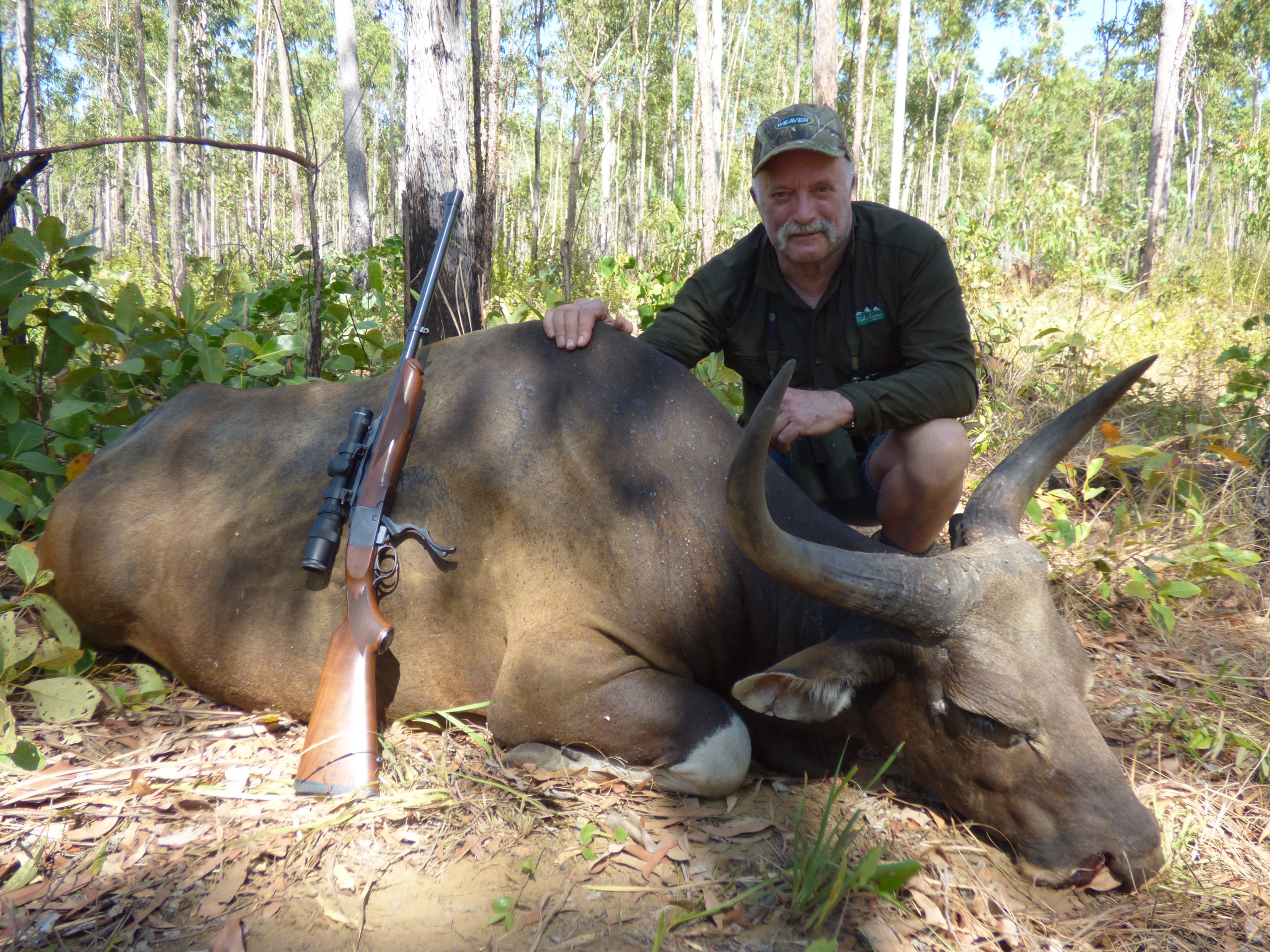
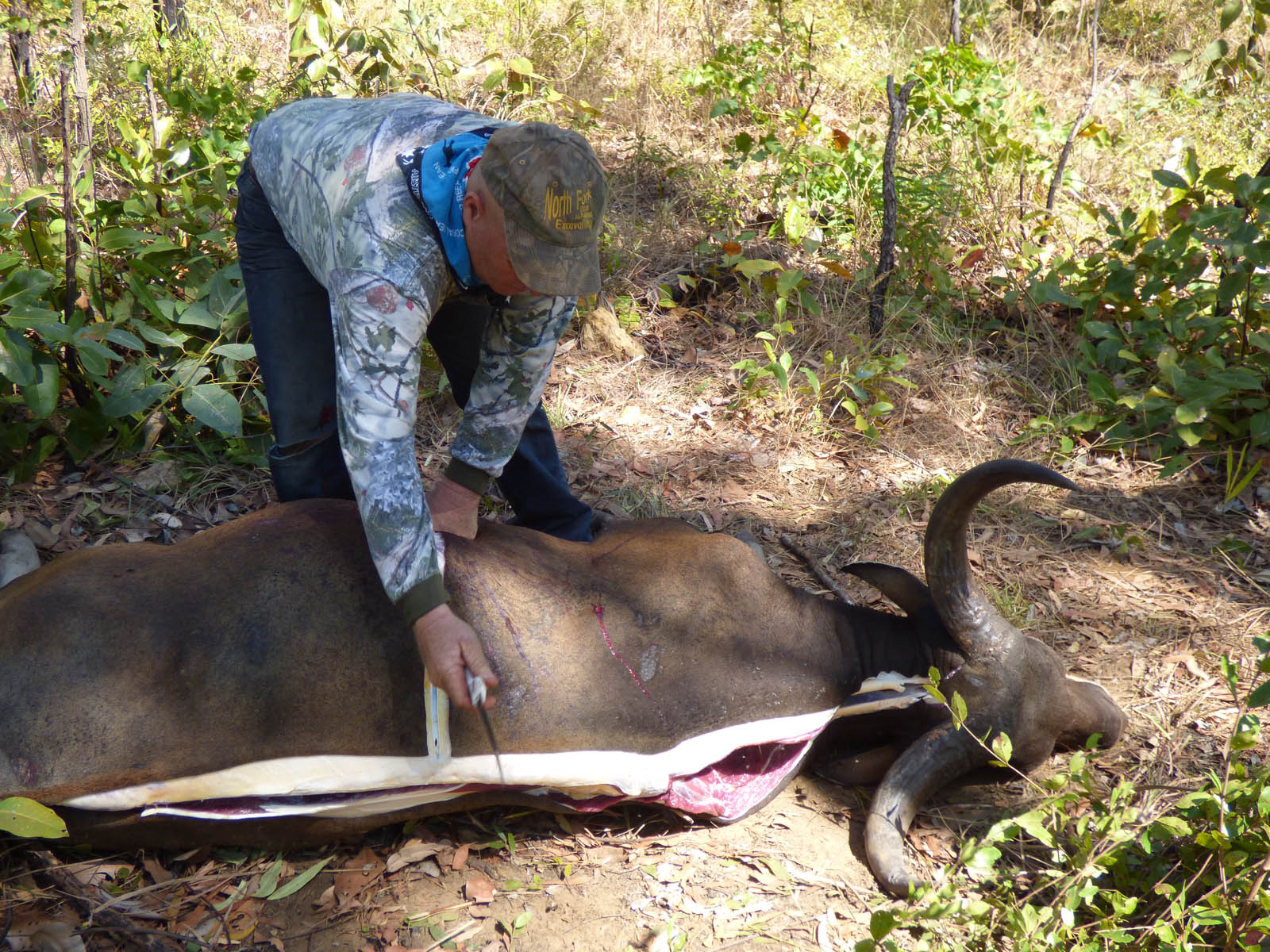
When the chosen bull presented himself just right, I shot him through the shoulders with my No.1 Ruger .375 H&H. He didn’t go far and with the caping all done we were back at camp for an early lunch. Despite the shortness of the hunt I was a happy camper, as it’s not every day you realise a long-term goal, in this case one almost 30 years in the making.
In late afternoon we went back to the drainage line and followed up some buffalo tracks we’d found during the morning, wishfully thinking there might be a good bull among them. There wasn’t, so we watched them for a while before heading back to the truck along a well-worn game pad. There we almost walked into a good lump of a pig travelling in the opposite direction. The look on his face and reaction when he saw us was priceless, as he almost turned himself over while he spun around and galloped away.
Next morning we packed up and left, en route to Katherine where we’d be based for the rest of my stay, hunting buffalo on Aboriginal land around the base of south-east Arnhem Land plateau. There I’d be introduced to another aspect of hunting the Top End I’d never experienced before.
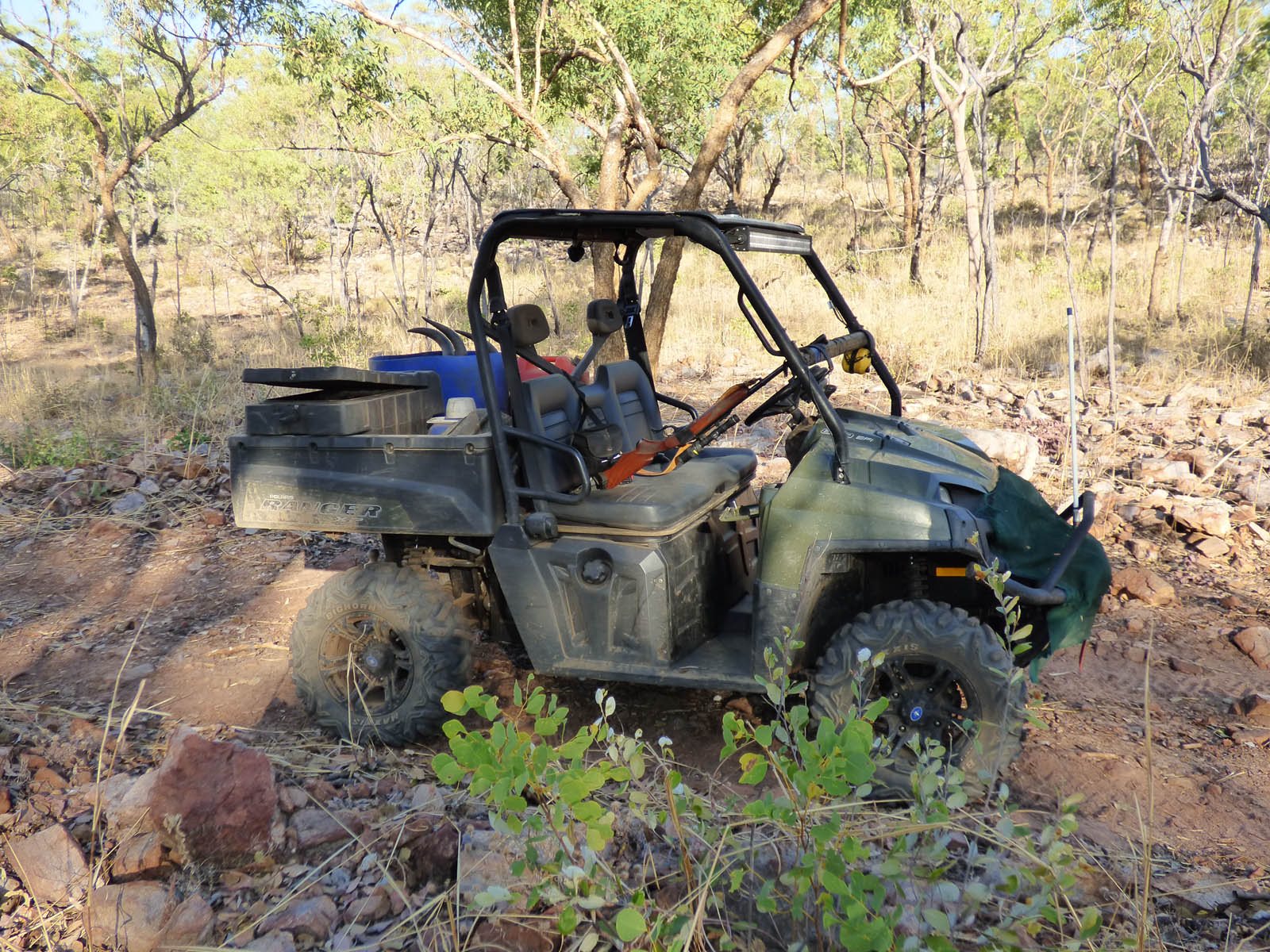
Because of the sweep of country and distances involved, the bulk of our travelling would be in a Polaris ATV. Where these machines could go had me amazed and while there were times when I was hanging on a little harder than I thought I’d have to, I enjoyed it all. There didn’t seem to be a hill or bank that couldn’t be climbed, or a gully line which couldn’t be crossed. On flat going they’d enough pace to draw alongside a galloping buffalo bull, another interesting first experience not easily forgotten.
We searched for two days, covering more country than a hunter on foot could walk in a month of Sundays, always looking for a bull that was bigger than anything I already had. It was a grand way to see a lot of wild country. On the third morning we’d a breakthrough when we bumped into a mob of red-skinned feral cattle. There was a ‘hands on the sissy-bar’ chase as we followed them through the timber, then a single-shot when a heifer split off to one side of the galloping herd and became fresh meat for the local Aboriginal community.
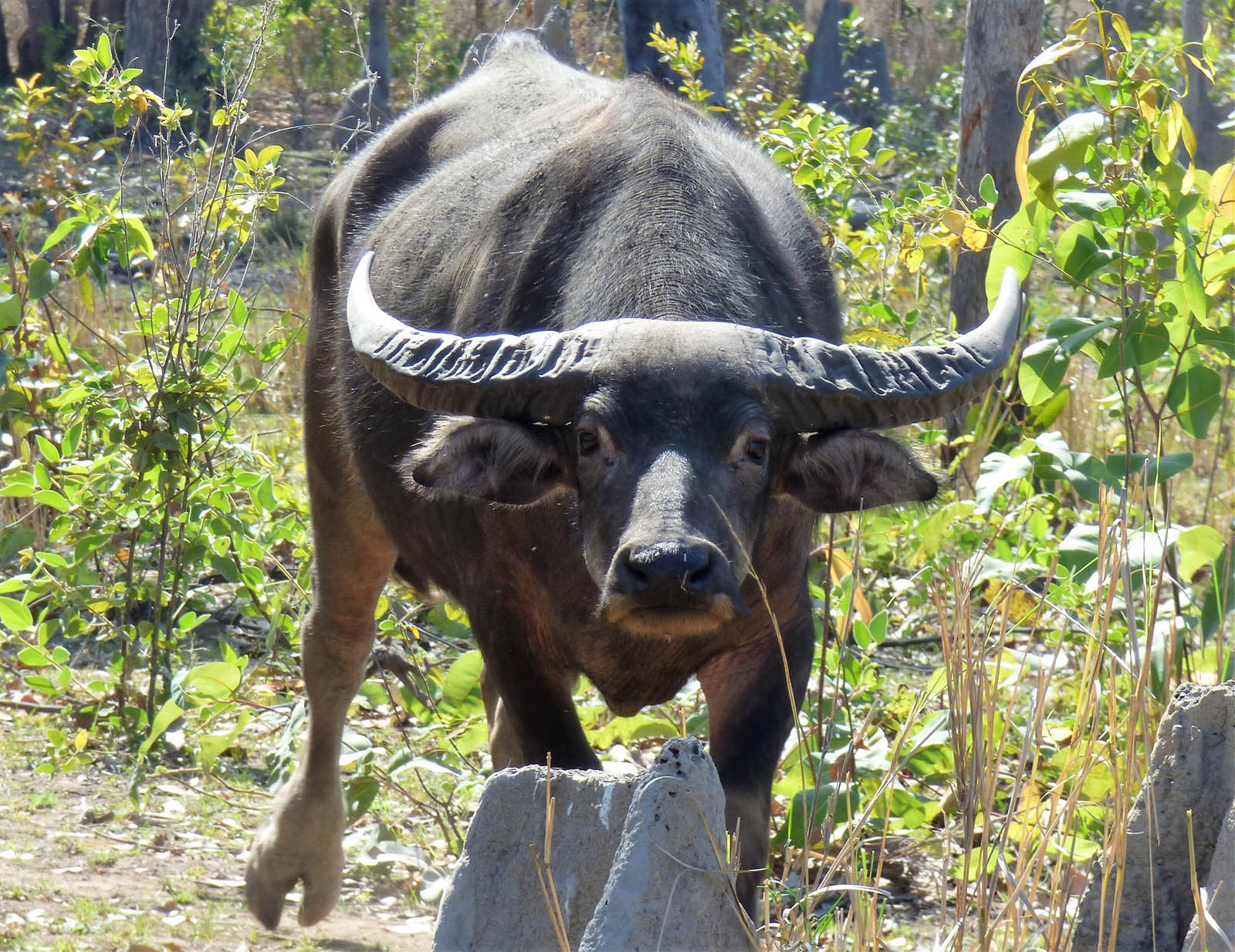
Just before midday we edged up over a low rise and found a mob of buffalo cows and calves milling around the edge of some swampy ground. As we watched, a bull barged out of the timber, rounded them up and pushed them away before turning back into the clear to check us out. It took a few minutes but eventually his curiosity got the better of him and he came trudging towards us.
He was a better bull than anything we’d seen, so when he turned slightly and showed me some shoulder I shot him. He spun around to the strike of the bullet and bolted back the way he’d come, making about 60m before the staggers took over and he came to a rocking halt. My second shot put him down and the insurance shot I fed him when we walked over wasn’t really needed, though with bigger animals like buffaloes you can never be too careful.
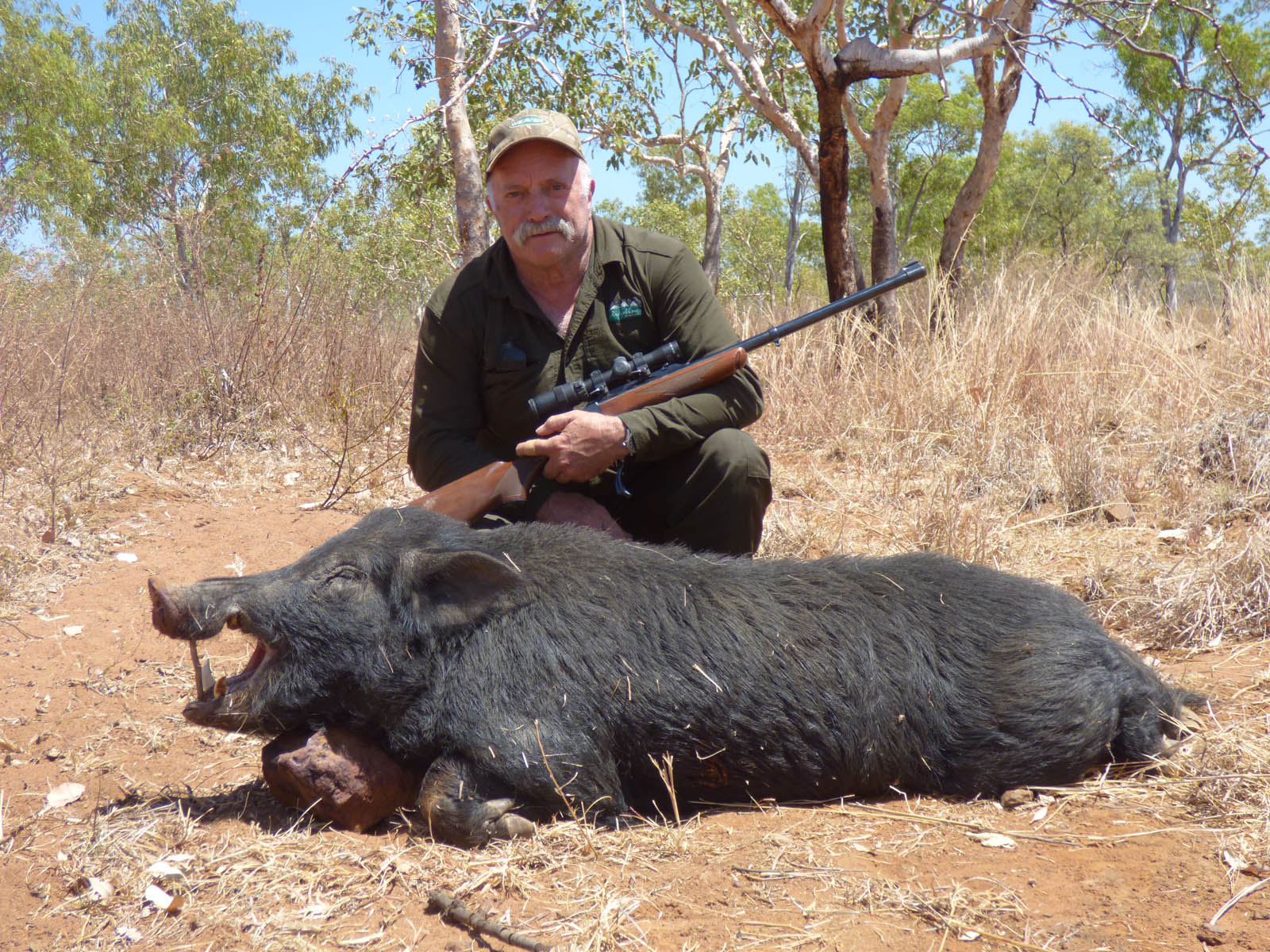
On the last day we went for yet another ride to look at some new country and see what it contained. I fired one shot for the day, collecting a boar whose tusks didn’t live up to the promise of his body size, all something of an anti-climax really.
Looking back more than a decade later, I still regard that trip as the best I ever had to the Territory. There’ve been others of course, but that first visit to Cobourg takes the cake for a swathe of reasons. First impressions are always best and Cobourg impressed from the outset. It still does and if the opportunity arose I’d go again tomorrow, easier said than done these days but a notion worth hanging on to. It’s not the pristine wilderness I thought it would be and sadly never will be again. Yet it remains a fascinating destination with its diversity of wildlife and landscapes, rich Aboriginal and European culture and history and a sense of remoteness I’ve never experienced anywhere else in Australia.
My first banteng bull was important as well and, in retrospect, so too was the broken toe which could’ve ruined everything but didn’t. The buffalo still has pride of place in my trophy room, outranked in size only by the Alaskan moose which holds yet another bank of good memories from my now-declining hunting life. But the real trophy for the trip was my ongoing association with the Tritten family who made it all possible. Friendships like that are hard to come by in this modern age.