


Book review by Thomas Cook
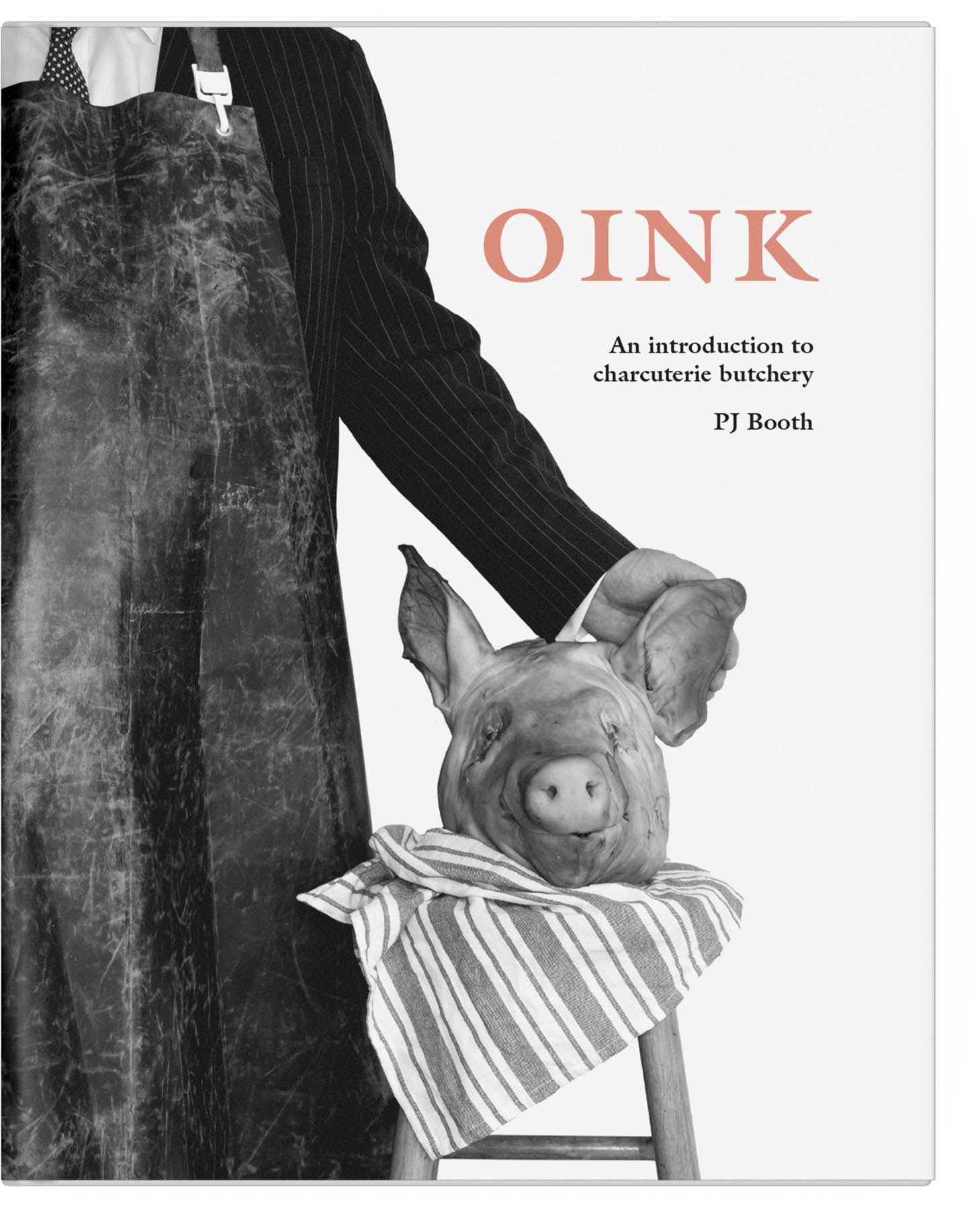
Let’s get something clear right off the bat: Oink’s author, Peter John Booth, is no chef. And Oink is no cookbook. Melbourne-based lawyer Booth is a self-proclaimed foodie, someone with a deep, almost unsettling, passion for meat. His mantra could easily be ‘You don’t win friends with salad,’ made famous by ‘The Simpsons’. But where Booth diverges from the norm is in the world of charcuterie, where he blends his deep love for meat with a macabre sense of humour and a healthy dose of grisly imagery.
Oink isn’t just a guide; it’s an eerie journey into the world of butchery, wrapped in dark, almost Hitchcockian visuals. In this hardback offering, over 250 pages of Booth’s eccentricities unfold with hauntingly beautiful photos and advice you won’t find anywhere else. It’s a voyage into the realm of the grotesque and the delicious, all served up with a side of dark hilarity.
Oink follows Booth’s previous works we’ve reviewed, A Charcuterie Diary, Feathered and Squeal, along with a novel, Slackwater, which is a whole other kettle of fish. But Oink, at its core, is a pictorial guide – though not for the faint of heart. Every turn of the page intrigues. Sometimes shocks. The butchery techniques, the utensils and the cuts of meat will be familiar to many hunters, but Booth’s unique, dark twist turns the whole process into a strange and unsettling art. It’s a fresh take on the familiar.
Unlike the poultry-infused Feathered and fellow pig-paradigm Squeal, which offer recipes to ease the way into the culinary dark side, Oink offers none. Booth boldly declares in the ‘The Recipes’ section: ‘There are no recipes. Those days are gone. Suck it up cupcake.’ and that’s the entire chapter – no frills, just cold, hard truth.
‘The Foreword’ by Charcutier Jo Barrett recognises the artistry of Booth’s experience in the world of charcuterie, but even her words seem to come with a shadow of eerie admiration: ‘How could I know that stuffing sausages, tying bubble knots and lathering fat and flour onto a leg of pork would drastically influence the way I cook and think about food… Oink is a timely publication that helps preserve this traditional craft, reduce waste and save money.’ There’s a strange sort of reverence for the art Booth showcases – a craft that celebrates both the practical and the macabre, the beauty and the beast.
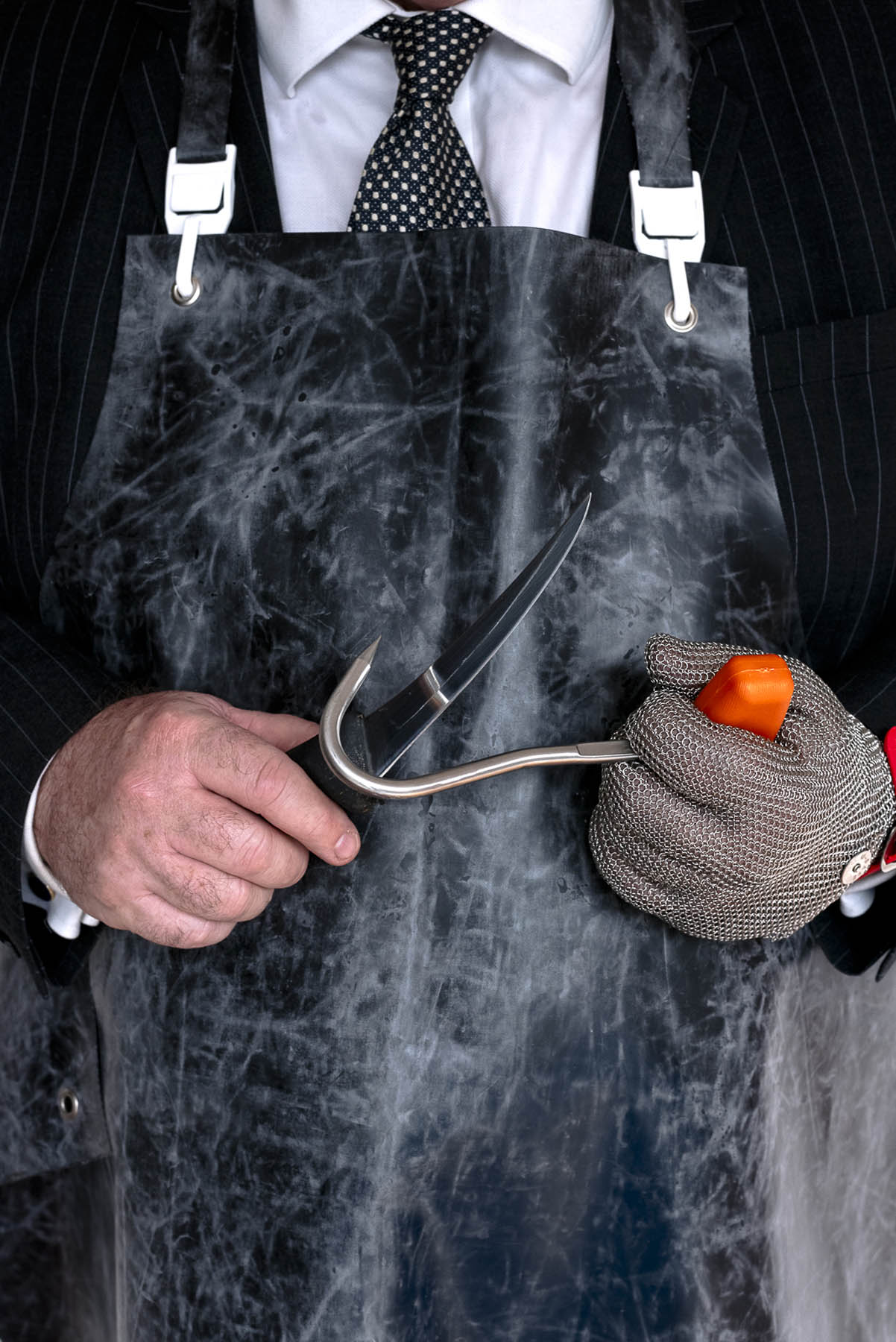
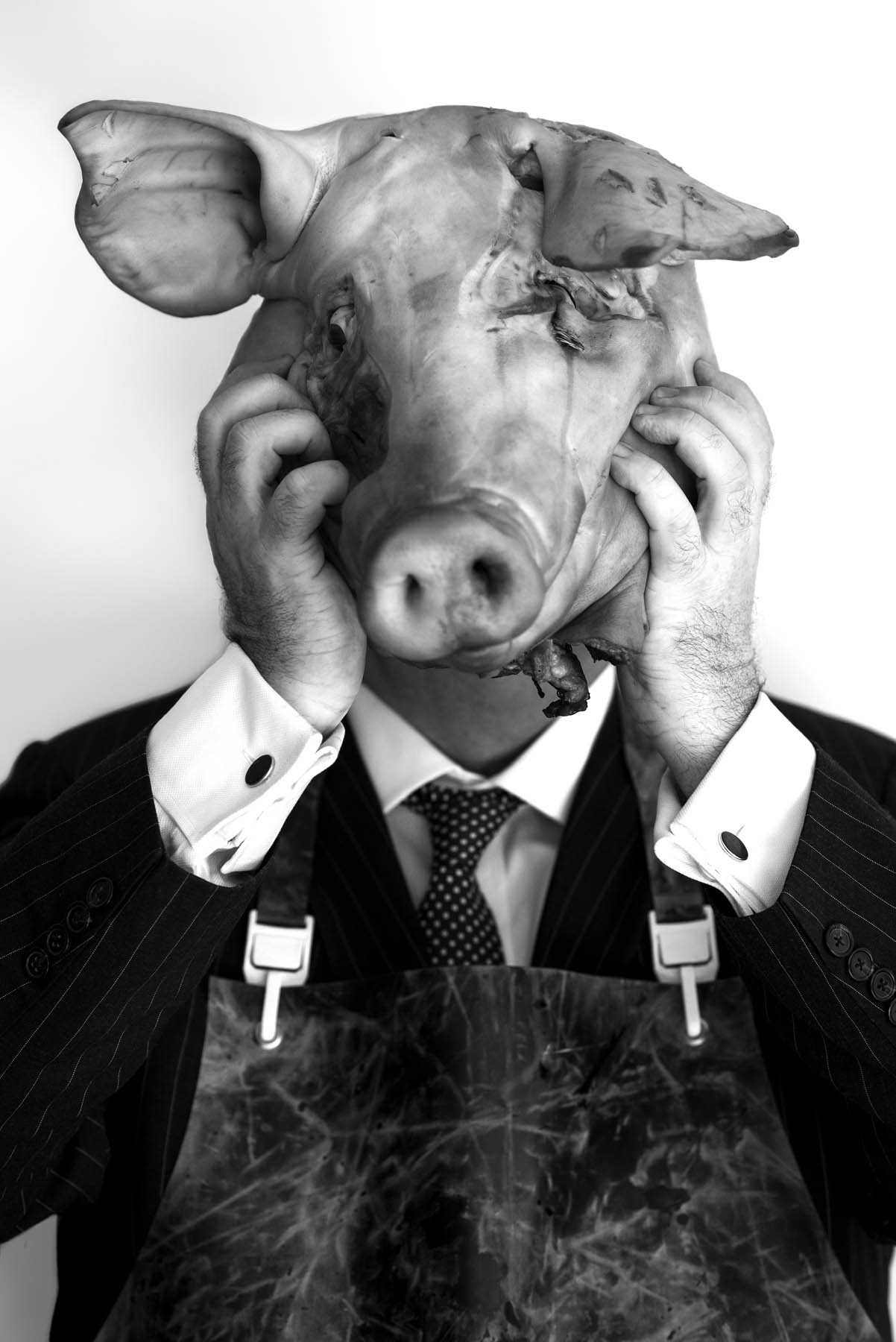
The pictures in Oink are undoubtedly both insightful and ghastly. One cannot help but hear Vincent Price’s voice narrating Booth’s foray into this step-by-step guide, as if each image is laced with a whisper of horror. Literary references appear throughout, such as this chilling quote from George Orwell’s Animal Farm: ‘The creatures outside looked from pig to man, and from man to pig, and from pig to man again; but already it was impossible to say which was which.’ This eerie sense of duality is echoed in the photos that feature (a faceless) Booth himself: a sharp-dressed figure in a black pinstripe suit, topped by a rubber apron. On the cover he’s beside a pig’s (or is it his own?) decapitated head as if it were an old friend, its ear – a delicacy in certain cultures – lovingly cupped in his hand.
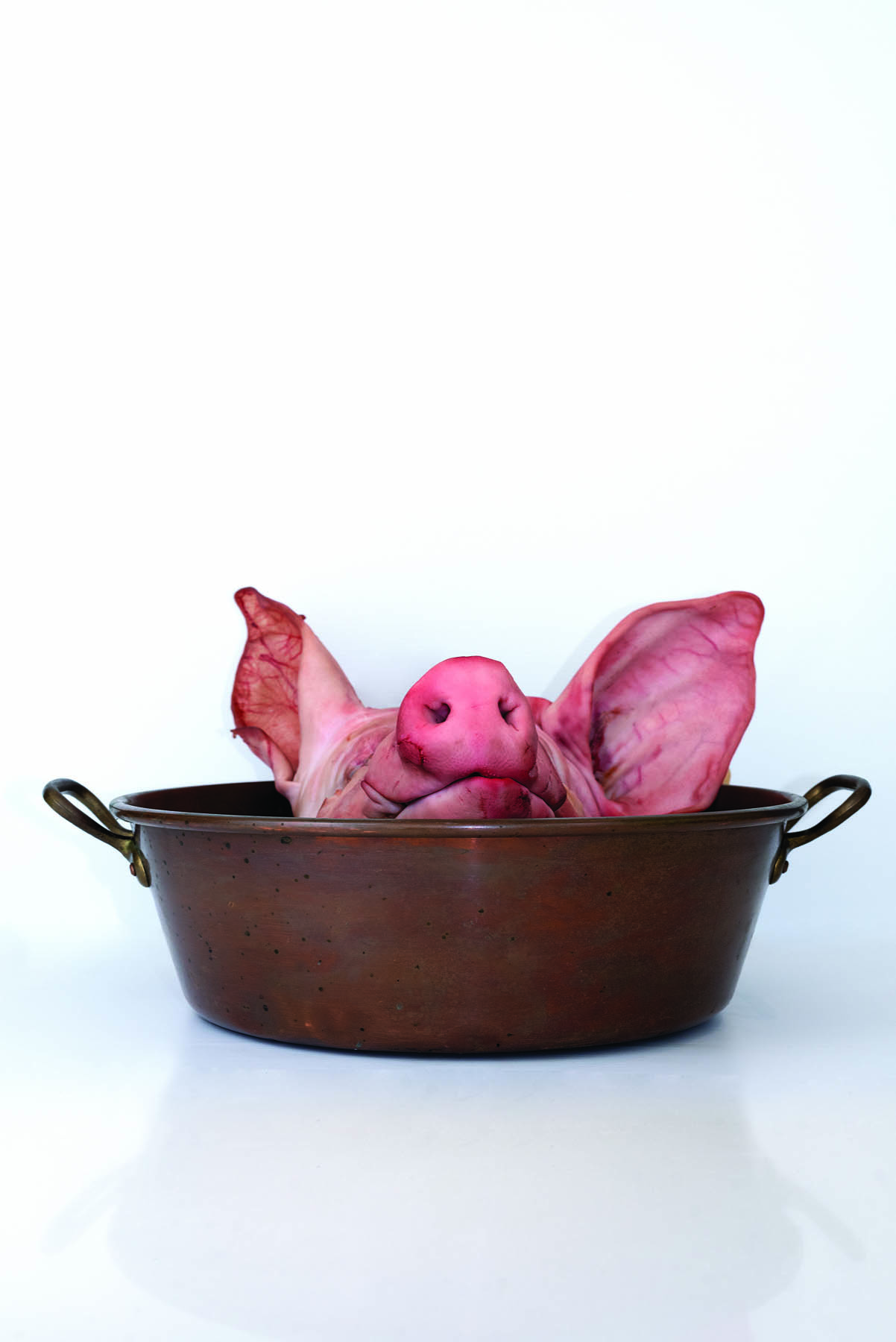
On the back cover, the pig’s head rests ominously in a saucepan, accompanied by the phrase ‘Trust no one.’ It’s both darkly humorous and unsettling – a fitting tone for the book. Charcuterie, after all, is a dish best served cold.
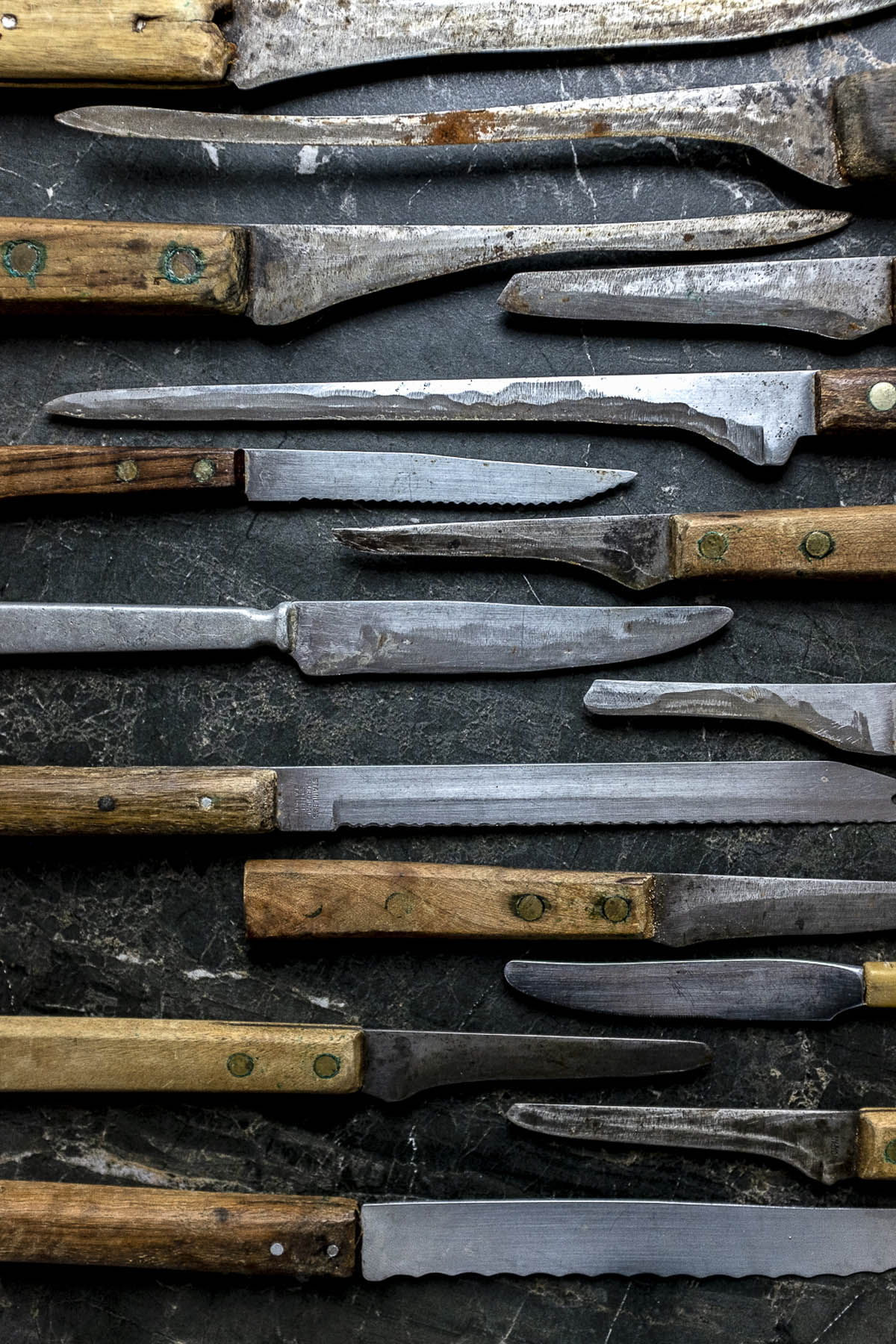
As Booth goes on to explain in ‘The Prologue’, Oink is a guide on achieving the specialised cuts of meat necessary for charcuterie, with every step, tool and technique provided. Oink embraces its grisly subject matter with relish, while still educating the reader. The section titled ‘The Technical Things’ starts with knives – so essential to the craft, yet so steeped in a certain menace. Booth’s fondness for knives is palpable as he writes, ‘You will need good knives in order to undertake basic butchery tasks… I have many knives. I have always had many knives. Some knives I like more than others. Although I do not tell the other knives this.’ Hunters can relate. This playful line invites everyone into a world where knives are as much an obsession as they are a tool for dissection. More correlation for the hunter. The imagery of blades and other kit feels almost ominous, but it’s all part of Booth’s approach. He details everything – from the obvious to the obscure. It’s a wonderfully thought-out introduction that helps take a lot of the guesswork out.
Following the technical section is ‘The Equipment Tutorial’, which offers further details and photos of everything. Booth has clearly thought this through, matching each tool with the charcuterie delicacies they best complement. Each item has its place in the charcuterie butchery process.
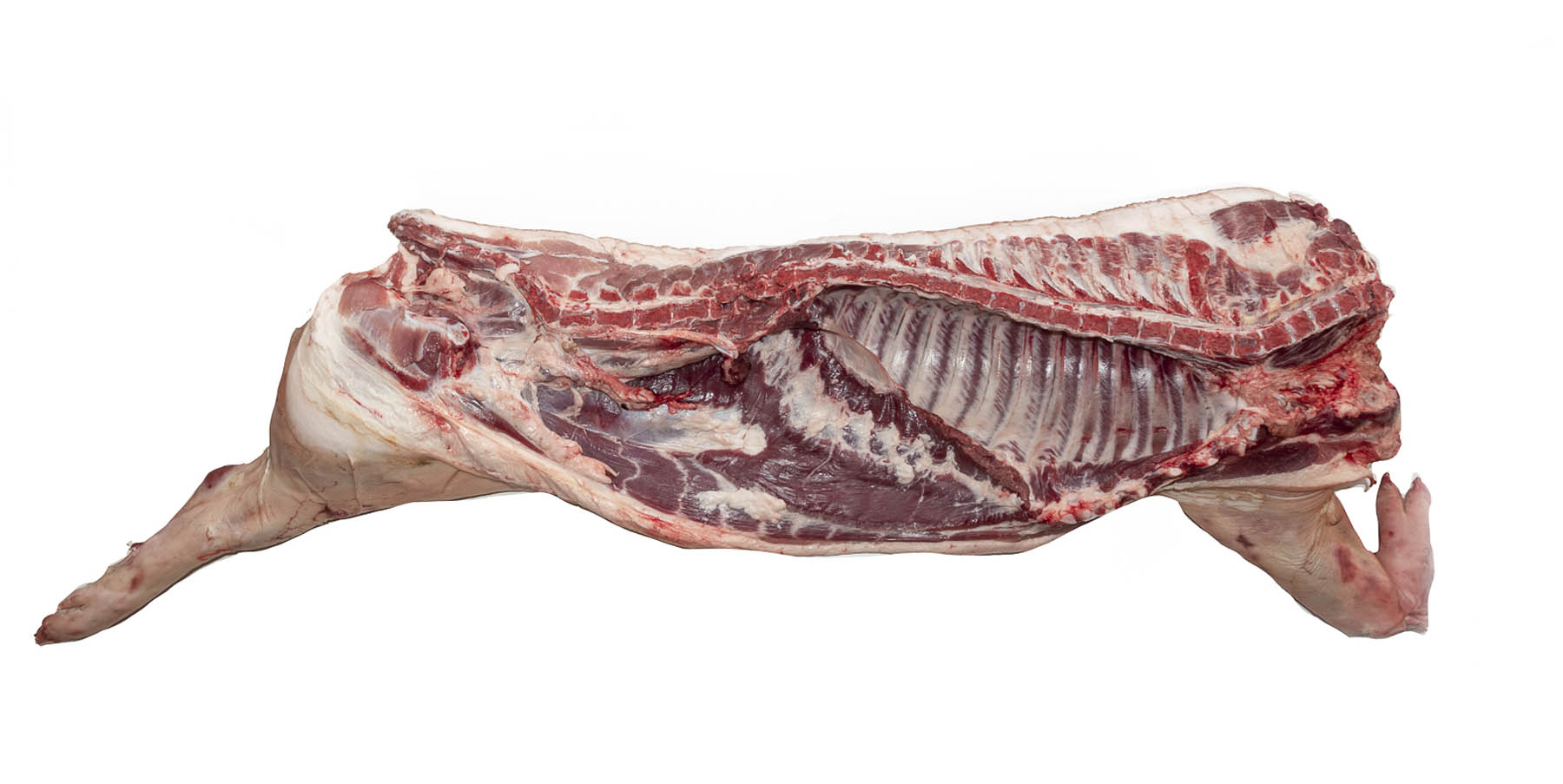
The true heart of Oink lies in the butchery, and here, we get to the main event: ‘The Butchery Stuff’. Pigs are the star of the show. They’re affordable. Plentiful. And Booth is fond of them. ‘I have never met a pig whom I did not like,’ he has said, adding a tinge of unsettling affection for the creatures he’s dismembering. Booth breaks it up into the three primal cuts in this section: forequarter, loin and hind quarter.
While he gives no apologies for letting the reader know there’s no offal offerings, there are some parts Booth can tolerate and appreciate. The pig’s head is one of them. More on that later. A half or full carcass is preferable, suggests the charcuterie character. ‘The head, trotters, bones, and skin are all desirable elements for the purpose of charcuterie and are effectively thrown in for free,’ Booth quips. For the mindful hunter, the whole lot is essentially ‘free’, making charcuterie an excellent outlet for using every part of a healthy pig.
Before reaching ‘The Butchery Pictorial’, which is the most comprehensive and visually detailed (straightforward) part of the book, readers must first flick past two bloodied handprints across a double-page spread. A suggestive reminder.
All jokes aside, Booth gets down to business here, walking the reader through each of the three main cuts with candid photos and almost surgical precision. The meat, raw, looks good enough to eat. Each pig portion. Each culinary cut. Shown in painstaking detail. The charcuterie butchery masterclass guides the novice through to the most experienced of hunters who have broken down a game animal carcass. By the end of the section, Booth wraps it all up with a tongue-in-cheek statement: ‘Congratulations, you are now an artisan butcher of the charcuterie persuasion.’
But Booth doesn’t stop at the primal cuts; he moves on to what he calls the ‘fourth primal’: the head. ‘The bit that no one wants except the charcutier (that is you by the way),’ he explains, leaning into the macabre reality of working with what further feels like a surgical procedure on a hapless, innocent pig.
From here, the section dives deeper into techniques for hanging, tying, wrapping and netting the meat. These sections are rich in pictures – abundant and detailed. Booth’s dedication to his craft is evident, but so too is his fascination with the complex side of the butcher’s art. The imagery, though practical, feels ominously celebratory of the process. Booth seems to have not really wanted to end this section earlier. And it’s a good thing that he didn’t. This ‘added’ content is the pièce de resistance. It’s as though Booth is revelling in the art of dissection and preservation, showing the reader that there’s beauty in the grotesque.
After the technicalities, the chapter titled ‘The Stories’ provides a brief respite. Here, Booth, still in his immaculate suit, raises a glass of beer and recounts tales relating to pigs. It’s a strange interlude that adds a touch of levity to the otherwise dark subject matter. But as you finish the tales, you’re quickly pulled back into the unsettling reality of what Oink is all about.
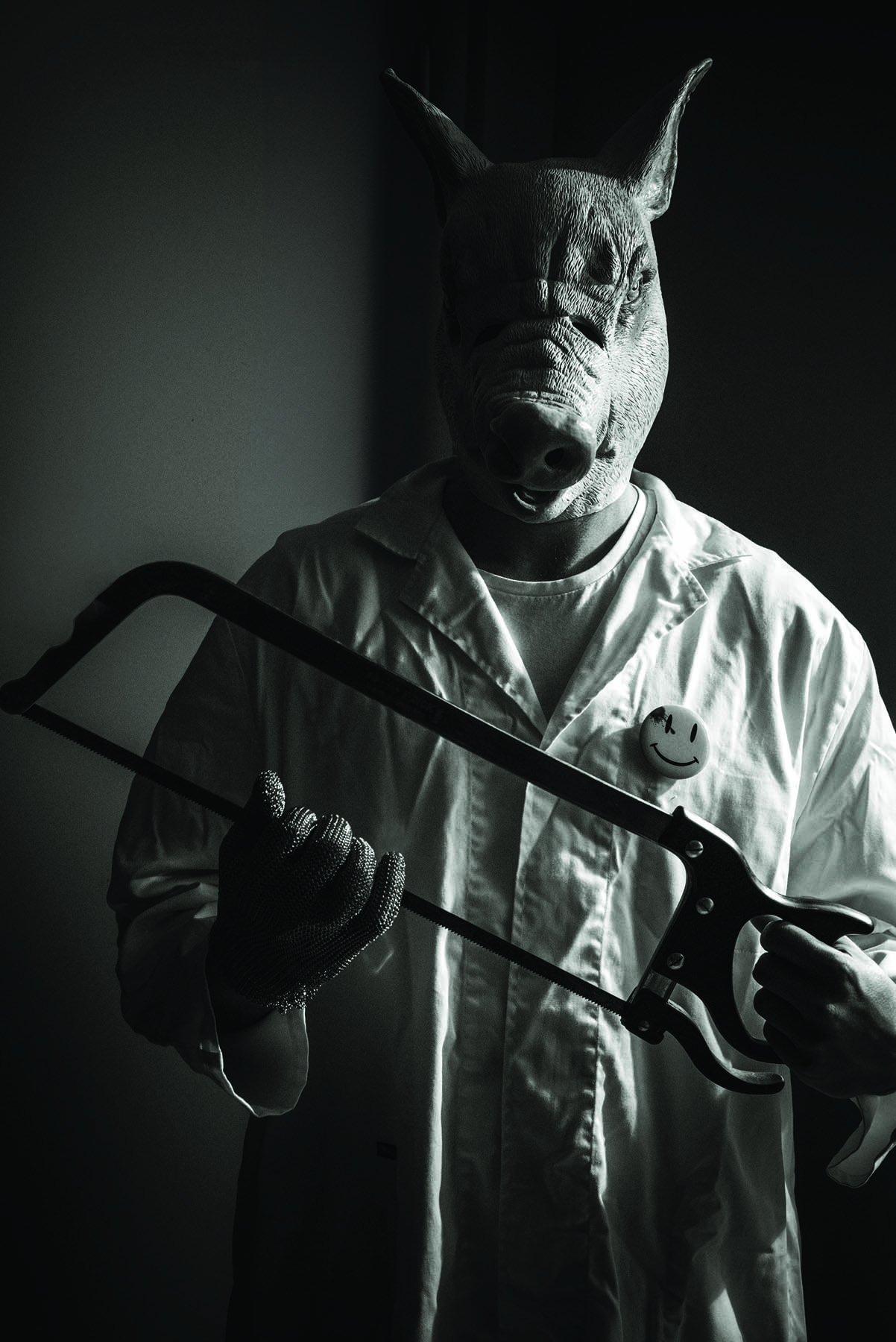
‘The Intermission’ chapter offers a surreal moment: a cannibalistic humanoid pig, standing in darkness with a pig’s head hanging from a meat hook. What follows is a dive into knives and sharpening, where Booth compares different types of blades and offers straightforward, no-nonsense advice about the steel you need to master this craft. Booth reflects on the importance of a good blade.
‘Happiness is a sharp knife,’ believes Booth. Hunters can compare notes and see where they already stand in the world of charcuterie. Booth delves into the different types used for blades and offers a clear explanation on steel grades. It’s a worthy reinforcement, ‘As you know, not all steels are created equal,’ adds Booth. We know it to be true.
As Oink begins to wind down, Booth invites the reader deeper into his world. His fascination with pocketknives is evident, and these, too, are lovingly photographed with an almost reverent admiration. Booth doesn’t shy away from the intricacies of his fascination, nor does he attempt to mask the obsessive undertones that run throughout his connection with the knives.
Oink is a book that will stick with you, haunting you long after you’ve finished. It is, above all, Booth’s love letter to the art of charcuterie – but with a twist. It’s dark, it’s macabre, and it’s definitely not for everyone. But for those brave enough to embrace it, Oink offers a fascinating glimpse into a world of butchery, preservation, and, yes, meat. Booth’s irreverence and wit make the macabre moments all the more intriguing. As he himself states, ‘Do not be afraid of charcuterie, it is certainly not afraid of Vouz.’
For just $60 via pjboothoink.com.au, Oink delivers a chillingly informative journey into the heart of charcuterie butchery Don’t let the eerie imagery or dark humour put you off. Embrace the bizarre and take a seat at Booth’s table – just be sure to bring your appetite for the unusual.