

Thumbs-up from Ben Unten for the Osight by Olight
When Olight first branched into the world of red dot sights I was sceptical. Known mostly for their torches (and bloody good ones at that), a lot of shooters figured they’d stick to lighting up paddocks rather than lighting up targets. But with the Osight, Olight have kicked the door in with a seriously well-thoughtout red dot system which caters just as neatly to the practical shotgunner as it does to the pistol or rifle shooter. Let’s be honest, red dots on shotguns have traditionally been a bit niche in Australia, though more and more shooters are now realising the benefit of gaining an ultra-fast sight picture of ferals on the run.
First impressions
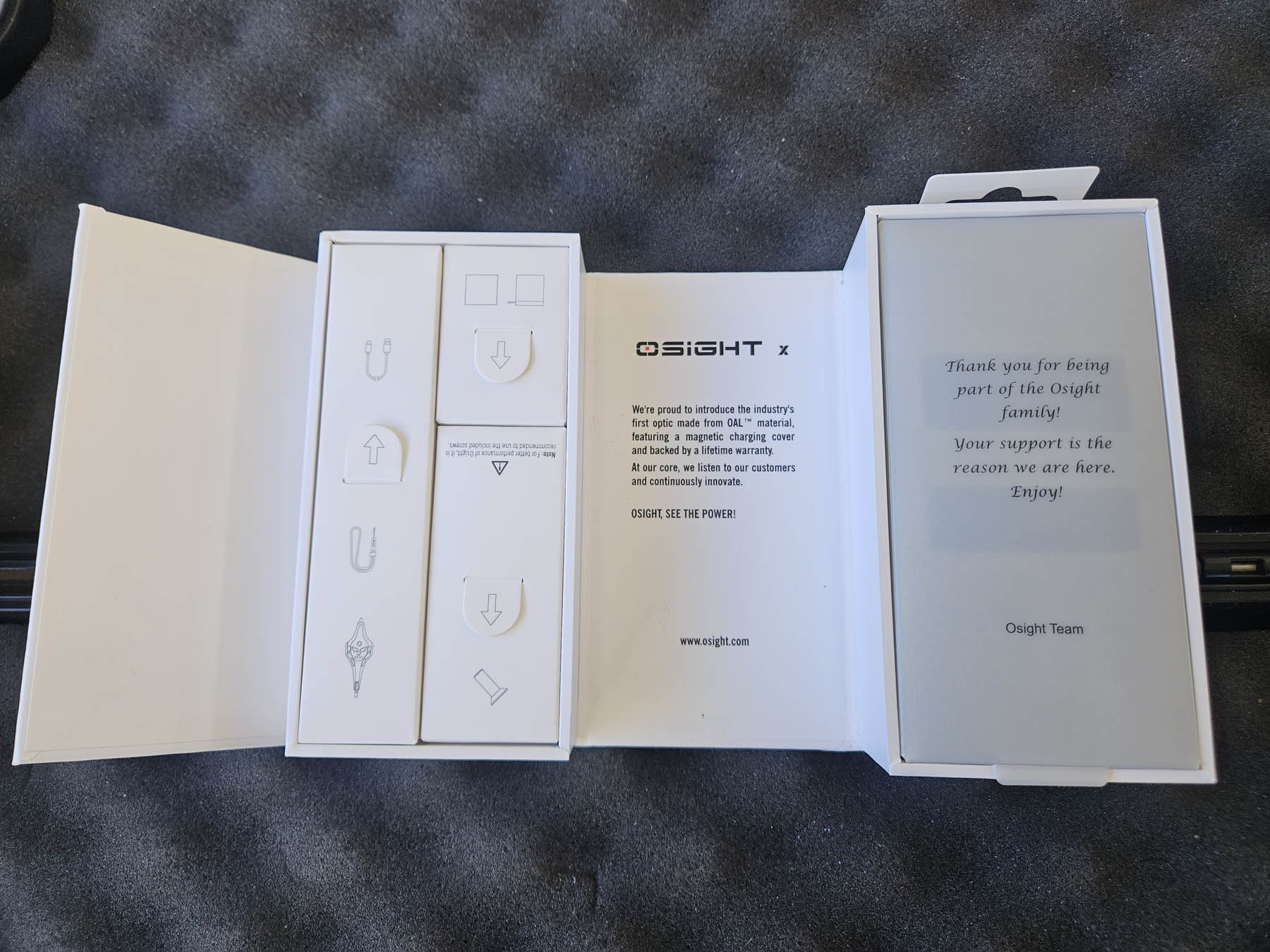
I don’t normally start reviews by talking about the box but Olight deserves a mention here. While many optics arrive in generic foam-cut cases or basic blister packaging, the Osight turns up in a minimalist cardboard clamshell box that’s clean, crisp and surprisingly satisfying to open. It’s not foam-lined but the layout is smart and protective enough, with everything secured snugly in cardboard inserts.
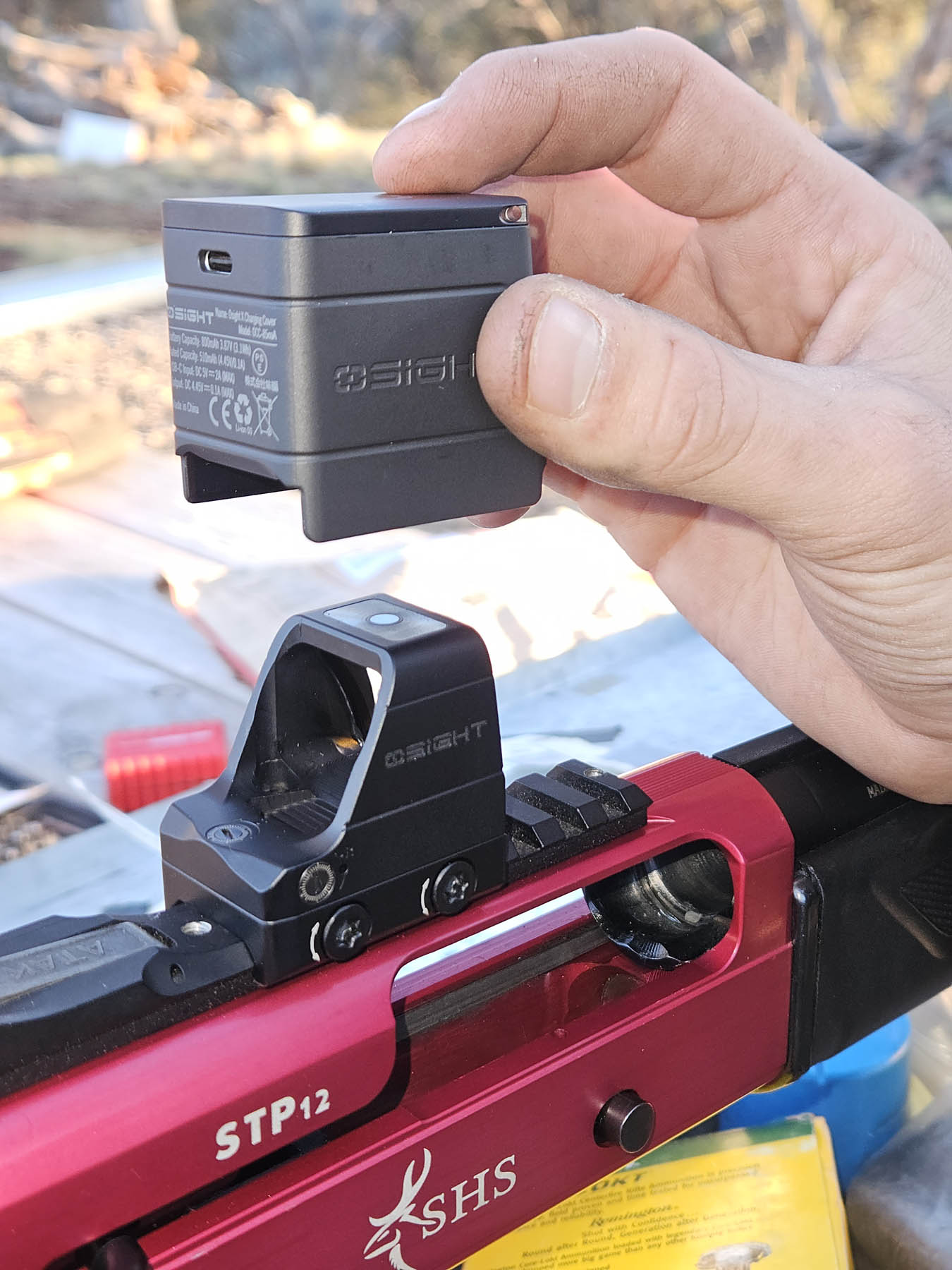
Inside you’ll find the optic itself, charging housing, Torx tool, cleaning cloth, lanyard for the charging cover and screws, and a well-printed manual which doesn’t read like it’s been translated through six different languages before finally arriving in English. Yet the standout is the magnetic clip-on charger, as that’s where the Osight really starts to show off.
Charging System
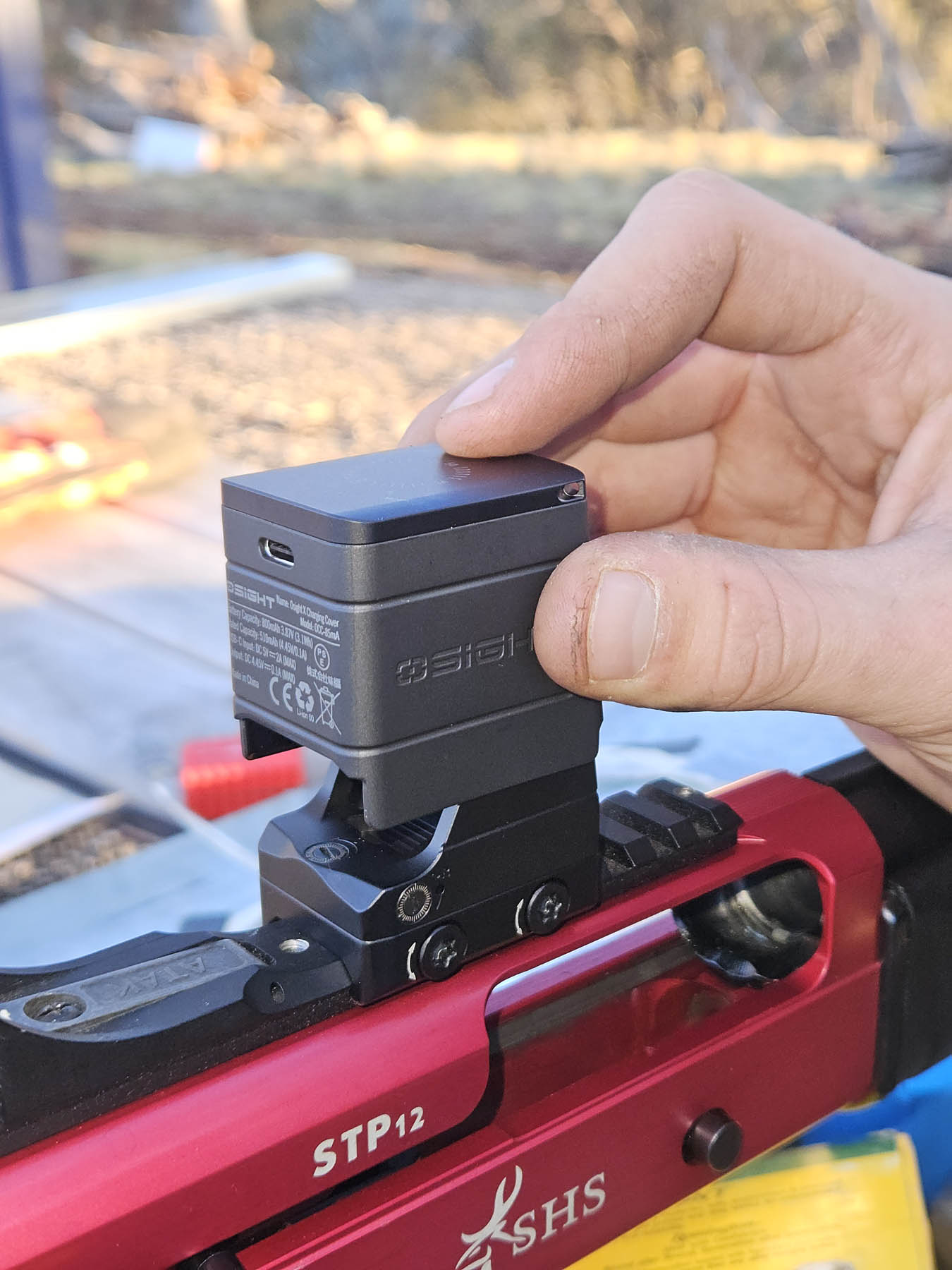
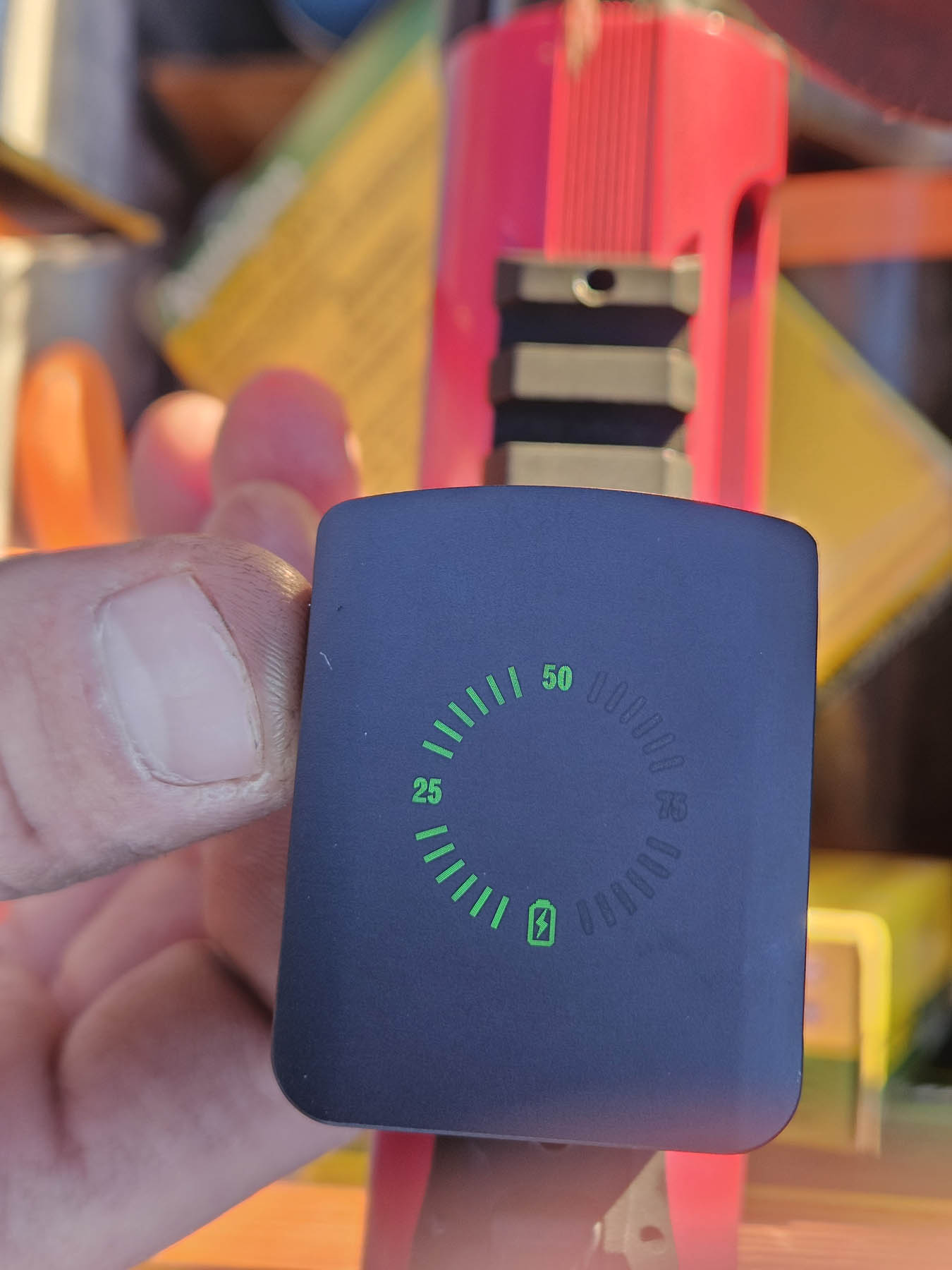
The Osight isn’t just another CR2032 battery muncher, it features a magnetic clip-on charger with LED display and is a cracking piece of gear. Snap the charger on to the Osight and it displays the red dot’s current battery percentage. Remove it and it gives the charger’s own battery level so you know when it’s time to juice-up, which is done by an everyday USB-C charger with no specialty connector required. There’s also a tiny tri-colour LED on the side of the Olight which indicates green, yellow or red to give you a quick visual as to the battery status of the sight itself.
There are three different configurations for the 3MOA red dot reticle, or you can select the 32MOA circle or chose both together. There are 10 daylight level adjustments and two night levels for illumination in manual mode and, being a reflex-type optic, eye relief is non-critical which makes it ideal for pistols and heavier recoiling firearms.
Mounting
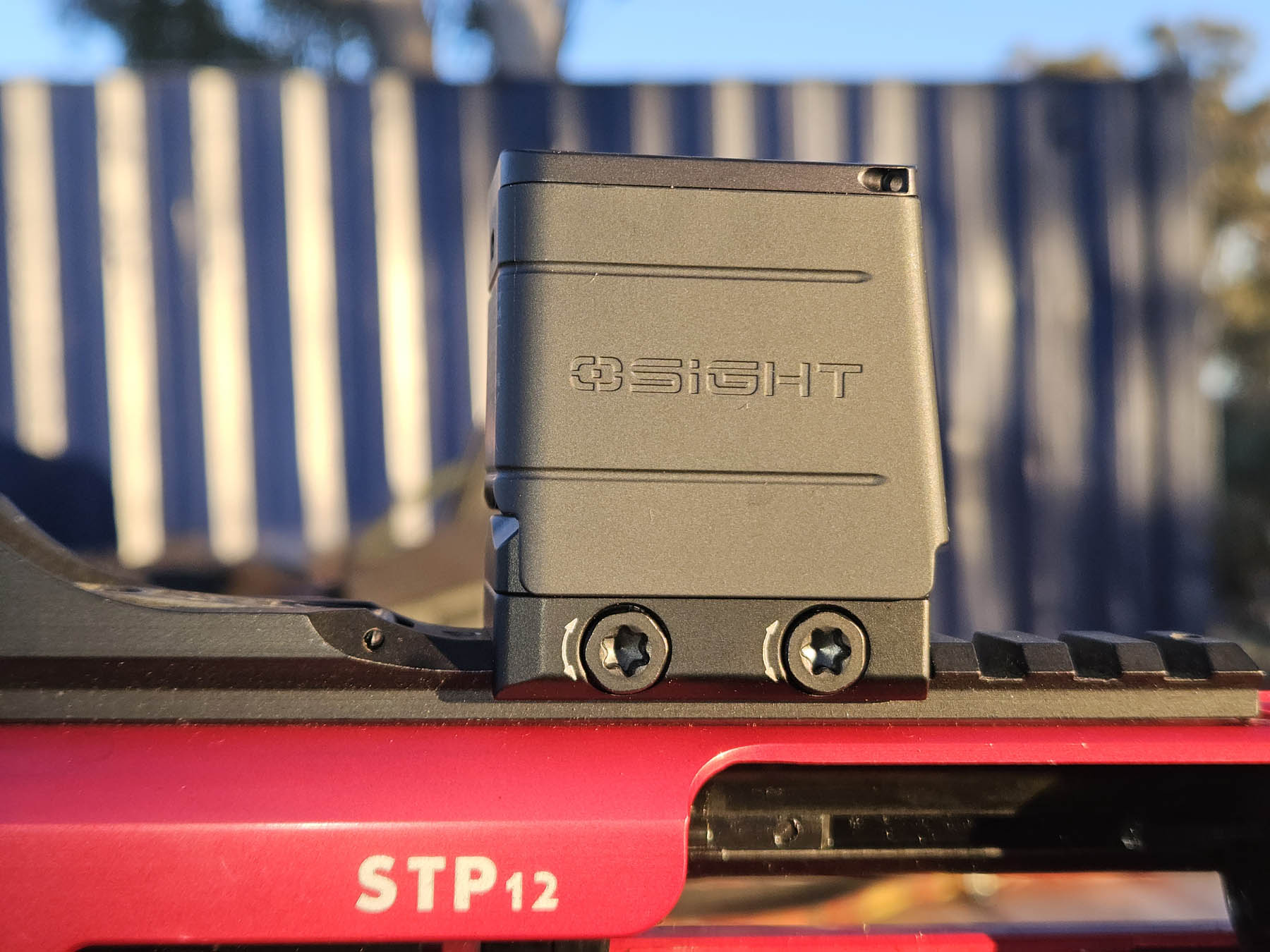
The Osight doesn’t directly use a Weaver or Picatinny pattern built into its body, rather it employs a standard RMR/407C/507C footprint for its base. For those who aren’t aware (which is probably almost all of us), the terribly uncatchily-titled RMR/407C/507C is basically a standard hole spacing and recoil lug pattern for the bottom of red dot sights.
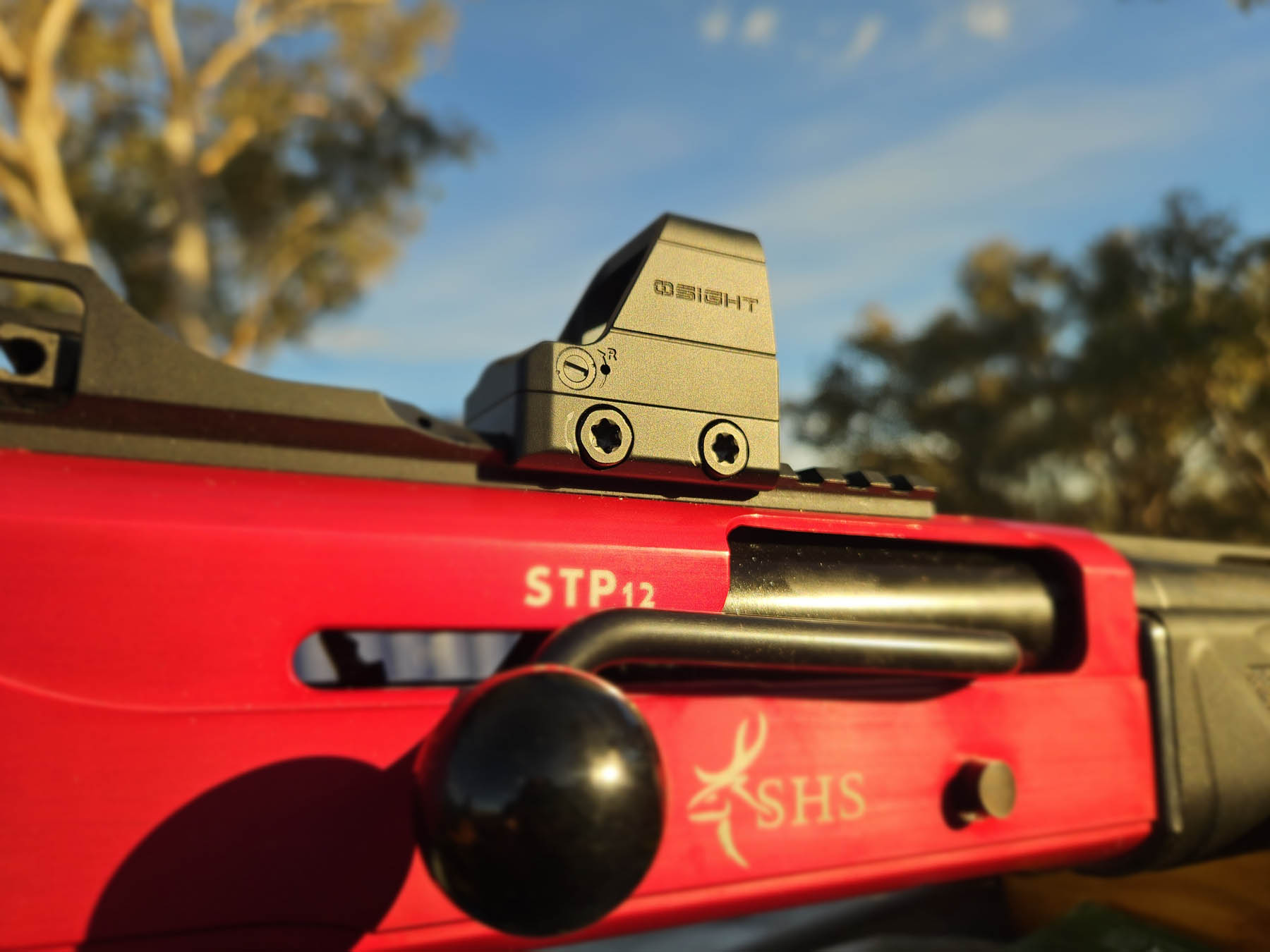
Then Olight offer a number of mounting options with varying heights based around a Picatinny rail, with aftermarket mounts also available for Weaver rails. I mounted the Olight Osight on an SHS STP12 straight-pull shotgun with black synthetic fore-end and stock, and with what the manufacturer calls a ‘red’ exterior for the action (though it looks a bit pink to me).
In the field
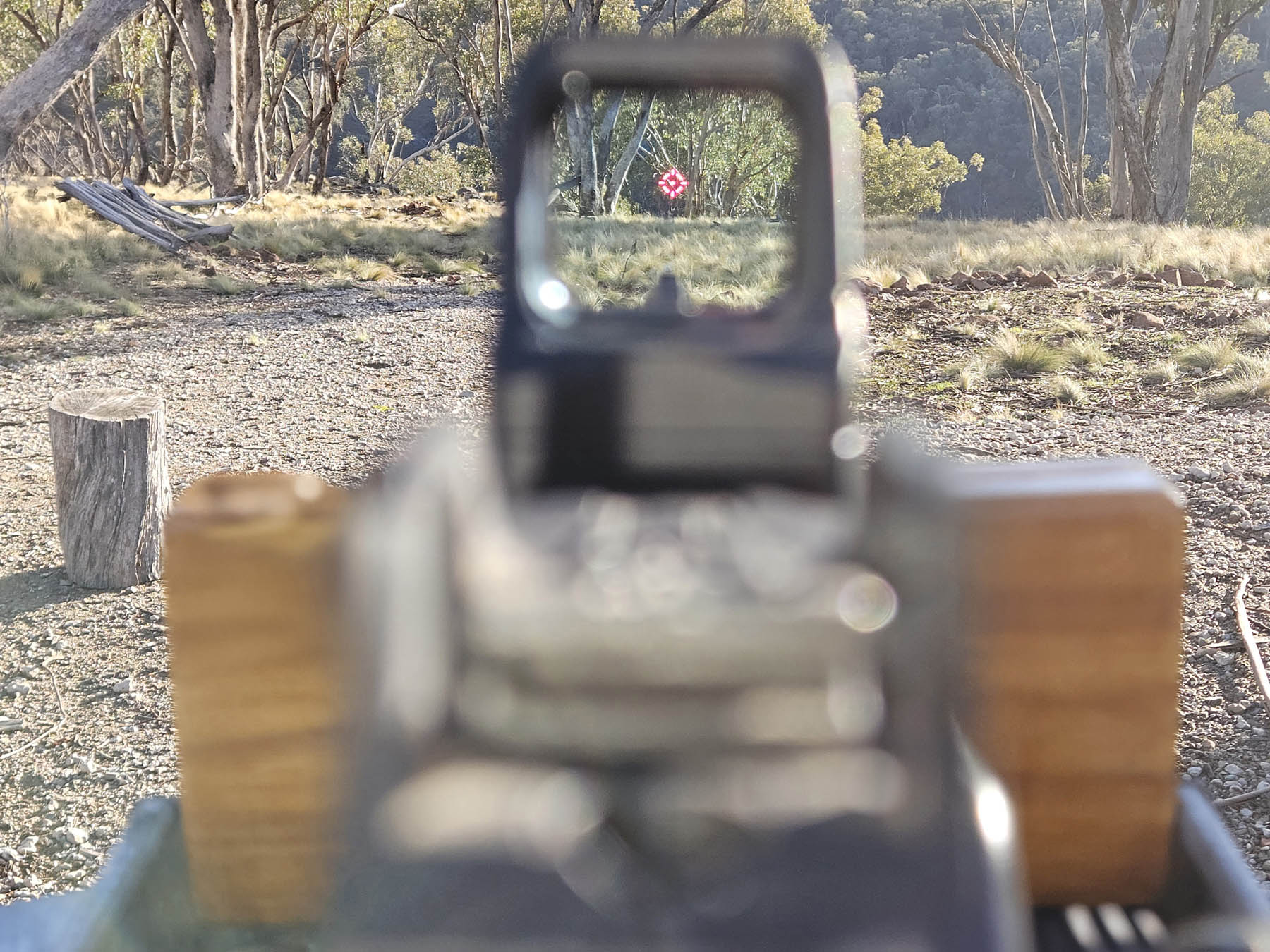
Sighting-in was a straightforward process via slot-head, windage and elevation screws. This was possibly made even easier by the fact I was sighting-in a shotgun, though the process is identical for rifle or pistol. The Osight does have an ‘auto-sensing’ feature which can automatically adjust the brightness of the display while still allowing manual adjustments. I chose manual mode and adjusted brightness towards the upper level as I was testing during daylight. The reticle appeared sharp and crisp, in fact the hardest aspect in relation to the reticle was focussing the camera to photograph the damn thing!
Multiple reviewers have commented that point of aim was highly consistent between different personnel and obtaining a sight-picture was quick and intuitive. Collectively, my reviewing buddy and I put through more than 40 shells and the Osight held a rock solid zero.
Battery life on this one sounds like science-fiction as it’s claimed to have 57,000 hours on level three brightness with the dot only. It’s also claimed the charging cover can recharge the Osight three times before needing recharged itself. This, combined with the Osight’s ‘motion sensor’ setting which activates the sight when it detects movement and automatically switches off after 10 minutes of inactivity, can apparently result in a maximum of 228,000 hours use, which is a tad over 26 years if my maths serves me correctly. So based on several of my current lifestyle choices, my battery might conk out before the Olight does.
I didn’t encounter any real negatives on this sight, though did notice when sighting-in that if you wobble your head like a rubber-neck behind the sight, the reticle does appear to ‘move’ around within the viewing panel. I’m not sure why you’d do that but it really isn’t an issue as it doesn’t move relative to the target. In fact it might even help with mounting your shotgun or pistol, as you’ll naturally gravitate towards the same head position each time.
In summary
This sight has a broad range of uses and appears to be an extremely well thought out, precision-made product. It almost goes without saying it’s manufactured using high-grade aluminium housing and features multi-coated lenses with anti-reflective coatings.
It would be fair to say I’m a committed fan of a red dot, reflex-type sight and can think of multiple shooting applications, shotgunning being but one of them. The Olight Osight is also available in a green reticle and separately in olive green housing and retails for around $355. More at www.au.olight.com