

Senior Correspondent John Dunn on a single-shot curio
Having associated with other hunters, shooters and collectors for as long as I have, I’m rarely surprised any more when some kindred soul reveals his or her latest object of interest. Sometimes it may be no more than a variation of some long-established theme, a different make or rare model perhaps. At other times it’ll be something completely out of the box, not like anything you might have expected.
That was the case recently when fellow hunter Bruce Oliver quietly revealed he’d acquired a Chiappa Big Badger rifle in .35 Legend, then added it was a nice companion piece for a Little Badger in .22LR he already owned. Knowing the man and his roving interests as I do, I probably should’ve expected it, as he’s always enjoyed owning and using firearms which are a little different.
Though I don’t have a particularly active interest in the current firearms market, I couldn’t resist when Bruce offered me the chance to take a look at his Badgers. After all, they’re both single-shot firearms and that alone will always be enough to rouse the interest of a tragic like me, especially in a different calibre like .35 Legend.
Like others of their ilk, the various Badger models are generally categorised as survival firearms, a term I feel is a bit limiting. The marque is built around an up-to-date version of the time-proven break-action every hunter of my generation used in his younger days. They weren’t survival firearms then, just very useful, general purpose utility rifles suitable for all the day-to-day uses landholders, hunters or travellers might have. They’re compact, easy to store and carry and more than adequate for all sorts of game and pest animal applications, provided a suitable calibre is chosen.
Chiappa’s Big Badger
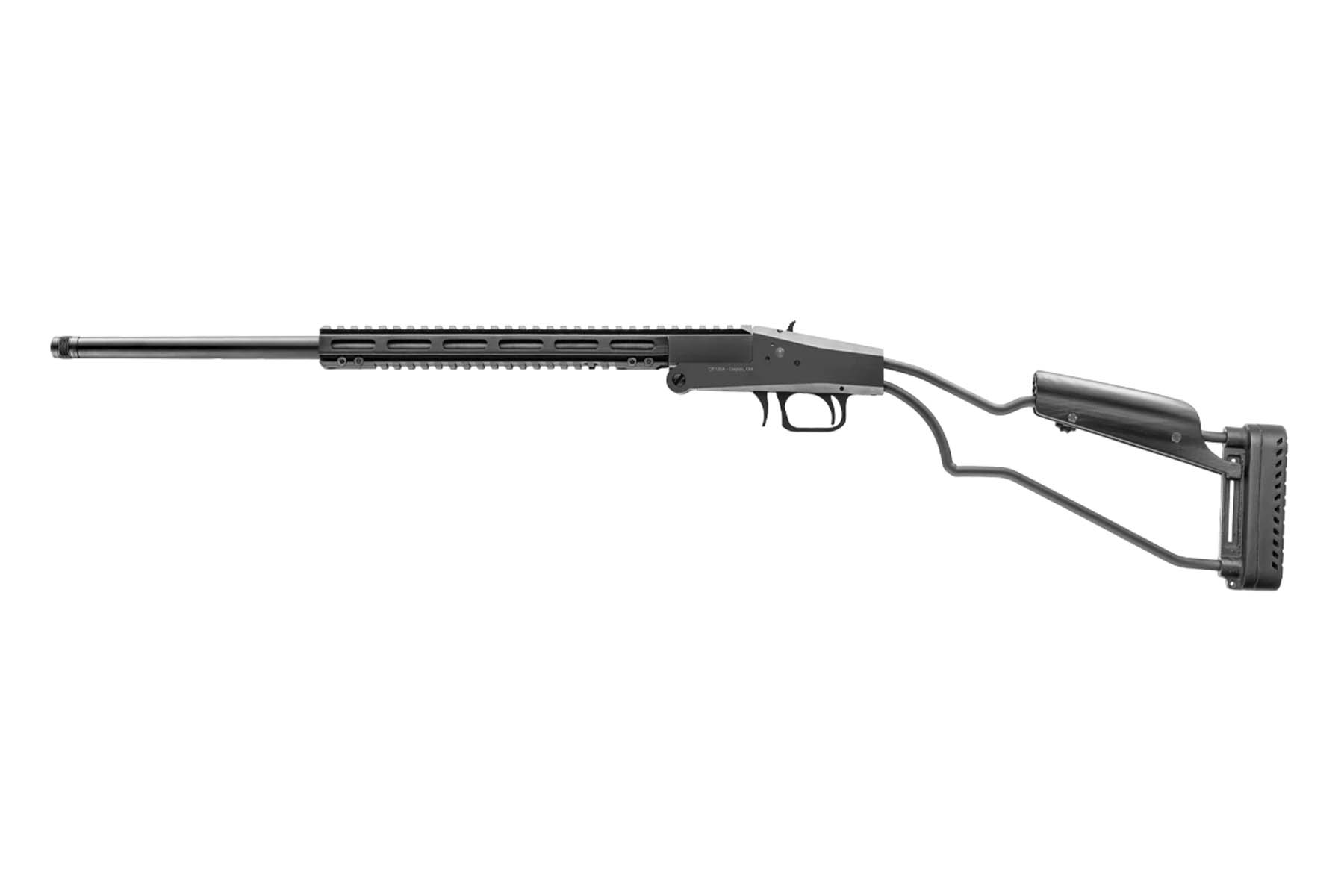
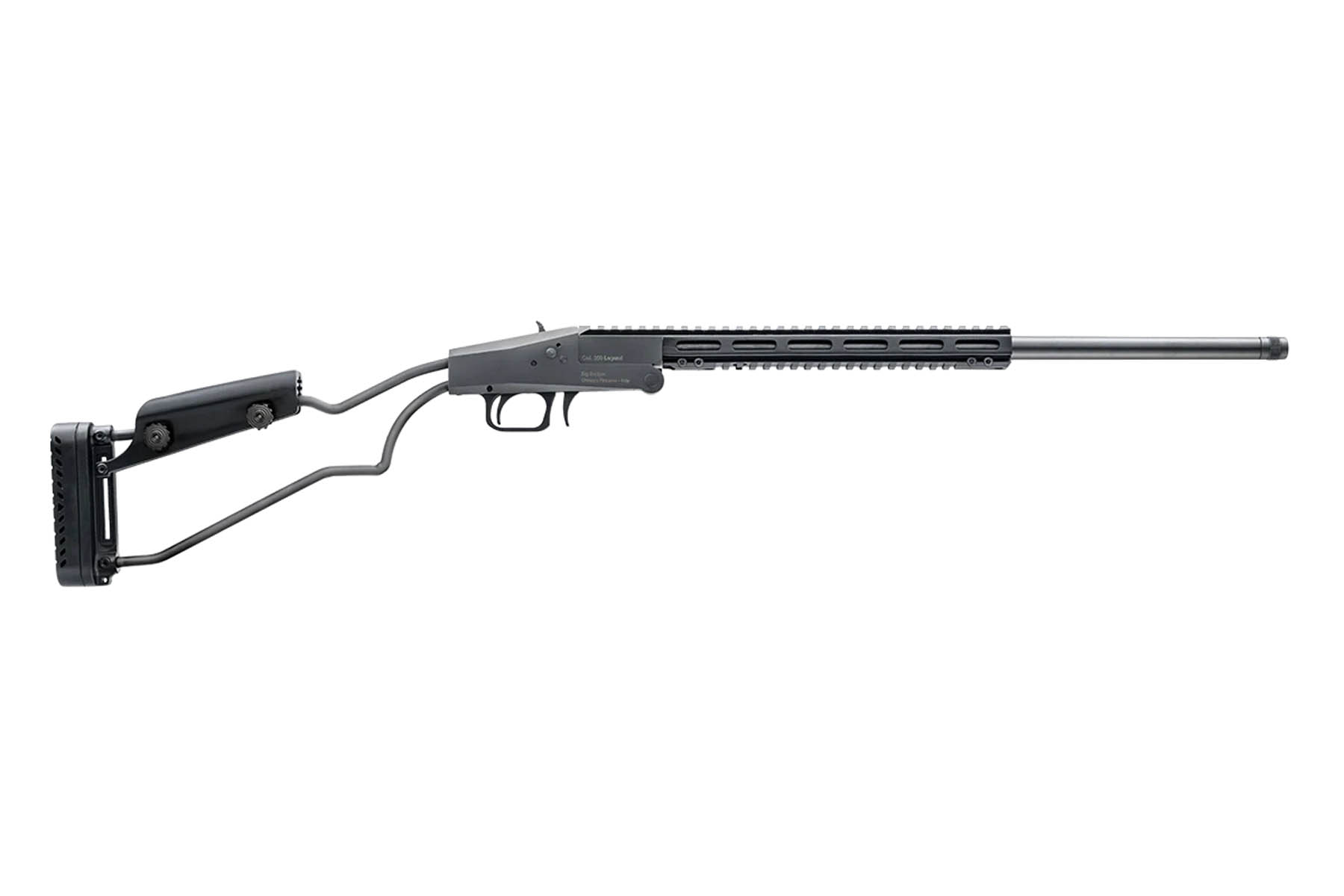
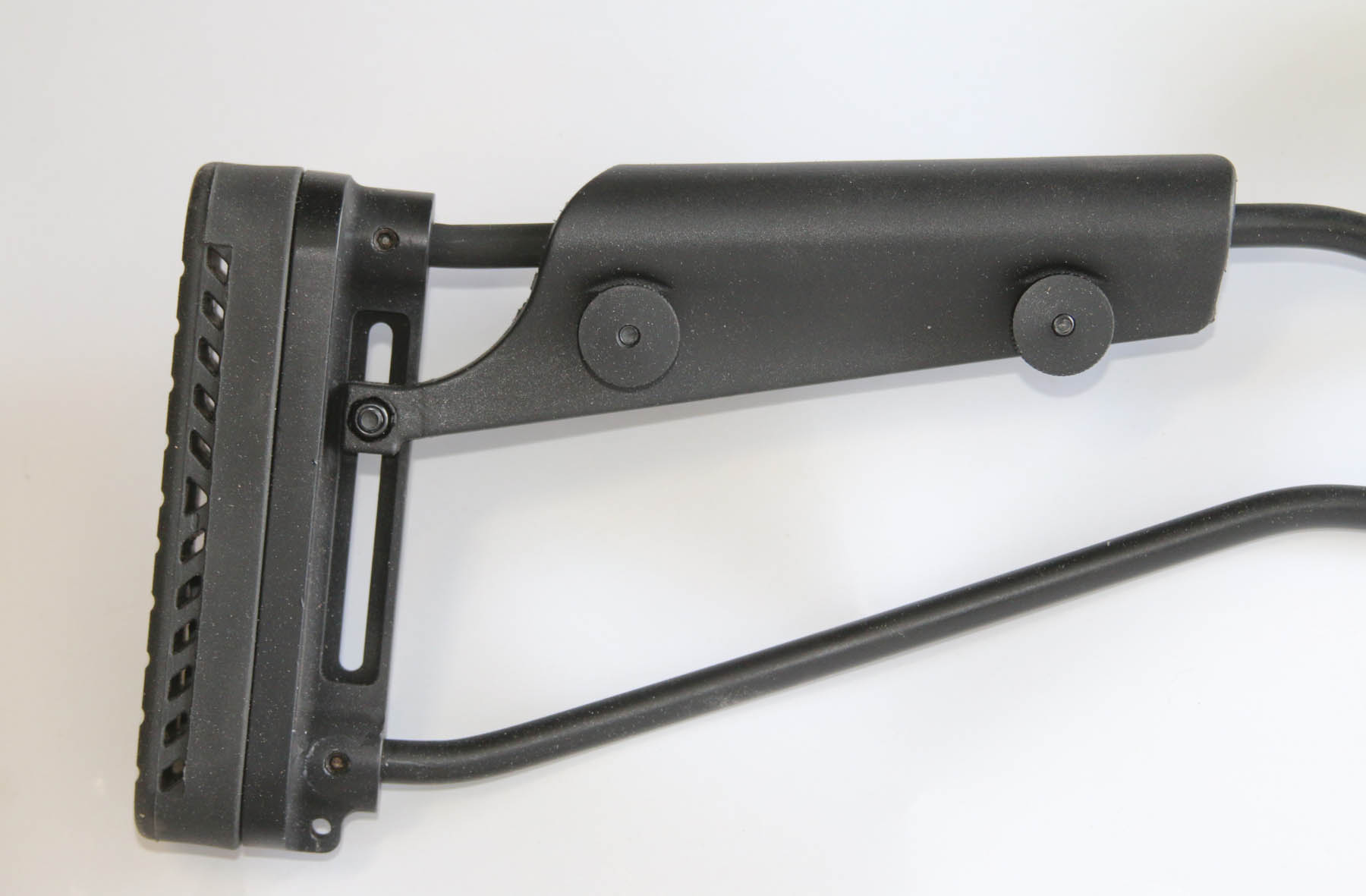
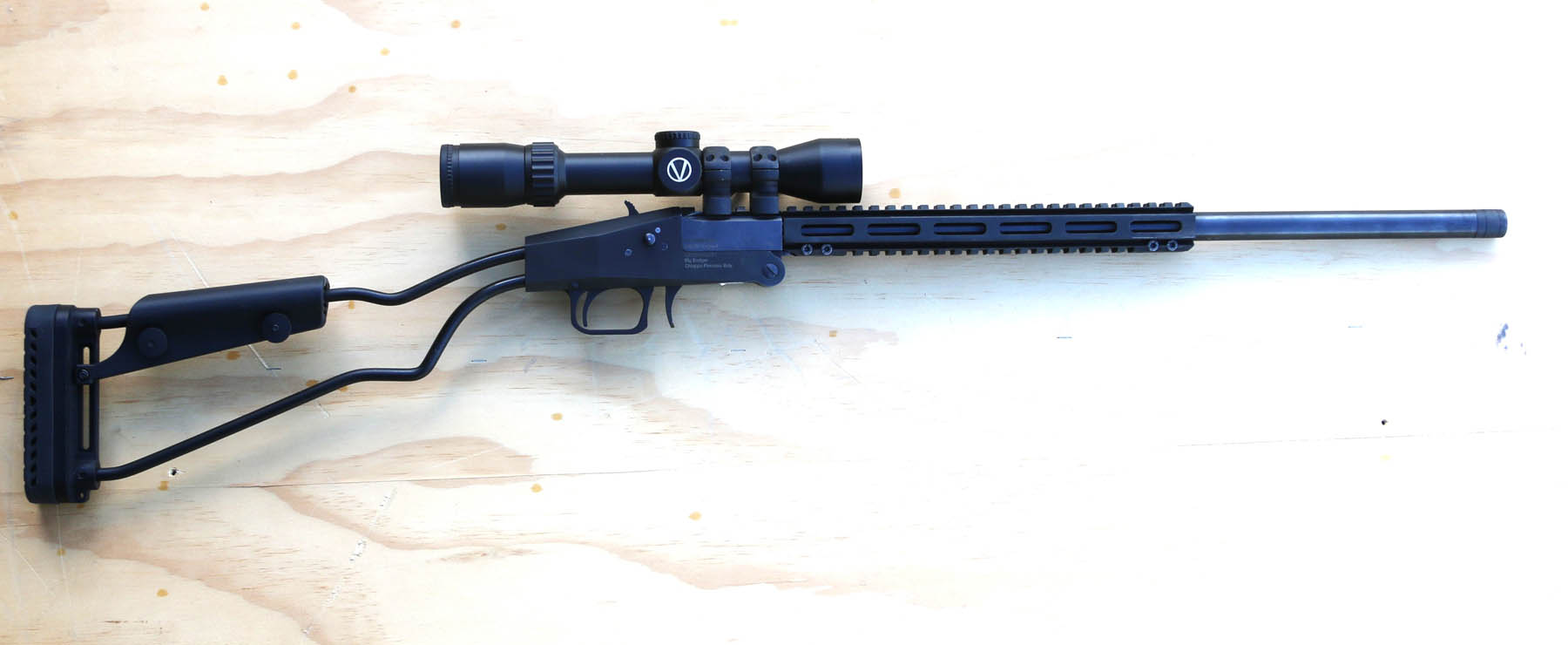
The Big Badger was introduced last year available in .30/30 and .35 Legend rifle calibres, as well as a .410 smooth bore, all of which have 50.8cm barrels. They’re not pretty. All three have a skeletonised, round steel buttstock with a very basic, integral pistol grip which slips into the back of the frame or receiver and is secured by a grub screw on the underside. It has a rubberised recoil pad and four-position adjustable comb to cater for individual face fit.
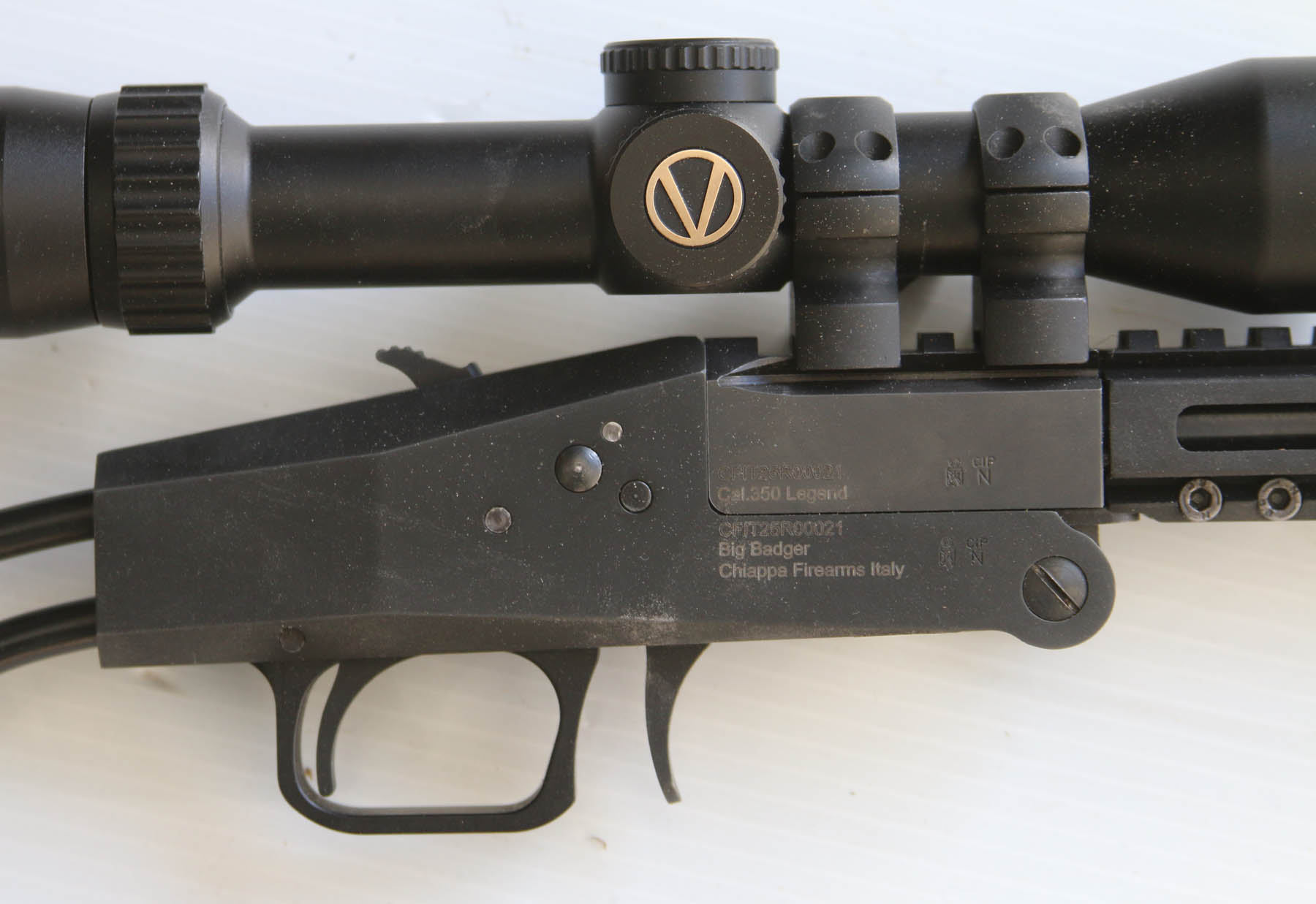
The steel receiver of the Badger houses the exposed hammer, trigger and springs that power them. There’s also the firing pin, a cross-bolt safety and trigger-shaped operating lever in front of the alloy trigger guard. At the very front of the frame, a through screw acts as a pivot for the barrel.
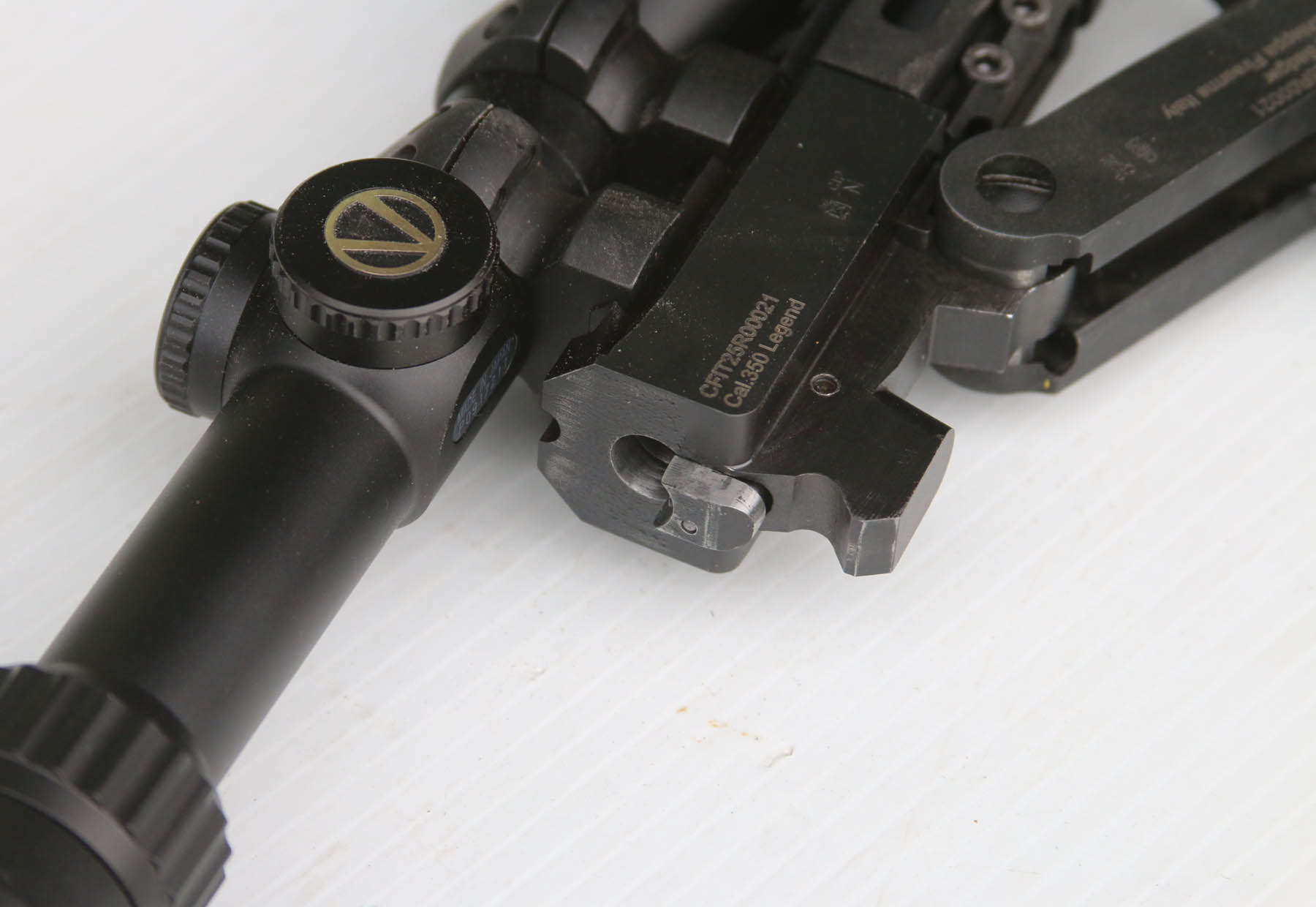
To break the action the operating lever is pulled back, releasing a locking bolt which mates with a lug on the rear bottom edge of the barrel. This allows the breech end of the barrel to swing away from the standing breech and expose the chamber. At the same time, any cartridge in the breech is extracted from the chamber by 4-5mm where it can easily be picked out with the fingers.
To close the action the barrel is simply lifted upwards and locked into place against the standing face of the frame. As the old saying goes, it closes like a bank vault though at this stage the rifle can’t be fired. The rebounding hammer is locked clear of the firing pin and the trigger disengaged. A manual crossbolt safety is also fitted.
To discharge the rifle the hammer must be thumbed back to full cock to engage the trigger before firing. A steel demi-block houses the chamber end of the barrel and its extractor, with an integral locking lug on the bottom edge below the extractor. Top of the demi-block is dovetailed to facilitate mounting of an optical sight, an absolute necessity given no sights are provided on the barrel.
The barrel is parallel with a diameter of 17.8mm and threaded at the muzzle for fitting a suppressor where such devices are permitted. A knurled cap extends beyond the muzzle, protecting the suppressor thread and crowning of the barrel at the same time.
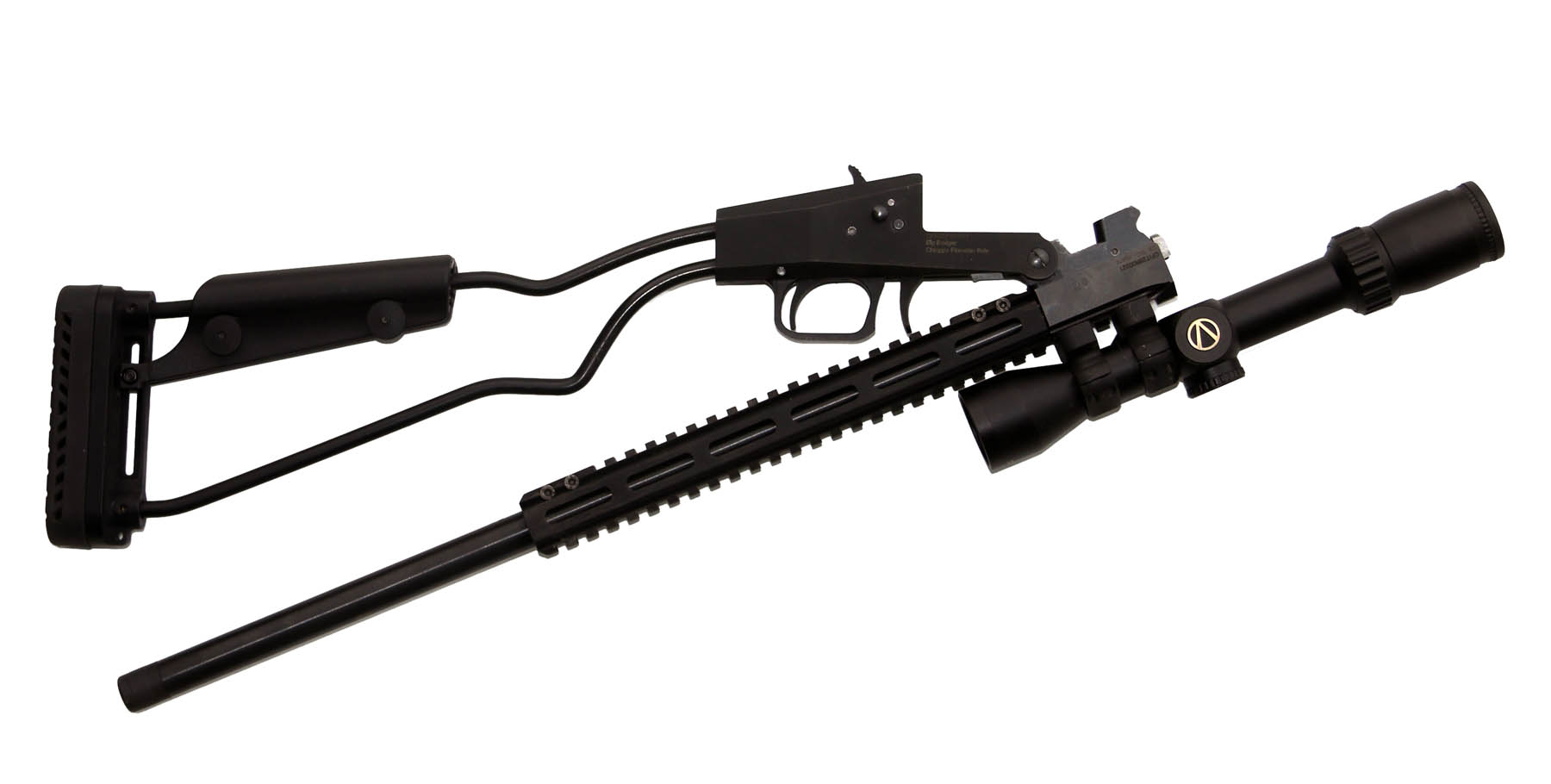
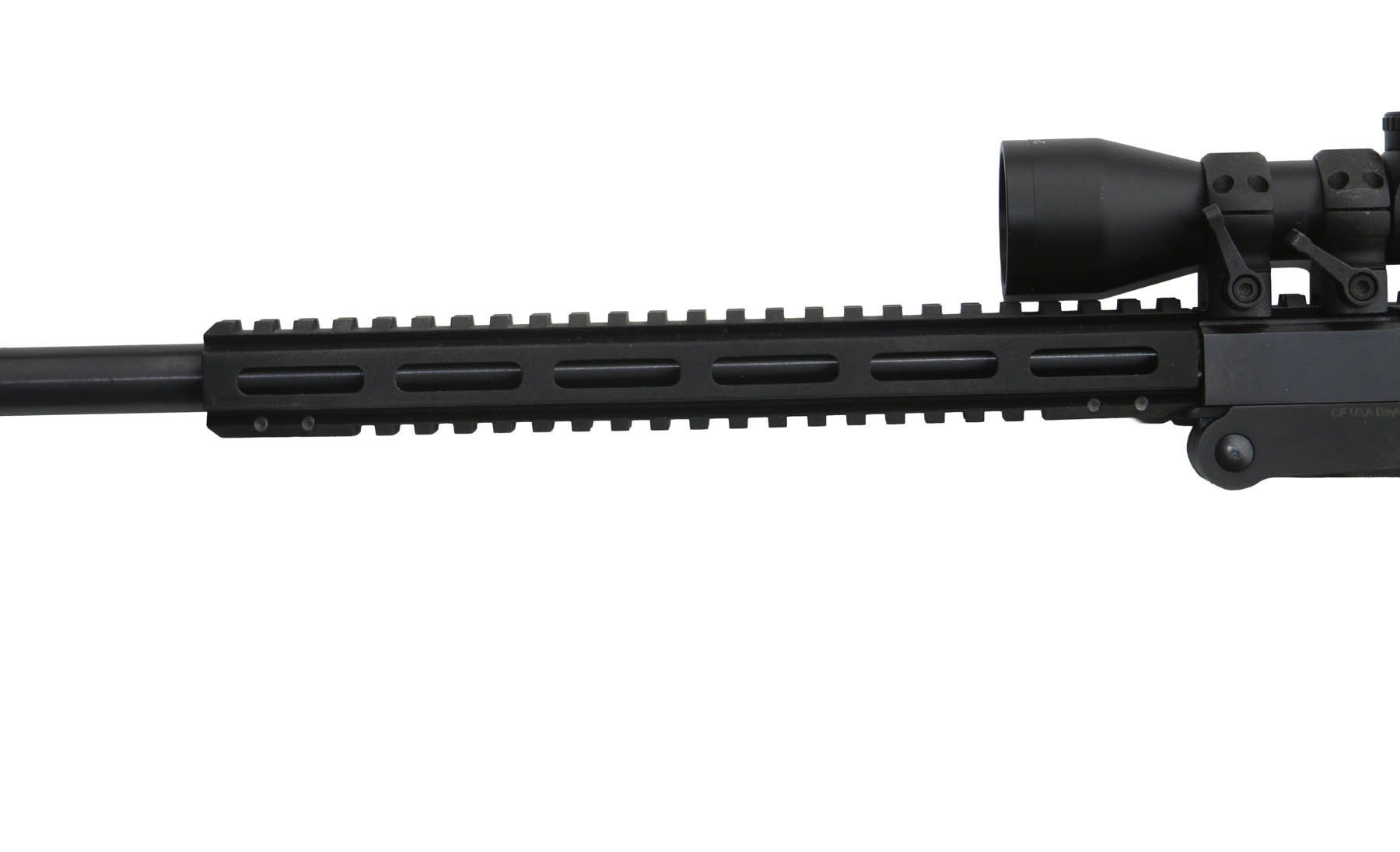
All metalwork on the rifle has a nice flat black finish, as does the recoil pad and adjustable comb. The plastic-feeling forearm (M-LOK or Modular Lok system) wraps snugly around the barrel and is secured by a pair of Allen screws fore and aft. It has Picatinny rails (Mil-STD-1913) top and bottom that match up with dovetails on the demi-block, which together allow the mounting of a range of sights. The sides have cuts to accommodate attachment of accessories such as a torch or sling-swivels as required.
While it can be taken down, in general use the Big Badger is touted as a folding firearm. The barrel swings down and back to lie under the buttstock, just like the small-bore poachers’ guns of yore which are said to have been carried concealed in a special pocket in a long coat.
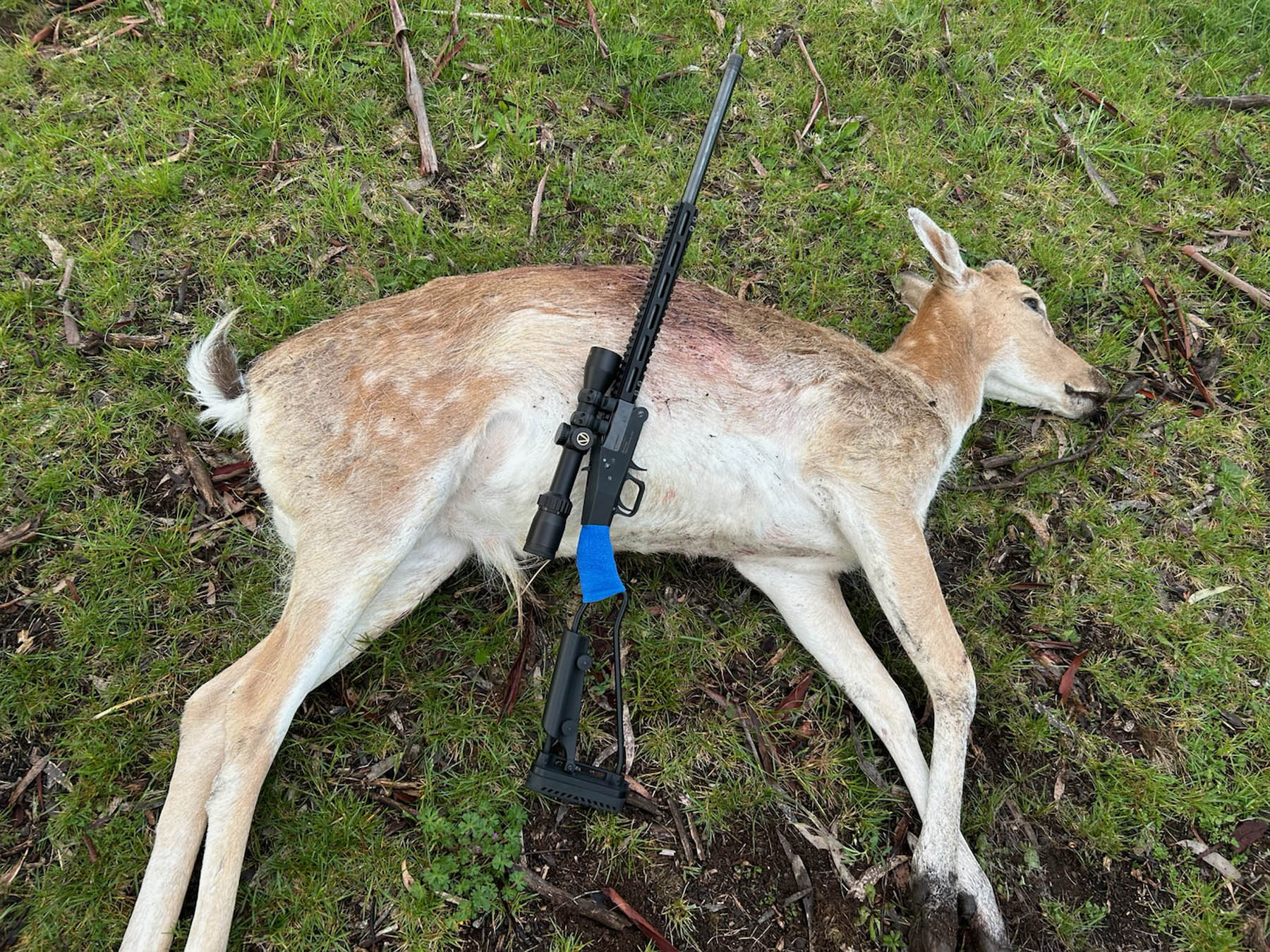
At time of writing, Bruce is still sorting out a suitable sighting system for the Big Badger. He’s not happy with the red dot sight he originally put on, which is why it’s wearing a 2-8×32 Vixen scope in the photos. This set-up is far from ideal as the rear end of the scope overhangs the receiver too much, making it vulnerable to being easily knocked out of alignment. It also makes it awkward to cock the hammer, a problem which may be resolvable with a hammer extension. A set of higher mounts is another option, as is a long eye relief scope with a smaller tube diameter, so it’s a work in progress.
For all of that the Big Badger resonates with me on several fronts, including the single-shot aspect already mentioned. It’s a solid rifle with a good heft and slightly muzzle-heavy feel, which I found a little surprising in a firearm of its weight and length. I’ve no doubt it’ll be useful for a variety of hunting scenarios as it shoots 50mm groups at 100m with factory loads, more than adequate for most situations.
While it’ll have limited appeal in some quarters, I believe the Big Badger will develop a following over time, if only because it’s so different and interesting. I could even be tempted into buying one myself, if I had the use for it.
The .35 Legend cartridge
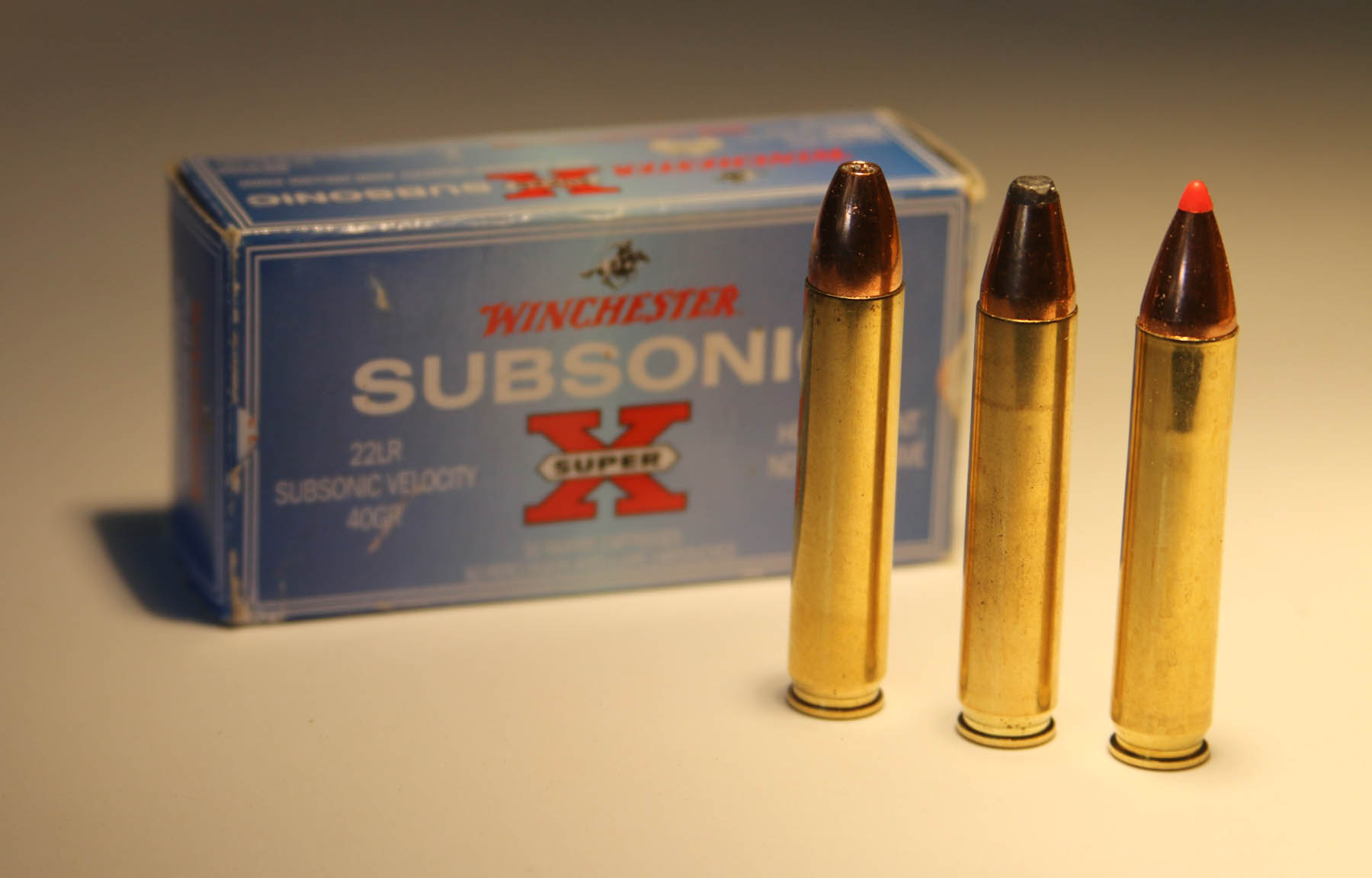
This was developed by Winchester Repeating Arms. Introduced in 2019, it’ll fit the AR-15 platforms and is legal for deer hunting in those US states where regulations require the use of straight-wall cartridges. It’s been touted as suitable for deer-sized game out to 230m, though I see that as a bit adventurous given its’ ballistics and looping trajectory. Around 130m maximum sounds more like the limit to me, especially with the energy levels the various loads develop.
As the ballistic chart shows, changing loads between brands and bullet weights without resighting would undoubtedly create problems, especially at longer ranges. As I write this, there are three different factory loads are available in Australia.
.350 Legend ballistics
| Winchester 255gn Open Tip | |||
| Distance | Velocity (fps) | Energy (ft-lbs) | Elevation (inches) |
| 0 | 1060 | 636 | -1.5 |
| 100 | 991 | 553 | 0.0 |
| 200 | 936 | 496 | __-33.6 |
| 300 | 891 | 449 | -106.9 |
| Federal Power Shok 180gn SP | |||
| 0 | 2100 | 1762 | -1.5 |
| 100 | 1793 | 1284 | 0.0 |