

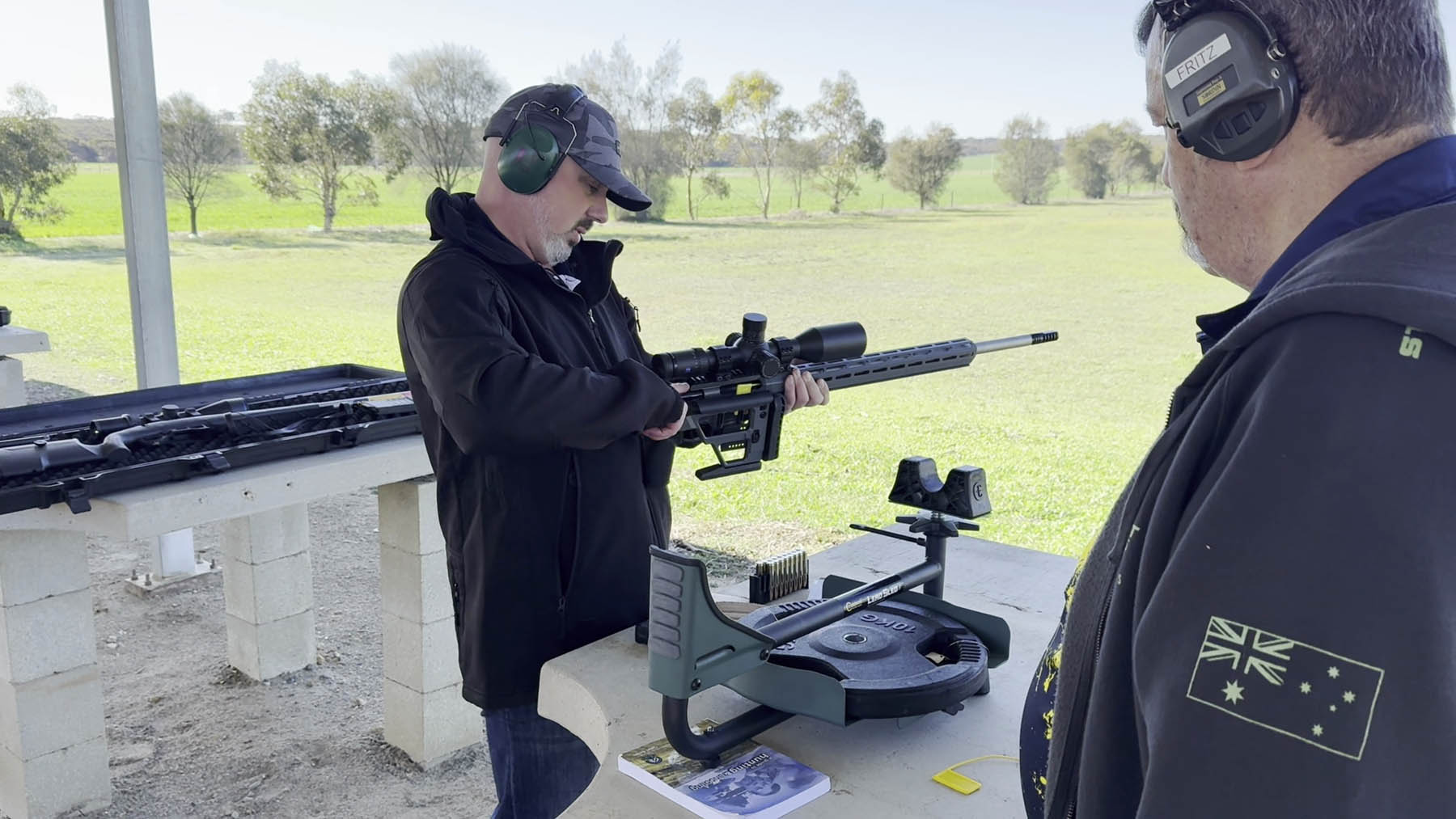
Julian Nuske takes us on a shooting journey of rediscovery
I hadn’t used a firearm since I was 12-years-old. Back then it was under the tutelage of my father who’d take us shooting rabbits and occasionally clay targets with my uncle in Bendigo, though I was usually only able to have a few shots at the clays. It was great fun and instilled a healthy respect for firearms, camping and genuine father-son camaraderie, though unfortunately this all came to an abrupt halt after the Port Arthur tragedy.
Now 50 and having been recently employed at the SSAA National office in South Australia, I was excited to begin the re-education process surrounding firearms, their safe usage and procedures. Not to mention the enjoyment of being involved with the vast amount of ‘boys’ toys’ now on offer which I never got to experience as a teenager and, I’m delighted to say, having my first reintroductory shots on the range at Monarto.
My how things have changed from those formative years. I thought, generally speaking, it would be similar to what I’d experienced in my youth, being able to shoot .22s, shotguns and maybe even a .223 which, with the enthusiasm I have towards my new vocation (which is high), would’ve been outstanding. Yet I was afforded an even greater opportunity, with the unexpected bonus of listening to and asking questions of experienced shooters on the day, who were all more than happy to share their knowledge.
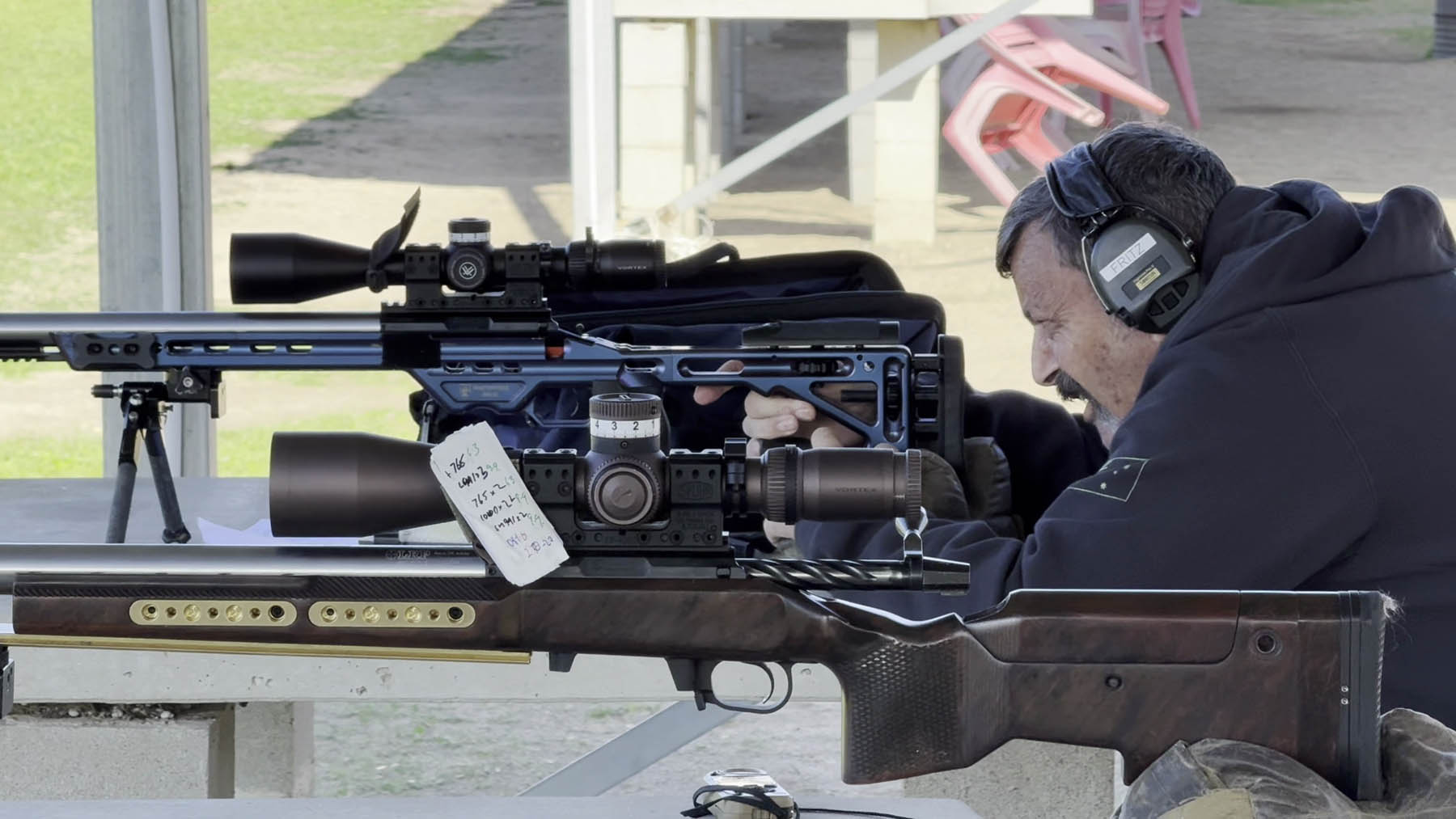
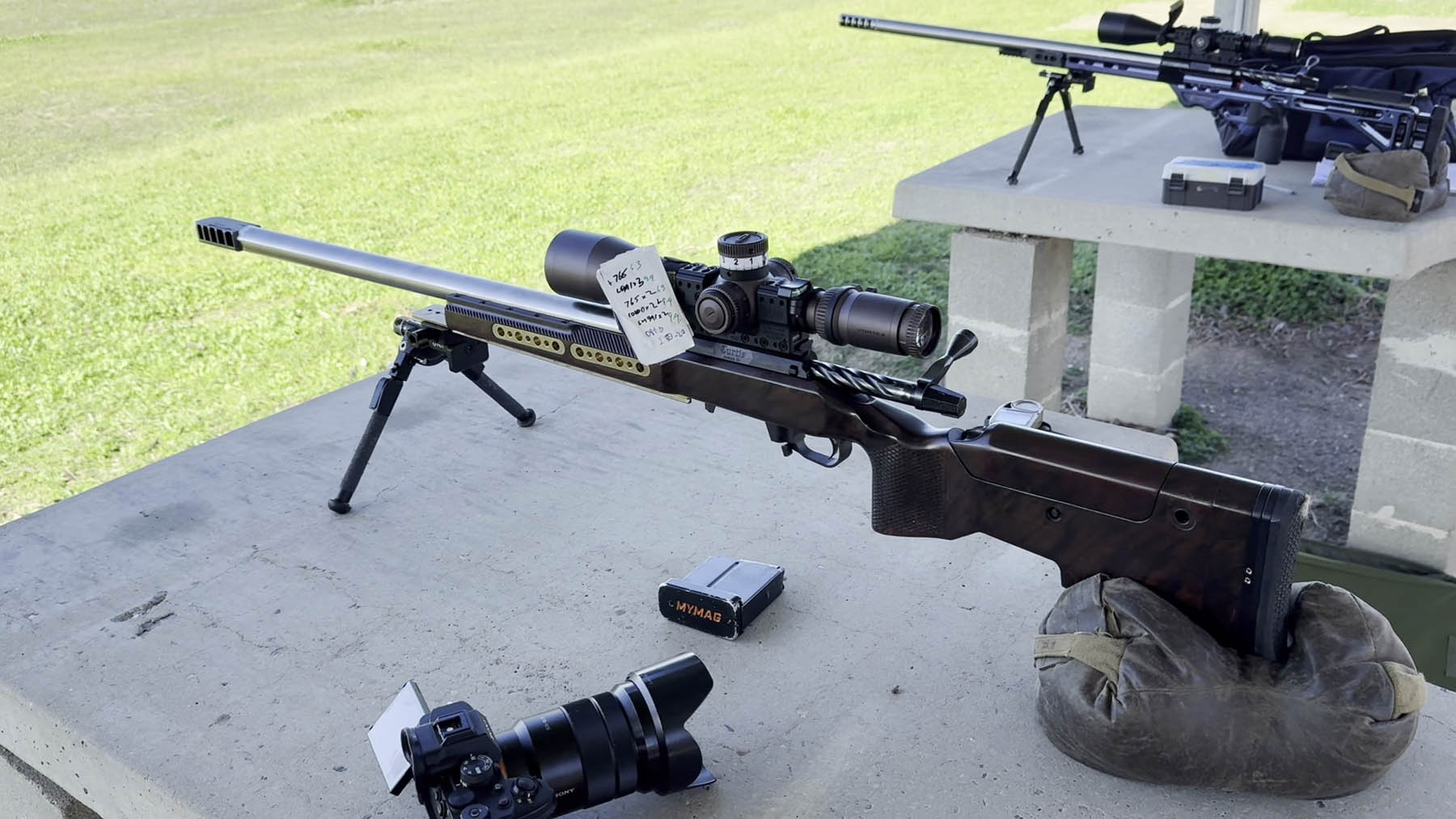
My SSAA colleagues Matthew Godson and Travis Allen had arranged for us to meet Peter Fritz, a precision shooter from the Monarto club, for a rundown on what’s available in the discipline of Precision Rifle and test a few firearms and scopes at the same time. His rifle was something to behold, completely customized and very heavy at more than 11kgs and, while he told me the specs, I wasn’t ready or prepared to take notes (I will next time). Suffice to say he as a marksman and his firearm were hugely impressive and, if you’d like to learn more about Peter and his discipline, you can find a video online at SSAA TV.
We were there to test three rifles, not as firearms necessarily for precision shooting, though from my limited experience they’d be a good starting option, more as potential hunting rifles for bigger game. Before we started the range rules were read out by ‘Fritz’ and, as a novice, I was impressed by the safety and confidence he instilled. I was equally engrossed on watching them put into practice and, as such, feel I should point out some which I deemed highly reassuring.
Firstly, a Range Officer must be present at all times when there are two or more shooters using the range and must be easily identifiable by the wearing of a SSAA Ranger Officer vest. To me this seemed a good rule, put into practice to make sure all the others are followed by the letter.
Shooting isn’t permitted unless all red flags are flying as required throughout the range. Again, a commonsense approach which easily points out to all the range is ‘live’. Further to this, no handling of any firearm is permitted on the firing line while there are people downrange. When moving around the range all firearms must be in an upright position, unloaded, action opened, magazine removed where possible and have an orange or yellow empty chamber indicator inserted.
There are many important rules to be adhered to, though as a beginner I thought it useful to at least point out these few, which not only put my mind at ease but would impress any newcomer to the sport. Safety’s not only paramount in this sport, it allows spectators and shooters with any apprehensions to feel at ease, as it’s taken extremely seriously. Believe it or not this adds to the enjoyment of the experience.
The first rifle to be used was a .308 Browning X-Bolt Max Competition with a Meopta scope (3-18x 56 SFP). I watched closely as Travis and Matt followed the rules and prepared the rifle for the first shot. Travis had it ready to fire, sighted it downrange, appeared to be comfortable and ready to go then . . . nothing. What happened? Several checks ensued including removing the bolt and checking the magazine and safety switch, resetting and still nothing.
After several minutes of head-scratching, even though it was checked over and over, the rifle refused to fire. Then our precision expert for the day pointed out the firing pin had been removed. This is by no means a reflection on the supplier, rather I saw it as a clear safety practice they obviously employ in their showroom firearms. There’d been a genuine oversight when sending it, though I’m confident we’ll review it in the near future.
Undeterred the boys moved on to the SIG Cross 24” .308 with Zeiss LRP S5 (2-25 x 56) scope. It was at this point I noticed the need for a product being used by everyone on the range except me, namely ‘smart’ earmuffs. I was using earplugs which, to be fair, worked well but didn’t allow me to hear them speaking. They were able to communitate freely but with the added advantage of having the sound of a shot suppressed without having to change a thing. Definitely a ‘must-have’ for shooting and I’ll be buying a pair before my next outing.
The SIG Cross was set up and, after my colleagues had fired a shot or three, it was my turn. The first thing I noticed was at 6.1kg it was heavy yet nowhere near the weight of our instructor’s rifle. I also had some trouble picking up a clear view through the scope. It was difficult for me to stop a ‘black halo’ from appearing and disappearing as I sighted up to take my first shot, someting I put down to inexperience.
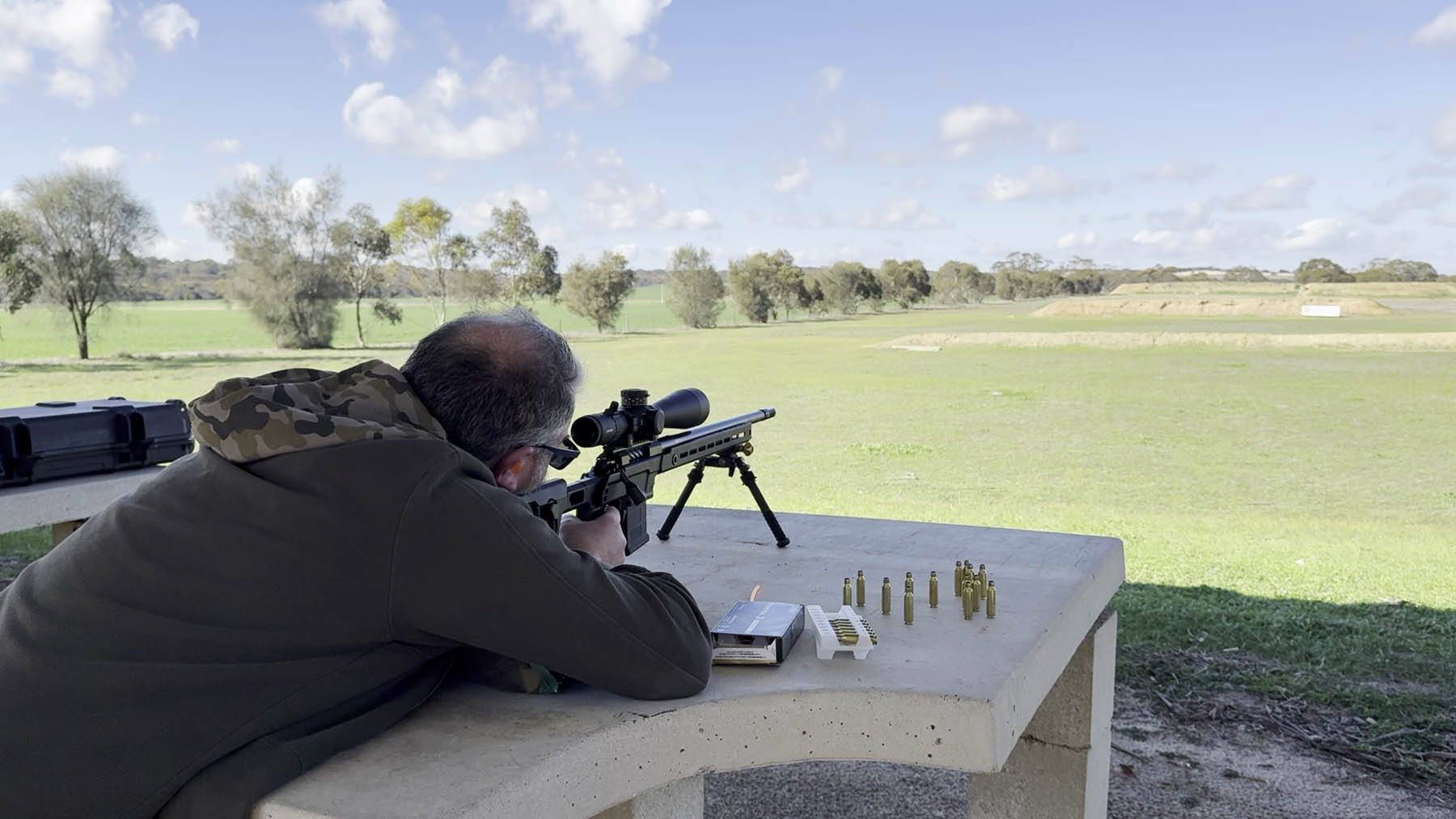
I then fired three rounds (not quickly) at a target placed at 100m. I hit the target twice with the two shots which landed being reasonably close. At this point I should point out this not a rifle review, rather the sharing of a novice’s journey which will hopefully help me become an engaged and learned contributor to the SSAA.
Next we had a look at the Solus 22” Competition rifle in 6.5 Creedmoor from Aero Precision with a Leupold Mk.5 HD 5-25 PR2-MI scope. Now this was fun. I put a few more shots through this one and was both surprised and delighted at how much I enjoyed it. I was aiming at a steel target at roughly 325m, took three shots (again, in my own time) and hit it once. I was also able to make better use of the scope which certainly enhanced the experience.
We then moved to a 500m steel target which moved if you hit it and fired a few shots each (I honestly felt this would be impossible). With expert help from our precision shooting guide to sight-in the scope for a shot at half a kilometre, I was actually ecstatic to land three hits in a row. Not in my wildest dreams did I think I’d be waking up that morning and, by the end of the day, be hitting a target (three times no less) at 500m. After the whole experience I’ve caught the bug and no mistake.
Now comes the research to figure out the most suitable rifle/scope combination to take the next step in my shooting adventure. It’s never to late to try something new in life, create fresh experiences and, most of all, have a lot of fun doing it. I’m enthusiastically looking forward to shooting more in the months and years to come.
- In our next edition I’ll chart my introduction to those all-important optics from an expert in the field.