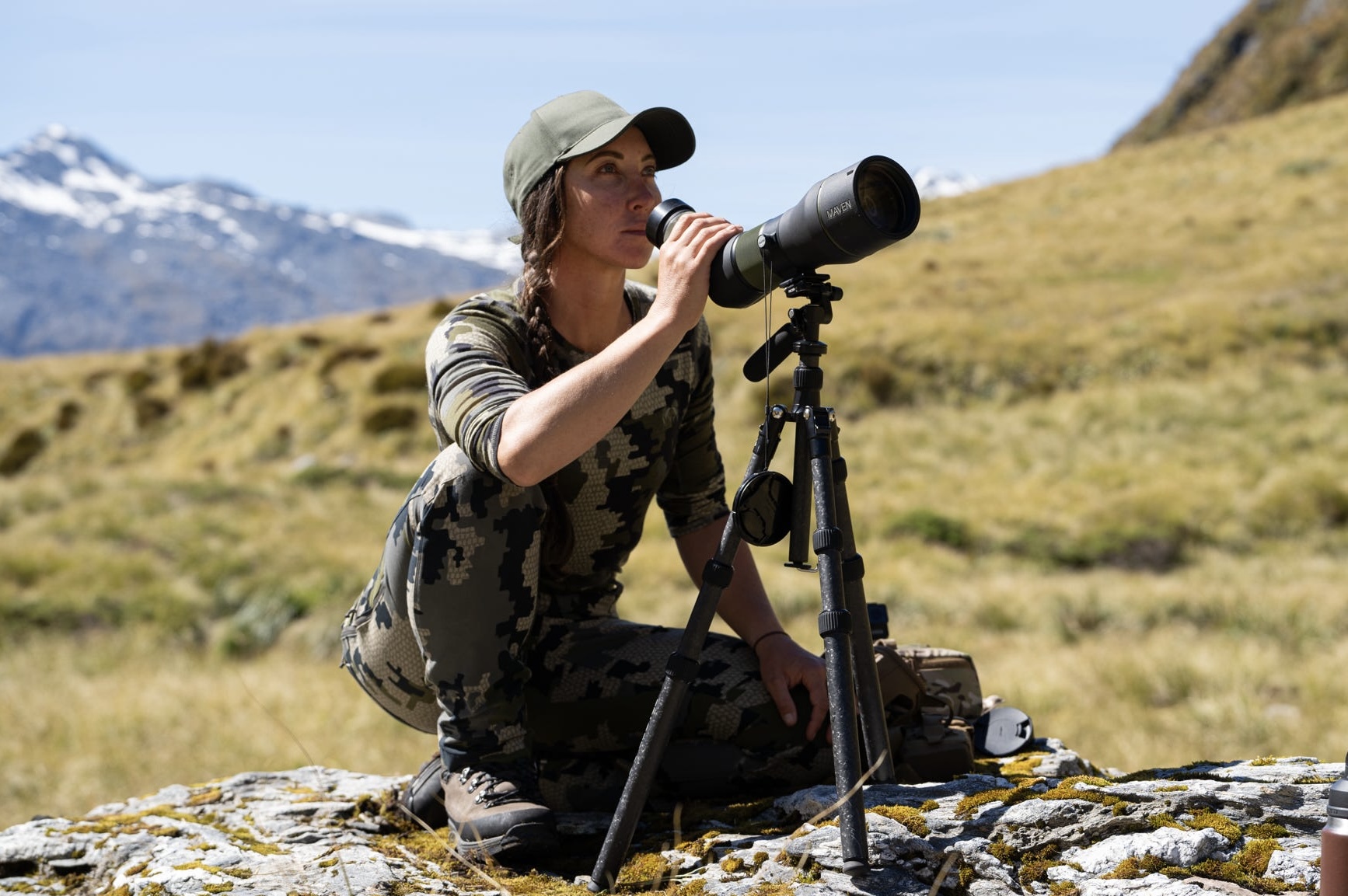
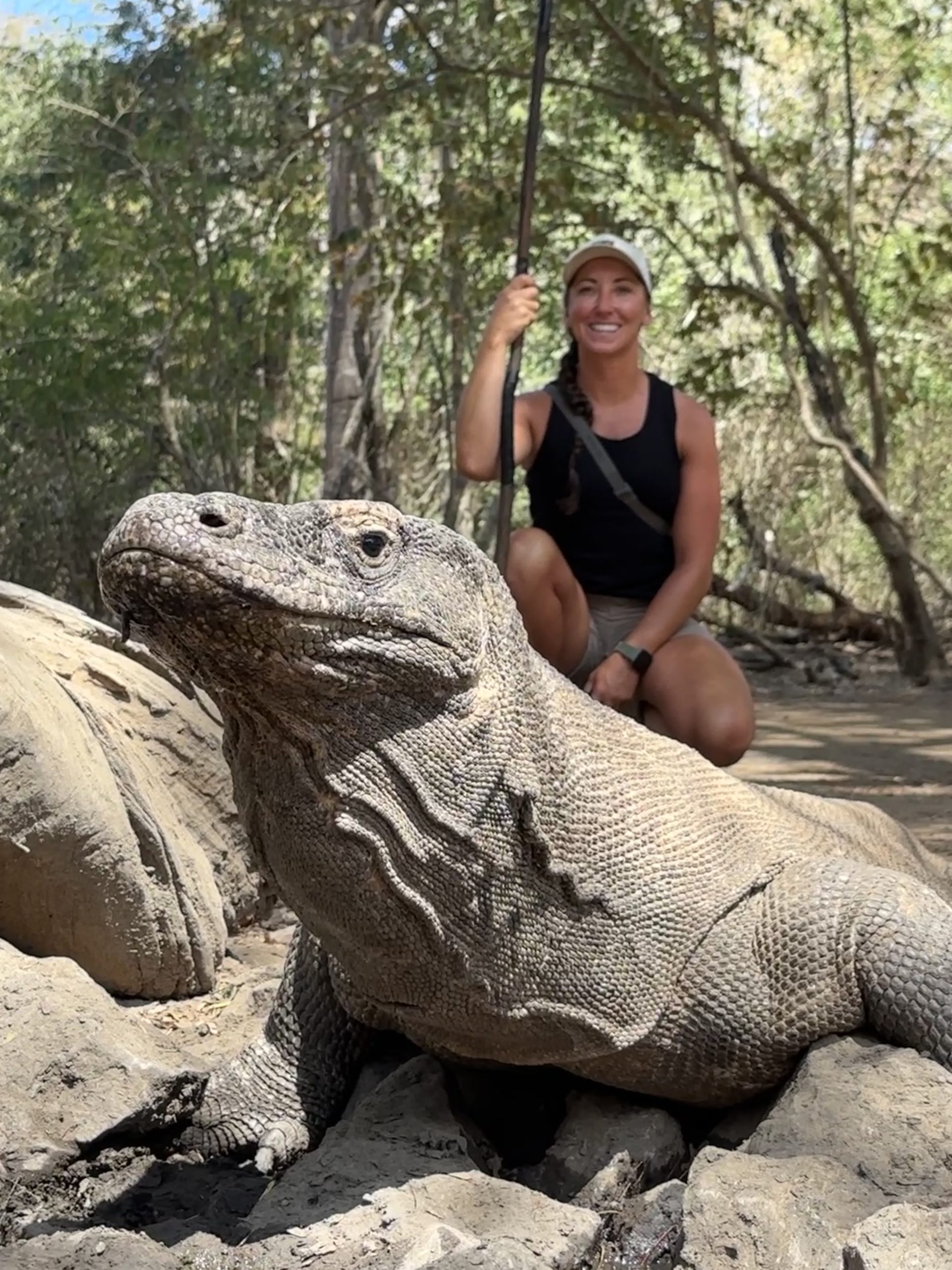
Karla Proud is an incredible woman, an expedition leader and naturalist who many will know through her Instagram profile @karla_inthewild and her time on TV series Alone Australia. Her passion for the outdoors has seen her develop a vast array of skills and knowledge through experiences such as being an exhibition leader, zookeeper, cameleer, working with crocodiles and flying helicopters. Karla spoke to Charlotte Fox about how she developed her skills and brand to having more than 20,000 followers.
Describe ‘Karla in the Wild’
I started posting on social media as a hobby and way of documenting a digital diary of my adventures. When I was living in the NT and working with saltwater crocodiles, I had a social media account under my name but wanted to create more of a brand. I think of my online presence as a resumé where people can see what I’m about or a future employer can say: ‘I want this girl on my team’.
You describe yourself as an expedition leader and naturalist. What does that mean?
I work with a number of companies as an expedition leader, including National Geographic Expeditions in the South Pacific. I typically look after the Kimberley region in Australia, as well as Indonesia, Papua New Guinea, French Polynesia, New Zealand and Antarctica – we take people adventuring.
My job as leader is to organise where we go, what we do, make sure it happens and goes as smoothly as possible. The job keeps me on my toes where I have to be creative and provide high-end clientele with the standard of experience they’re expecting. I also have a team of naturalists I organise including an ornithologist, botanist, geologist, culture specialist, photographer and videographer.
How did you build skills to lead expeditions?
I developed a love of animals at a young age from my family and got into wildlife from there, including wildlife rescue as a teenager. I studied zoology and did zookeeping for the first five years of my career. As for survival and bushcraft, that knowledge came much later. Bushcraft I got into recently from travelling through remote villages with Nat Geo and seeing how people in Third World countries live off the land. I’d see communities where they live wholly and solely through catching their food every day.
I had my introduction to Australian indigenous culture and bush tucker in 2012 when I started travelling and was living in Uluru and working on a farm running camel tours. A guy named ‘Frog’ introduced me to eating kangaroo tails and pigeons and animals you could trap. He was nicknamed Frog as he was a great swimmer but terrible runner. We were watching pigeons and he said: “These are really good eating. Fatten them up then call me and we’ll catch them and eat them.” So I fed them up for a couple of weeks then Frog and I cooked them underground along with a kangaroo tail. I remember thinking this is the coolest thing and I want to get more into learning to live off the land.
What have you learned from indigenous communities?
When I visit them I spend more time with women, so I experience more skills related to gathering, bushcraft survival and what fruits, berries, seeds and nuts you can and can’t eat. I haven’t been hunting with men in these tribes and I’d love that opportunity.
Is a nomadic lifestyle in the nature of your work?
A lot of my work for the first 10 years was seasonal where I’d go somewhere remote in the NT or Kimberley and stay for six months. When the wet season came I’d have to move and start a new job, which I love as it meant it was my next adventure. I’ve been in that mode for so long that even if I do have a job that runs all year, after six months I’m ready to go again as I’m so used to living like that. I’ve been working on expeditions for three years and when I’ve completed one, I come back and pick up my vehicle from wherever I left it and visit friends, go bush then go off to work again.
How did you learn to hunt?
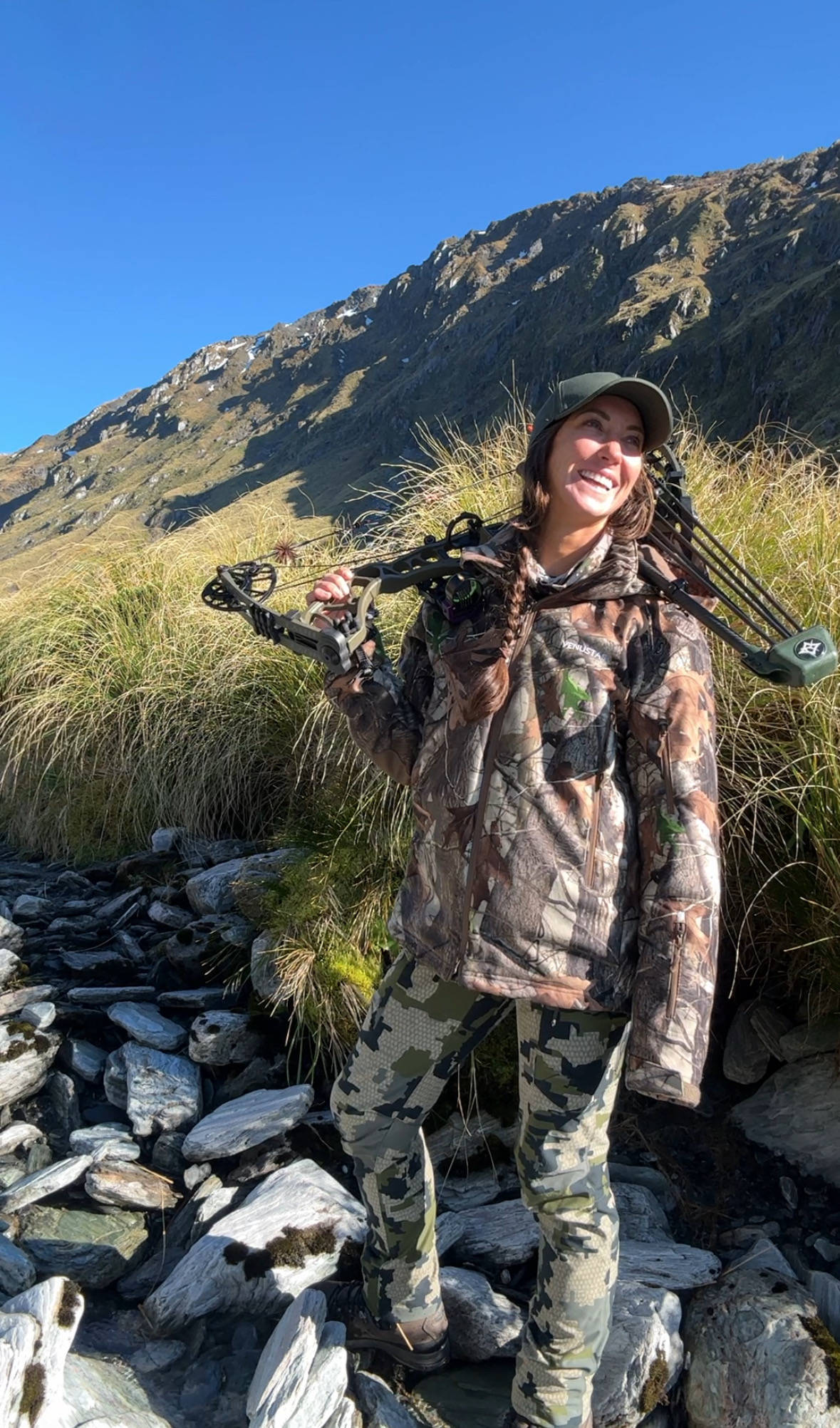
I got into bowhunting as it was part of my ambition to be able to live off the land. I also like the primitive aspect of being able to tap into how your ancestors lived. My father would rifle hunt growing up but stopped when we moved to the city, so I reached out to people I follow on social media. They included Adam Kavanagh who’d been on TV show Naked and Afraid, as well as Sarah McDuffy (profiled in our September edition).
What you enjoy most about hunting and shooting?
Feeling that connection to the environment and the process, while knowing where my meat comes from. I like to know an animal has lived a wild life and not been fed grain in a stockyard. It’s the holistic experience of being on the land, in tune with yourself and the animal and harvesting meat you know is as organic as possible. And the added benefit of helping eradicate feral species.
And your most memorable hunting experiences?
My most memorable and humbling trip was to New Zealand with Sarah McDuffy and a bunch of other girls. We had two from the US, two from Australia and two Kiwis on the west coast of the South Island. We took a helicopter into the mountains which was way colder than I anticipated. Normally we hunt in pairs but we went solo this time, a first for me. It was a great opportunity for me to hone the skills I’ve been taught, connect more with myself and really be present in that environment.
What message are you trying to convey on social media?
I wanting to encourage women to get more into hunting and use it as a mechanism to build confidence. I also want to help remove the stigma attached to hunting through social media. Because I’m an animal person, I work for National Geographic and I’m female, that’s a wonderful opportunity to open people’s minds and help close the gap between perception and reality.
How did you amass more than 20,000 Instagram followers?
It’s grown organically as I’m not an influencer or content creator. Some people suggested I start a YouTube channel but I don’t want that. If I can document my life as I’m doing it and that interests people I’m all for it, but I don’t want social media to change my lifestyle. I’m also quite reluctant in relation to endorsing brands. I have a very small pool of those I work with and they’re products I generally use.
Do you encounter any negativity from your online presence?
I’ve encountered some with people questioning how I can be an animal lover and also a hunter. I’m also careful that when I do post about hunting, I give a warning like: “I’ve been on a hunting trip so the next few posts are about animals I managed to bring home.”
You’ve also been on TV shows including Alone Australia. How was that?
That’s essentially 10 people dumped in the wilderness. You have 10 items and the clothes on your back and have to survive through building shelters, trapping food, finding water and being in the elements, all while documenting the experience. It’s the most difficult test I’ve ever had but I’d do it again in a heartbeat.
How did you find out about Alone Australia?
I was contacted via my socials to see if I was interested in applying but was already involved in Million Dollar Island, another survivor-based show. When season three came around I was keen to apply and was selected. I loved the idea of the program and wanted to test my skills. I took way more from the experience than I could’ve imagined including a lot of personal growth.
Did you spend much time thinking about how the others were getting on?
It crosses your mind as you don’t know how you did until the show goes to air. That’s when we find out where we placed as only the winner knows they’ve won before then. In scenarios like a downpour you start to wonder how everyone else is faring, if their shelter’s been washed out. Or if you haven’t caught fish for days, is no-one else catching fish or am I doing something wrong?
You had an eel incident one day. Can you describe it?
It was delicious. The first one I caught was massive and slimy and I was thinking: “I don’t even know what to do with this as I’ve never caught an eel before”. I used the lid from a cast iron pot to fry it up and because it’s such an oily fish, the skin went crispy and the flesh was beautiful. I wasn’t sure if it was tasty because I was so hungry but when I came off the show I tried it again and it was still delicious.
Before you tapped out did you feel a tug back to humanity and want to be around people again?
I thought that would be my strength and it wasn’t until about week four I started to really feel I didn’t want to be alone any more. Because my job is extremely social, looking after people on expeditions, when I return to Australia I go hiking, camping and fishing on my own to recharge.
I was stuck in that habit for so long I’d segregate myself from birthdays, barbecues and other social events. On Alone, I realised I’d been so focused on connecting to the land and nature, I forgot to connect with the people in my life. Since finishing the show I’ve stayed true to my word to reconnect and don’t think I’ve done anything solo since.
On the show you lost a lot of weight, lost hair and were hungry. Is that what made you tap out?
It was out of my control. Apart from the day where I ate fiddleheads and was sick, I was having so much fun. Once I reached day 30 and ran out of food, something changed my mindset. I started to plummet and think: “I’m cold, hungry, it’s raining and I’m sad.” I didn’t want to feel like that and as I’d lost so much weight by that point, I knew I couldn’t win. Yet I took everything out of the experience I wanted and have no regrets.
Do you have a quote that resonates now you’ve finished the show?
Don’t be scared to fail as it’s not failure, it’s growth.
What does the future hold for Karla in the Wild?
I’m leaning towards bushcraft survival and hunting and spending more time in Australia to focus on those skills. I also want to improve my hunting and start challenging myself in different environments. I feel nature has a path designed for me already, so when opportunities come my way I’m open to them.