

John Denman cuts through the clutter to help with selecting a hunting knife
As long as we humans have hunted for meat, there has been a need for the means of processing it. Way back, sharpened stones were used, then flint was found to be able to produce a sharp edge when ‘knapped’ by some long-forgotten craftsmen. Bronze and iron followed, but it wasn’t until the forging of steel evolved that knives became closer to what we have today.
Choosing a good hunting knife can be a tough call for someone not too sure of what to look for. The term hunting knife is a bit misleading to begin with. There are a number of jobs your knife may be called upon to handle but mainly it will be gutting and skinning the game you’ve shot.
This generally sets it apart from say, a camp knife. For a start on a hunting knife the edge must be razor sharp, so you don’t use it for mundane tasks like whittling a bit of wood. Other considerations include the length of the blade, how the edge is ground, and the shape of the blade.
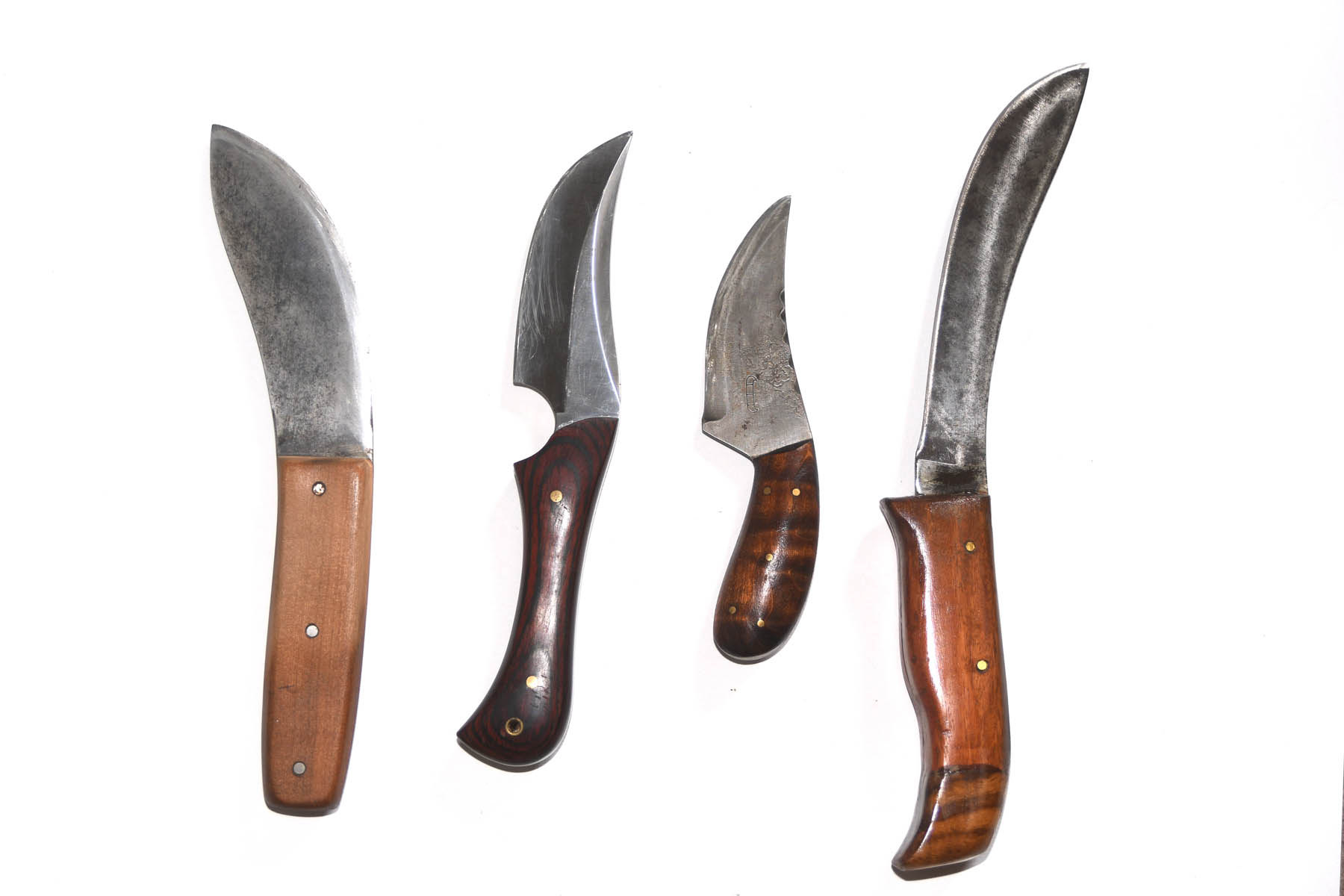
As gutting and skinning are two completely different jobs, they also require different attributes in a knife. My preference in a gutting knife is called a drop point. This tends to minimise the chance of the knife point snagging the gut bag. A skinning knife on the other hand will have a noticeably upswept blade.
So, your first hurdle is to sort through the bewildering selection of cutlery in your local gunshop. In this case, cheap is not always cheerful. The blade, and the steel it’s made from, are the most important considerations, and good steel isn’t cheap.
Nearly everyone goes for stainless steel blades, but there’s a lot of difference in the grade of stainless. Don’t scoff at carbon steel either. Yes, it will rust if you don’t care for it, but I’ve seldom ever seen a carbon steel blade that isn’t easy to get an edge on. What’s more, they tend to keep an edge well too. And with normal care they won’t rust. A light patina on the steel is okay and will help resist rusting.
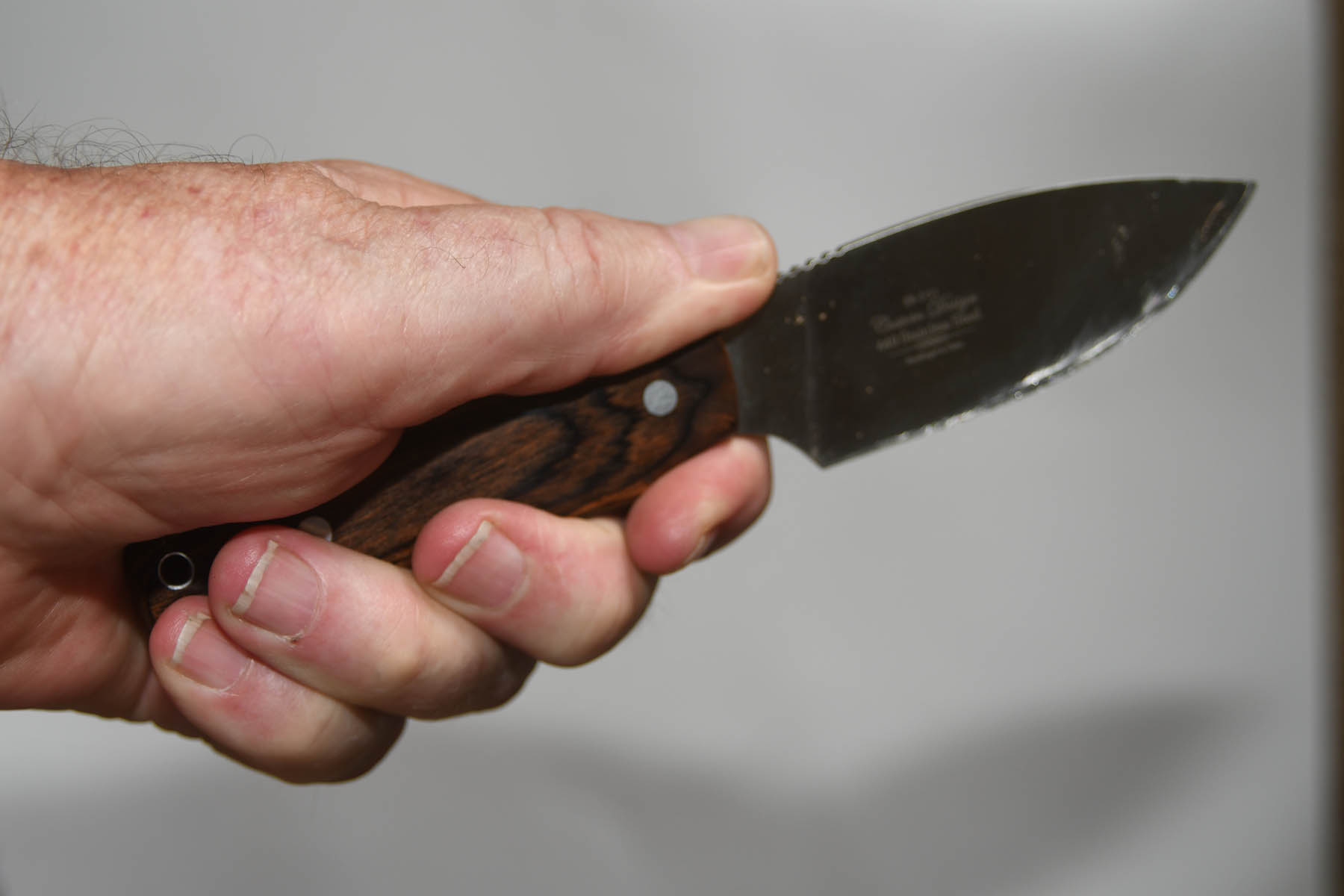
Holding a knife that you intend to buy will firstly bring your attention to the handle. It needs to sit in your hand well and provide a good grip, even when slick with blood. With your fingers just a short distance from a length of finely sharpened blade, you don’t want your hand to slip.
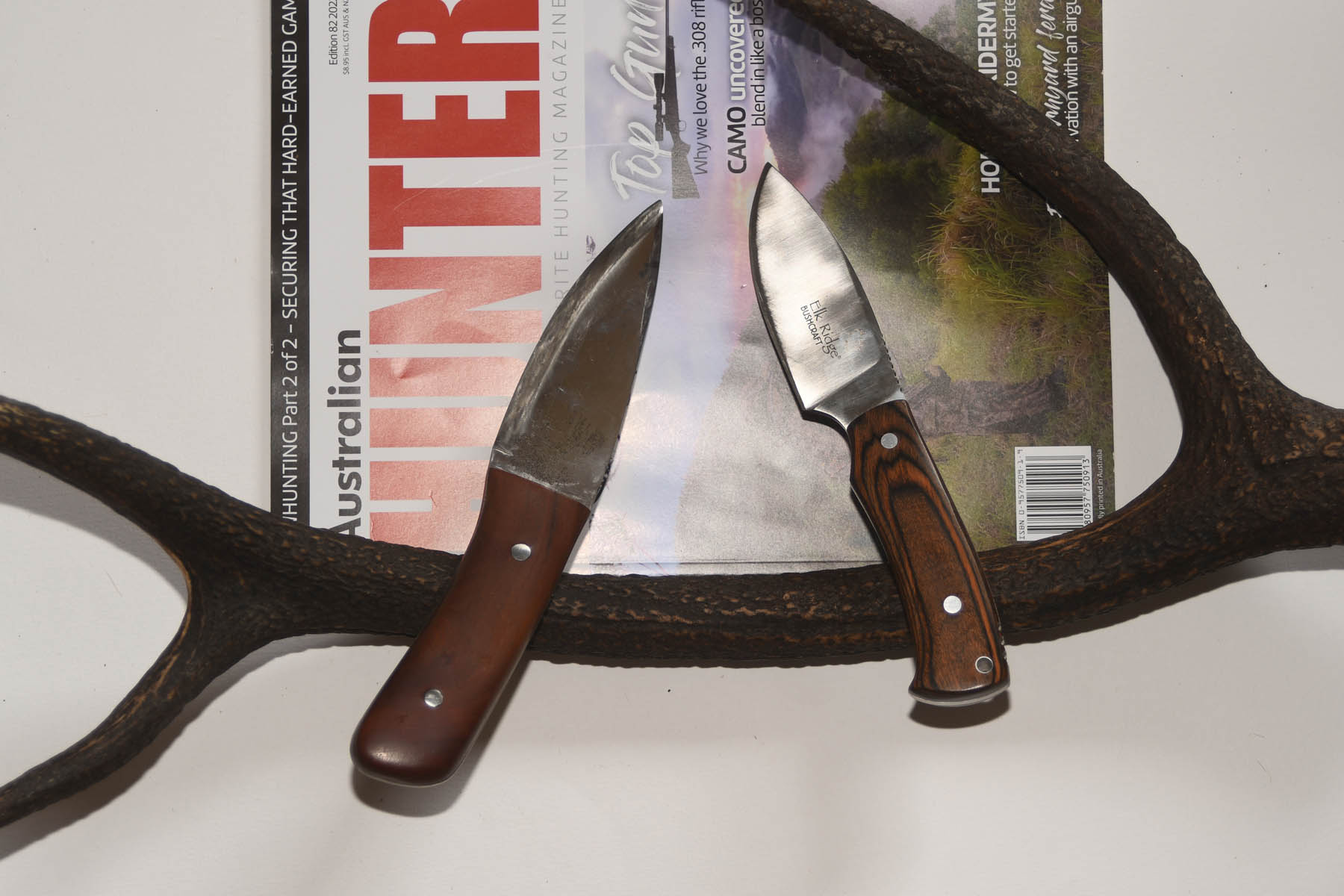
Handles, or scales, come in a wide variety of materials. Like much of our gear, synthetic handles are becoming popular, but well-designed scales made from wood or deer antler are still good, and ideal for the knife owner with a sense of the traditional.
As far as edges are concerned, there are basically two varieties: hollow ground or flat. Both have their adherents, but I prefer the flat ground blade. Hollow ground blades are no harder to get a good edge on, but where some clean slicing is required the flat ground blade slips through the meat a bit better,
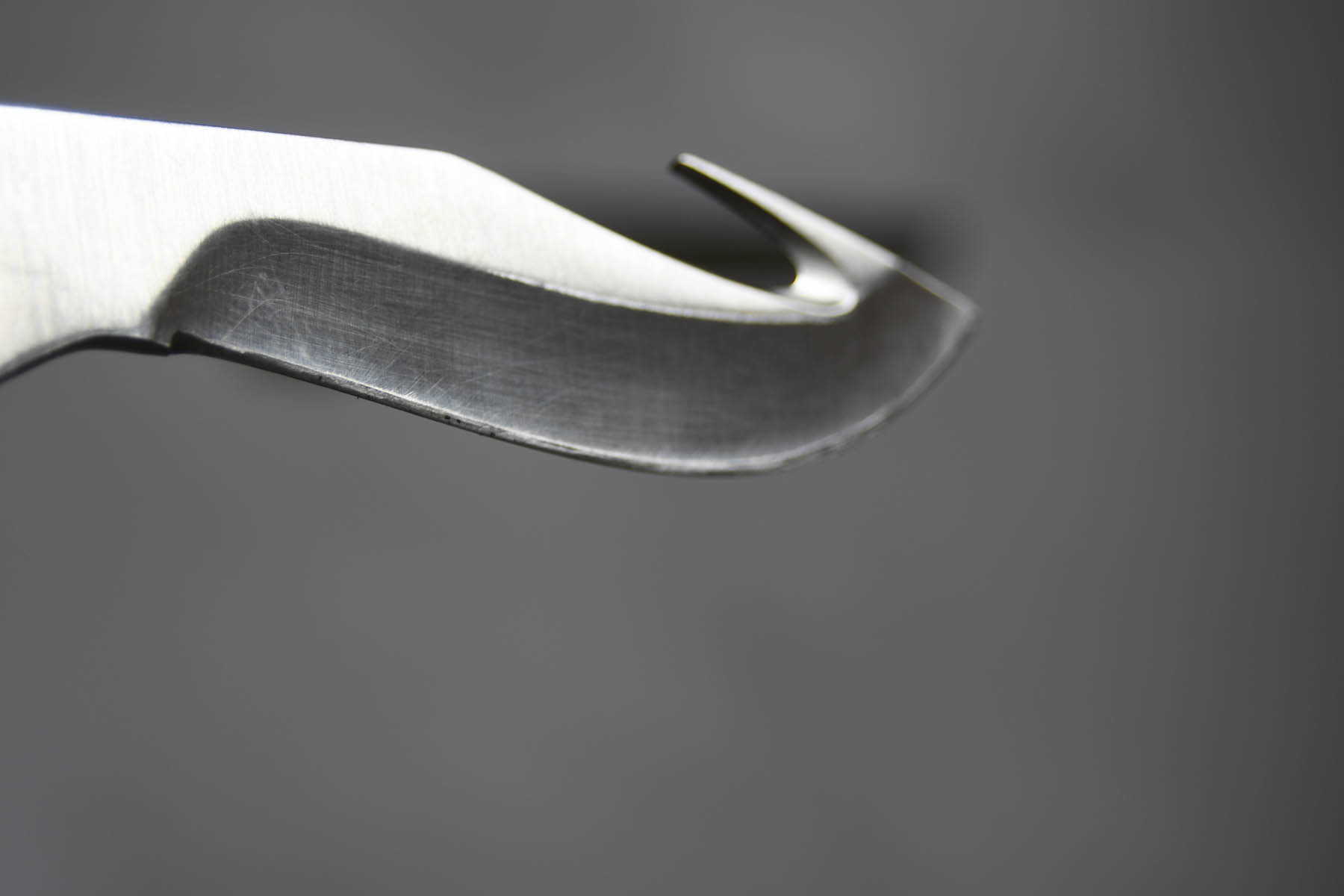
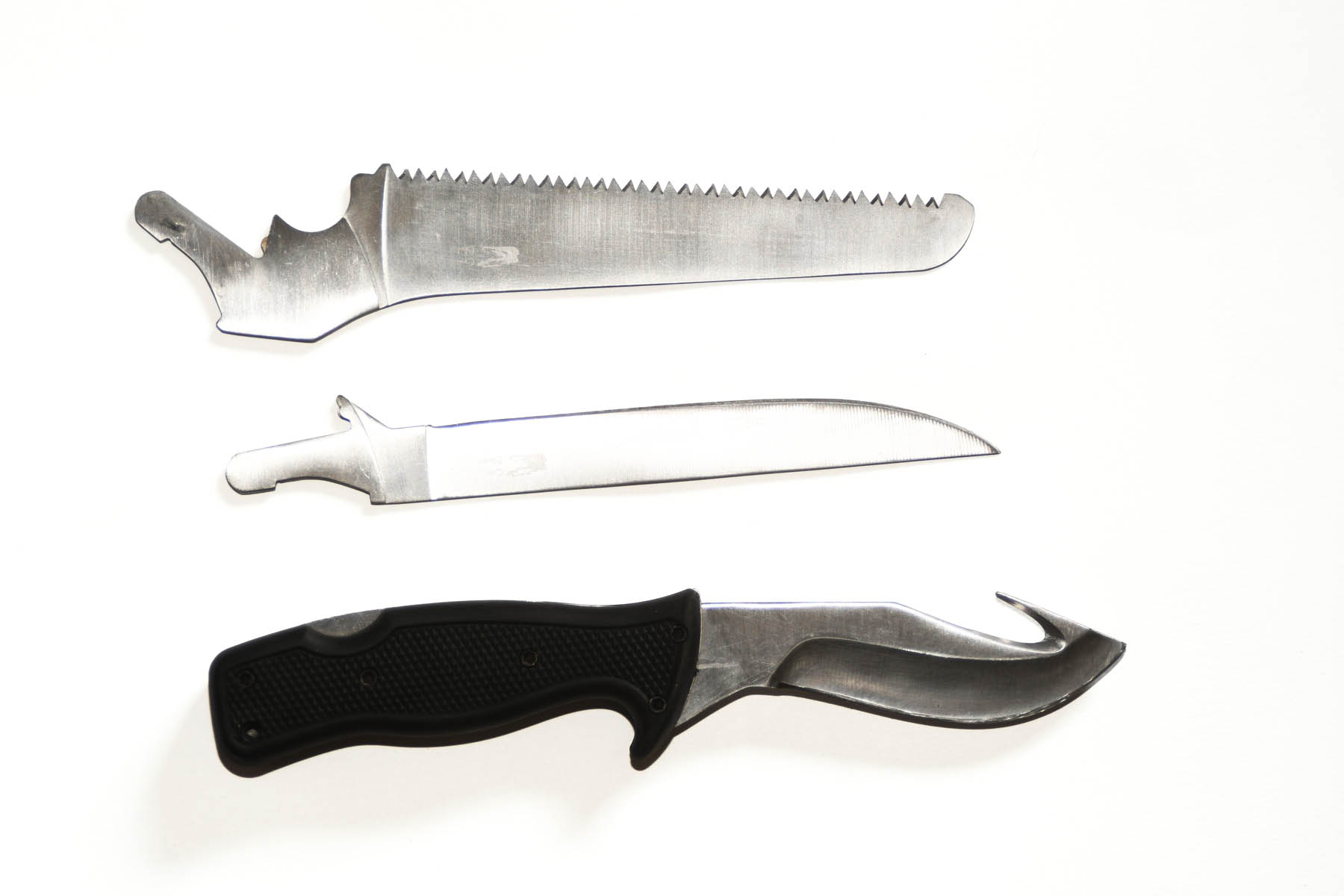
Also, hollow ground blades tend to be a bit heavier than flat ground ones. This makes them ideal if hacking through tough gristle or even light bone, but less suitable for more subtle tasks such as skinning. Another feature that’s mostly found on the heavier hollow ground blade is a gut hook. This can be a handy thing for running up the belly skin. The gut hook is designed so that it’s highly unlikely that the gut bag will get punctured.
So, you can easily find yourself carrying maybe three knives, which is a good reason to try and keep weight down. Although one decent knife can do most jobs, it’s not uncommon for a bit of a collection to take place. A gutting knife with a drop point and a good curve on the cutting edge will usually do both jobs. But if you don’t mind some extras, go for a gutting knife, skinning knife and maybe a lock blade for some smaller jobs or simply as a spare knife.
As I said, carbon steel knives will rust if not cared for. But then so will some stainless blades. There are numerous grades of stainless steel, but the two most of us will come across are 420 and 440 grade. On a quality knife the grade should be stamped on the blade. The one you need to look for in a hunting knife is the 440 grade. It has a .95 to 1.2 per cent carbon content and will hold an edge better than the 420 grade, which is softer and needs to be sharpened more frequently. The 420 grade is more often found in diving knives due to being more rust resistant.
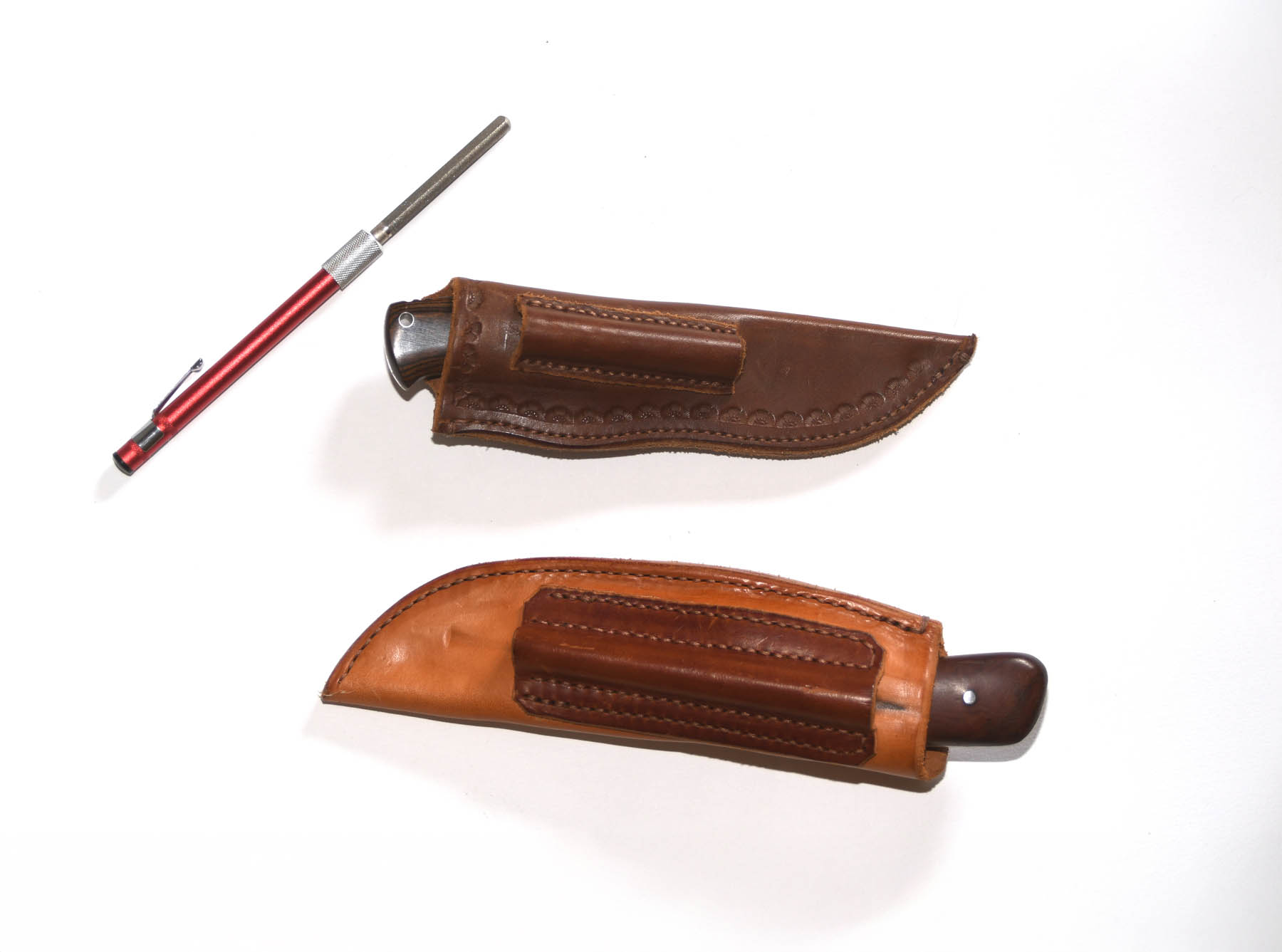
For a fixed blade knife, a decent sheath is pretty much essential. It’s a sad fact that not every factory knife has a sheath that suits it 100 per cent. The best sheath material remains leather, even though it doesn’t have the ‘tacti-cool’ look. A well-made leather sheath will be made to fit the knife, and when properly made will enclose the knife in a way that clips and loops won’t be needed.
I’ve found that if the original sheath doesn’t do the job, a good saddler or leather worker can fix it for you. An attached sheath for a small sharpening steel can be a good addition and keeps everything in one place. I almost never wear my sheath knives on my belt. When you wear a pack, even a light one, the knife can get in the way if your pack has waist straps. The knife is also less likely to be lost if it’s safe inside the pack.
As far as sharpening your knife is concerned, this is a skill that every aspiring hunter should acquaint themselves with. I realise there’s any number of sharpening tools around, call me old fashioned, but I still prefer a good stone. It may sound a bit gross, but I like to lubricate the stone by spitting on it. You can argue the health benefits or otherwise to your heart’s content, but I have yet to find a better way of getting decent edge on a knife.
Even a very fine stone will leave a few microscopic rough bits on the edge, so I keep a piece of wood with some fine leather stretched over it and strop the knife back and forth over the leather. I also scrape off the slurry on the stone onto the leather. It creates a nice fine medium to strop the edge with.
After the hunt, even before you get home, make sure your knife is given a good clean up. Blood will lodge in all sorts of places and giving the blade and handle a good scrub with fresh water means you won’t be pulling it out of the sheath on your next hunt covered in crusted blood, and probably stinking.
Before you put the knife away, give the sheath a rub down with some leather preserver like Dubbin, and sharpen the knife so it’s ready to go on the next hunt. Basically, you care for your knives just like you care for your rifle. Both are as important as each other to another successful hunt.