
A rain deer worth the effort
Mark van den Boogaart did it tough in this year’s Roar
Early afternoon, April 2025 and I’m loading the truck under a darkening sky as water-laden clouds sink ever lower. Cut to the following morning, before dawn and the tyre hiss accompanies the double-time beat of the wipers as they struggle to clear the rain. Leaning forward I peer through a persistently fogging windscreen, at the same time squinting in response to the bright reflection of the headlight-illuminated highway signs.
Why do I make such a journey? Red deer of course. I’m heading to the Brisbane Valley in pursuit of rutting reds on what has become an all-too-familiar boat-like drive north. Big rain has been the marker of my red deer adventures for the past four years. When I started hunting along the Stanley River 17 years ago, I don’t remember it being so wet.
As Dorothea Mackellar once wrote, it truly is a land of drought and flooding rain and the rhythm of boom and bust has rung true during my comparatively short time on this chunk of space rock. Furthermore my hunting, like the weather, has mirrored the cycle of boom and bust. My first year hunting The Roar on the new block was full of trumpeting stags, close encounters and eventually a deer on the ground.
It was so good I held fire, returning a week later to close the deal and I carried the memory and confidence of that year into 2023. Mike Tyson was quoted as saying everyone has a plan until they’re punched in the face and in that second year I took one right on the chin. The deer stayed high and I didn’t see a stag until May, up high and more than a kilometre away on a neighbouring block.
In 2024 I had access to an adjoining block and in early April the reds were roaring and the rain torrential. “Prudence is the necessary ingredient in all the virtues, without which they degenerate into folly and excess,” espoused Jeremy Collier. Heeding those wise words, I dropped the hammer on a Brisbane Valley roughie and got the hell out of there.
This year I prepared for rain and maybe deer, maybe not, either way my intention was boots on the ground. On arrival, the truck sloshed into the house block and turning off the headlights the darkness was complete, no stars, moon or other heavenly body visible under low cloud and rain. There’s a knack to readying yourself in the dark and the more time spent sorting in the comfort and illumination of home, the less likely you are to forget something when it matters most.
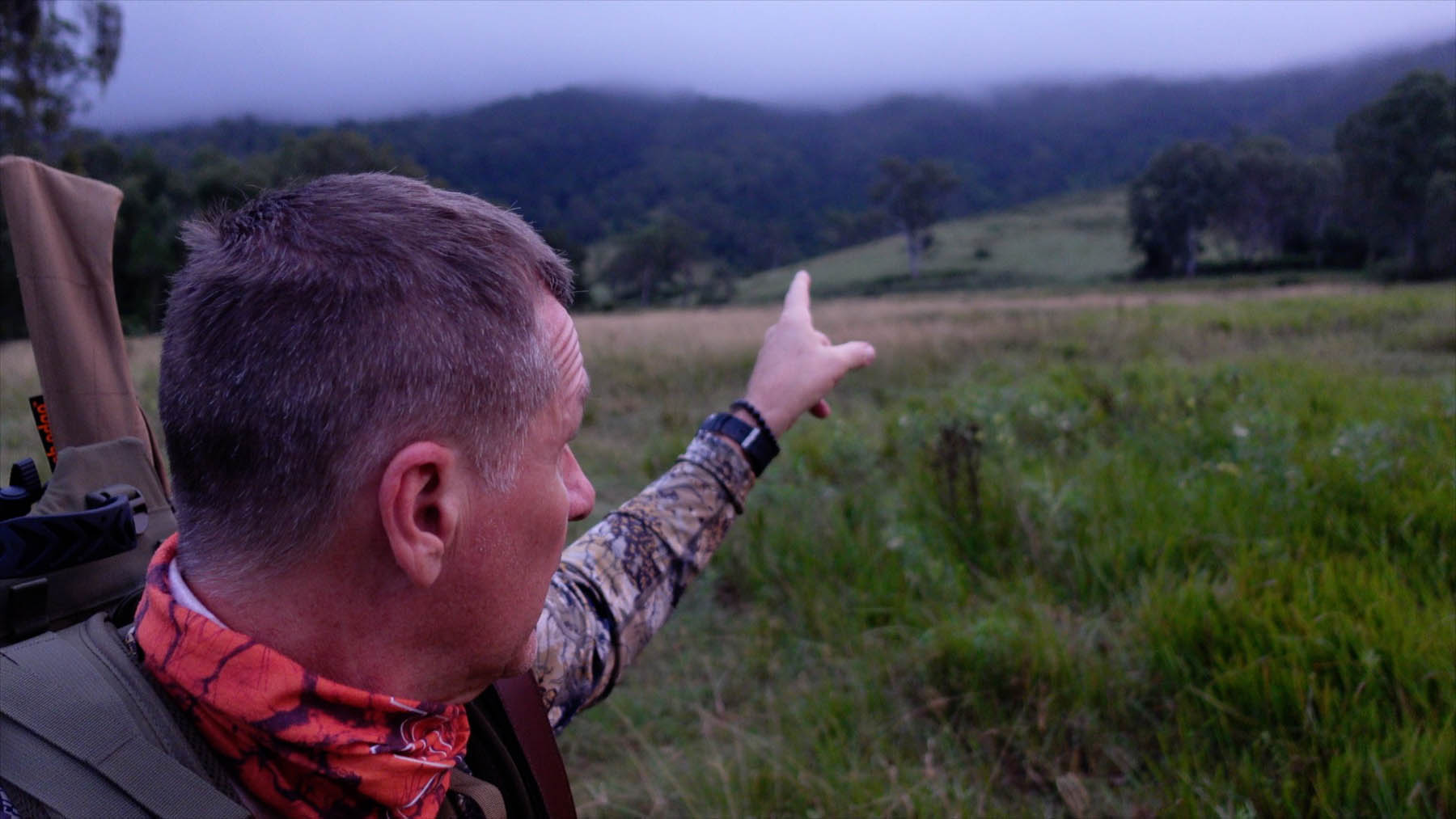
Good news was the rain had begun to ease as I passed Kilcoy and with first light 30 minutes away, I convinced myself things were looking up. A little later I crossed the first paddock. It’s completely open and yes, I have in the past unintentionally bumped deer in the opening minutes of a hunt. Standing there in very low light I heard a distant roar way up high on another block, possibly even in the forestry. With the wind in my favour I headed for the tree line and sound of the stag.
Reaching the beginning of what I call the bush block, the stag continued to vocalise and was duly answered by a challenger. The first sounded more mature, the respondent younger. It’s not an easy thing to describe but there’s a difference, not so much a lesser roar, just not as commanding. Sitting down about three-quarters the way on an opposing face, I listened as a third joined the conversation. While the first two were on the wrong side of the wire, number three sounded closer so time to get moving.
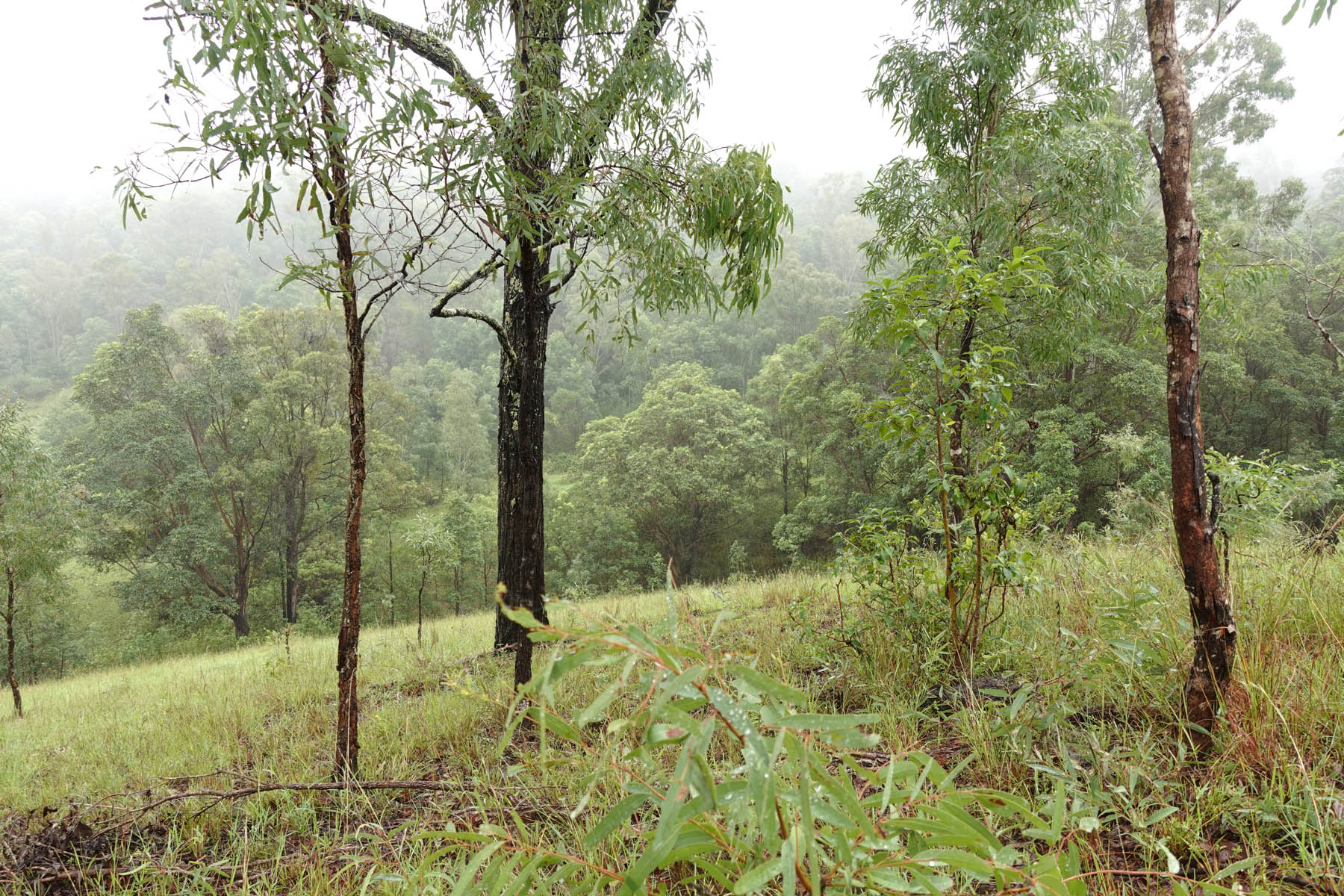
To avoid creating a silhouette I used the contours to gain elevation. It was a slow process and along the way I heard another two stags. In total all but one sounded out of reach and I started to wonder if it was 2023 all over again. Finally breaching the top of the gulley I crossed the doglegged fence line separating the two blocks. That much-repaired collection of bush-cut posts and wire marks a fundamental change in ownership, geography and my approach. Keeping with the prevailing wind I’d so far moved through, up and over a major gulley system and would now begin crossing a series of them.
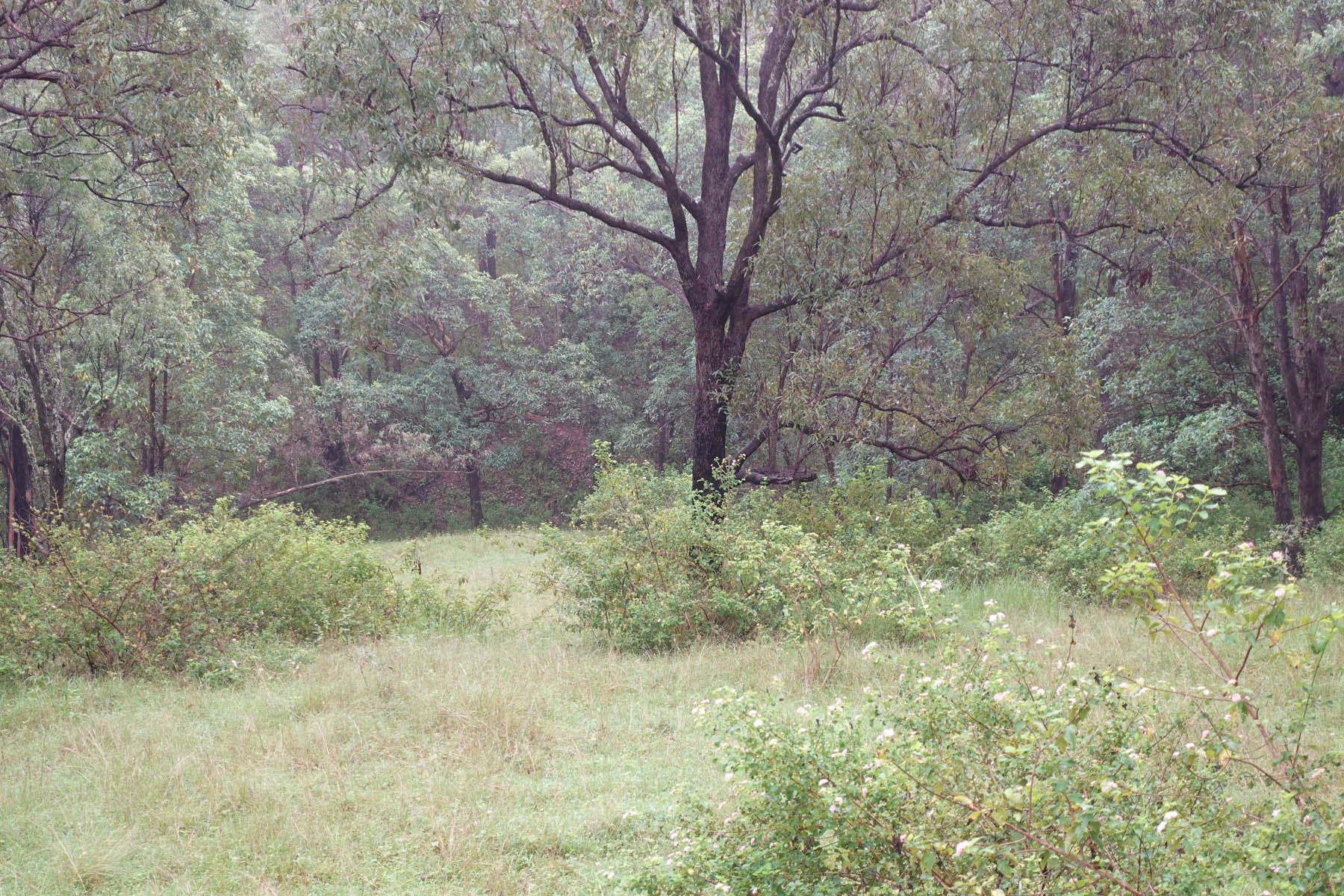
The upside was I was moving into good deer country, the downside being if the first gulley held deer, they’d effectively shut down my ability to move further east. After taking a breather I decided to head towards a highly productive wallow, one which at times could be an amphitheatre of roaring stags, bored hinds and skulking spikers. If it was holding deer, great, but if it was holding a young stag and I could hear or even see a better one further on, I’d have to decide if it was worth the risk of looping around and having my scent drift back.
Even if it did hold a stag worth taking, the deer around the wallow would form a series of defensive rings. There would stand my target surrounded by hinds, lesser stags and young spikers all positioned in a wide, sliding arc. Now a roaring stag doesn’t seem too perturbed by movement but if you’re not right with the wind you’re done. The hinds will wind you and, when they get up and move, the whole circus hits the road.
It was a quandary yet, just like rabbits, hunting two deer often ends in none, so I moved towards the wallow while the still-roaring stags remained beyond my reach. Finally laying eyes on the wallow I stopped under some cover and made myself comfortable. It turned out to be a smart move as soon after I heard a roar, much closer this time. It was answered by another equally close then a distant third. All the while the high stags continued with their performance, bringing the chorus line to possibly seven.
It was difficult to gauge, yet the loudest seemed only a couple of hundred metres away on the opposite side of the gulley. The wind was good, my cover was good, I was up high and had a reasonably unobstructed view. Things were coming together.
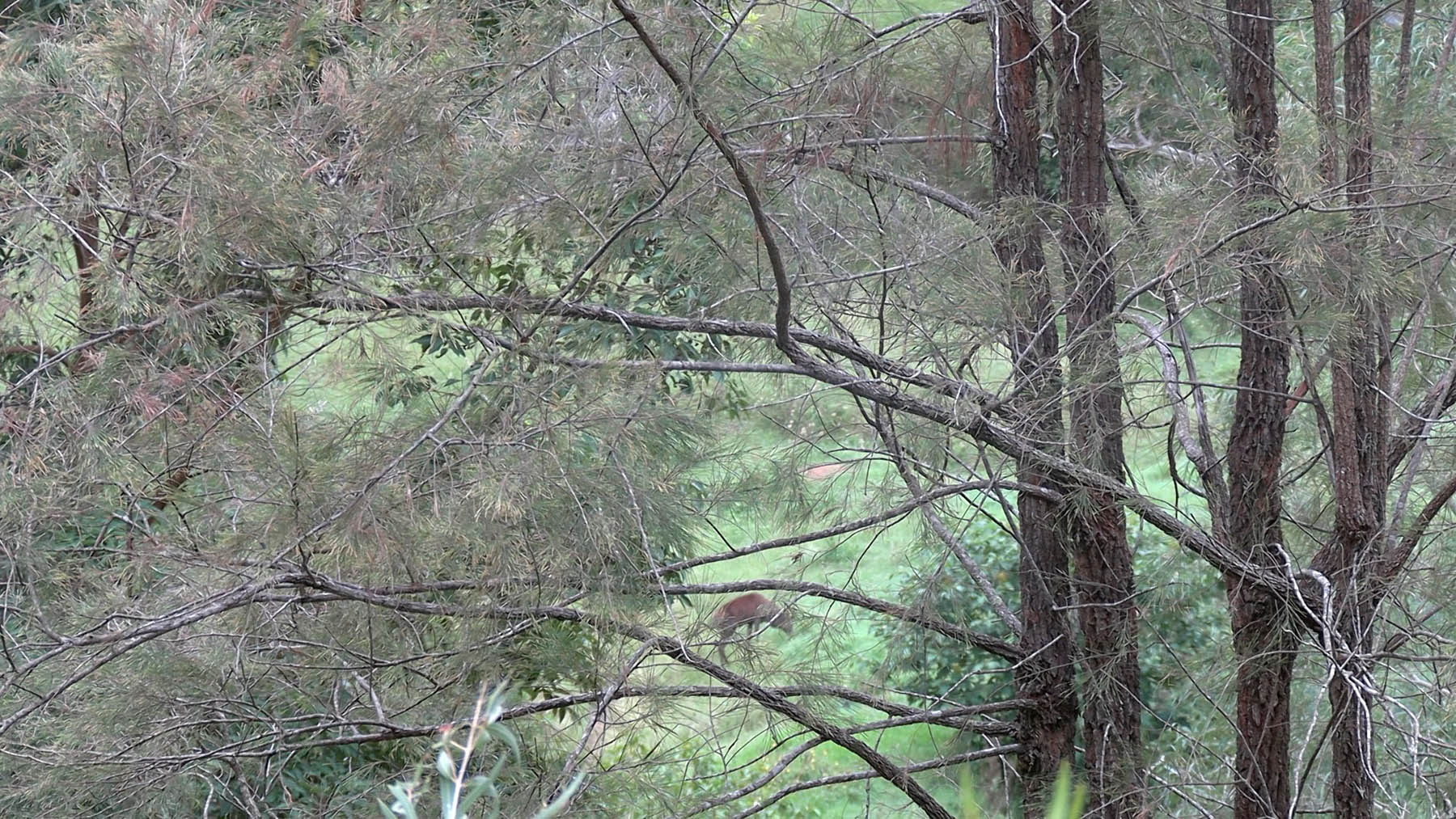
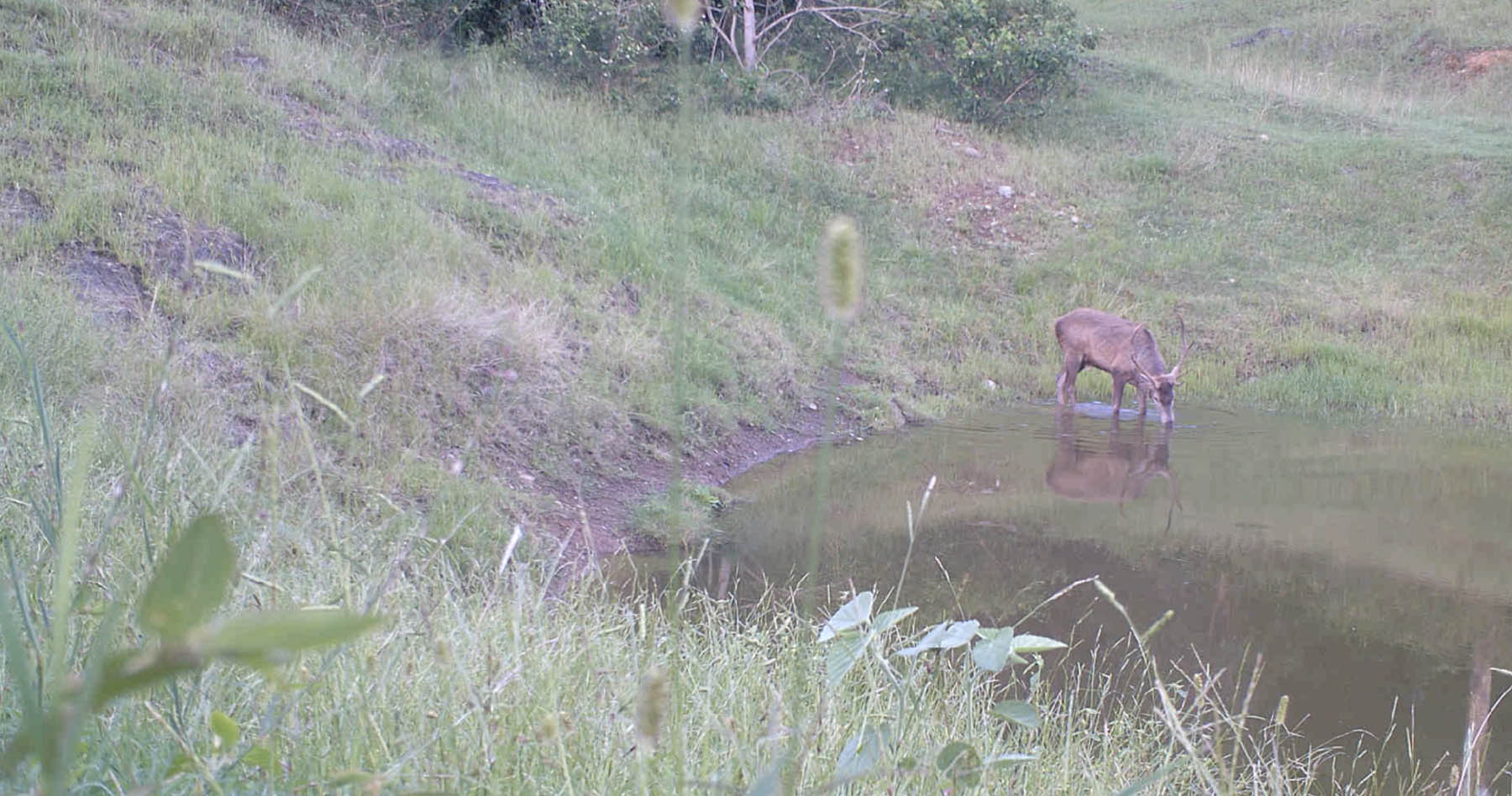
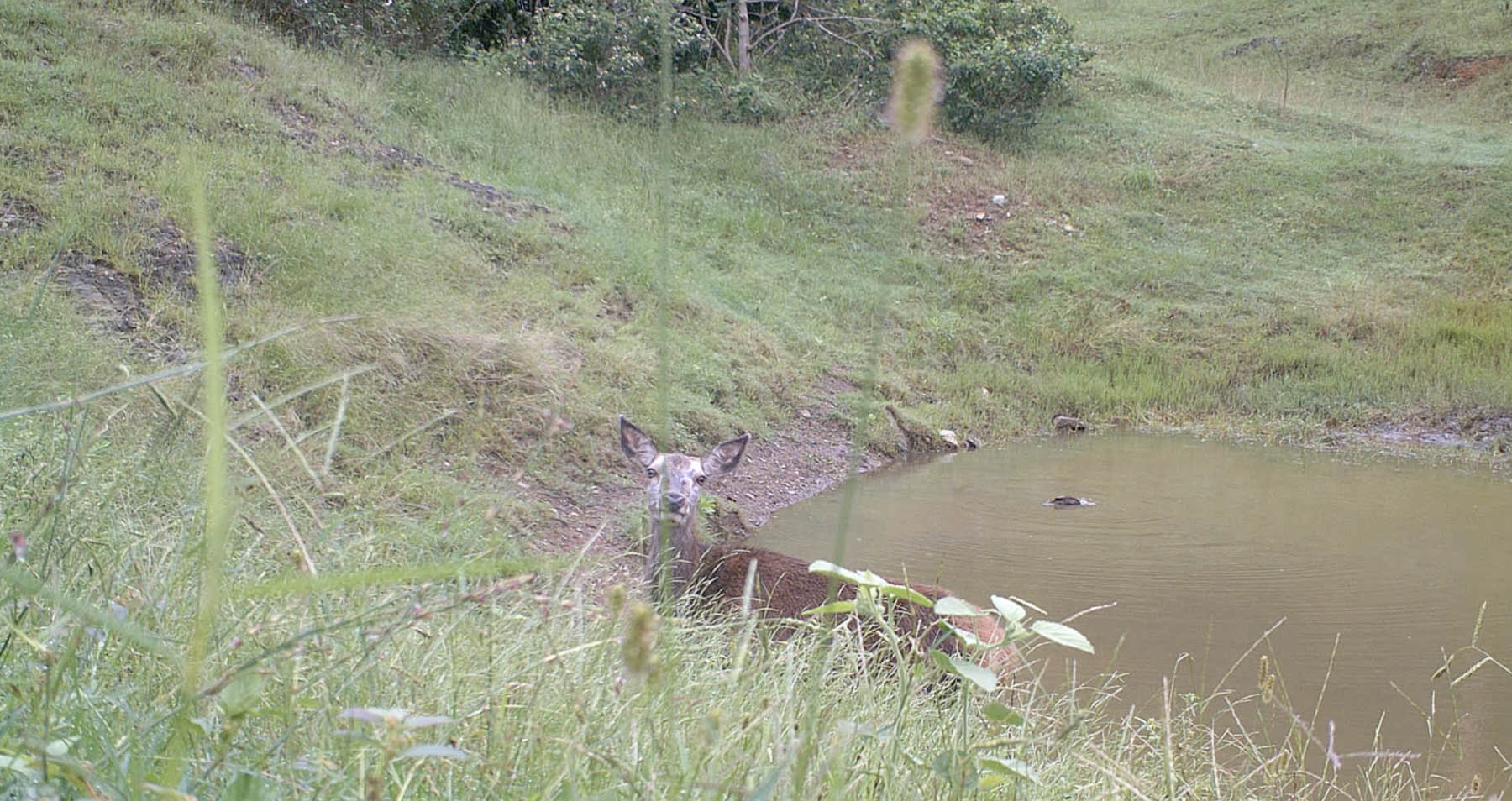
There was then a very close roar followed my movement. I caught a glimpse of brown fur and assumed it was the stag until, straining through the binoculars, I realised it was a hind. I watched her move in and around the wallow and even look up at the sound of a jet crossing our shared sky. There was another roar, the hind turned towards the sound and the stag came into view.
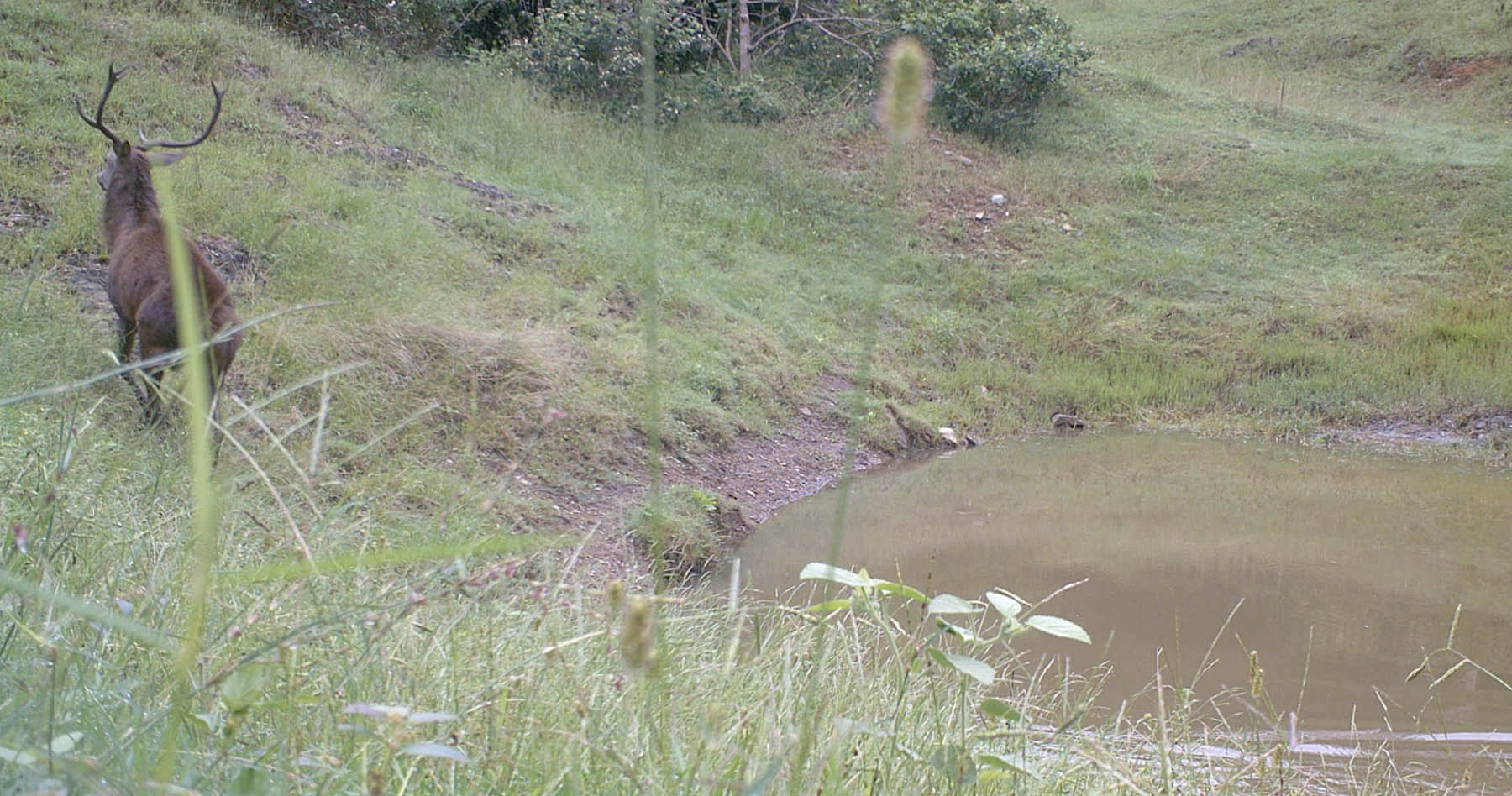
There’s a running joke about the quality of deer on my blocks. No Maximus Giganticus stags around here, just Jeff and his mates, yet this specimen was a little better than your average Brisbane Valley roughie. I continued to watch both deer, at times dropping below my eyeline into the wallow then reappearing among the wooden growth of lantana. Even though my view was at times partially obscured, there was certainly a shot in it somewhere on a good stag.
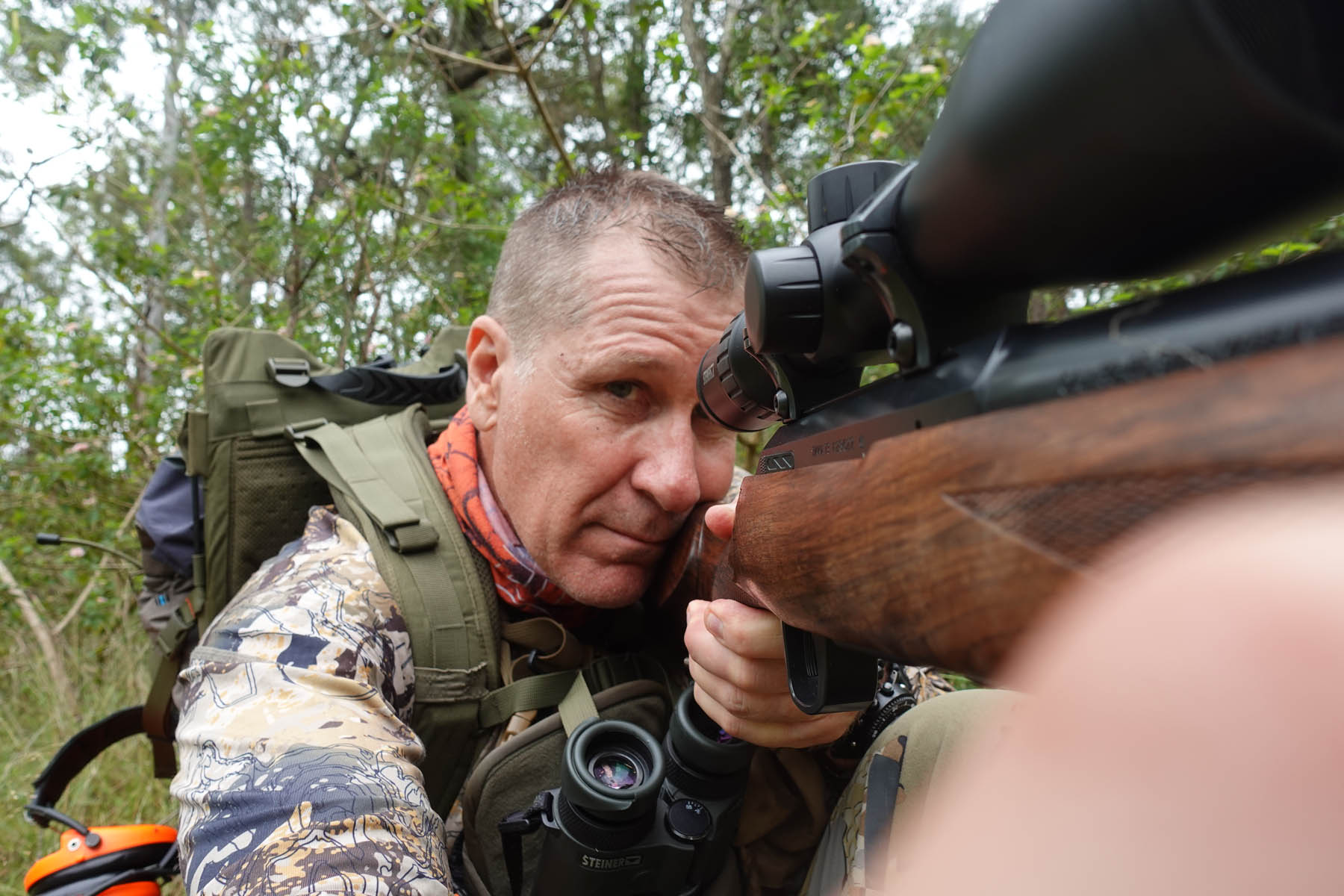
For the second year running I’d a set of shooting sticks in my pack, a bipod which extends almost to standing height. I quietly made myself ready and bum-scooted with rifle and bipod towards some good cover about 120m off the water. Eventually the stag shifted a little and clearly exposed its vitals through the overgrowth and branches, the hind remaining nearby and occasionally causing the stag to perk up. A rhythm of sorts became apparent as the hind would garner attention, the stag would look back then settle again.
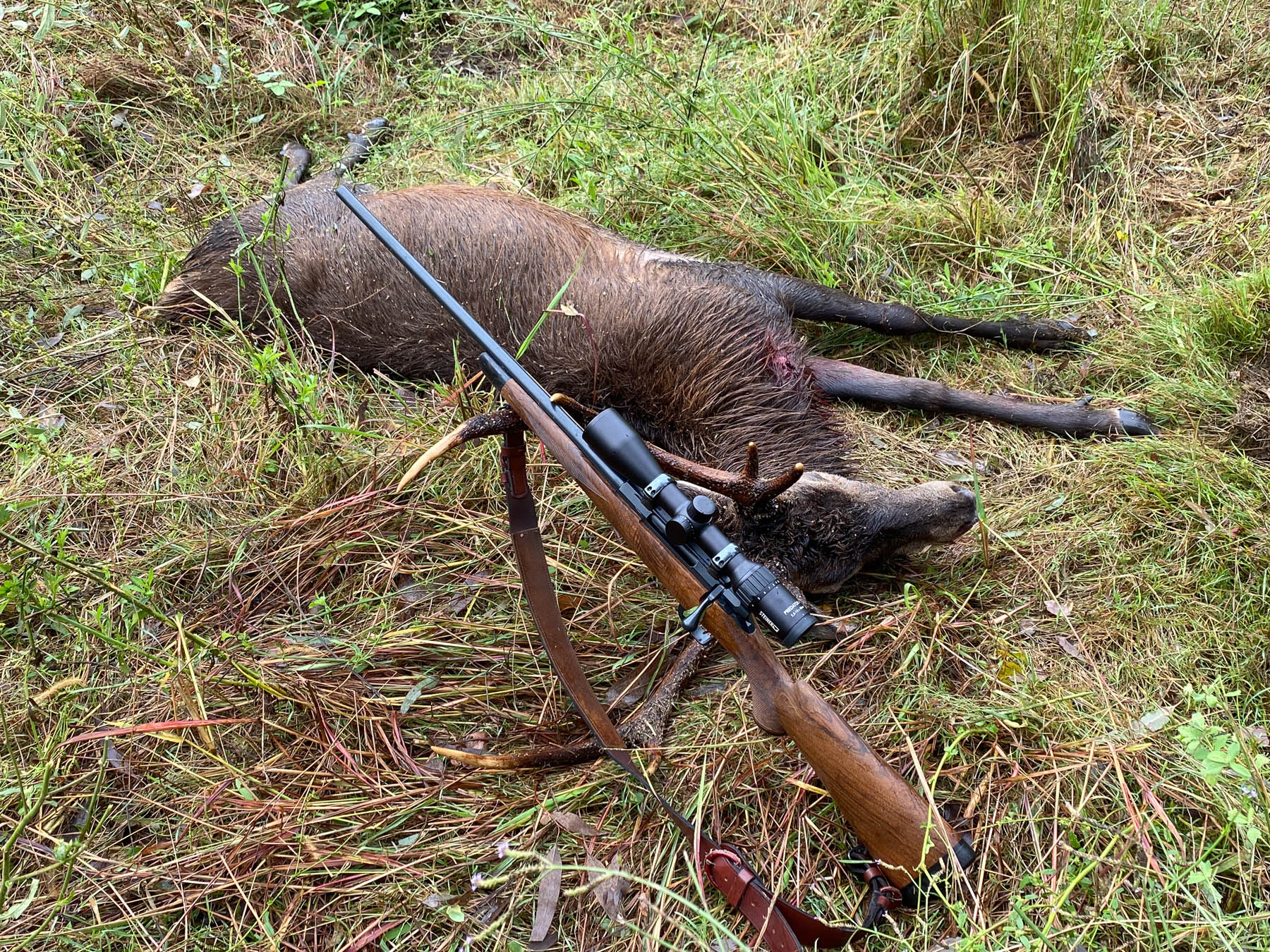
I cycled the action on my deer rifle, the trusty Tikka .30-06, the load a well-constructed 180-grain Norma Oryx. I regarded this load a little too stout for red deer, but I had sambar in my future plans so had set the rifle up in February to take all-comers. The stag heard the metallic click, momentarily lifts his head then resumed a more relaxed position. The shot rang out with the target hit low in the chest as I saw him spin and try to head uphill, while the hind broke in the opposite direction.
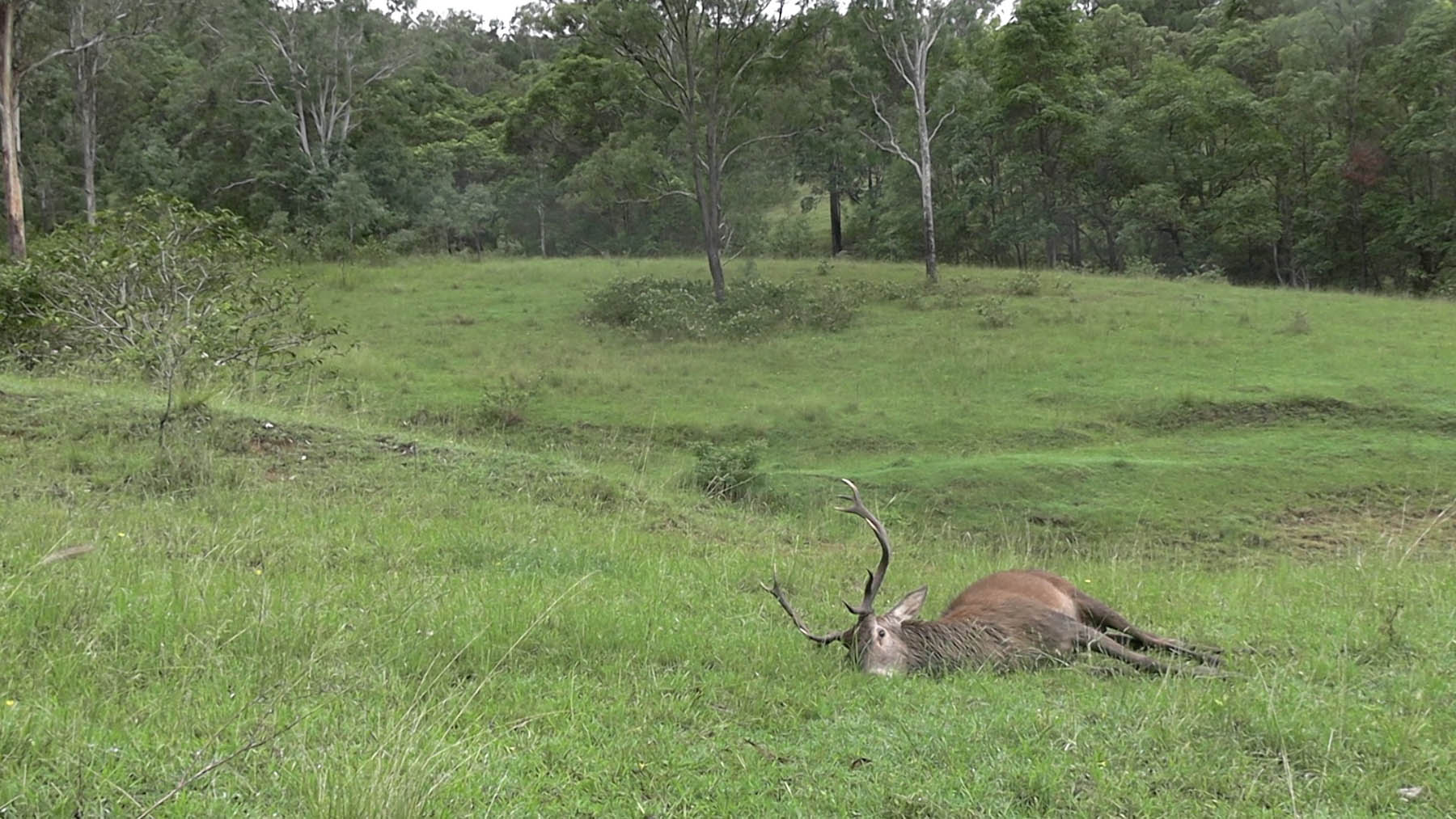
It’s been my experience that a shot red will try to escape uphill and this one was no exception as he cut up and behind a lantana patch. As with almost all deer I’ve ever taken, I experienced a momentary sense of doubt but my more rational mind told me he was still behind that bush. I watched, ready for a follow-up but nothing much happened so I decided to move forward. Reaching the cover, I circled around and found the stag on his side with the rack slightly lifting his head.
The impact point was visible with the 180-grainer doing its job, just like last time. The antlers showed signs of damage, the bey tine broken though still long enough to be visible through the binoculars. It’s a trait on almost all antlered deer I’ve taken off the block, they sure do scrap a lot. My phone told me a storm was inbound and, to punctuate the point, I heard a rumble and felt the air become decidedly thicker.
I set up a bolthole for my gear and went to working breaking the stag down for transportation. After some heavy work I had backstraps, quarters and antlers ready to go, the load then secured to my meat-hauler pack. With everything on board except antlers (I’d have to come back for them) I set the pack on the slope, sat myself down below it, secured the straps, rolled a little to the side and hauled myself upright.
The rain started to fall as I began slugging it out towards the farmhouse, my chosen route direct and flatter though I’d have to navigate a locked gate. I passed my rifle through, did my best to keep it out the mud and decided to keep the pack on while I climbed the heavily constructed obstacle. It held my combined weight but, as I kicked my leg over, the pack shifted so I hung on tight then very slowly brought my other leg over.
With feet back on the ground I collected my rifle and kept moving. In sight of the boundary I stopped for a breather, sitting again with the pack slightly above me. Getting up a second time almost proved my undoing but I held my balance. The entry gate to the block was a rain-induced mudhole and I’d visions of falling over and thrashing around like an upended turtle, though apart from the squelching of my boots I passed through the final gate without incident.
I didn’t know at the time but the rain would set in and fall uninterrupted for another 24 hours. Good news was I able to set my tent up in a semi-open tractor shed, the roof providing ample shelter while the open sides allowed a breeze to flow through and partially dry my gear. I placed the meat on ice to cool before moving it to the car fridge. It’s amazing just how much heat a fresh kill contains, so cooling it down helps the fridge operate more efficiently over a few days’ hunting.
With the meat away, I slugged it back to retrieve the skull and by the time I got there was thoroughly soaked so set about skinning it. With that done I changed and headed to a nearby town for a feed, though not before threading the now cleaned skull through the rails of a metal fence. A couple of hours later I returned to the sounds of a growl and loud, metallic clunking – the farm dog was trying its best to run off with the antlered skull.
It really needed to be out in the open so I hit on the idea of storing it high up in the exposed frame of the shed roof. In the early hours of the morning the dog returned to alternately whimper and bark at the skull. I’d soon had enough and, giving back my own growl, all went quiet and with it my 2025 red deer Roar.