


New player is ‘Loaded for the Australian shooter’, reports Chris Redlich
Last time I bought factory ammunition was to compare options in a review rifle. I’m an avid handloader so while familiar with cartridge components and my preference for projectiles, I’m a little confused by the colourful factory ammo boxes spread across the shelves. Furthermore, every manufacturer seems to lay claim to their product being the fastest or having the best knockdown power. “Does it really?”
In a perfect test environment with a carefully tuned rifle I’m sure they might produce outstanding results, yet the hunting world’s not so perfect and no two rifles or shooting scenarios are ever identical. Some suppliers would prefer I use the ammo they sell, which is fine from a marketing point of view, but when that ammo shoots terribly through their own rifle I need to look elsewhere.
As a hunting reviewer I’ve had to diversify my choice of ammunition whether it be factory or handloaded and, more recently, gladly accepted an invite to review the newly-released offerings from Red Earth. Currently their ammunition is only available in .223 Rem and luckily we had some compatible rifles (I’d be surprised if most shooters didn’t have at least one rifle chambered in what’s arguably Australia’s most popular calibre). Yet for reasons of testing market response, it makes perfect sense that if you’re releasing something new then ‘start with what’s popular’.
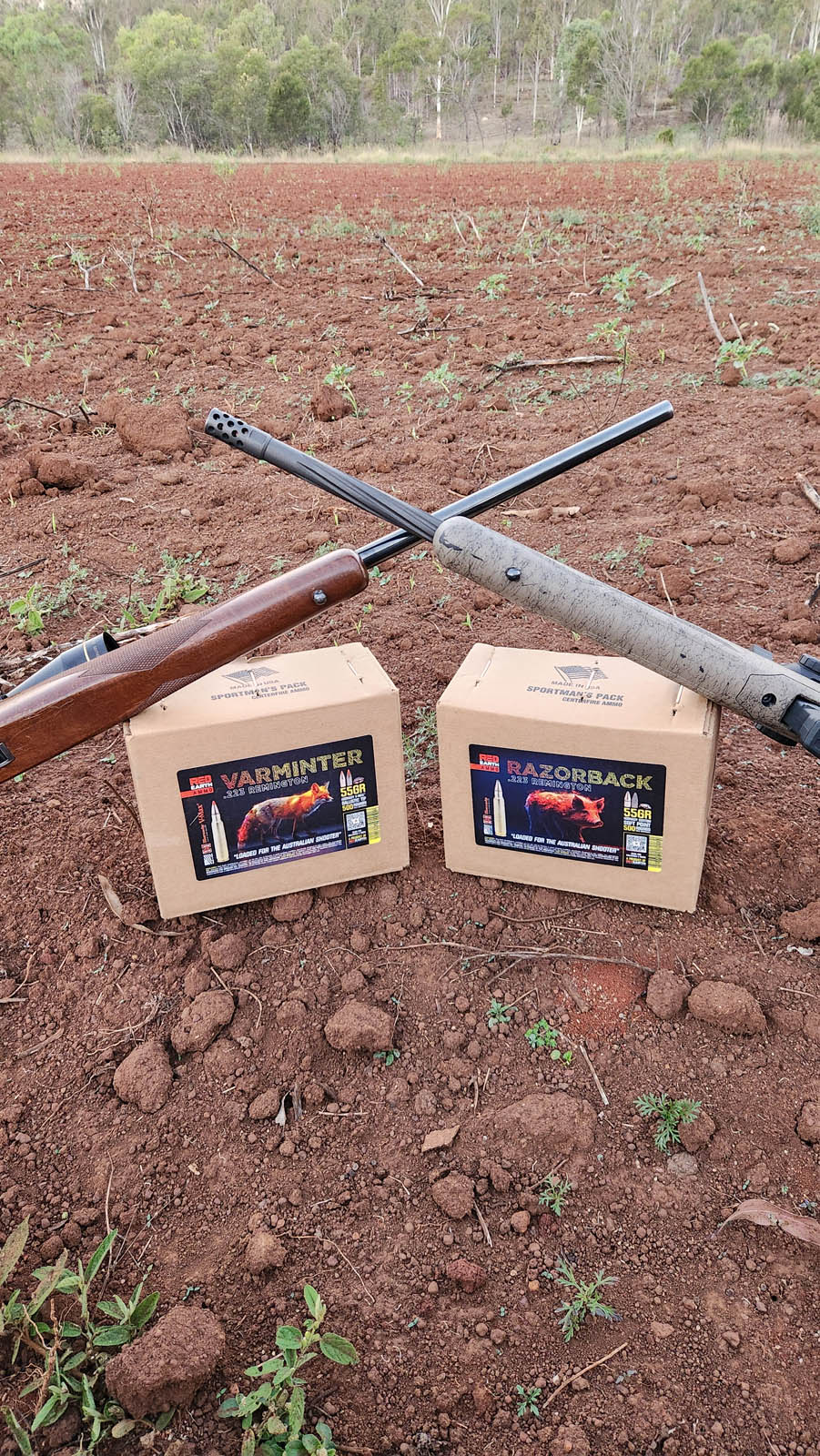
Red Earth Ammo is an Australian-owned brand manufactured in the US, their dual-purpose offering of bullets in .223 Remington made specifically with Aussie hunters in mind. Once again we see a personalised sales pitch of ‘Loaded for the Australian shooter’, using the common red fox Varminter projectiles and a game animal for the Razorback variety. By using these motifs you assume they’d be the perfect medicine for their chosen quarry. As I’ve found, the .223 Remingtion with one bullet type can be adequate for a broad range of game including foxes and some pigs, so what’s the difference between this pair?
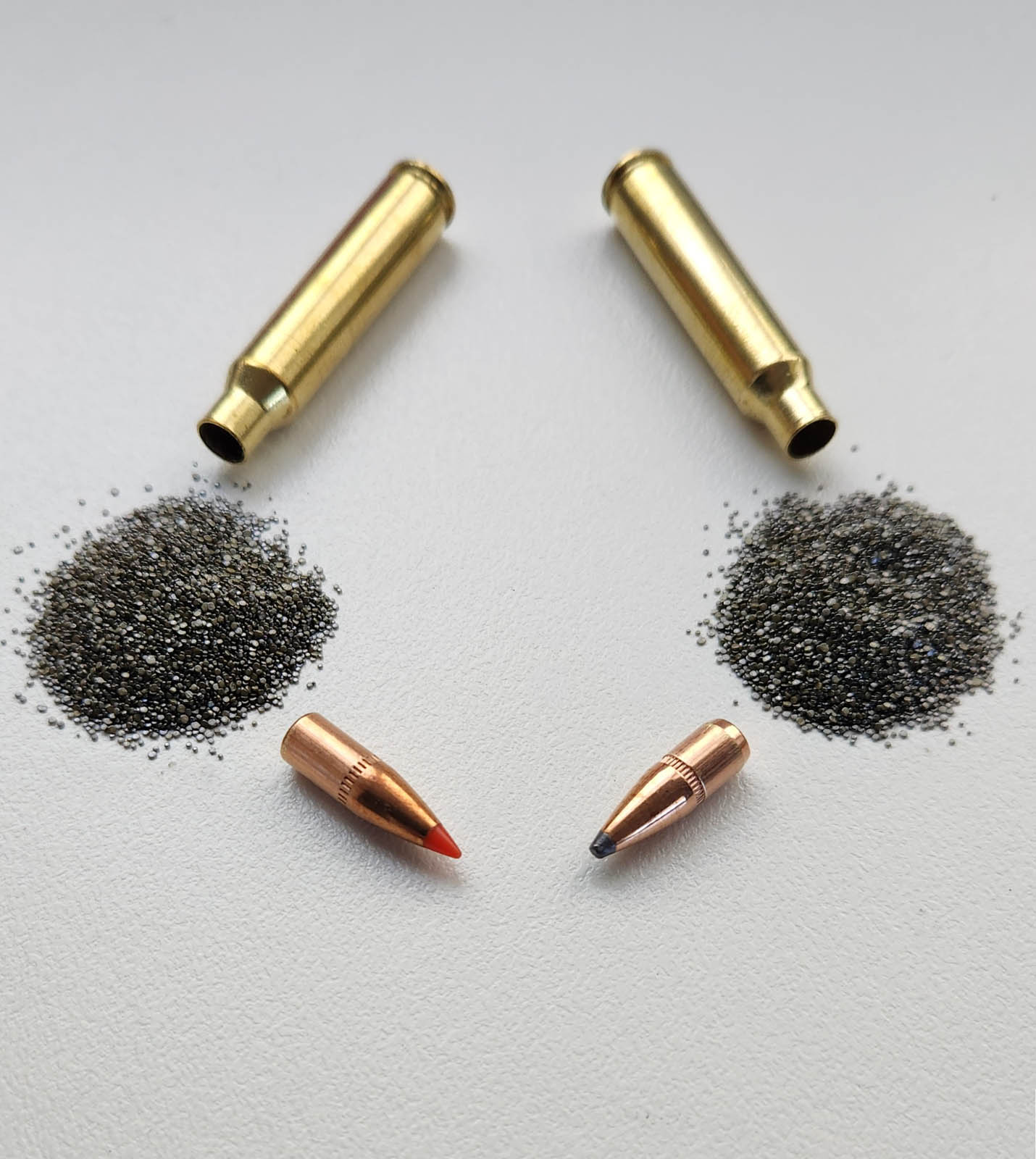
My handloader’s curiosity had me taking the magnifying specs to both and I’ll pass on some of what I found. Both projectiles weigh 55-grains with the Varminter using Hornady’s V-Max ballistic tip bullet. I’ve a history with V-Max bullets dating back more than 30 years, including a recent purchase and can vouch for their effectiveness. They’re a flat-based, lead core bullet recognisable by their coloured polymer tips.
Those tips sit in front of a tiny cavity which, on impact, initiates rapid expansion to its thin copper jacket and are typically used for smaller game with thin skin such as feral cats, wild dogs, hares and of course, foxes. The explosive nature of V-Max bullets usually results in significant exit wounds. Well regarded as a flat-shooting and accurate option, many a fox has fallen to the V-Max and it’s no wonder they head the ‘Varminter’ category.
Red Earth ‘Razorback’ game bullets on the other hand use Hornady’s boat-tail, custom soft point, with expansion on these not quite as rapid or aggressive as the V-Max. By comparison, its lead tip and marginally thicker copper jacket mushroom more evenly on impact, creating a larger wound channel to the vital organs on heavier-skinned game such as wild pigs.
Both bullets are cannelured and share the same ogive and have been loaded with what appears to be a fast-burning, fine granule powder weighing an even 25-grains. I found this similar to my own handloads which generate muzzle velocities of around 3200fps from a 24” barrel. While they won’t win a drag race against the likes of a .22/250 Remington, the .223 Rem cartridge has a reliable history of ‘runs on the board’ in the Australian bush and at the range.
They’re seated to an overall length of 57mm (for the slightly longer V-Max) and designed to chamber easily in most commercial rifles, with or without detachable magazines. Bullet seating can play a role in accuracy and that’s why I was keen to test them in a couple of rifles to see which fared best with what round.
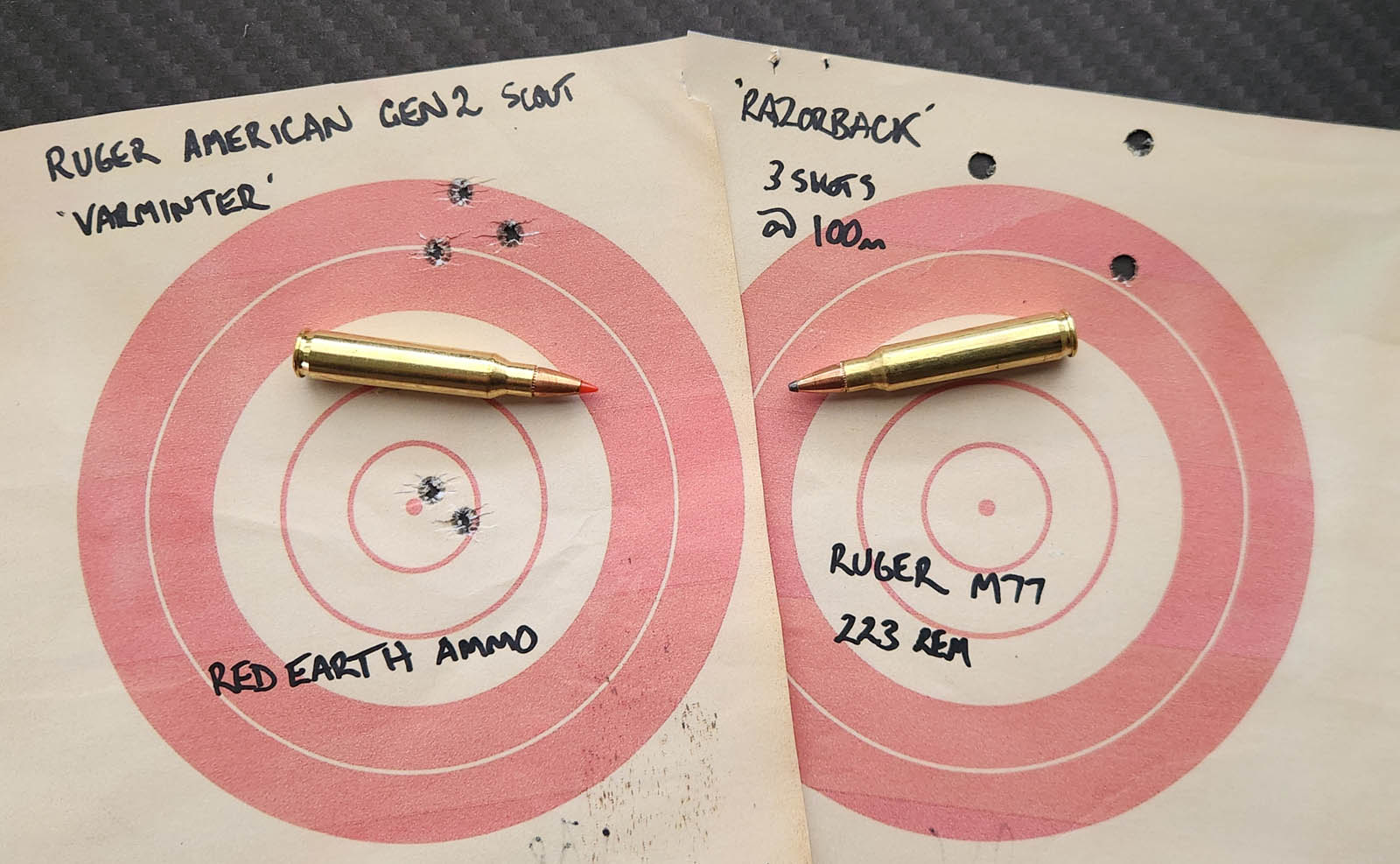
Shooting firstly an ‘out of the safe’ three-shot group from my wife’s Ruger M77, the Razorback ammo measured over an inch at 100m as did the Varminter. Next up, the Ruger Scout rifle shooting Razorback ammo printed also above one inch, though thankfully the ballistic-tipped Varmint produced a highly satisfying half-inch group and remained tight with two more shots (as seen in the picture) after adjusting the scope down to zero.
This proved once again some rifles can be fickle with factory ammo yet, despite the first of three groups being slightly wider than I’d prefer, there were no ‘flyers’ and follow-up groups remained consistent. Quality manufacture is key to consistency and a reminder that prioritising correct shot placement on your chosen quarry is more important than accuracy on paper.
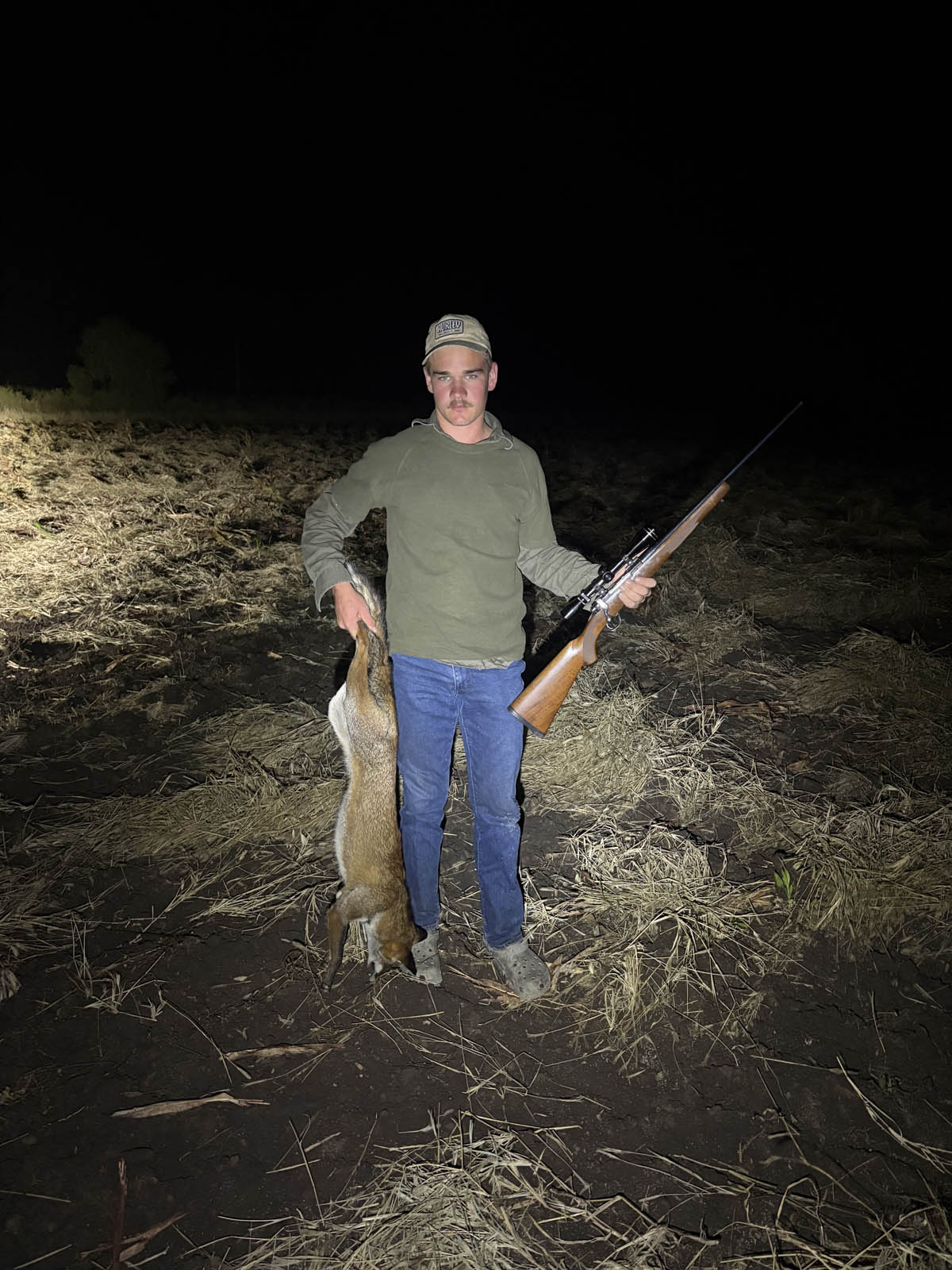
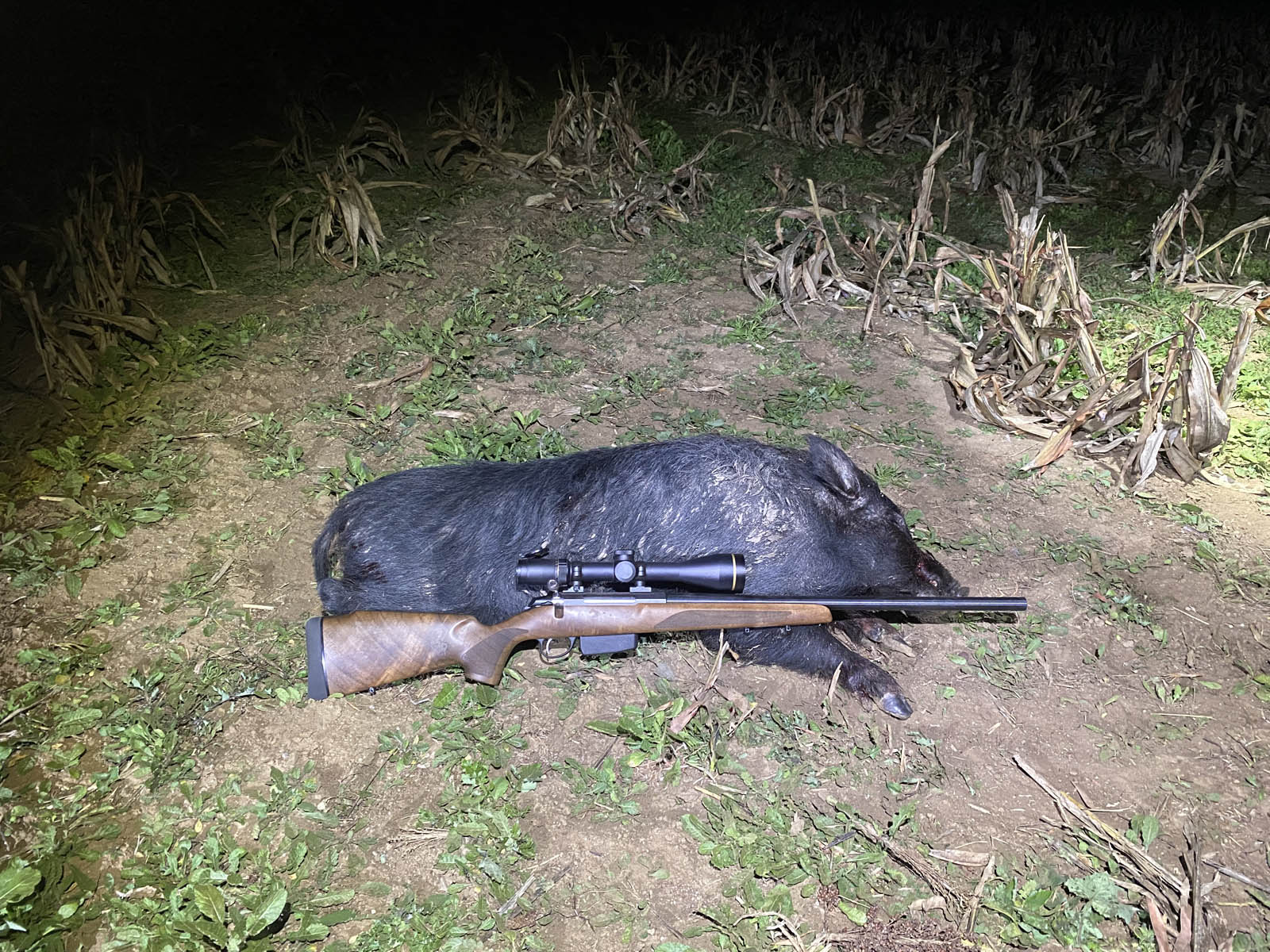
I was keen to evaluate the ammunition thoroughly to determine if their categories met the expected standards, so we chose the M77 for use with the ‘fox’ ammo and Ruger Scout with the soft-points on pigs due to its larger 10-shot magazine capacity. Furthermore, I recruited the services of a local professional shooter for his expert opinion. Brock culls roos and pigs as part of his livelihood and prefers to use his Tikka T3X Varmint Hunter in .223 Rem so, after my own experience with the same rifle, I’d high expectations for his outfit.
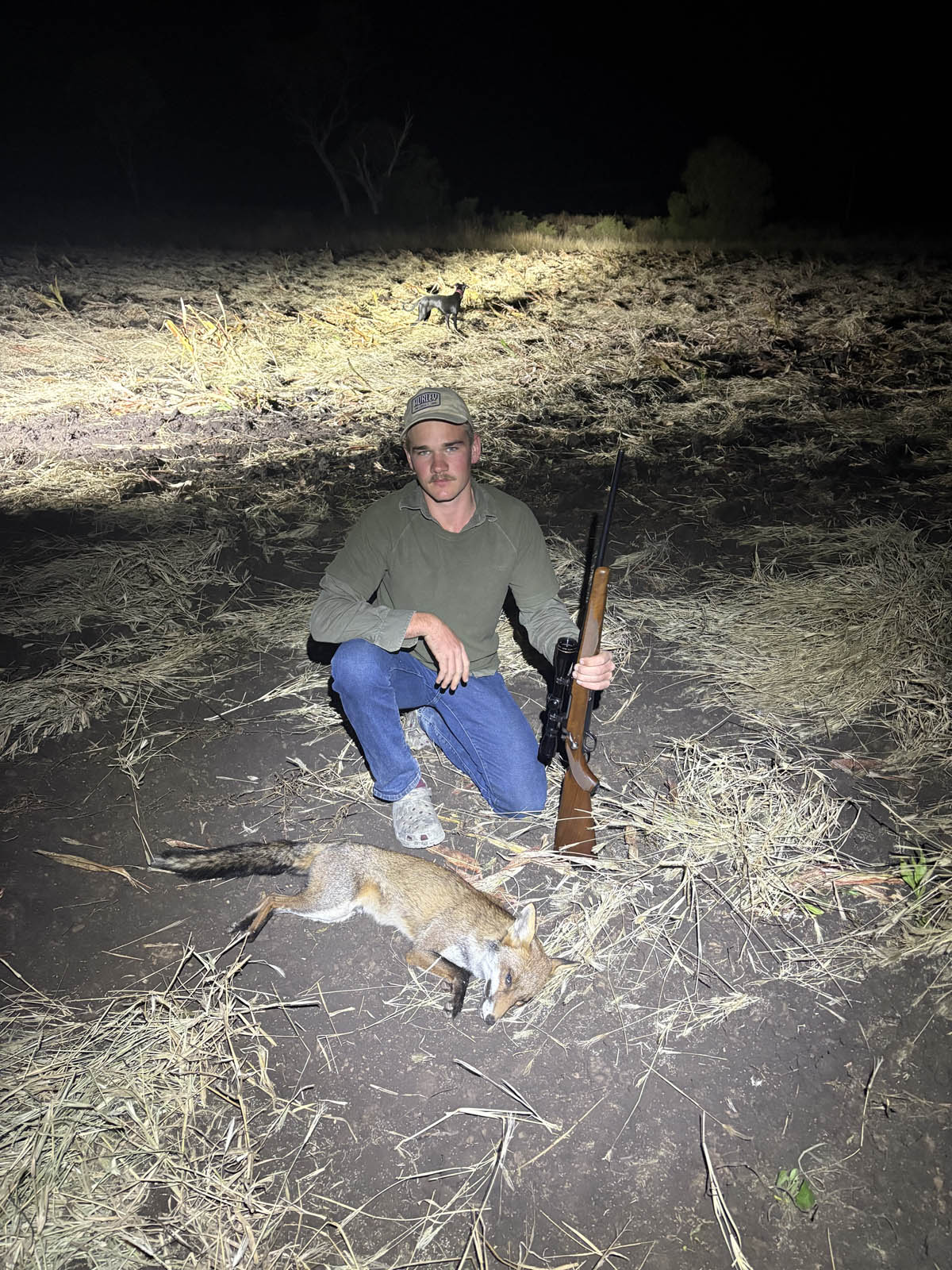
I’m happy to report that unlike my first range test, Brock shot very satisfying sub-MOA groups straightaway with both bullets at 100m, remarking how effectively the Varminters performed on foxes. In typical V-Max fashion, he reported the bullets worked so well with headshots that targets were unable to be presented for photos. On another occasion he head-shot (as per commercial standard required) numerous kangaroos for the processor at long range and was more than happy with their performance. Brock also recorded satisfactory results with the Razorback ammo on pigs and remarked on how both loads left his barrel clean with minimal powder fouling.
After bearing some weight of expectation for testing, Red Earth proved on par with most other factory ammo I’ve tested lately. They are, however, specifically targeted at the Aussie market and after numerous field excursions, performed well on foxes and wild pigs in their respective categories. I don’t believe for a minute the average shooter will switch bullets ‘on the run’ if they happen to spot a feral pig while fox hunting or vice-versa, though it’s refreshing having that option available.
As I discovered during testing, both loads performed better in some rifles than others though this is no reflection on the ammunition, merely a case of barrel-to-bullet preference. Furthermore, as a glowing endorsement for the new brand, Brock said he’d definitely be buying Red Earth Ammo in future.
Importantly, lightweight high-velocity rounds such as .223 bullets do have limitations and can be easily swayed by light foliage. For that reason I believe it’ll only be a matter of time before we see the introduction of popular larger calibres added to the Red Earth lineup. To help keep pricing down, Red Earth ‘Varminter’ and ‘Razorback’ ammunition is sold in bulk cartons of 500, so check your local retailer for price and availability. More at www.redistributions.com.au