

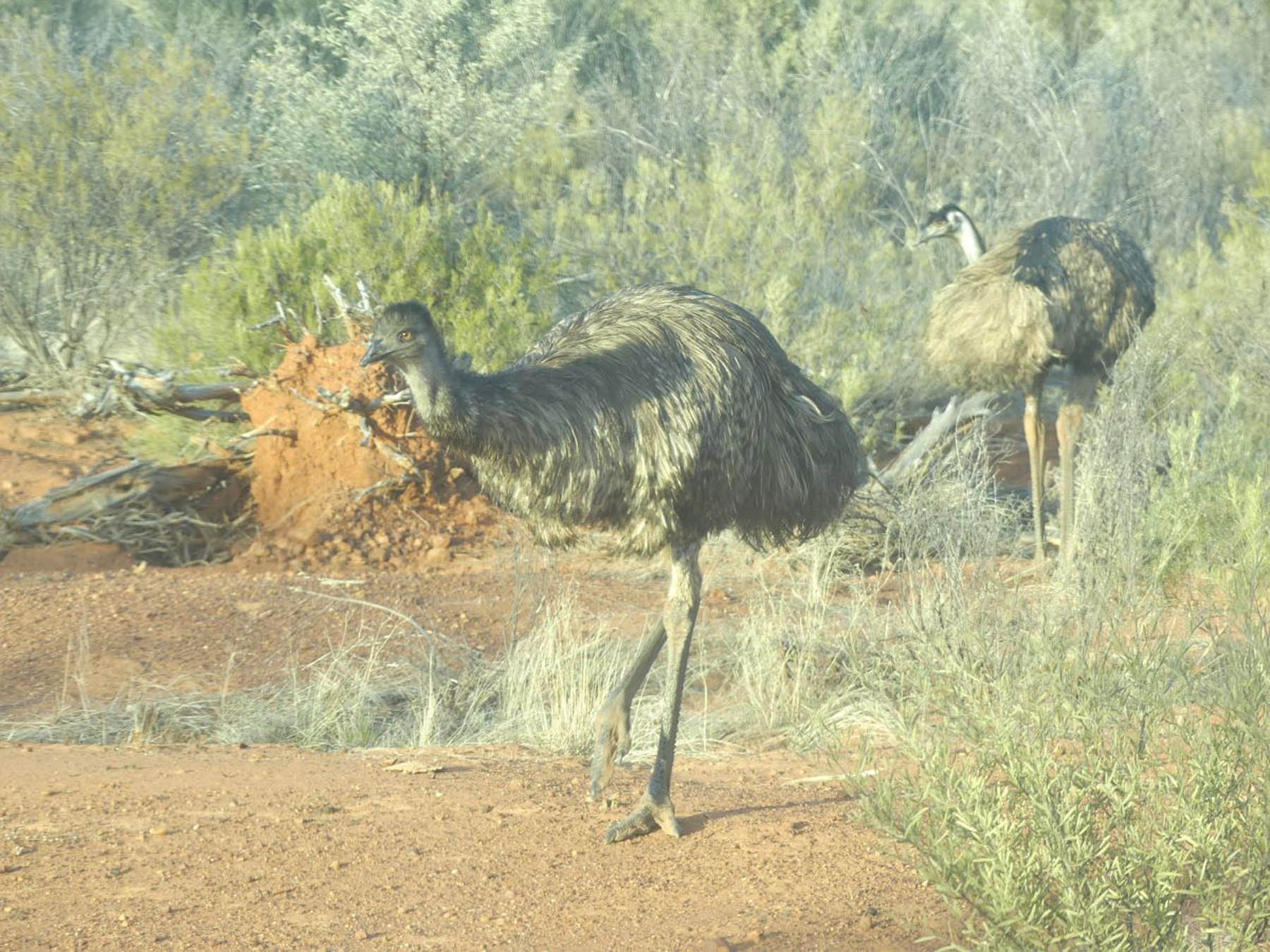
Mission impossible, which Peter d’Plesse chose to accept, was for wild dogs in Outback NSW…
‘What is the most cunning animal in the world?
It is the one that you never see.’
Mystery Cats of the World by Dr Karl Shuker
The above words perfectly describe cryptozoological creatures such as the ‘black panthers’ sighted in Australia and other areas of the world. These reports deserve a separate article and interested readers are best directed to the above reference.
Three animals closely fitting this description must be the feral cat, fox and wild dog. This trio are a menace to native animals and farmers, so hunters can play a significant role in humanely managing their numbers. We know they are around as they leave evidence of their passing. They become visible through the benefits of technology, accidental encounters or the efforts of hunters prepared to expend the necessary time and patience.
Animals in the wild are wary of human contact. Wild dogs that inherit genes from their domesticated brethren familiar with human contact result in a feral animal that can be even more ghost-like.
Sheep, goats and calves are particularly susceptible to wild dog attacks. Size makes them a vulnerable target and their usual behaviour on sighting a dog is to bleat, break and run, typical of a prey animal. This fleeing behaviour triggers a natural response from the dog to chase and attack isolated individuals. These are often left uneaten or maimed and wounded.
The presence of dog packs also drives away herds of wild goats that supplement farmer income through harvesting. Studies estimate the annual cost to farmers for feral pigs, foxes and wild dogs into the hundreds of millions of dollars.
Ghosts
With a pig hunting trip approaching its end, things took an unexpected turn. While heading out before dawn on a property service road, the driver of a triple-trailer cattle truck pulled up for a chat. He was familiar from previous trips, as manager of a neighboring property, and had added another property to his responsibilities.
Carbon credit money was encouraging a reduction of cattle numbers by offering money for ‘doing nothing’, but rebuilding cattle numbers was still a priority following the drought. He advised that there would be a round-up that morning of stray cattle.
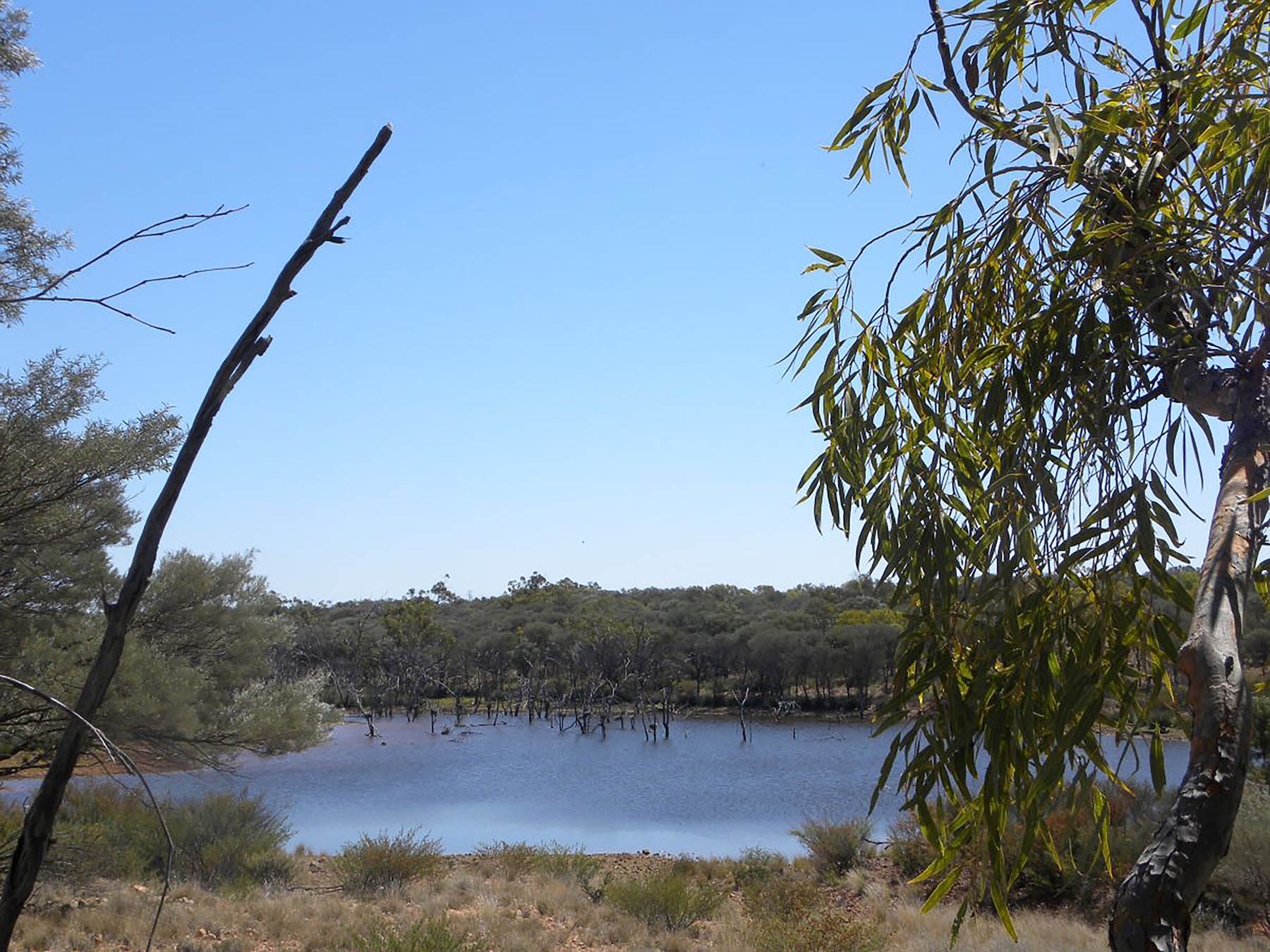
Dog sign had been found along a trans line running across both properties and on the access track to the Blue Lake. With a handshake, a commitment was made to check out the spoor.
Things must have been serious, as later in the morning a vehicle arrived at the homestead. The driver owned the neighboring property and others in Western NSW. He had a story to tell. Calves were being killed by a dog, and goats had been driven away. Rebuilding herds was a challenge and the loss of goat harvesting income just added to the usual problems. There were five days left for the trip. The last day was for packing up and rain was predicted – so four days. He looked at his watch and noted: “It’s not yet noon, that gives four and a half days.” He also added that any effort would be appreciated and concluded with “please.”
Roughly 100,000 acres, four and a half days and one dog. It was good he used the words “impossible mission” as the same thought crossed my mind. I have a few years under my belt hunting feral game in Australia and overseas. While skill, experience, knowledge of animal behaviour and an understanding of the landscape are crucial, luck still plays a part. How much of a part it plays is always uncertain.
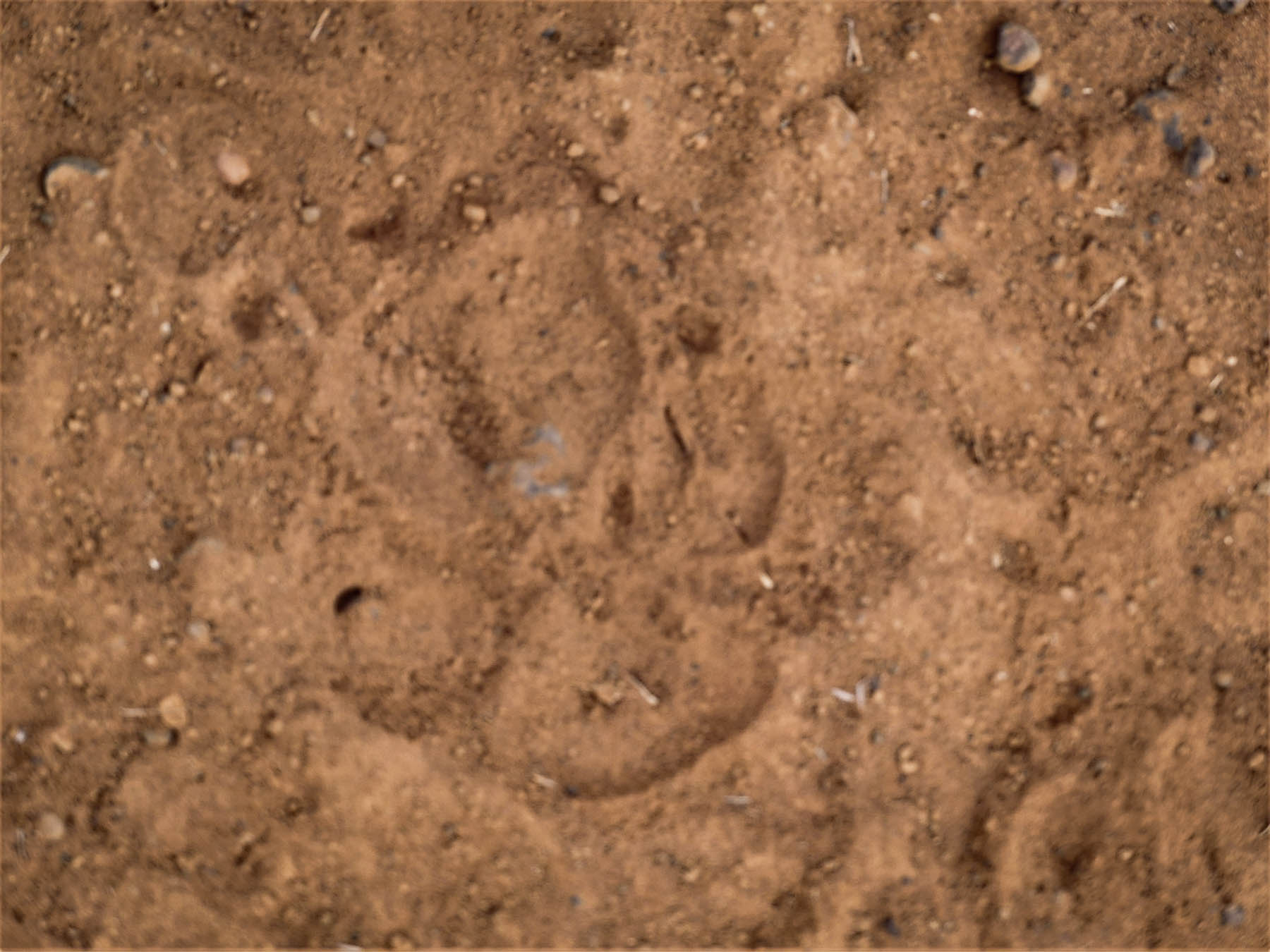
Focusing on the areas with recent spoor reduced the challenge. Wild dogs often mark boundaries of their territory using natural or manmade features. On the Blue Lake track, spoor had been obliterated by a previous party. Friends of the owner used vehicles, motorbikes and quad bikes to encourage almost every animal, including the carbon credit cattle, to pack a bag and retreat into the mulga. After carefully checking the track, only one print remained. It showed that a dog had been heading north to south on the west side of the track.
Trapping combines art, science, an understanding of animal behaviour and a dose of luck. The wild dog is extremely wary and observant of minor changes to the environment, so there is no room for error in setting a trap.
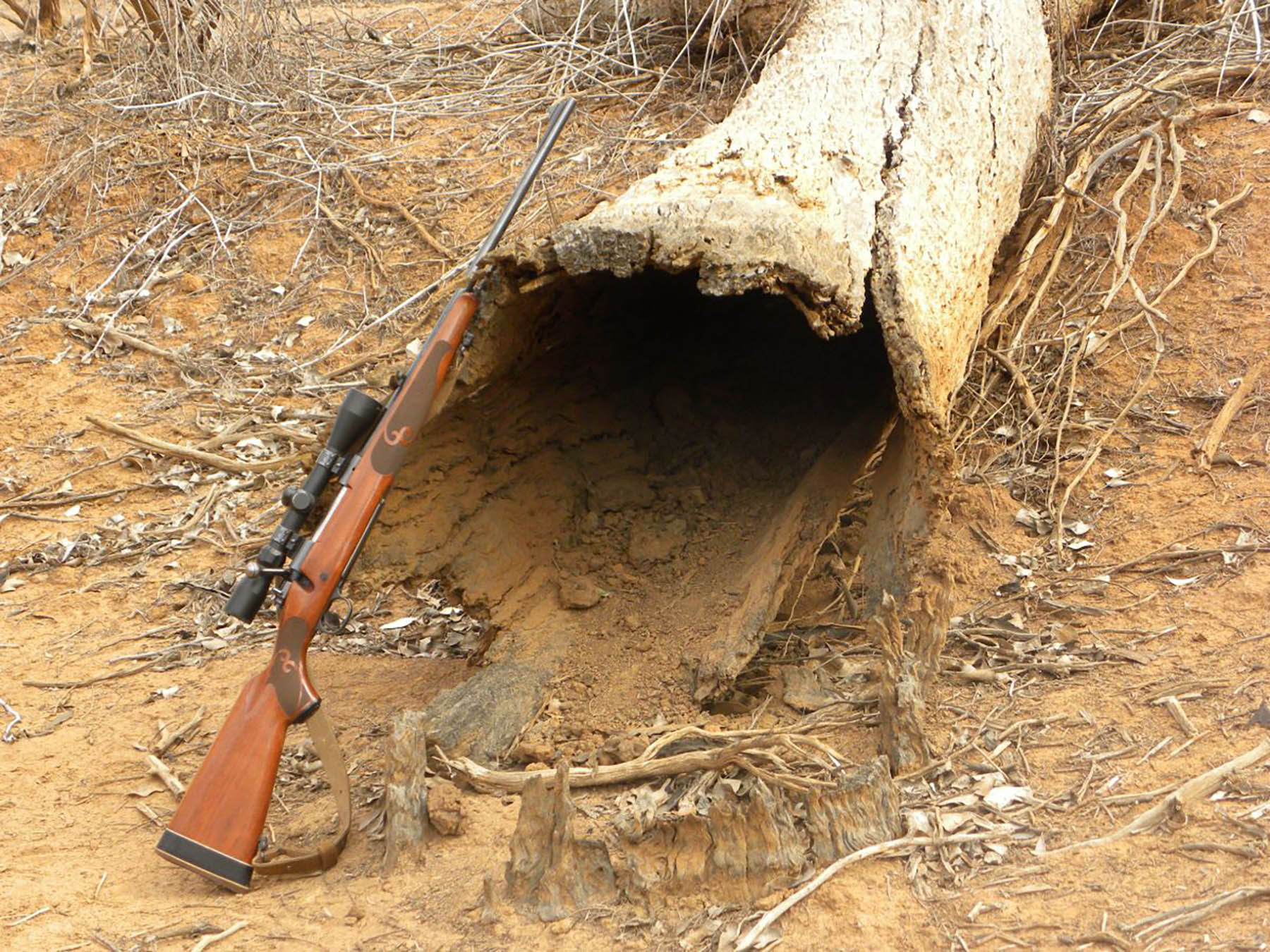
A site was selected, backed by dead timber to serve as an anchor for the chain. A hole was dug about 300mm in front (fist to elbow is also a useful guide). The trap was carefully settled into the shallow hole to eliminate any movement, a piece of foam tucked under the pan and Glad Wrap laid over the top. Soil was replaced around the trap and tapped down with a stick to remove any air pockets. Red dirt from the hole was sprinkled over the top in the same order it was removed, then swept using a stick. Grass and leaves were replaced to restore the natural look, being careful to avoid anything that could jam the trap.
Sticks placed either side would help guide a dog toward a few drops of Red Dog scent lure placed on the log (obtained from Western Trapping Supplies, Toowoomba). A Guinea fowl feather added as a visual attraction and later a deceased feral cat was added as well. Three more traps were placed along the trans line in a similar manner.
Traps were checked every morning from a distance to allow humane despatch of any dog caught. Regular checks are desirable as crows and pigs can poke around to uncover traps. Even a slightly exposed pan can alert a dog and educate them about traps. An educated dog becomes a much harder quarry for the hunter.
When the scent lure was refreshed, it was done in the morning to allow any residual human scent to burn off. On a cattle station, wild dogs should be familiar with human scent and associated sounds but around a trap extra care doesn’t go astray.
Hunting focus shifted away from pigs to allow sessions at calling in the dog over a rifle. Sites were chosen to allow good visibility along fences, the trans line or property tracks.
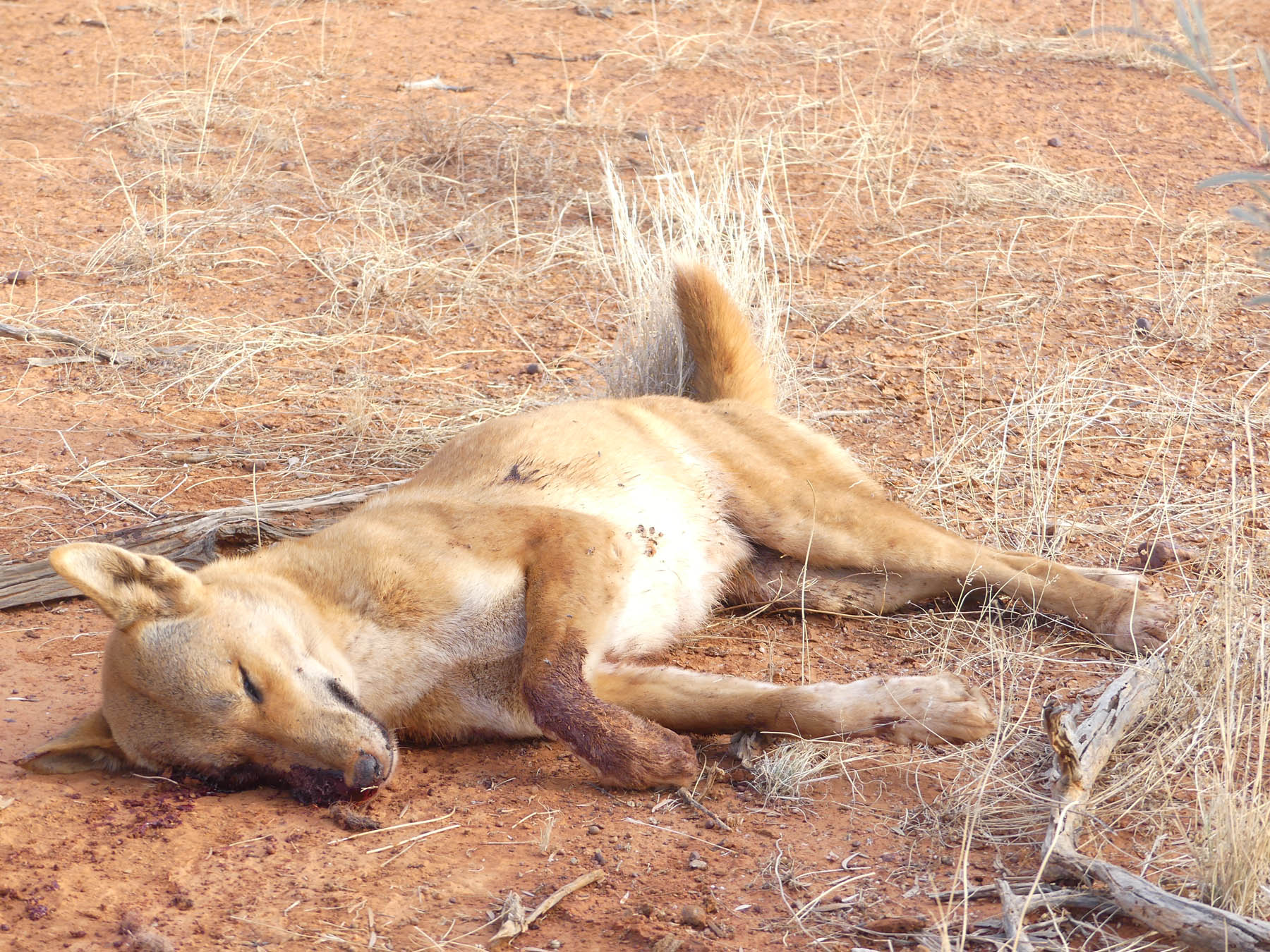
Patience was needed and consistent monitoring of traps an absolute necessity. On the morning of the fourth day, the Blue Lake trap paid off. A dog had been caught and quickly despatched. After some thought, the site was revisited later in the morning and the vehicle track inspected on foot. Spoor revealed a surprise. Two dogs had been approaching the trap. One had been trapped while the other had departed the scene.
Familiarity with a property is worth gold. A mental map was visualised and their movement backtracked. They had come from the Blue Lake, so a likely route was up the dry creek bed serving as an overflow for the dam. The creek eventually leads down to the river channels and is crossed by a fence line. Following that fence north leads to the trans line and a gate into the neighboring property where spoor had been sighted.
The dogs probably arrived at the trap site using the trans line or by following another fence line that also ran down to the river. The geography and layout fitted in with the spoor that had been observed.
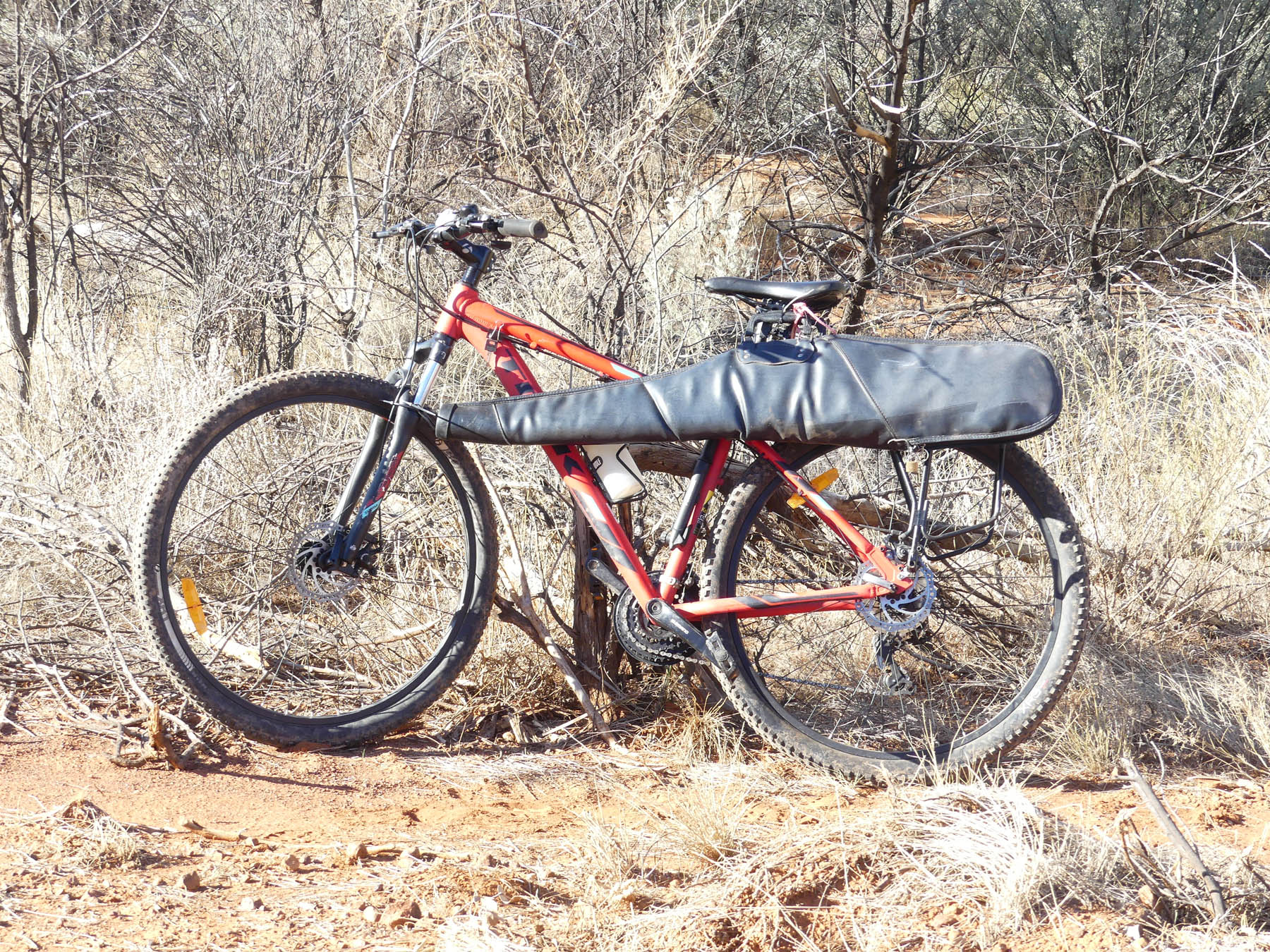
On this trip, alternative transport was supplied by a mountain bike. It was fitted with 27^ wheels with a vinyl gun case attached using plastic ties. Liquid sealant had been added to the tyres to prevent punctures. It provided a silent means of transport, if prepared to put up with the punishment delivered by dried out cattle prints left after rain. It was certainly a lot quieter than a quad bike or a 4WD fitted with a rattly diesel engine, and particularly useful patrolling the cleared trans line. Apart from silence, the bike also allowed more efficient use of hunting time.
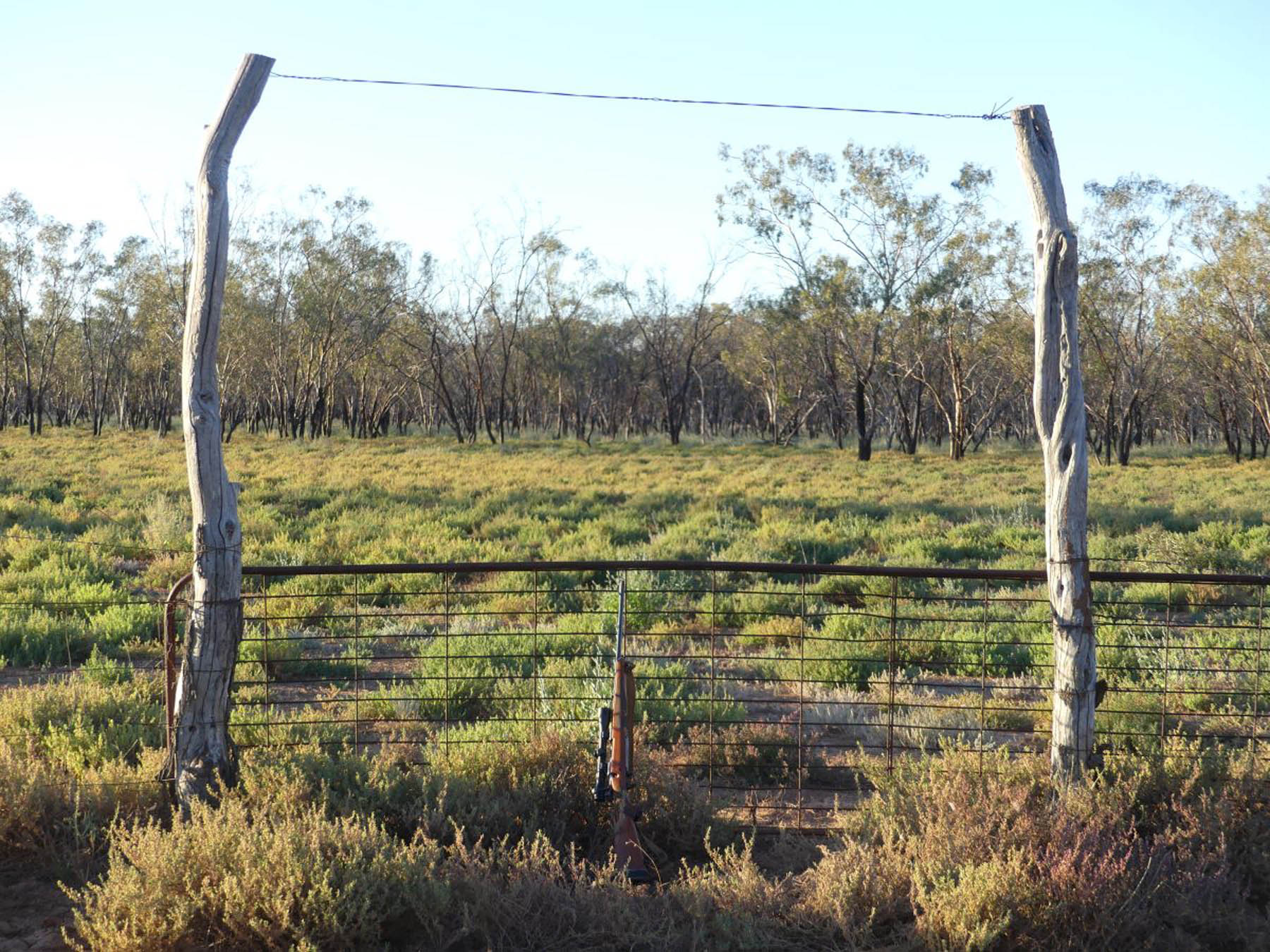
Attempts at calling in the dog were focused near the gate, where a slight rise allowed good sight lines down the trans line, along the fence line and into the next property.
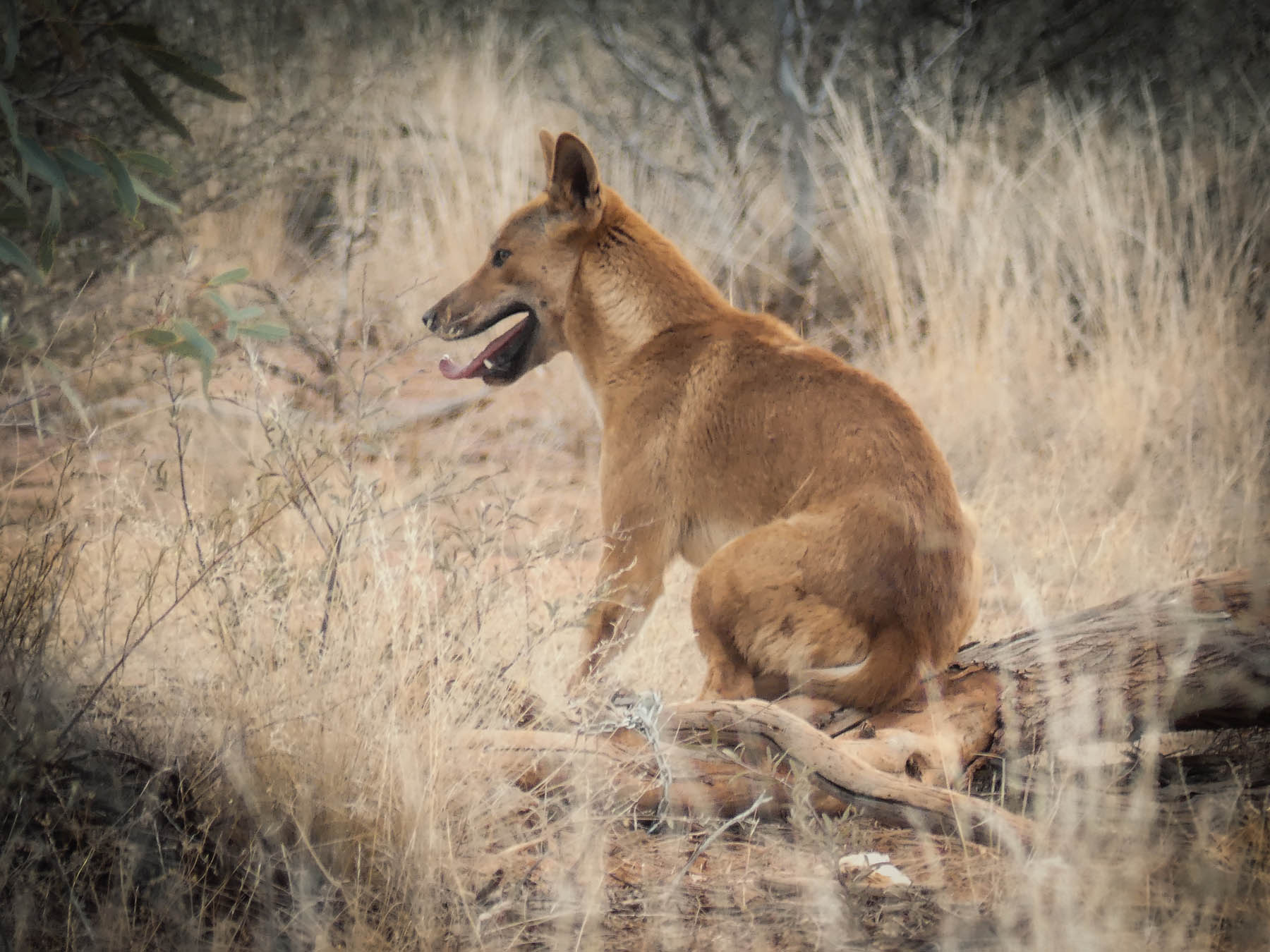
With a calling session about to end, a final quick scan through compact 10×25 Olympus binoculars caught sight of a dog standing on the edge of the bush line 150-250yds away. Judging distance in the field can be tricky, subject to light and environmental influences. A snap roll into a prone position placed the cross hairs on the heart / lung area.
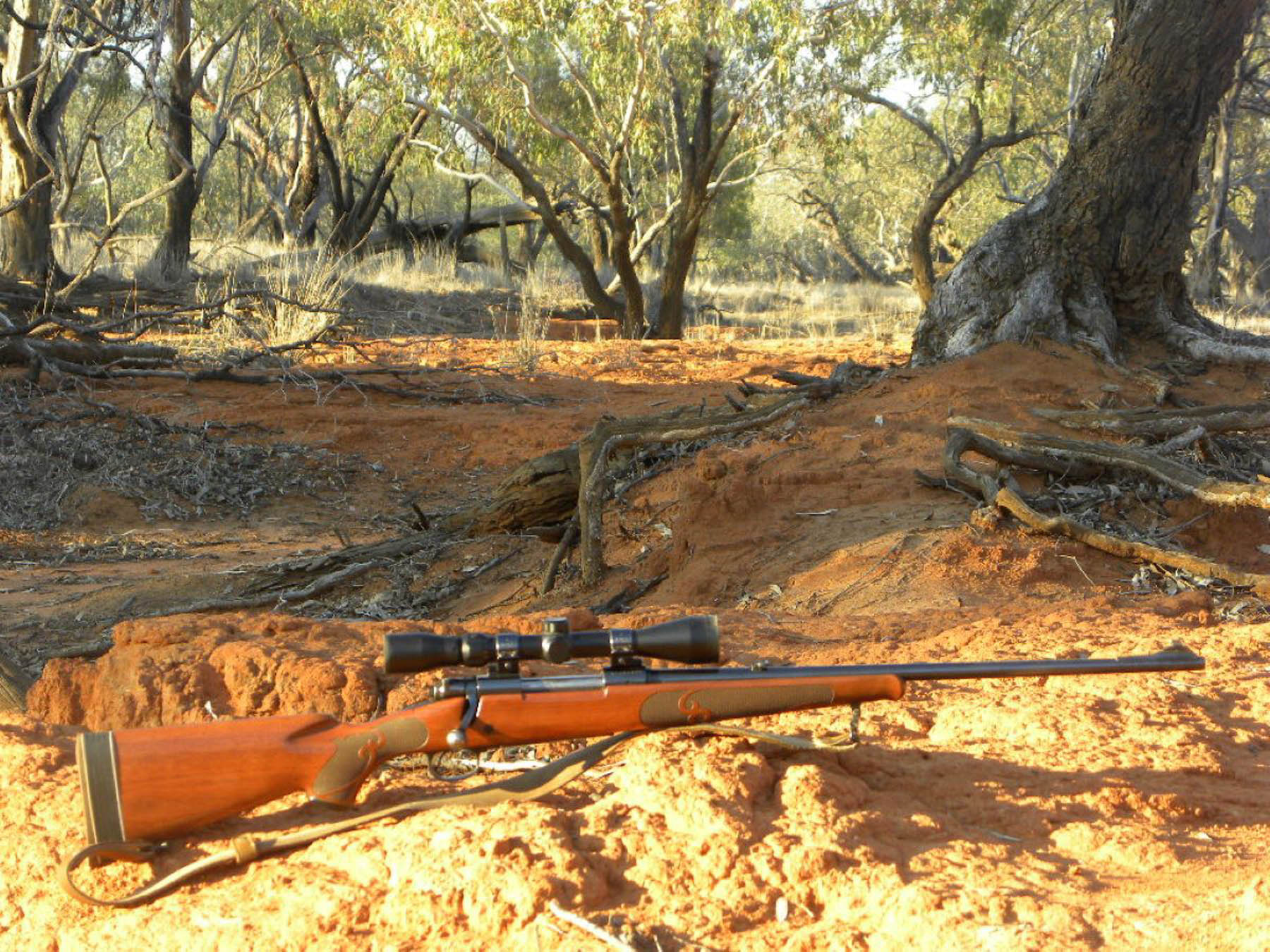
The advantage of cartridges such as the .270 Winchester is the extended point-blank range (PBR). With this load, the PBR was 325yds (297m) so range estimation was simplified. It would be a hit or a miss.
The cloud of red dust blown up by the muzzle blast hid the results of the shot. Given the sight picture at firing, it had to be a hit. The dog wasn’t visible so it must have ducked into the bush. It was finally located after a search that resulted in an error that could have posed problems in different circumstances.
Grey overcast weather offered no hint of the sun’s position. The GPS and compass were sitting securely with the camera in a bum bag back at the firing position. Diving into scrub on an overcast day and searching around randomly soon delivers the realization that you don’t know where you are. Actually, that’s not quite true. You know sort of where you are but have an inability to get to where you want to be.
Being only a few kilometres from the homestead, together with unexpected excitement, had created the perfect set-up for a basic mistake. The trans line bisected the area between two property roads. In this case, the mistake could have a resulted in wasted time wandering around until a road, trans line or fence was encountered. Such carelessness in a more remote area could easily make an embarrassing situation much worse.
It was a rookie mistake that shouldn’t have happened. A compass is a simple, lightweight tool and occupies little space. It is usually slipped into a trouser pocket and forgotten about until needed. After a much-needed wash the compass hadn’t been replaced in my trousers. Murphy had struck again! Experience as a propeller head hammers home that it’s always the little things that get you. Thinking things through with a logical plan remedied the situation without drama.
Hunters play a key role in culling wild dogs from sheep and cattle country. Landowners may not have the time and station workers have many other tasks that demand attention. Professional trappers cannot cover the whole range inhabited by the wild dog. The assistance of recreational hunters is valuable but must be undertaken ethically. It must also be done in a manner that does not educate feral animals, making them harder to despatch.
A landowner or hunter regularly visiting a property should notice juvenile animals resulting from the twice-yearly breeding cycle of wild dogs. Such dogs may also demonstrate familiarity with human activity, as well as an increase in aggression evidenced by the wanton killing of sheep and calves.
The wild dog may be considered as Australia’s top predator and a worthy target for a dedicated hunter. In this case, calves were being killed and carcasses left uneaten. It was a case of an adult male dog teaching a juvenile male how to kill. The need to cull them was obvious.
No guarantee could be given that there wasn’t a female still out there ready to breed. With two males taken out, the possibility of producing another litter was significantly reduced. A follow up on any other dogs will be a priority on the next visit.
The impossible mission offered was completed. Luck played a role as the dog passed the trap while patrolling his territory during the four-day window in which it was set.
Standing over mutilated calves has modified my opinion about hunting Outback Australia. Pigs provide plenty of excitement, with foxes and cats adding challenge. Reducing the number of wild dogs delivers an economic relief to farmers as well as environmental benefits that avoid the ethical problems around large scale poisoning.