
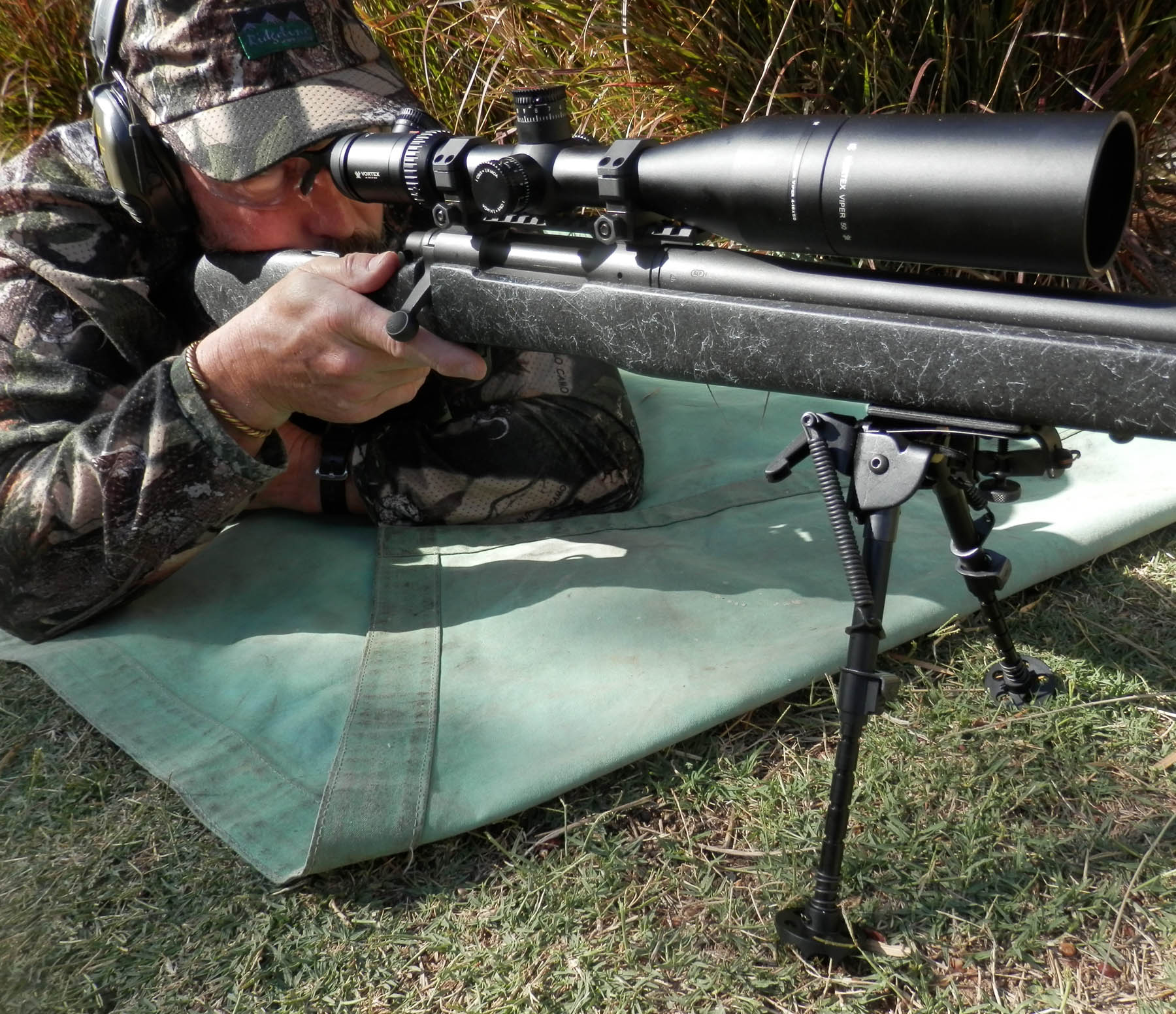
It’s all a matter of balance for Brad Allen when it comes to pairing a rifle and scope for hunting
Of all the different types of rifles I’ve owned and used throughout the years, walkabout hunting options are without doubt my favourite. I’ve used various makes, styles and calibres in that time, some good, some not so good, but sampling all of them have assisted in shaping my current opinions.
As far as rifle actions go, I’m a ‘controlled round feed bolt-action’ fan and, subsequently, most (not all) of my favourite rifles have that Mauser 98 type of action. This is a personal preference but there are numerous great ‘push feed action’ hunting rifles out there, with many of those being inherently more accurate than my beloved 98s.
I just have a thing for that broad Mauser extraction claw, which can remove the ‘stickiest’ of fired cases on a reload, which in a rifle intended for hunting large or dangerous game is a desirable feature.
In this day and age, hunters and shooters the world over are spoilt beyond belief with the sheer volume and variety of rifle brands, action types and calibres on offer. An unforeseen consequence of this amazing array is that there is almost too much to choose from. For old heads, it’s not as much of a problem, but for our new hunters and shooters, it’s often too easy to fall into the ‘new popular rifle/scope/calibre’ trap.
This is never more evident than when trawling through the online second-hand firearms sites. Almost daily, I see walkabout hunting rifles for sale that are topped with ridiculously large, inappropriate scopes. I often wonder, if that rifle had been fitted with a more appropriate scope, would the seller still feel the same?
A couple of cases in point somewhat recently were a beautiful, almost new Marlin .30-30 wearing a huge Leupold scope with target turrets and 50mm objective and a Ruger American .308 with a similar target scope plus an adjustable 50mm objective. Both are imminently suited as walkabout hunting rifles, until the addition of those ridiculously large scopes. The Marlin should have been wearing nothing larger than a 2-7x and the Ruger up to a 3-9×40. Even if those rifles were only being used on a range, the smaller scopes, mounted lower over the actions to enable a better cheek weld on the stock, would have greatly enhanced their usability and definitely given a better shooting experience to the owner.
Certainly, it’s all about horses for courses. A large, high magnification scope, like my son’s Vortex 4-16×50 with its target type turrets (and there are many larger scopes available with objectives up to 56mm) are not intended for walkabout hunting rifles. Macen’s big Vortex scope sits upon his long and heavy Remington ‘long-range’ .300 Win Mag, which is purely and simply a long-range target rifle, whatever the target may be.
With that in mind, for its intended purpose, it is a well-balanced outfit, as it matters little how large or heavy the finished product is, because it’s not intended to be carried over hill and dale in the pursuit of game animals.
On the flipside, if he had mounted a 1-4×20 scope on that rifle, it would be likewise unbalanced, as that is a scope you would put on a light, short, fast-handling brush rifle for pigs or deer, at close to medium ranges.
I’ve previously mentioned the time, years ago when I was in a local gunshop and the proprietor was attempting to sell a young fellow, a fixed 8x scope for his .222 Remington, which he was going to use for walking up pigs in cover. When I explained the obvious shortcomings of the combination to him, he didn’t buy that scope and if looks could kill, the shop owner would have taken me out there on the spot.
Apart from the plethora of overly large target style scopes available on the market, another issue is pistol grip chassis rifles promoted as hunting rifles. Sure, generally they are quite accurate due to their rock-solid bedding systems, but they do not handle or point anything like a well-balanced, classic shaped hunting rifle.
The basic concept of bolt-action and lever-action hunting rifles has not changed much in well over 100 years and the reason for this is quite simple. Those designs work extremely well for their intended purpose.
Again, the newbie can easily be influenced by these sexy-looking skeletal pistol grip stocks and wide array of colour choices. Top it all off with a great big target scope, and a new fad calibre and our newcomer is doomed to an average hunting experience at best. Ultimately, the likely outcome is a substantial financial loss when they realise the mistake and on sell the outfit, wondering just where they went wrong. Pistol grip chassis rifles with large scopes do have their place in the shooting world, but not as a walkabout hunting rifle.
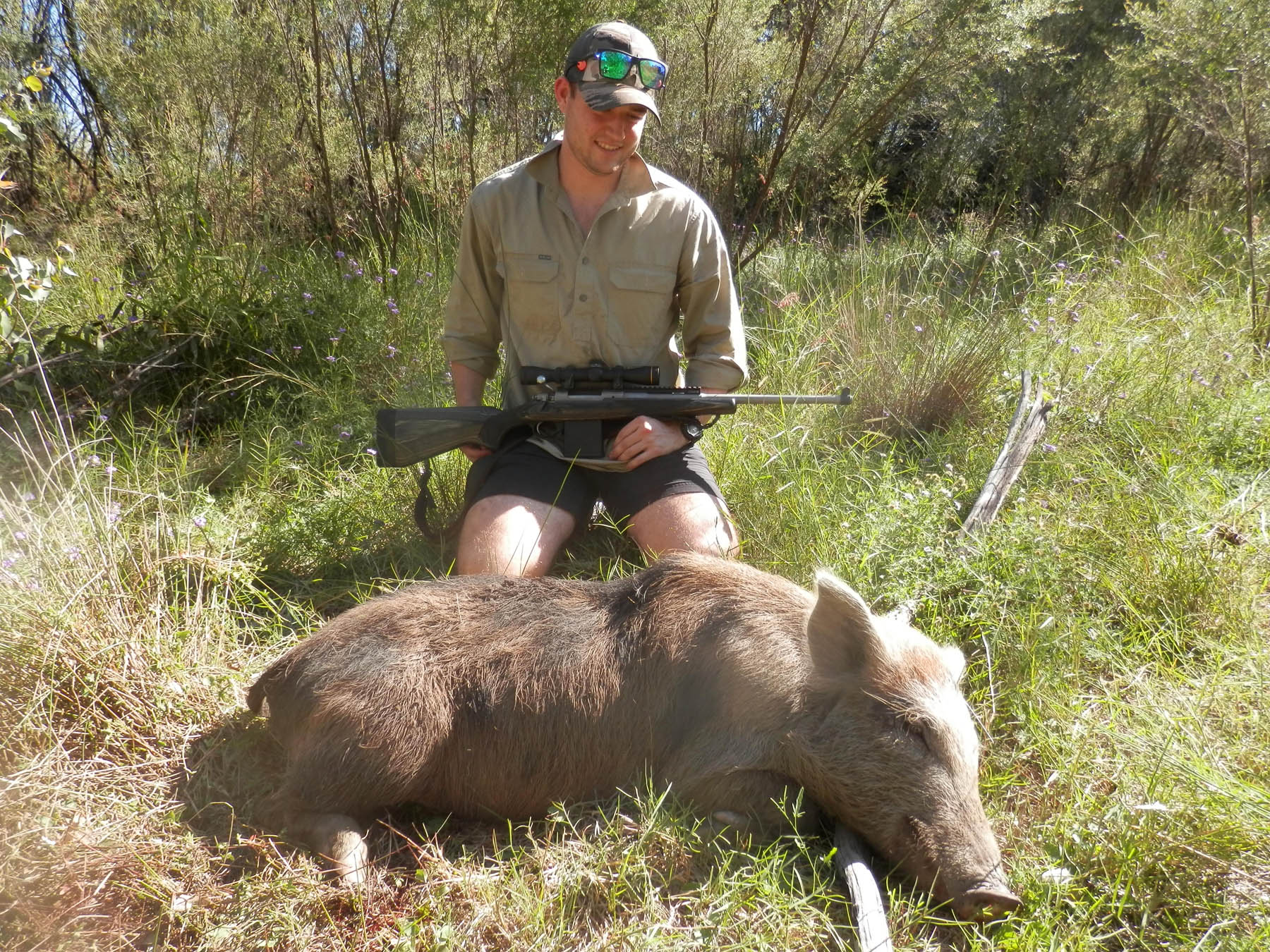
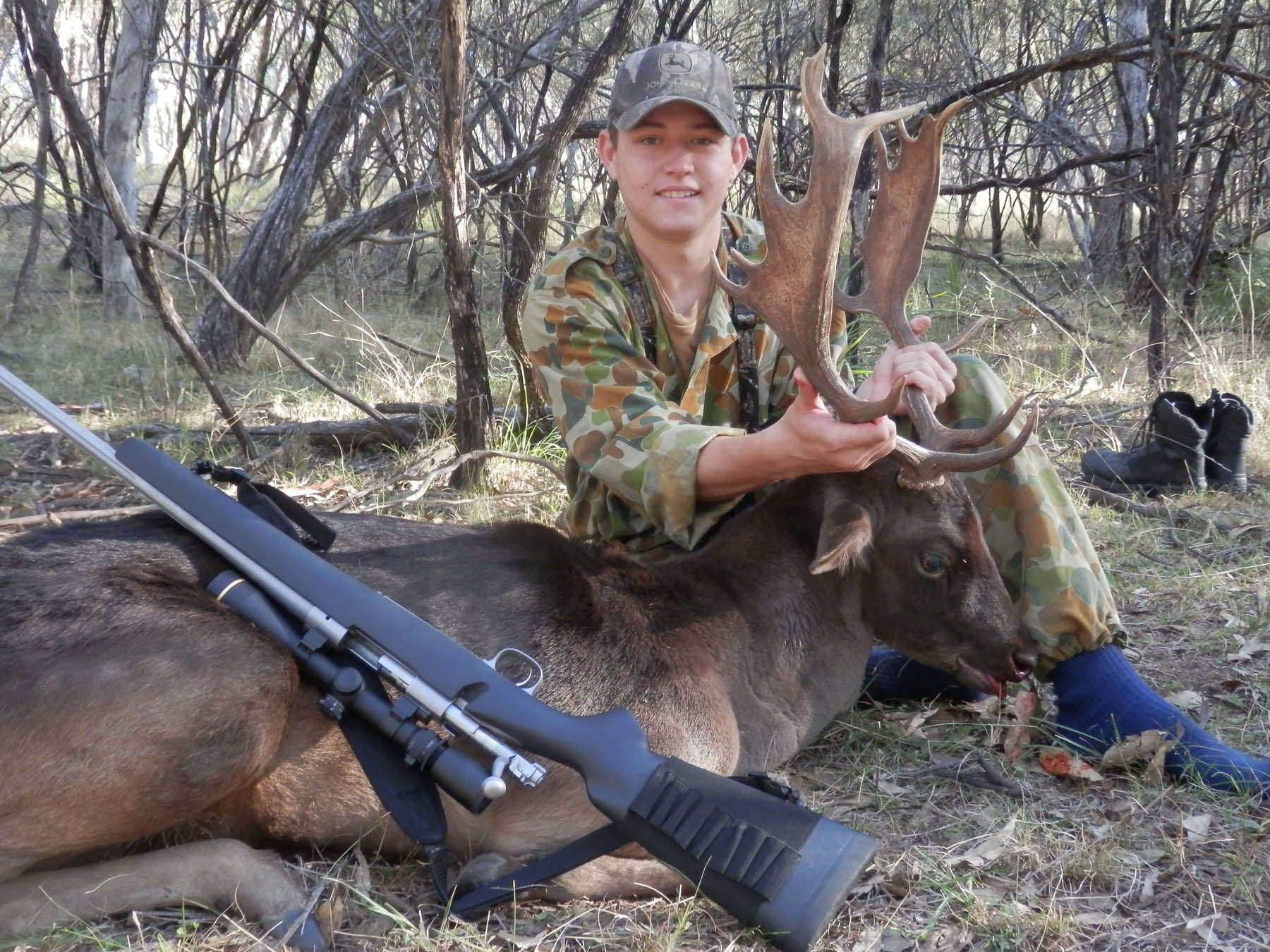
Well, by now you know what I don’t like in a walkabout hunting rifle, so I’ll try to be a little more positive and tell you what I do like. There are any amount of well-balanced, hunting rifle/scope combinations out there, but my preference is for a bolt-action repeater, reasonably slim stock, a barrel around 22″ long (24 or 26″ for Magnums) with a low mounted scope of no more than 3.5-10x40mm.
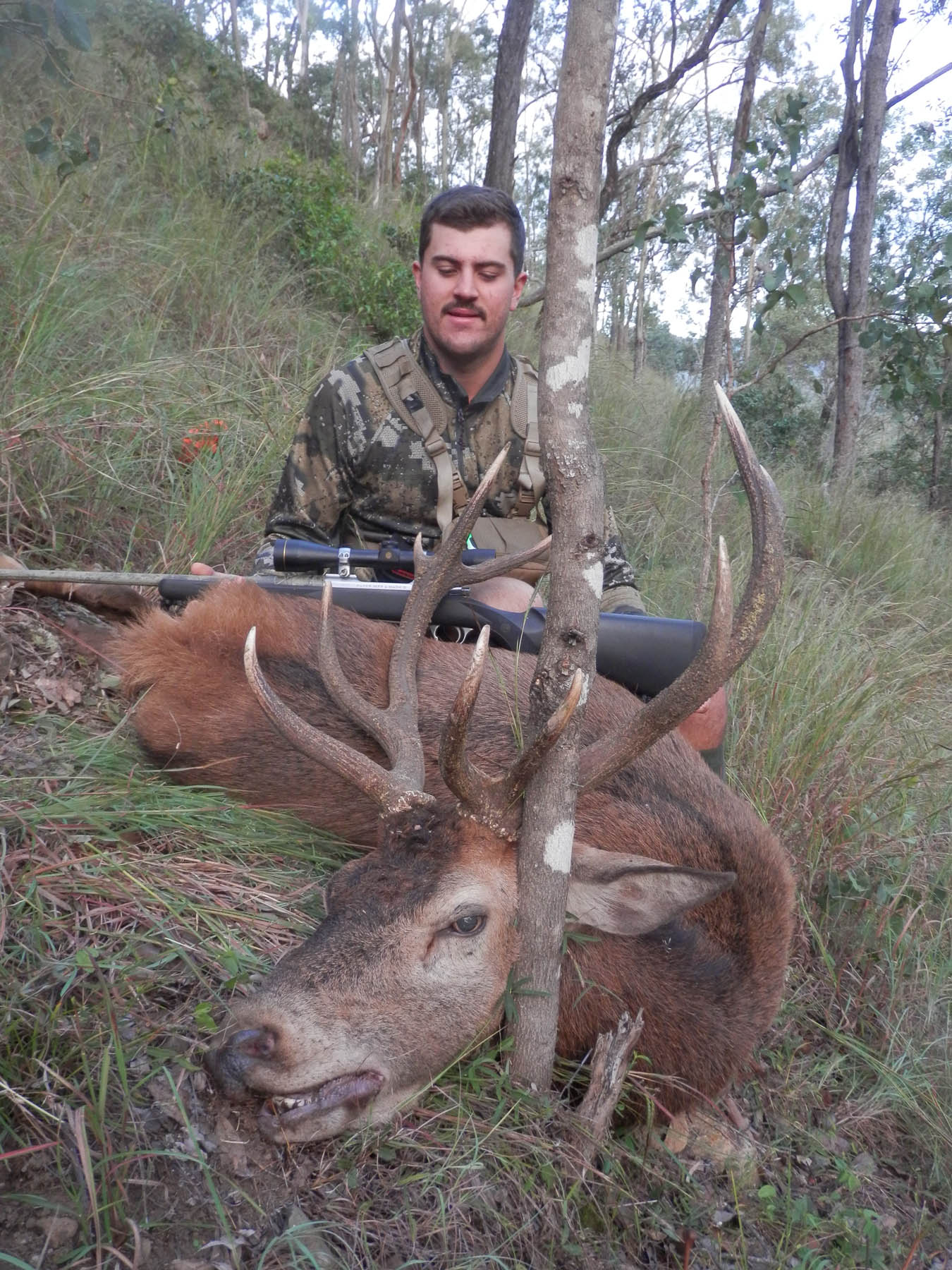
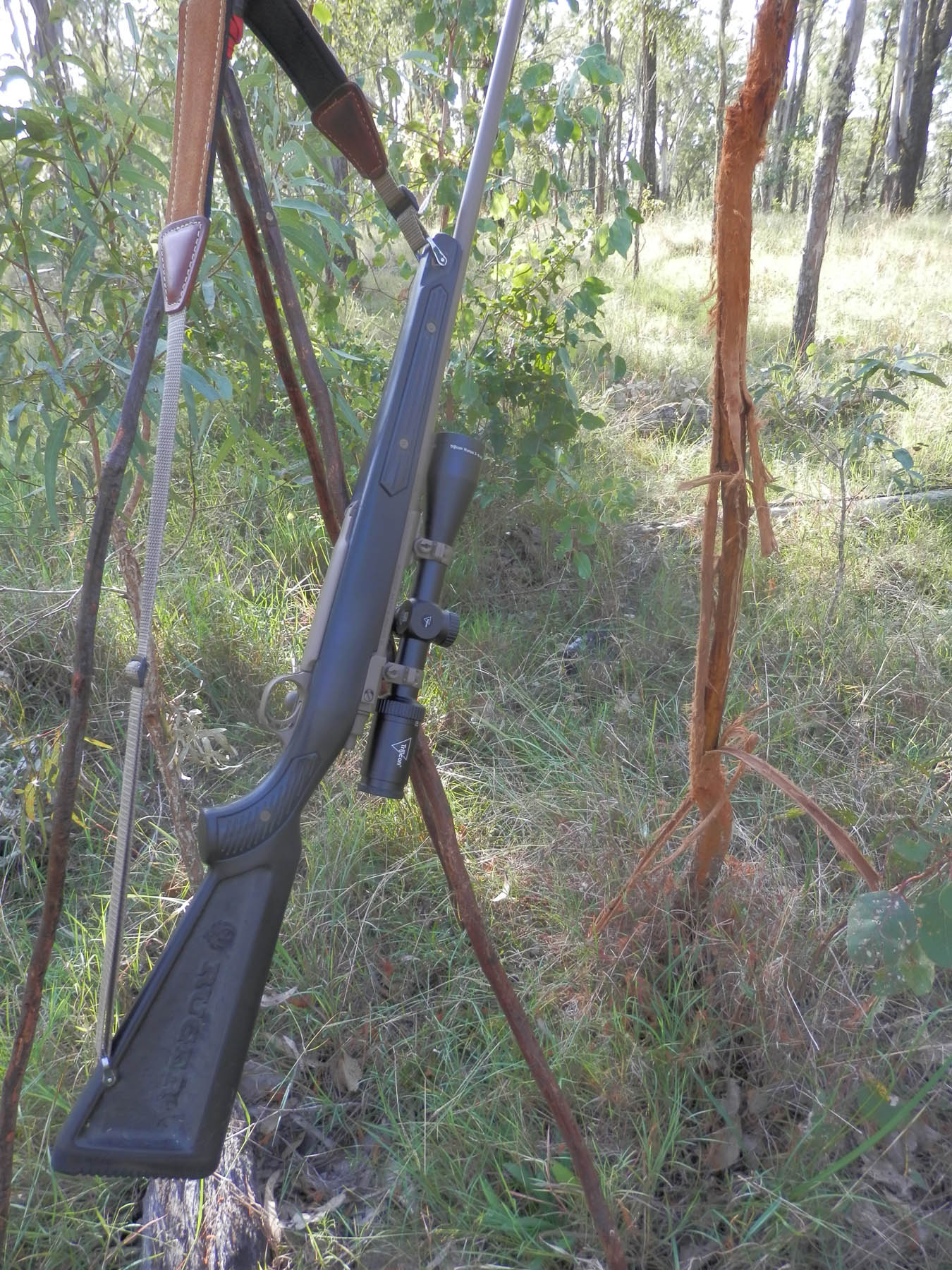
Consequently, my long-term favourite has to be my old Ruger stainless/synthetic .270 which now wears a Trijicon 3-9×40 scope. It is reasonably accurate, powerful enough, light and short with a 22″ blue barrel. Over the years, I’ve carried that rifle many kilometres through the bush, in wind, rain, sleet and heat, taking many head of game in the process as the combination just works so well.
It’s no secret that the 3-9×40 size scope is probably one of the most popular used by hunters, worldwide. The reasoning is quite simple, in that at the lower and most important end of the scale, 3x allows ample field of view for most close-in shots at moving game. At the higher end, 9x is plenty of power for shots on deer-size game out to 300 yards or so (the realistic maximum range that most responsible hunters should ever contemplate a shot on medium to big game). On the scope’s objective size, 40mm is quite sufficient size in a quality optic to transmit the required light to the hunter’s eye, even in lowlight conditions. All this in a package that complements the size and balance of most walkabout hunting rifles.
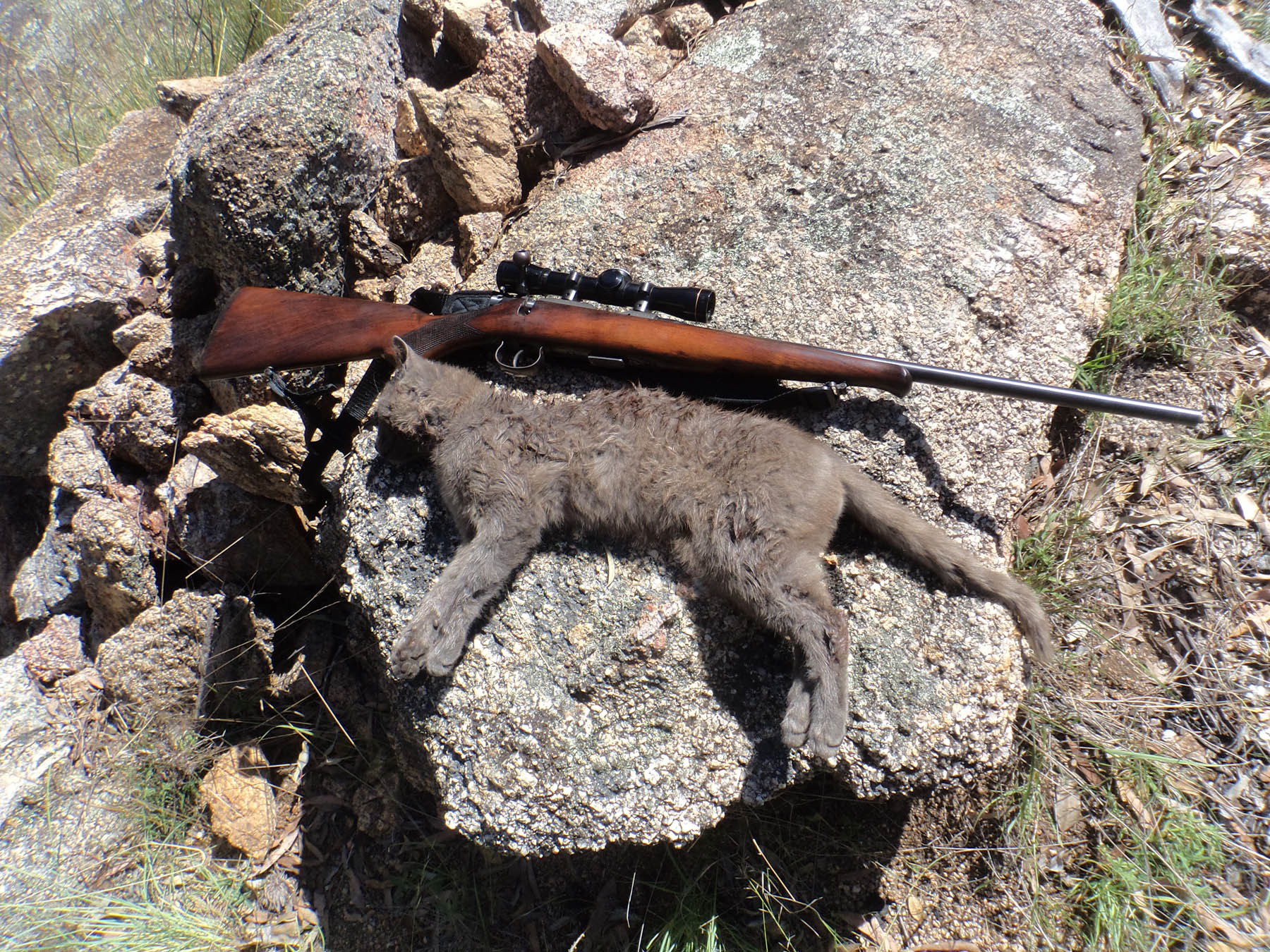
On the smaller side, both my nephew Frank and I have old Brno Model 2 .22RFs that have had their barrels shortened to 20″ and wear Leupold 4x28RF scopes. Invariably, every year, I account for more head of small game with mine than all my other rifles combined.
It is beautifully balanced and accurate, and exceptionally easy to carry. I have previously had a Leupold 3-9x33RF scope mounted on it, that’s a tad bigger than the little 4×28, but rarely ever shifted the power from 4x anyway. The truth is that any fixed power scope of 2.5x, 3x or 4x, that has its parallax adjusted to 50m to suit the .22RF cartridge, will be entirely adequate for 90 per cent of all small game hunting.
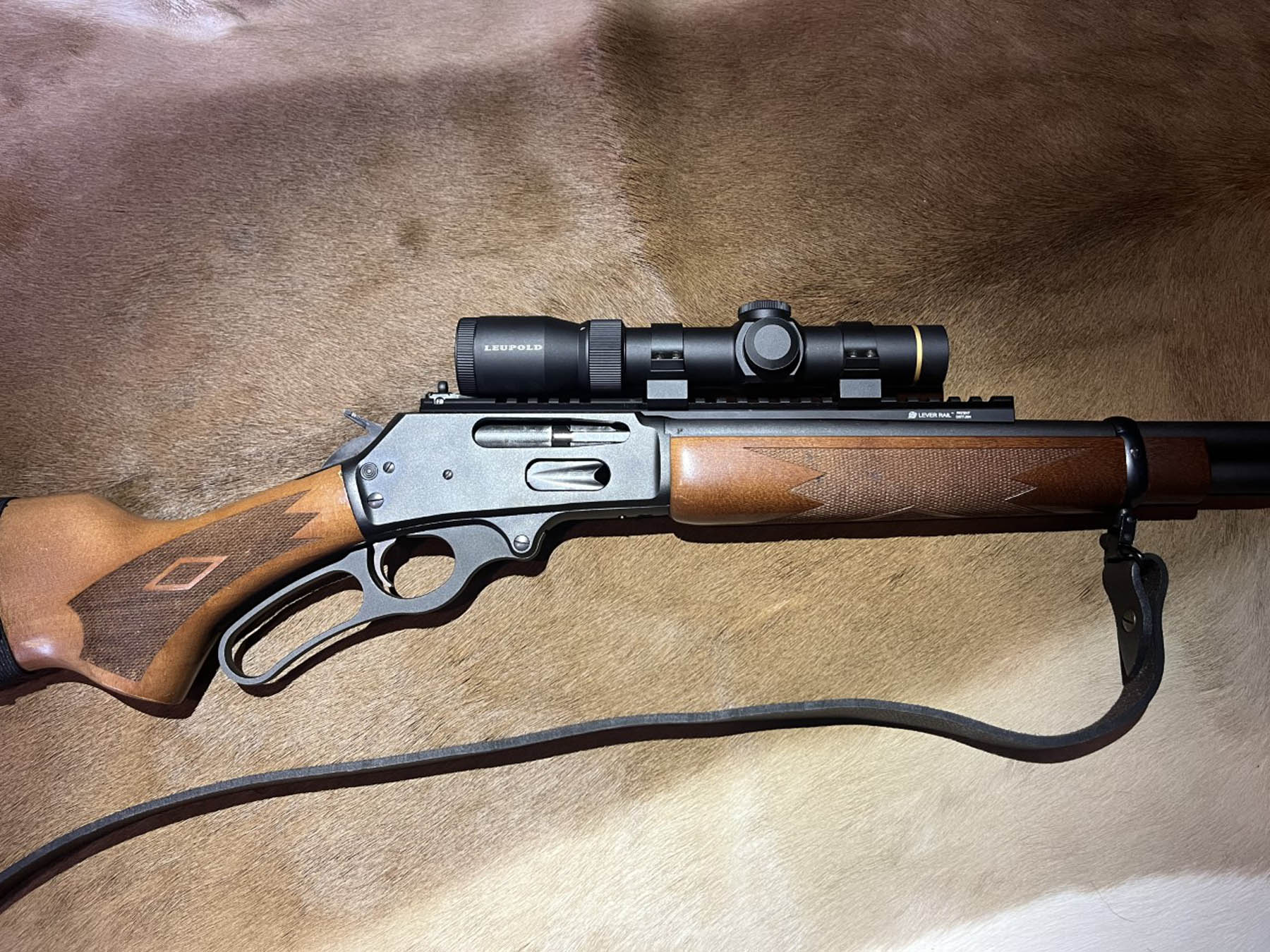
Not that long ago, my eldest son Bill acquired a lovely Marlin .30-30 lever-action. A classic medium game hunting rifle to be sure and he fell in love with it instantly. Initially using only iron sights, he easily shot hares and pigs well past 100 yards, with all animals succumbing quickly to the moderately powerful round.
Recently, Bill added a low mounted 1.25-4x Leupold VVXR scope in quick detachable mounts to the outfit which has made it even more versatile. For a rifle that’s been around in the same basic form since 1894, it would appear that Marlin did it right the first time and the addition of a modern low powered scope enhances its usability even more.
When selecting a scope for a walkabout hunting rifle, bigger is ‘definitely’ not better. Certain rifle types and calibres that were developed for specific purposes and ranges, require quite precise styles and sizes of optics to function as they were intended. Target scopes should be mounted only on target rifles.
Low power hunting scopes were designed to be mounted on short, fast-handling brush rifles and scopes from 2-7 up to 3.5-10, with objectives no larger than 40mm, were explicitly intended to be mounted on walkabout medium game hunting rifles.
Any scope that you mount on any rifle should ‘complement’ the usage and balance of the outfit. If it doesn’t do that, the set-up’s usability will be compromised as will be the owner’s enjoyment of it. So, don’t be influenced by all the hype surrounding inappropriate optics that are just not suited to your rifle. Bigger is not always better and balance in life is everything, especially in relation to hunting rifles. A well-balanced unit will go a long way in providing the owner with a much more positive hunting experience. Enjoy the hunt!