


Steven Fine recounts a captivating time in East Africa fraught with danger and extremity for survival
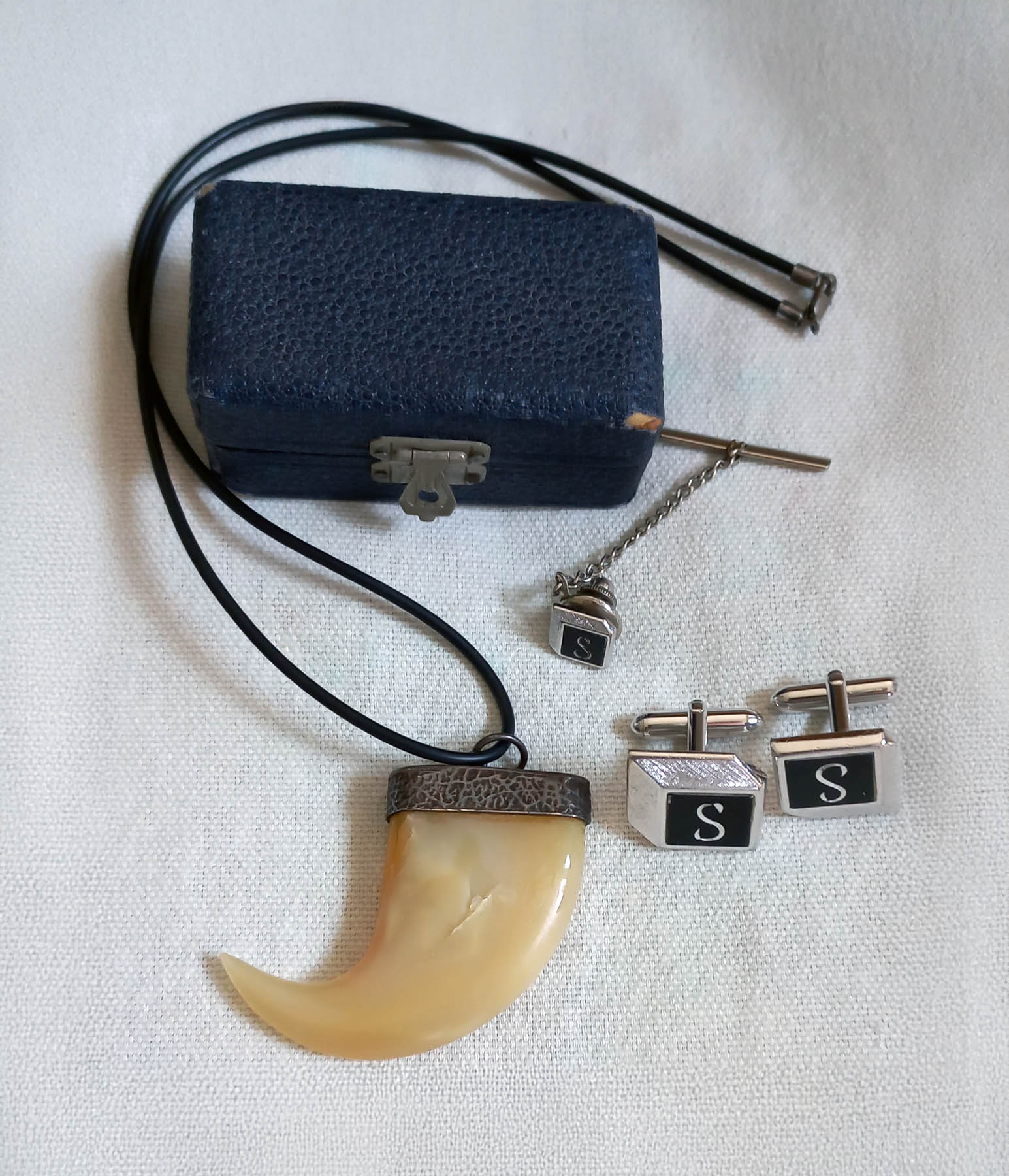
I was only eight or nine years old when my grandfather, ‘Pop Sam Jaffe’, asked me if I wanted to see a lion claw. My curiosity and excitement were all over my face so Pop Sam went to his room and came back with a small, worn wooden box. He removed the claw from the box and put it in my hand. I remember feeling the sharp tip of it in glee, while running my finger over the entire claw.
I asked Pop Sam how he obtained the claw, and he told me that he was in East Africa during World War 1 as a British soldier. He was based in Kenya, Tanzania and then Egypt in North Africa. When in Tanzania, he had to shoot a lion that was “very bad”, and he would tell me the full story when I was a bit older. My heart pounded away in more excitement when he then promised me that the claw would one day be mine.
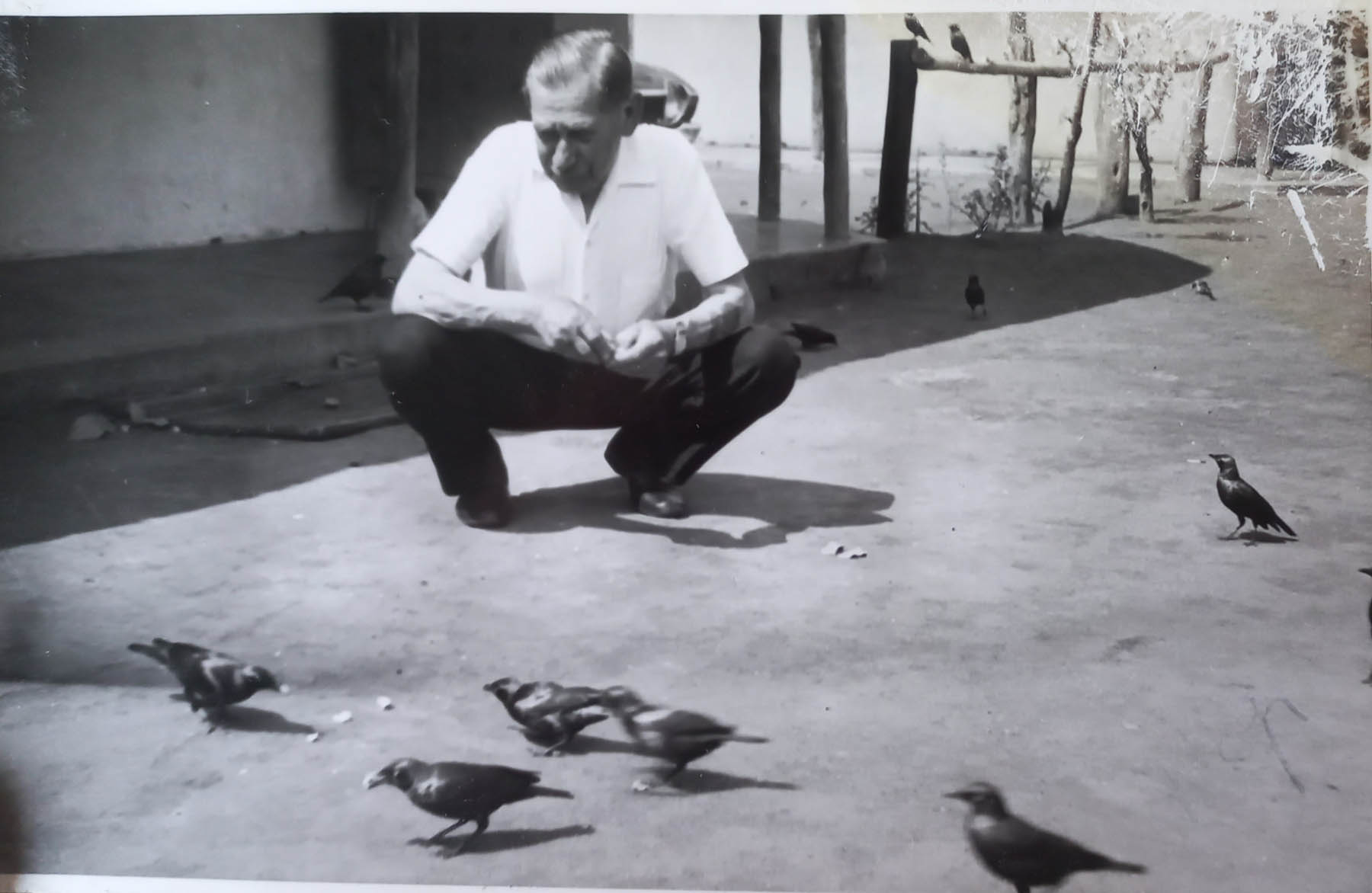
My late grandfather was a quiet man, modest, caring and short in height. He fought in both World Wars, saw a lot of action but never shared his war stories. I learnt from him and in all the decades that I hunted with different people and friends, that when sitting around the campfire at night, it was the ‘big talker’ who often never succeeded on hunts.
Years past, I was a teenager, and Pop Sam an old man. He kept his promise and produced that small wooden box. “It is yours now” he told me. I was so impressed and proud. Pop Sam went on to say that, while in Tanzania, which used to be German East Africa, he and another soldier called Fred Thorpe would hunt meat for the pot. They mainly hunted buck species but on two occasions they shot buffaloes.
Pop Sam began to tell me what happened with the claw. Early one morning a tribesman came running to their tented camp and was immediately stopped by a guard. He was puffing after his run and begging for help. His village was not far from camp and a few kilometres from the enemy. He told them that a big male lion had killed a herdsman, and it was not the lion’s first kill. Their commanding officer instructed Pop Sam and Fred to track the lion down and kill it. They were chosen because they were both marksmen with their English .303 rifles. Further instruction was to be back before sunset.
The tracker took them to the attack site and from there they tracked the lion. It was a sweltering day and at around midday they saw the lion lying down under a tree. It was agreed upon in whisper that the tribesman would hurl a stone/rock towards the lion and when the lion stood up, Pop Sam would shoot, and Fred would cover them.
The golf ball size rock was hurled towards the lion, which was some distance away. Even though the rock fell short, the noise prompted the carnivore to sit up quickly. Suddenly a couple of fishermen from the village appeared 300m to the right of the hunters and, as normal with village folk, they were talking loudly and not aware of the unfolding scenario.
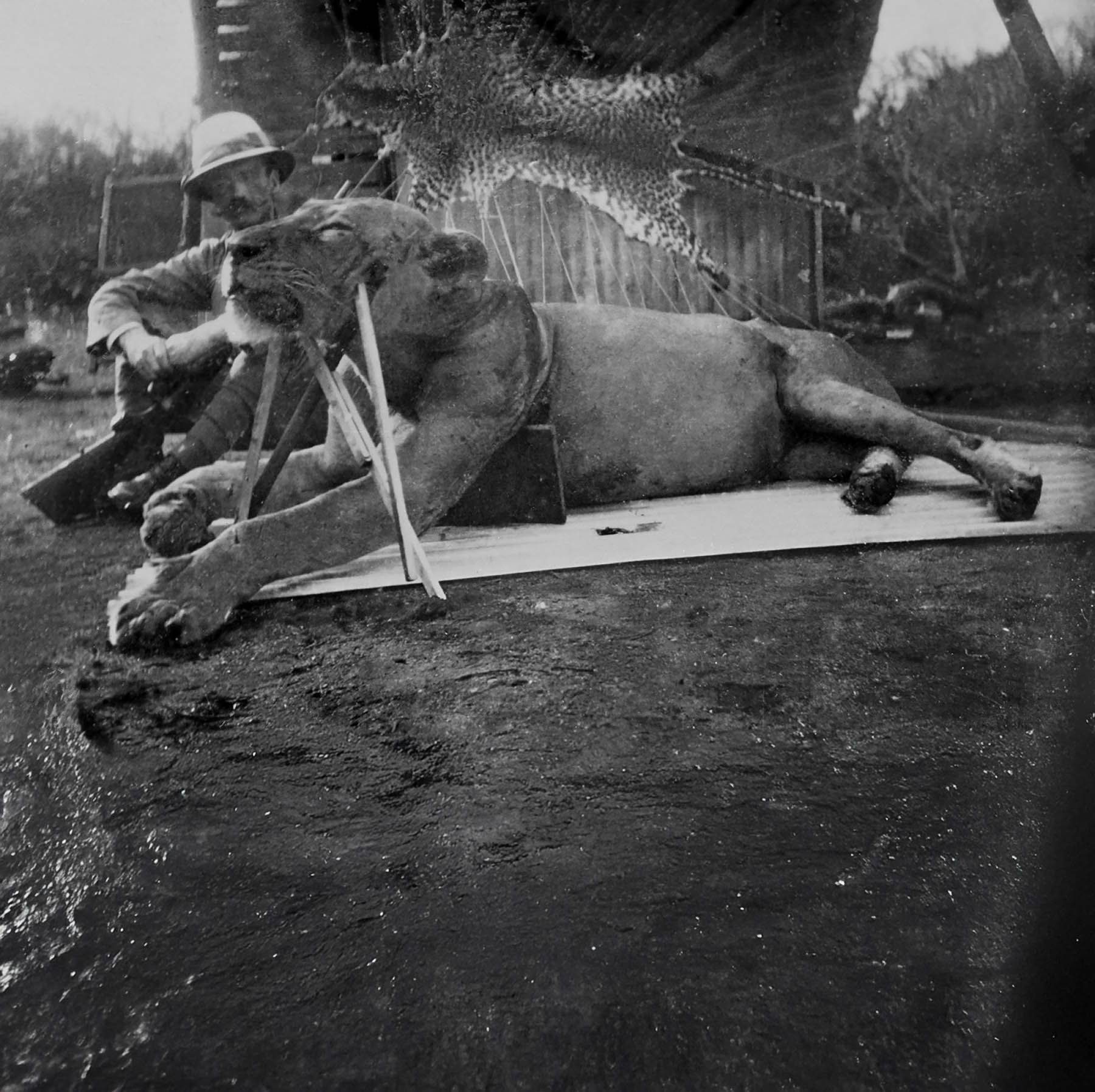
The lion jumped up, turning to face the fishermen and my Pop Sam fired. The lion dropped on the spot but was not dead. He aimed a tad high due to the distance, but the lion was incapacitated as its spine took the first bullet. The fishermen disappeared quickly, and with caution Pop Sam and Fred approached the lion who was snapping and snarling but could not stand up. The coup de grâce followed, and Simba was no more.
With the pocketknife Pop Sam always carried, he removed a claw from the lion. Among the lion’s tracks, they noticed a lot of fresh hyena tracks. The tracker set off at a run to call someone from his village. He needed help to skin the lion and Pop Sam and Fred returned to camp, arriving before sunset.
The lion’s belly was found to be full but there were no remains of the herdsman. There was a bit of doubt if the lion killed the man but, then again, with all the hyena tracks it was possible that after eating his first helping the pack of hyena stole the rest.
The following day there was another commotion in camp as a couple of soldiers on guard shouted: “Halt, who goes there?” While the guards were pointing their rifles at a small group of tribesmen, the guards realised they were locals without evil intention. They had come to thank Pop Sam and Fred, offering small gifts.
One of the gifts was a rustic, slimy and wet looking narrow leather strap with beads attached to it. It was a wrist strap with beadwork that was part of the contents of the lion’s gut. It belonged to the poor herdsman. The tracker who accompanied the lion hunters confirmed that the pack of hyenas was 15 strong, and had at some stage chased the lion off his kill then finished every shred of meat and bone. The tribesman gave Pop Sam the wrist strap but he passed it on to Fred as he had the claw. Fred took the wrist strap and said he would clean it up.
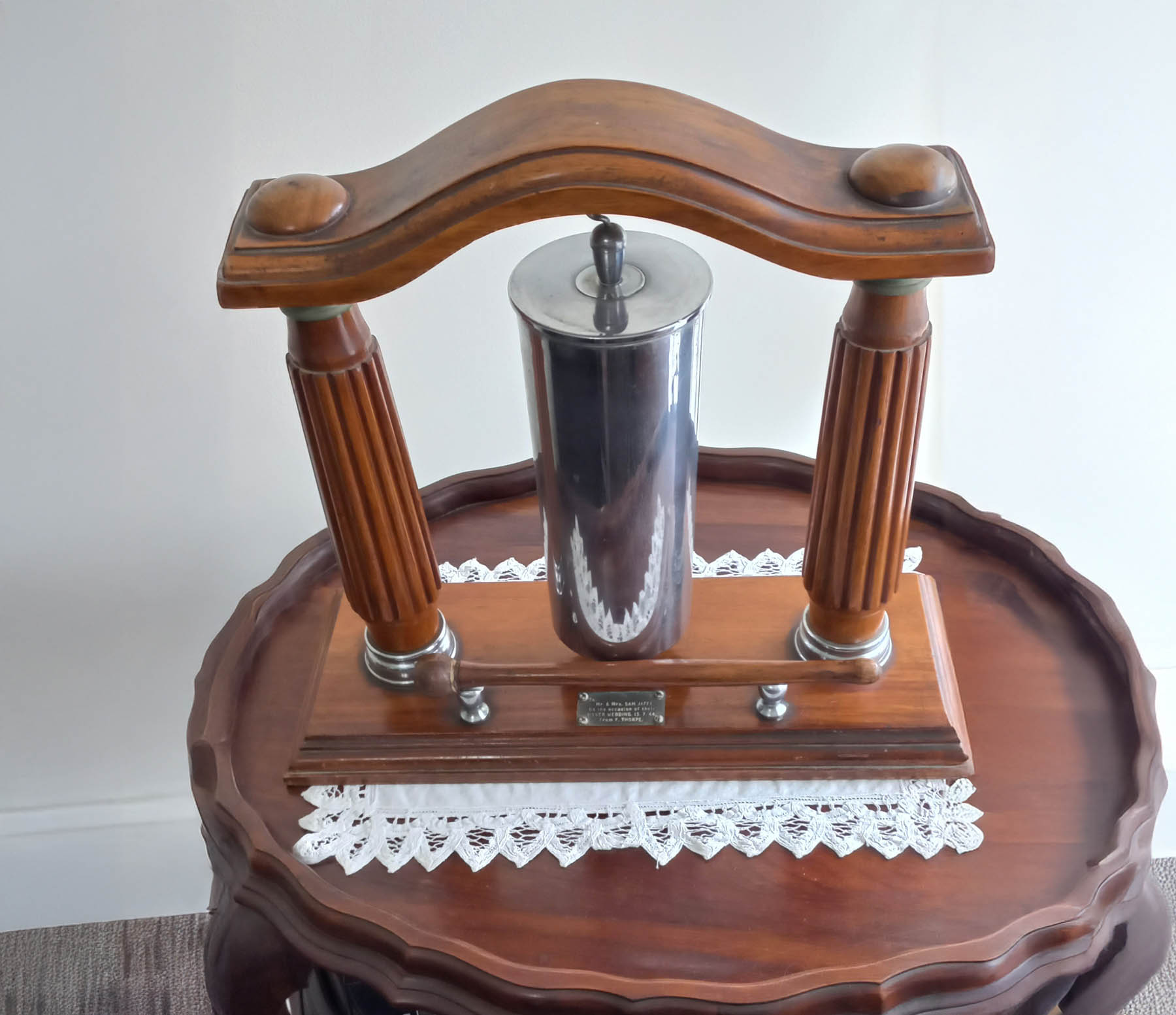
Decades later, in the mid-1960s, I met Fred at the home of my grandparents. He had come to visit them from England and confirmed that he still had the beaded wrist strap. Fred pointed to the dinner gong that he gave to my grandparents for their silver wedding anniversary. He had made it from a tank shell, saying a present was also due to Pop Sam because he had shot the “bad” lion. He then shared some events of their lion hunt as well.
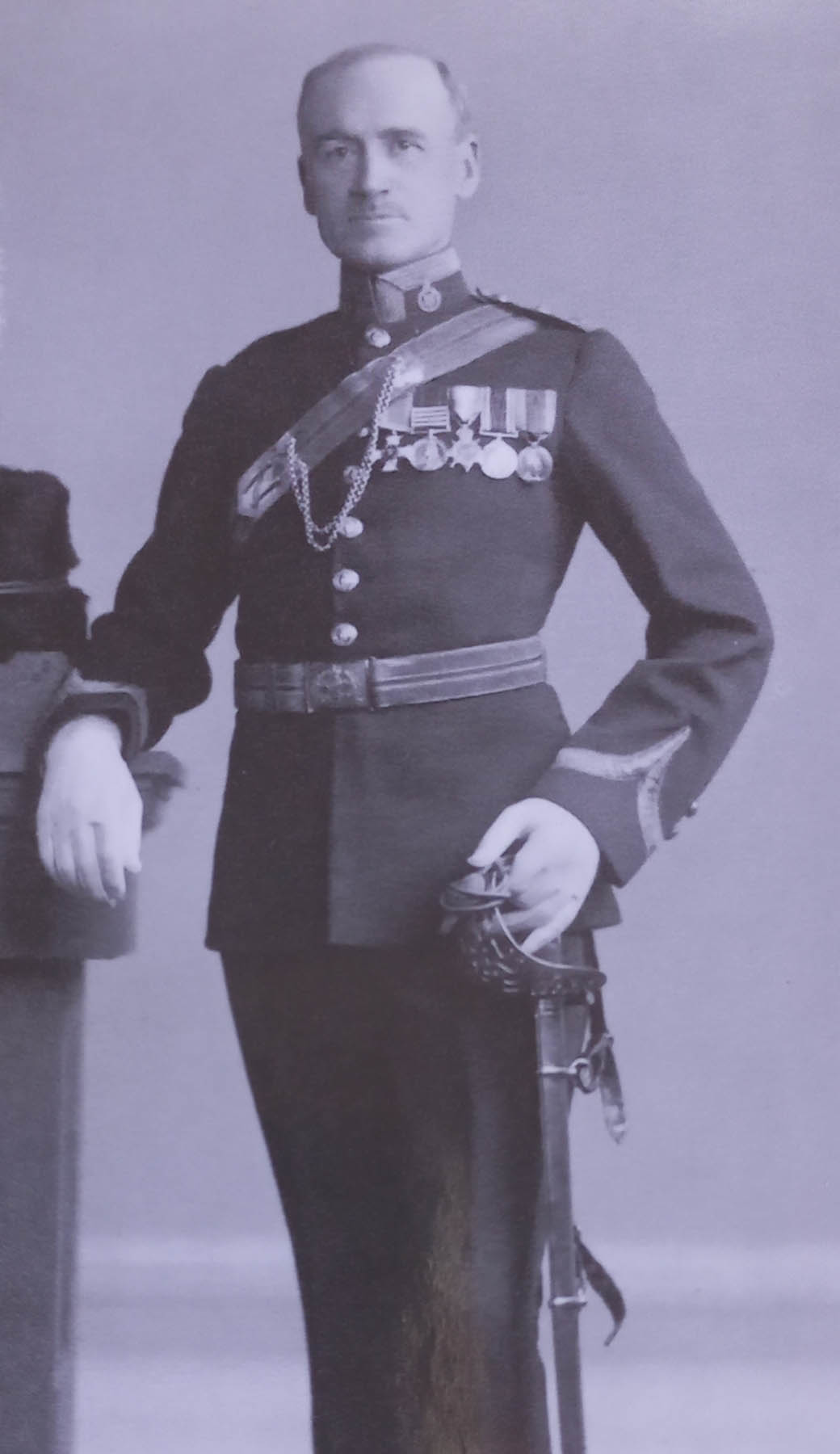
It was then that Pop Sam told me about a famous man called Lt. Col. John Henry Patterson (JHP), who hunted and killed the Tsavo man-eating lions. The pair of lions had killed at least 136 workers on the construction of a railway line in East Africa.
I’ll never forgot that discussion and my interest in the bush, hunting and the study of human fatalities by animals such as the African ‘Big Five’ opened up for me. This included working in the bush in South Africa as a junior ranger and later as a professional guide and hunter.
Pop Sam passed away in 1975. I still have the claw, and I also inherited the handmade dinner gong along with a pair of cufflinks and a tiepin featuring: ‘S’ for Sam and ‘S’ for Steven. The gong makes a hell of a noise. A strange gift really but it now sits proudly in my loungeroom as an ornament.
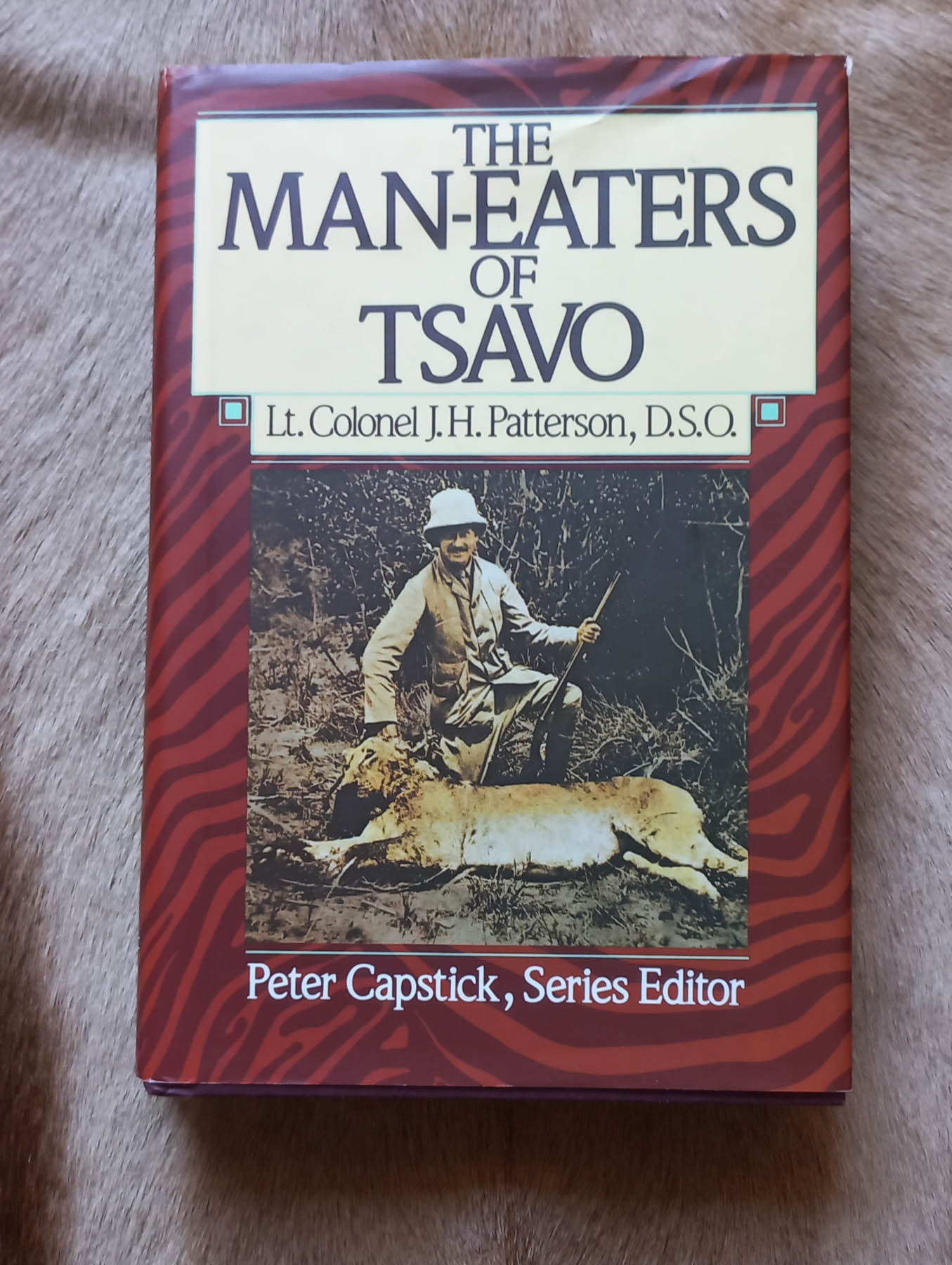
Back to JHP. His book The Man-Eaters of Tsavo is exciting. I bought a copy after my discussions with Pop Sam. Besides the man-eaters that he killed, he shot other lions, leopards and hyenas that caused lots of problems. ‘Tsavo’ came from the African Kikamba word for ‘slaughter’ due to many bloody Masai battles.
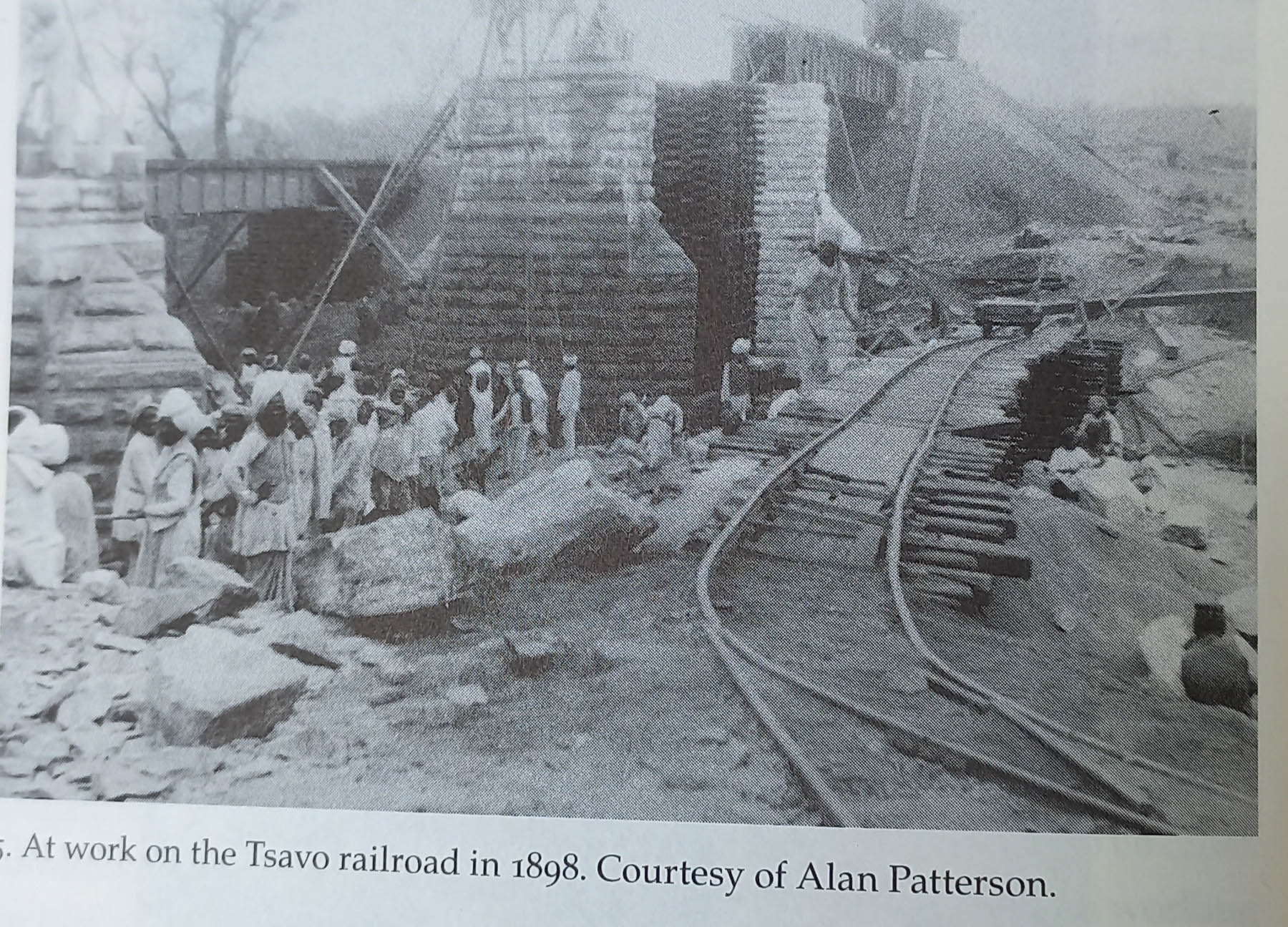
JHP was chosen to hand-build the lengthy Mombasa-Victoria (Uganda) railway line. He arrived in the area in March 1898 as an engineer, experienced in building railway lines, having completed one in India prior to this. Above all, he was a disciplined soldier, extremely brave and a stout leader. During the construction, everyone referred to the railway line as the ‘Lunatic Line’ due to the weather, terrain, wild animals and unskilled workers. JHP had to supervise the massive construction, protect his own life due to attempted murder threats from labourers and see to the wellbeing of his men. Dysentery was common and so was malaria, tick bite fever and blackwater fever – a dangerous complication of malaria.
JHP did not start the building of the line, it was one Ronald Preston, but due to many problems as mentioned above, JHP was sent to solve these and take over. His main task was the construction of the 95m bridge across the Tsavo River.
The labourers were being attacked by lions, leopards and even brazen hyenas. JHP, armed with a .303 Lee-Enfield rifle with a short magazine and a 12-bore shotgun, sat over kills and baits on all night vigils. He also owned a .450 rifle and used solid Martini bullets. From what I read, his two shotguns were also LE, with double barrels.
Two lions were constantly attacking workers while they slept in the open and even in train wagons on piles of wood. His foreman was attacked and eaten, and it was then that JHP and a friend, Captain Haslem, went to track the man-eater. They found a bit of torn clothing, blood and part of the foreman’s foot and skull, with JHP vowing to find and kill the culprits.
JHP slept in a tent and one night a lion caught a foot in one of the tent ropes but soon escaped to attack and kill a labourer who was in the tented hospital. The first real encounter was at night when a lion jumped over a cattle fence just behind JHP. He was with Dr Brock, the head of the hospital. They both briefly saw the lion, and, in the pandemonium, both shot at the growling, snarling lion but the ‘ghost’ disappeared. A worker was attacked that night but thanks to Dr Brock he survived, although Brock had to amputate a leg, stitch other parts of his body up and bandage several fractured ribs.
The deaths continued, the staff were under terrible stress and went on strike several times. JHP requested help from a district officer by the name of Mr Whitehead. He invited Whitehead over for supper and sent a staff member to meet him at the Tsavo railway station in the late afternoon. The staff member returned in panic and fear, Whitehead never arrived and on the station platform there was a lion.
At night JHP heard rifle shots but this never worried him as shooting was regular. He slept in a shelter made of wooden railway sleepers and on top of a grinder. He heard a lion and grabbing his rifle he fired but the eyes were soon gone.
In the morning, he went early to check where he shot at the lion and was shocked to see Whitehead, whose clothes were torn and blood saturated. The district officer told him that the train arrived late and with his accompanied sergeant, they set off for the camp of JHP. On the way a lion attacked him from behind but they managed to shoot at the lion with a carbine. He was not injured badly but the lion attacked his sergeant, taking off with the man in its jaws.
Lookouts for the predators were built in trees, with donkeys as baits, and lives were still being lost to the big cats. One night while sitting over a donkey, a lion stalked JHP from behind. Although he was up on a platform it was not a great height for a lion to reach. Suddenly a twig snapped and JHP fired his rifle at the lion. The bullet struck home, there was a lot of snapping and snarling and then it was silent. That one man-eater was dead but the second one continued to kill people. (Personally, I believe that there was more than just the two lions).
Weeks later, JHP was back up on a platform in a tree. It was night, in the distance a hyena emitted a howl like bark, the crickets chirped in happiness… then silence. JHP saw the lion and his .303 rifle shattered the silence. He cocked the rifle and fired again and again. The moon was bright and JHP smiled when he saw the lion lying still. Taking his rifle, he climbed down, the lion recovered for a very short while and charged. JHP shot it in the head and in the chest. Lion number two was finally dead.
The lion was the bigger of the two and measured 9ft 6.5^ (almost 3m) from nose to tail tip. The first man-eater was killed on December 9, 1898, and the second one 20 days later on December 29.
Both male lions were without a mane, which had occurred before in the area. Some say it was due to the climate being extremely hot, but I do not agree. I believe the genes were simply passed down. Other different examples are the white lions from Kruger National Park and the rare black leopards in Africa.
Later, JHP discovered an area by a precipice where a field of scattered human bones were found where the lions ate many of their victims. A total of 136 recorded deaths were attributed to the lions.
The bridge was completed in February 1899. At the end, sometime during 1901, JHP returned to England. The two moth-eaten lions are in the Chicago Field Museum. JHP moved to California in 1940 with his wife Francis and became friends with Benjamin Netanyahu’s (Prime Minister of Israel) late father.
He died in 1947, and Francis died six weeks later. They were both cremated and their ashes were buried in Israel. This was his request and an instruction to family in his will. He was a Christian Zionist.
Three movies were produced about JHP and the lions:
1953: ‘Bwana Devil’
1959: ‘Killers of Kilimanjaro’
1996: ‘The Ghost and the Darkness’.