
Chris Redlich recalls the 80th anniversary of victory in the Pacific through his grandfather’s diaries
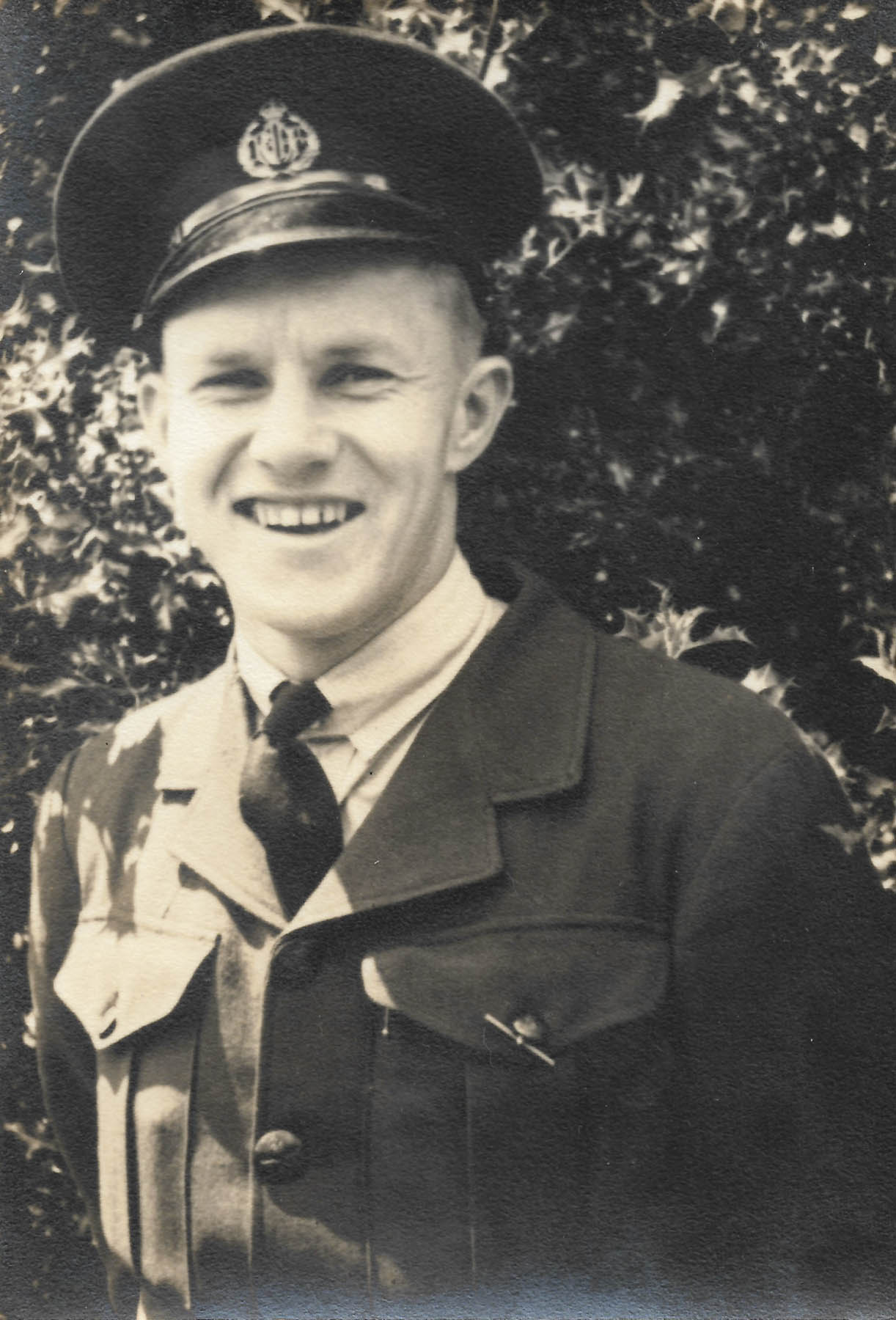
I couldn’t help but be moved by the immense sadness on reading the letters from my grandfather’s first wife Ethel while he was away training for war. At home and helpless due to the separation of distance, Ethel battled painful blood poisoning brought on by a serious infection of the hip. She pleaded for his return and, after finally being granted compassionate leave by his Commanding Officer, grandpa Jim returned to be with his wife in Queensland.
Tragically, she passed away from acute sepsis less than 24 hours before he got there. Jim was heartbroken. Had she received a shot of penicillin the outcome would’ve been positive, so it’s a stark reminder of what we take for granted today and how hard it was for families during the Second World War.
Jim was the fourth of five Redlich children born to Latvian immigrants and, like many young people of the war era, they were keen to serve their country in its hour of need. By late 1942, the tide of Japanese invasions had been met with fierce resistance from Australian and Allied forces but they were far from finished. Despite being recently married, Jim’s chance for enlistment arose later and with older brother Harold having previously served in the Middle East with the 2/15AIF, he was keen to join the same battalion.
In a conversation I had with him more than 20 years ago, grandpa recalled when the family received word that brother Harold was ‘killed’ or ‘missing in action’, the news directly impacted his immediate decisions (see A Gallant ‘Rat’ in the May 2020 edition of Australian Shooter). Jim’s mother begged him not to join to spare him the same fate as Harold, yet his passion to serve remained strong.
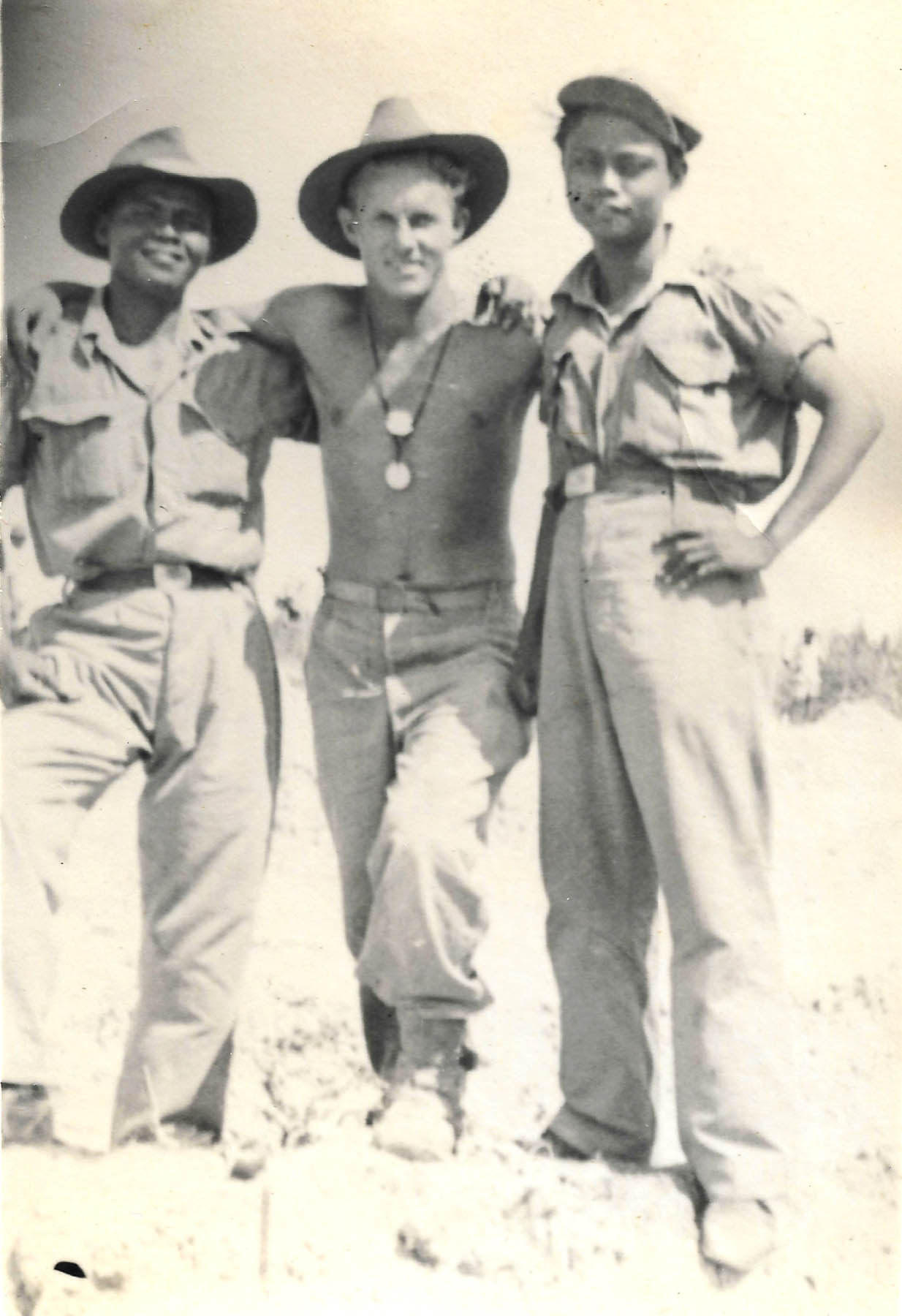
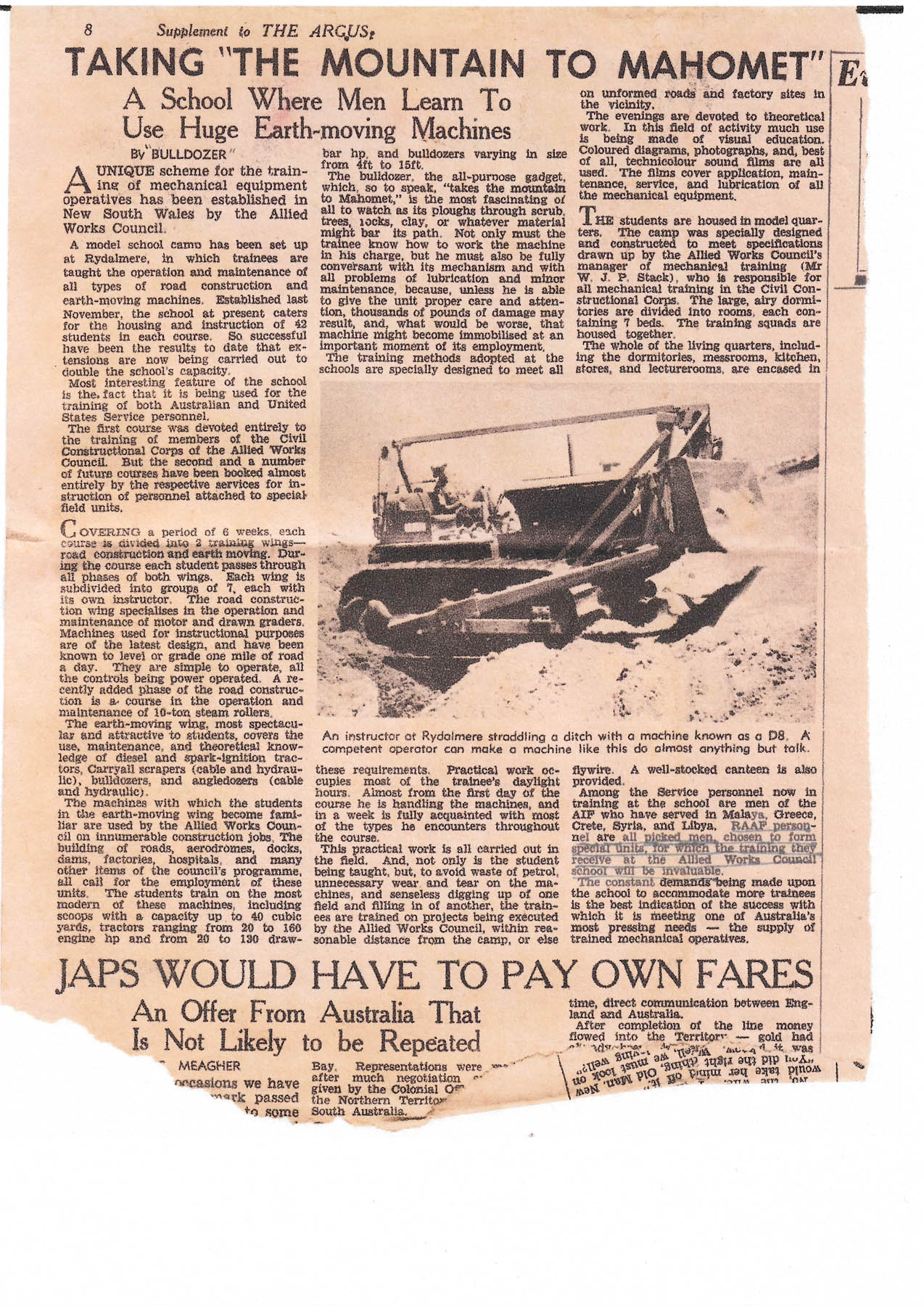
His experience as a steam engine operator in rural sawmills played a part, and he enlisted in June 1942 as a plant operator with the RAAF instead of his brother’s infantry unit. After the devastation of losing his first wife, the ensuing uncertainty saw him reposted to another outfit where he soon made new friends and became a valued operator with the 8th Airfield Construction Squadron (8ACS).
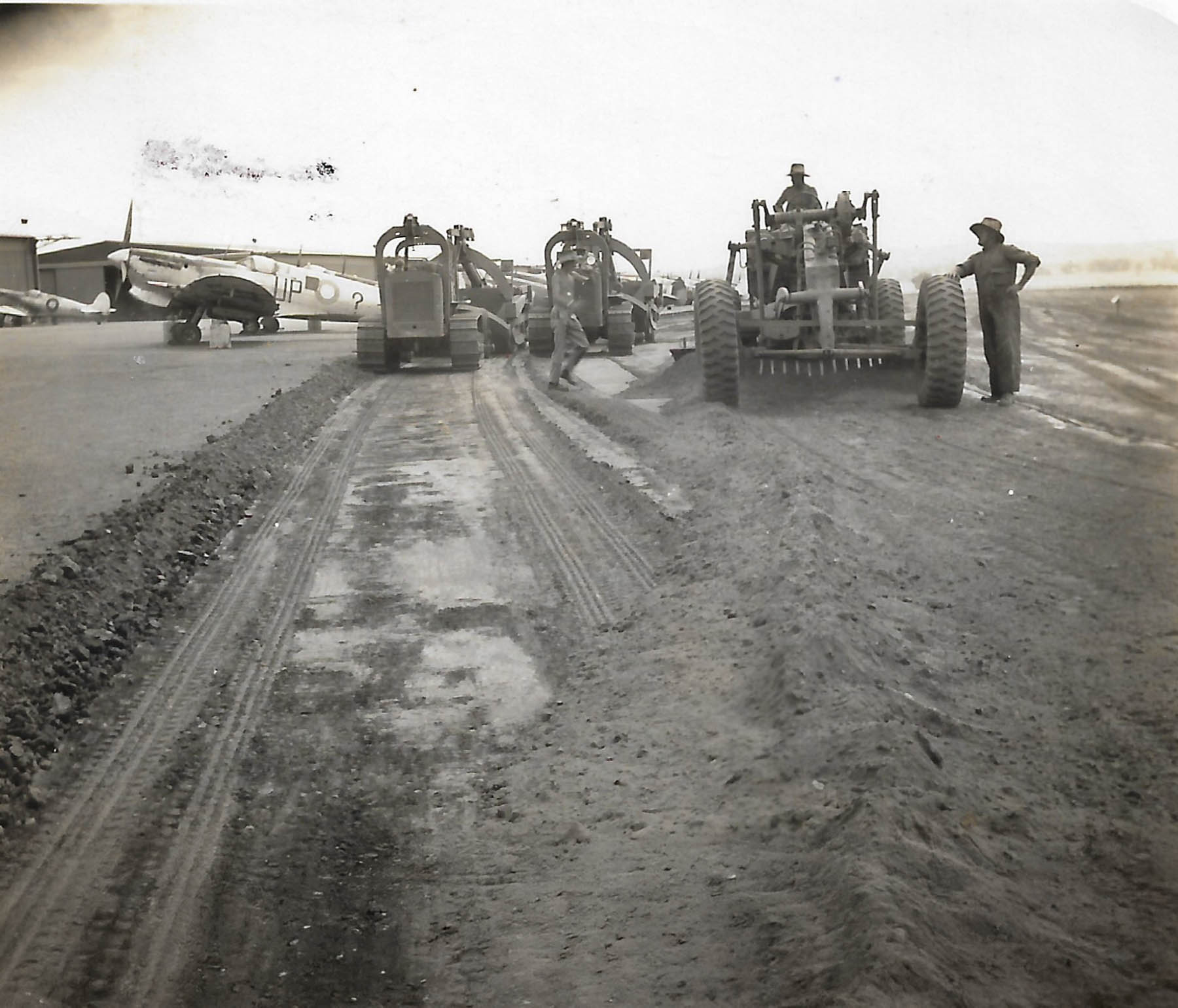
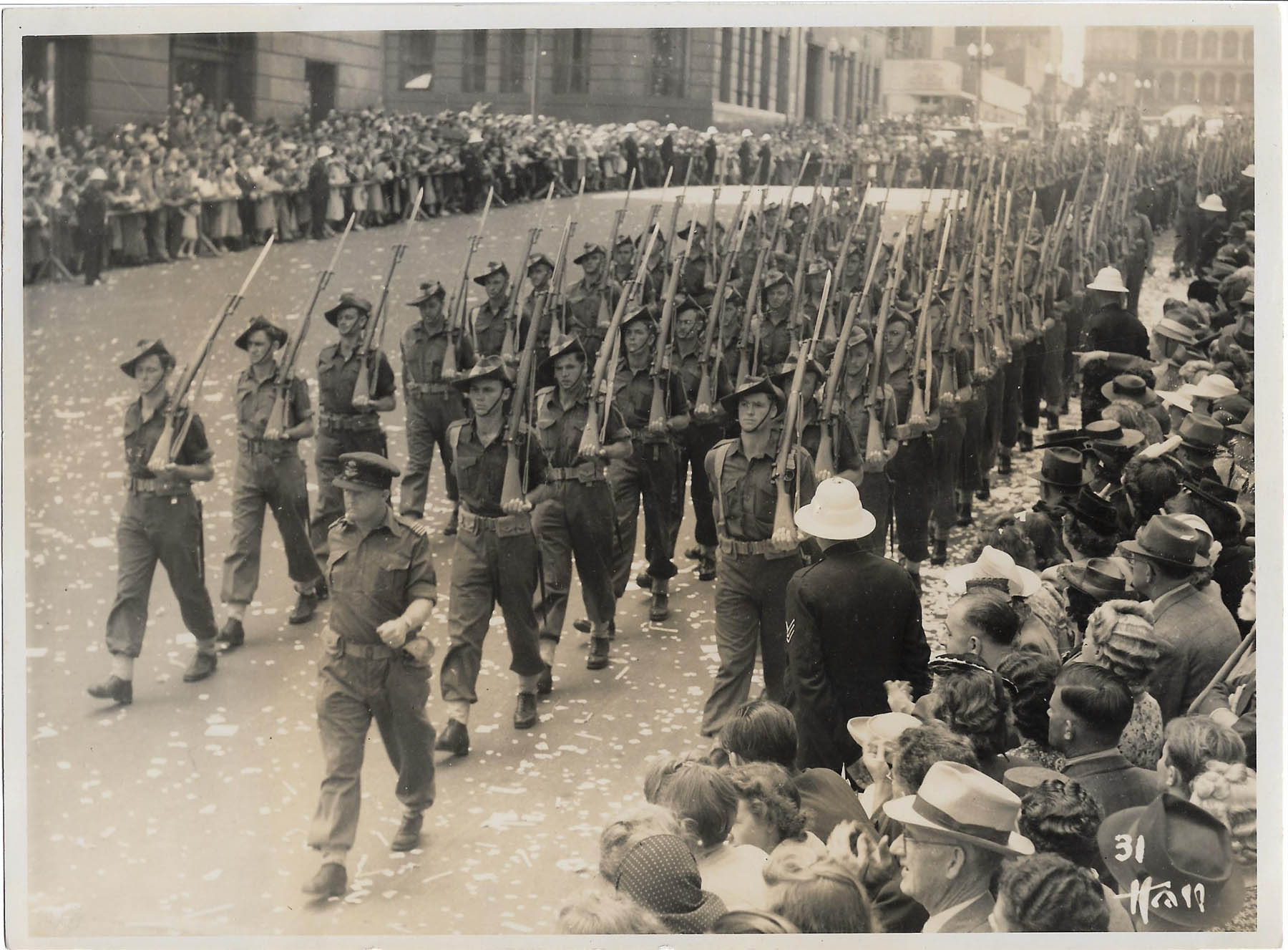
With his unit Jim travelled across Australia and was involved in the construction of remote airfields near Katherine and on NT’s Gove Peninsula. Eventually the time for active service arrived, with three years of graft on home soil proving the perfect grounding for what lay ahead. On Tuesday, April 10, 1945 Jim and his mates left Sydney on Dutch ship SS Swartenhondt bound for hostilities in the Pacific, to boost the massive Allied effort in regaining contested territory. First stop was the island of Morotai.
The Landings
By 1941 Borneo was one of the biggest oil producers in the region. Understandably, Japan required this valuable resource to feed its war machine if it was to continue the conquest of neighbouring Pacific islands. With the impending Japanese invasion of Borneo in mid-1942, the Dutch had sabotaged most of their own installations on evacuation, though it didn’t take long for the imperial warlords to reinstate them.
By May 1945, Japanese forces were wearing the weight of heavy losses yet continued their aggression. They’d completely underestimated the enemy’s will to fight, what I like to call ‘old school’ Aussies who’d “give it to ’em” at every opportunity. Despite strategic Allied victories including defeating the Germans in Europe, our Pacific forces were unaware at the time the bombing of Hiroshima and Nagasaki would force a Japanese surrender within months.
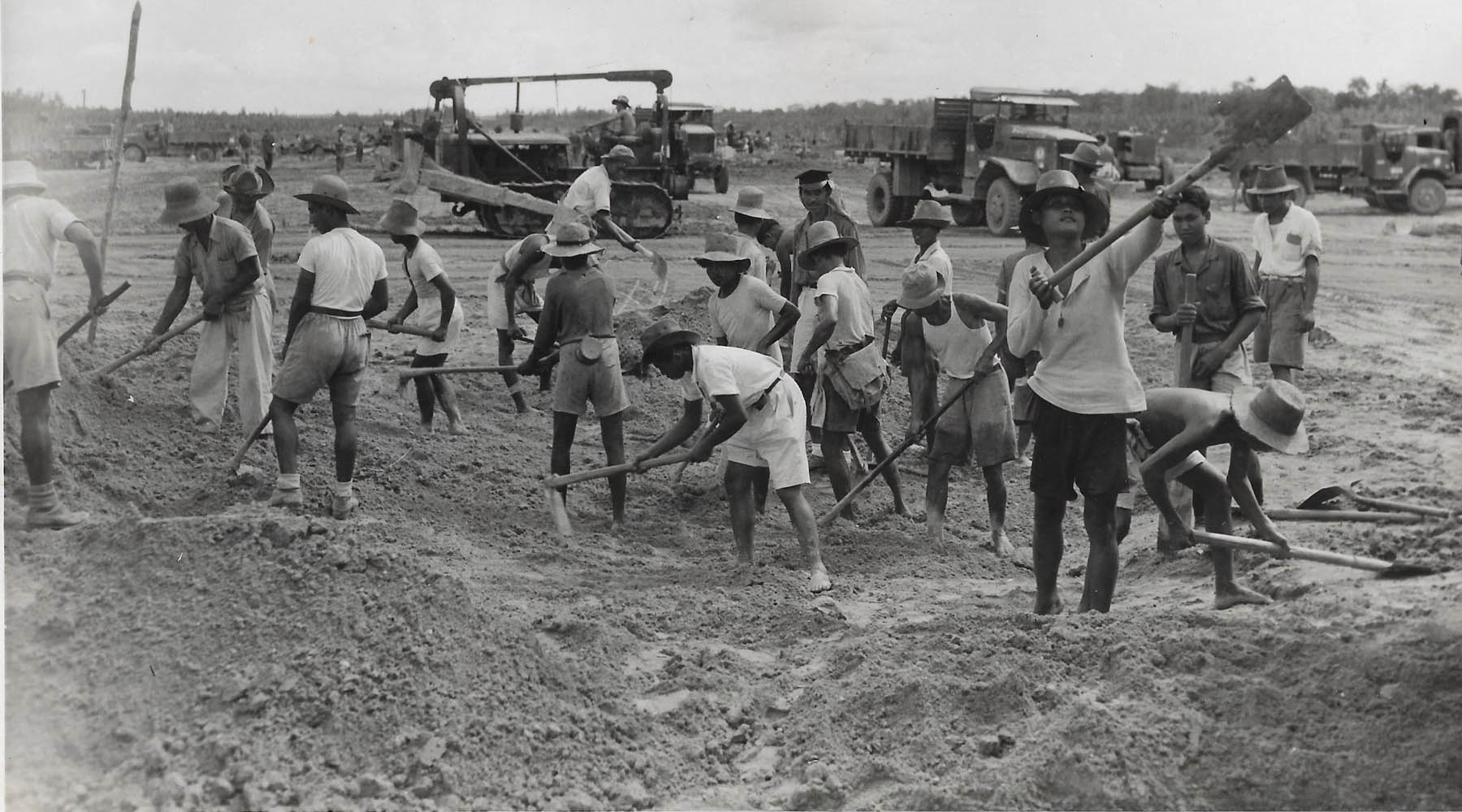
For the time being it was ‘business as usual’ with 8ACS responsible for maintaining and rebuilding key airfields on the islands of Indonesian Morotai, Tarakan and Balikpapan on the mainland of south-east Borneo. Reading my grandfather’s diary made me feel like I was looking at a smoke-filled sky lit by bright orange explosions across the island, while bobbing around the ocean waiting for a chance to join in. He wrote: “We had a landing force of 18,000 strong at Tarakan, with 3000 of those being frontline troops.”
Across the three theatres of war, remaining Japanese-fortified enemy defences were softened by repeated air force and naval bombardments prior to the invasion and, once they’d established a landing, our artillery continued the barrage. Multiple AIF infantry units supported by tank armour and flamethrowers carried out land assaults and continued the onslaught.
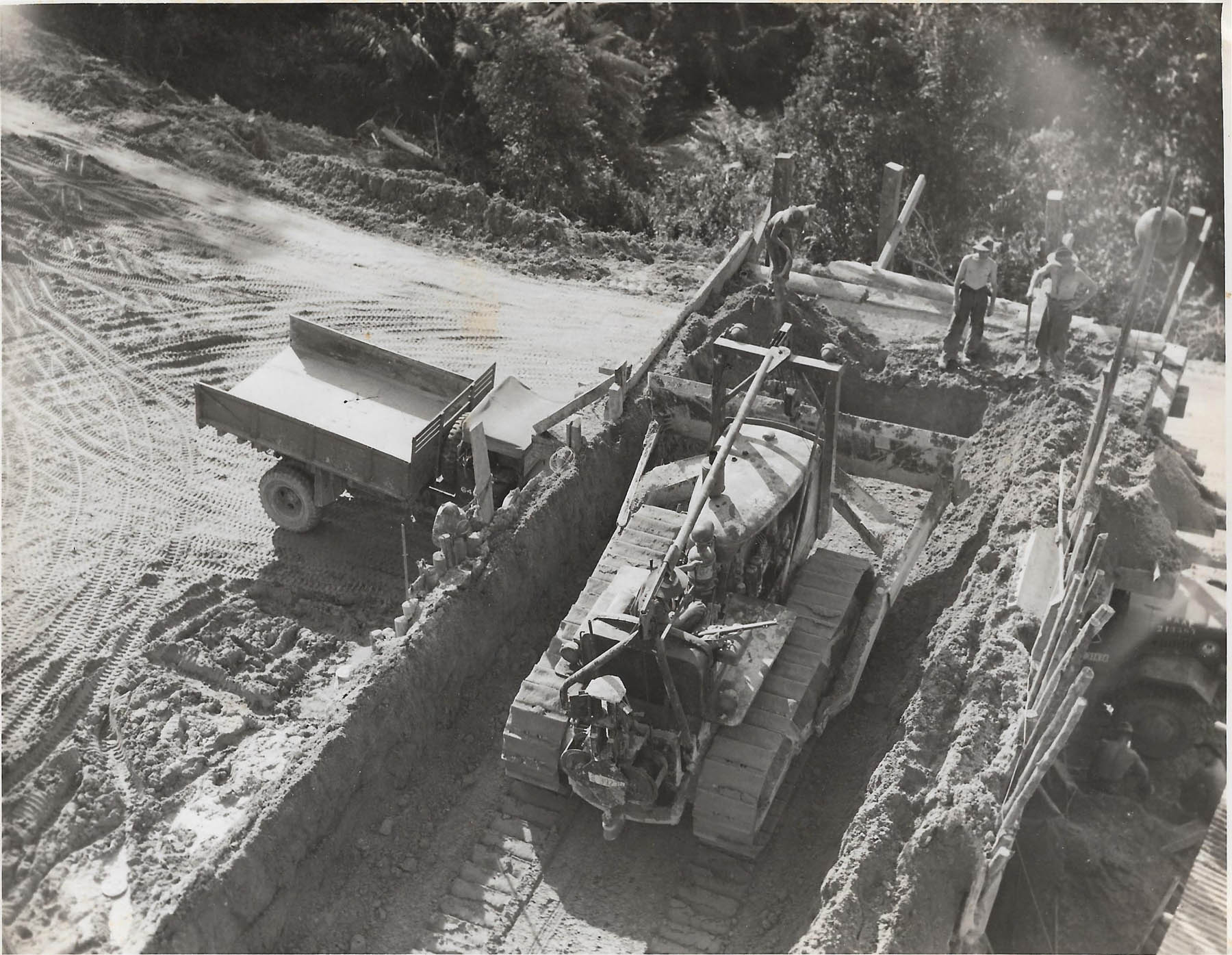
It would’ve been a highly unnerving sight for the Japanese watching an approaching armada of Allied ships but, once secured, 8ACS and other engineering elements left their LST (Landing Ship Tank) and came ashore. At the Morotai landing, Jim noted he was the first of his crew to drive the bulldozer off and mentioned that if he’d sank, the LST would have to get closer, though he made it ashore without a problem and the rest followed.
Some LSTs did become bed stuck on coming too close to the reef as the captain’s skill was tested at identifying underwater obstacles. Jim’s 8th Airfield Construction Squadron was a small cog in a very big wheel, as all three Australian and US services combined and complemented each other in order to complete the task.
Day-to-day taskings for Jim included long hours pushing fill out of gravel pits, machinery maintenance, ‘picquets’ (guard duty) and ensuring Allied aircraft had somewhere safe to take off and land. If an airstrip was damaged by enemy bombing it was repaired immediately, with coral from the beaches a key ingredient for road-base.
He tells of times when they were caught off-guard by a high tide and the machines became bogged. Engineers greased up critical joints and capped off vital points of entry from sea water and, once the tide receded, vehicles were retrieved and returned to work. Meanwhile, remnant Japanese forces remained defiant, constantly probing and harassing Allied positions, with many soldiers lost on a daily basis.
One thing Australians did well was make friends with indigenous populations, which negatively impacted Japan. While Jim and his mates tried to grab some sleep after dark, Borneo natives (known then as pygmies), small in stature yet big in strength, killed marauding Japanese who dared get too close to our men. Their presence was evident in daylight when dead Japanese were found with poison darts in their necks.
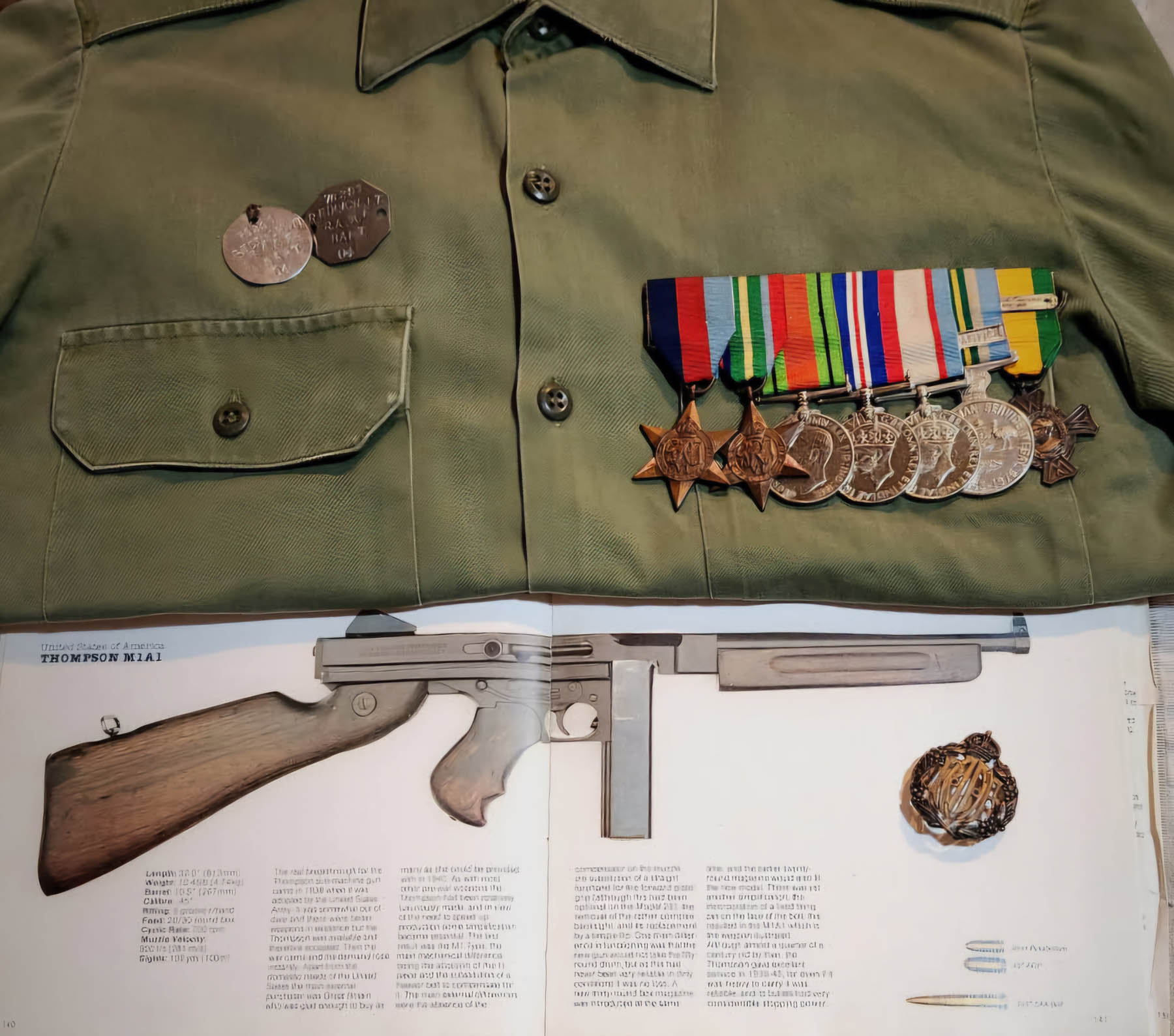
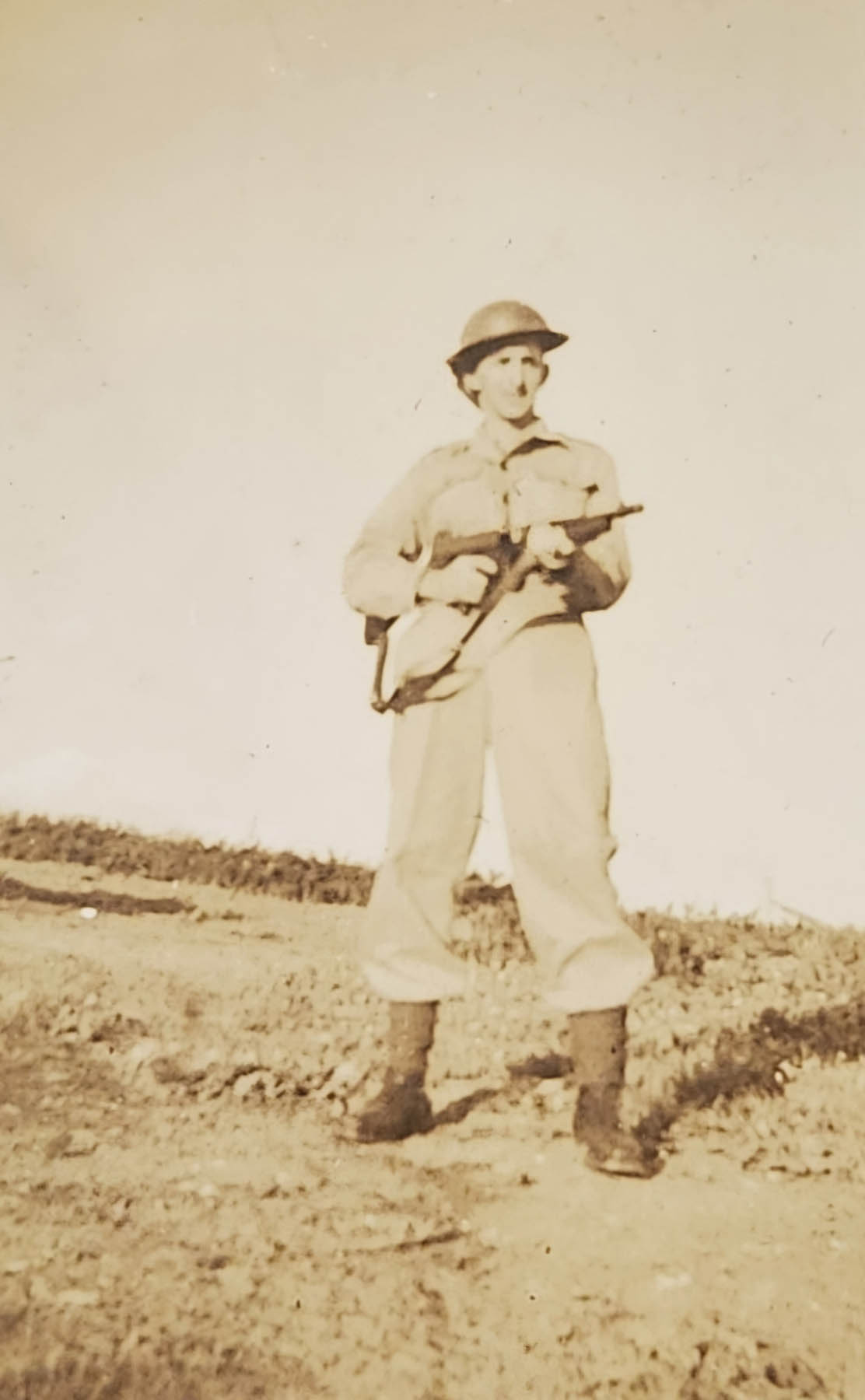
All men regardless of frontline were issued a weapon, typically the reliable Lee Enfield .303. The Thompson submachine gun was grandpa’s favourite, which he affectionately referred to throughout his diary as Tommy. Unlike my other grandpa, Reg, who’d used his Bren gun in New Guinea (see Australian Shooter, August 2022), not a shot was fired in combat by Jim, though he carried it everywhere on foot or in machine and maintained it as if his life depended on it. Clutching his Tommy while on guard duty, he mentions nights where some of his mates had previously been shot doing the same job.
Jim’s Tommy
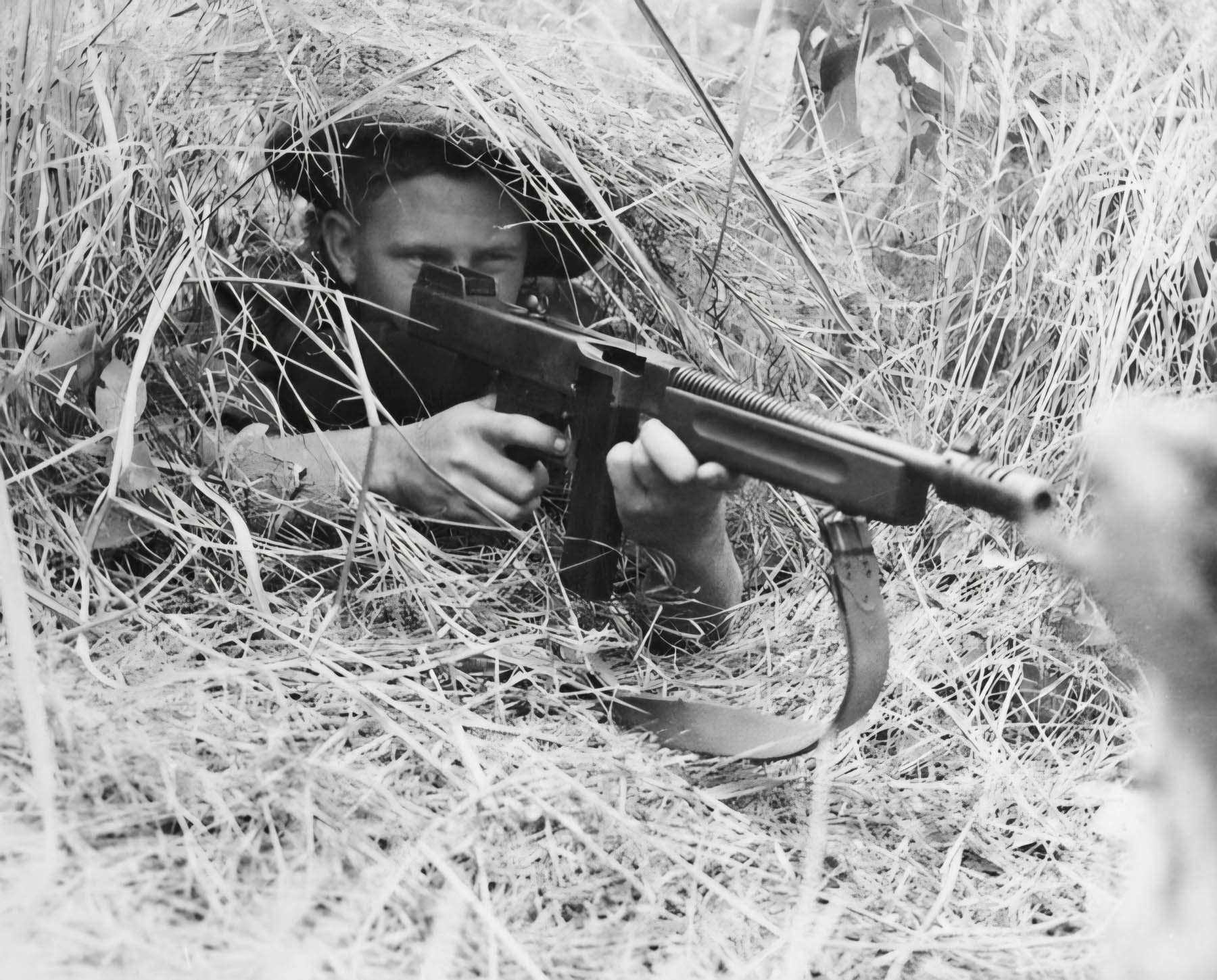
The Thompson submachine gun formed the backbone of Allied small arms for close quarter combat and saw solid service across all theatres of the Second World War. Designed in 1917 and entering service in 1921 the Australian-issued, American-made M1928A1 is a derivative of the unmistakeable gangster models of US prohibition era, with its drum magazine and pistol-style fore grip.
The M1928A1 was a recoil (blowback) operated, fully automatic submachine gun with a top cock breech, top ejection port and front and rear open sights. Chambered in the .45ACP round it could achieve a cyclic rate of 600-725 rounds per minute, yet because of its limited 20-round box magazine wasn’t favoured for continuous bursts. Some Australian Tommy guns were equipped with a muzzle brake in the Cutts Compensator.
It was an important inclusion which tamed muzzle jump by redirecting propellant gases upwards and reduced inaccuracy of vertical shot stringing, common with these guns during bursts of automatic fire. Jim’s model had the horizontal timber foregrip and underside sling loop. This arrangement didn’t always suit our forces and, with typical Aussie ingenuity, some rearranged the sling with a fencing wire loop to the top of the barrel, allowing it to be slung waist high with barrel facing forward ‘at the ready’.
Unfortunately the .45ACP cartridge wasn’t known for its accuracy beyond 50 yards, meaning our forces favoured other firearms like the Australian designed and built 9mm Owen gun for jungle warfare and, to a lesser extent, the 9mm Austen submachine gun. Nevertheless, the Tommy had its supporters and during years of Allied use served its purpose well.
Victory at last
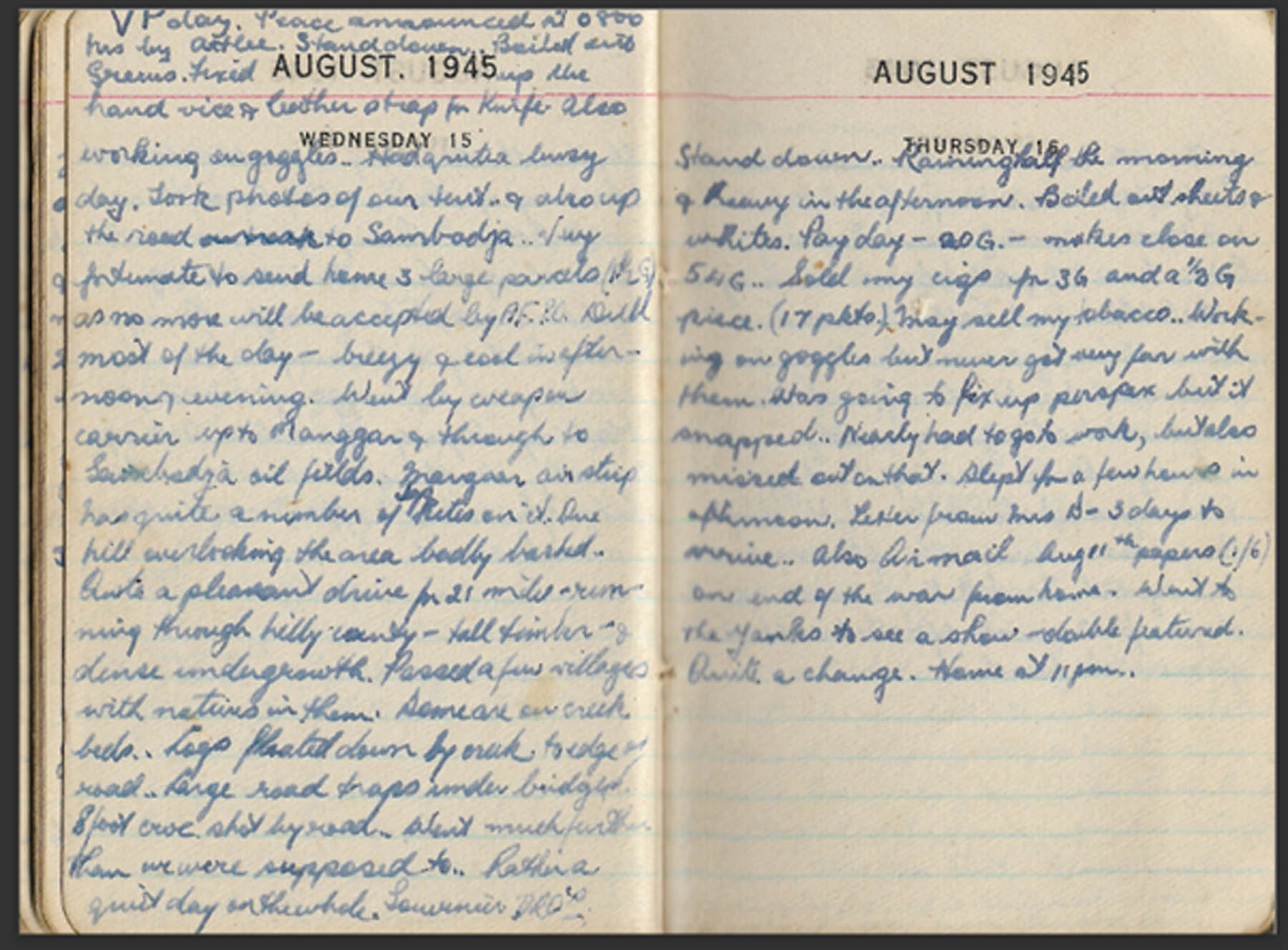
Although their commander wasn’t entirely popular with all Australian soldiers, General Sir Thomas Blamey on August 15, 1945 summed up the sentiment of our troops in the final two paragraphs of his Order of the Day:
“We have fought through the burning days and freezing nights of the desert. We have fought through the ooze and sweat of tropical jungles. We have defeated the Italians and the Germans and we would soon have destroyed completely the Japanese before us.
“We are now to go to our homes, having done our part in ensuring freedom, for which we have fought so future years to ensure it remains the crowing heritage of Australian people. Above all, we give thanks to the Almighty for His greatness and crowing mercy that marks for all people the total downfall of tyranny.”
The Japanese surrender in the Pacific was the last of the formalities to end our involvement in six years of war. We can only imagine the sense of relief our troops felt when Japanese officers finally signed the papers and handed over their swords.
In his writing, Jim detailed personal fatigue and his sorrow for lost mates. He mentions the fear of being killed, sadness for slain locals and, like most, homesickness for their beloved country. During the war years he lost a brother to service and his wife to illness, while Australia sadly lost around 34,000 personnel with total casualties topping 100,000.
While the tactics, techniques and procedures of the AIF had improved since World War One, a significant percentage of the Australian public yet again paid the ultimate price. Jim’s story was never intended as a historic account of the Borneo campaign, more a compilation of memories shared, diary entries explored and an overview of his issued weapon to commemorate the 80th anniversary of Allied victory in the Pacific.
In January 1946 he discharged from the RAAF at the rank of Corporal, his Certificate of Service and Discharge stating unsurprisingly he was of “very good character”. I noted also many a letter was written to Ethel’s parents as well as Marjorie, who Jim married in 1947. Marjorie was my dear grandmother and together they raised a family of three, including my father, and shared 60 years of marriage. I remember grandpa Jim as a loving man who adored his family and, after all he’d been through in those early days, had earned his peace in later years.
- A special thanks to my aunt Claire who scanned multiple diary entries for me, AWM Publications (Stand Easy, 1945) among numerous others, Brian Labudda of Wondai Traders and my brother Charlie for his help in sharing accurate recollections.